
Production has been running without interruption for hours when a critical conveyor motor suddenly fails.
Within minutes, one production line stops completely. Maintenance heads to the affected area while operators move unfinished products away from the line. Warehouse teams begin asking whether deliveries will be delayed. Procurement contacts suppliers to review incoming deliveries, customer service starts receiving calls about outstanding orders and senior leadership wants to know how long production will be affected and what the financial impact is likely to be.
At first, it looks like a maintenance issue.
Within a short time, it becomes a business issue.
The disruption quickly spreads beyond the production floor. Delivery schedules become uncertain, customer commitments come under pressure and employees wait for clear direction while different departments begin making decisions using different information. Even if the conveyor is repaired quickly, the wider organisation may spend hours, or even days, dealing with the consequences.
This is where the true cost of production downtime begins.
Lost manufacturing output is only part of the picture. Downtime can also result in delayed customer deliveries, disrupted supply chains, lower employee productivity, contractual penalties, reputational damage and leadership spending valuable time coordinating recovery instead of focusing on the business.
This is where Business Continuity Software provides practical value. Rather than focusing solely on repairing equipment, it helps manufacturers coordinate recovery across the entire organisation. By bringing together business continuity planning, communication, operational visibility and structured incident management, it helps every department work from the same verified information while recovery activities are underway. When used alongside Manufacturing Incident Management Software and Incident Management Software, organisations are better equipped to reduce disruption instead of simply reacting to it.
If your organisation is reviewing its wider operational resilience strategy, our guide to Manufacturing Incident Management Software explains how coordinated incident response helps reduce disruption during equipment failures, utility outages and other manufacturing incidents.
Manufacturers that recover most effectively are rarely the ones with the newest equipment or the largest maintenance teams. More often, they are the organisations that prepare every department to respond together when normal operations are disrupted.
What Is Business Continuity Software?
Business Continuity Software is a platform that helps organisations prepare for, manage and recover from operational disruptions while maintaining essential business activities. It combines business continuity planning, communication, incident management, task coordination and operational visibility so leaders can coordinate recovery using one reliable source of information.
Rather than focusing only on repairing equipment, it provides a structured way to coordinate people, priorities and recovery activities across the organisation.
For manufacturers, this means leadership can quickly understand what has happened, which operations are affected, what recovery activities are already underway and where decisions are needed next. Instead of relying on separate spreadsheets, phone calls and manual updates, every department works from the same operational picture.
Business continuity is therefore about much more than disaster recovery.
It is about keeping the business operating while recovering from disruption.
For organisations looking to strengthen their wider resilience strategy, our Business Continuity Software solution explains how digital continuity planning supports coordinated recovery before, during and after operational incidents.
Why Production Downtime Is Bigger Than A Maintenance Problem
When production stops unexpectedly, the immediate priority is naturally repairing the equipment that caused the disruption.
That is only the beginning.
While maintenance focuses on restoring production, other parts of the organisation are already managing the consequences. Customer service is updating customers, logistics is reviewing delivery schedules, procurement is speaking to suppliers, operations is assessing alternative production capacity and leadership is trying to understand the wider commercial impact.
Each department has a different responsibility, yet every decision depends on the same thing: accurate, shared information.
Without coordination, disruption often continues long after the equipment has been repaired.
Many organisations measure downtime by the number of production hours lost.
That figure tells only part of the story.
It measures how long production stopped, not how long the business was disrupted.
A more meaningful measure considers how quickly the organisation restores customer service, stabilises operations, supports employees and returns to normal performance.
Looking at downtime through the lens of business continuity instead of maintenance alone helps manufacturers recover more quickly while reducing the wider operational impact.
The Hidden Costs Most Downtime Reports Miss
Production downtime is usually measured in hours.
Leadership reports often record when production stopped, when maintenance arrived and when equipment returned to service. Those figures are valuable, but they only describe the technical recovery.
They do not show how long the wider business remained disrupted.
Customer service may still be managing delayed orders. Procurement could be reorganising supplier deliveries. Warehouse teams may be adjusting outbound shipments while finance calculates contractual penalties and sales works to protect customer relationships built over many years.
These secondary effects can cost as much as, or even more than, the initial production loss.
A single equipment failure can quickly affect the entire organisation.
That is why manufacturers with mature manufacturing business continuity planning look beyond repairing equipment. They evaluate how one operational incident affects customers, suppliers, employees and commercial performance before those secondary impacts continue to grow.
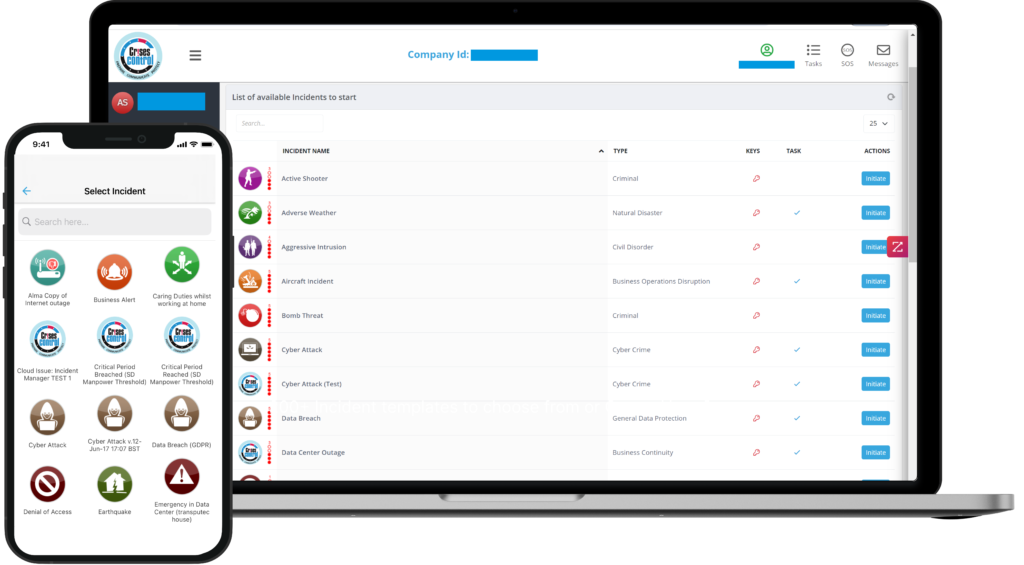
Interested in our Incident Management Software?
Flexible Incident Management Software to keep you connected and in control.
The Common Assumption That Increases Downtime
One of the biggest assumptions in manufacturing is that production downtime ends when the equipment starts running again.
In reality, that is often only the beginning of the recovery.
Production may have resumed, but customer backlogs still need to be cleared. Orders must be reprioritised, employees may need revised shift patterns, suppliers require updated delivery schedules and leadership still needs confidence that operations have genuinely returned to normal. The production line may be running again, yet the business can still be recovering for hours or even days.
Restarting machinery is only one milestone.f
Returning the organisation to normal performance is a much broader operational challenge.
This is why recognised business continuity guidance encourages organisations to prepare not only for incident response, but also for recovery, restoration and the return to normal operations. Effective continuity planning considers people, suppliers, communication, critical business activities and recovery priorities alongside the immediate operational response.
Manufacturers that focus only on repairing equipment often discover that operational disruption continues long after maintenance has completed its work because the wider business has not recovered at the same pace.
Where Traditional Downtime Management Falls Short
Most manufacturing facilities already have experienced maintenance teams, detailed engineering procedures and preventive maintenance programmes.
The challenge is that production downtime rarely affects maintenance alone.
During a significant disruption, operations needs to reprioritise production, procurement must assess supplier impacts, warehouse teams adjust deliveries, customer service manages expectations and leadership needs a clear understanding of the wider business impact. At the same time, business continuity teams are trying to coordinate recovery across multiple departments.
Each team is solving a different problem.
The difficulty is making sure they are all working towards the same objective.
When every department manages its own response independently, coordination becomes increasingly difficult. Phone calls replace structured updates, email chains become longer and different departments begin building their own understanding of the incident. Before long, decisions are being made using incomplete or outdated information.
The result is not always a longer repair.
It is very often a longer recovery.
Many manufacturers discover that their greatest delays occur after the technical fault has been resolved because the wider recovery was never coordinated across the organisation.
What Effective Production Downtime Management Looks Like
Reducing operational disruption requires far more than efficient maintenance.
It requires a structured recovery process that keeps every department aligned from the moment an incident begins until normal operations have been restored.
An effective approach typically includes:
- Immediate incident activation.
- Clear priorities for business-critical operations.
- Defined responsibilities across every department.
- Regular operational updates for leadership.
- Communication with customers, suppliers and internal teams.
- Task management throughout the recovery.
- Visibility across production, logistics and business continuity activities.
- Documentation of decisions and lessons learned.
When these elements work together, leaders spend less time chasing updates and more time making informed decisions that support recovery.
Business continuity planning follows the same principle. Organisations should identify critical activities, define recovery priorities, assign responsibilities and review recovery arrangements regularly so disruption can be managed in a consistent and structured way.
What Business Continuity Software Looks Like In Practice
This is where Business Continuity Software shifts the focus from repairing equipment to coordinating the recovery of the entire business.
When production stops unexpectedly, leadership needs far more than progress updates from maintenance. They need to understand how the disruption is affecting customers, suppliers, employees, production schedules and commercial commitments so they can make informed decisions that reduce operational impact.
An integrated business continuity platform brings together incident management, communication, recovery planning and operational visibility within a single coordinated process.
When an incident is declared, authorised personnel can activate predefined business continuity plans while notifying the relevant teams according to their responsibilities. Recovery tasks are assigned, progress can be monitored and leadership gains a clear view of how the situation is developing. Instead of relying on separate spreadsheets, phone calls and email chains, every department works from the same verified information.
As recovery progresses, leadership can quickly understand:
- Which recovery activities are underway.
- Which teams have acknowledged their responsibilities.
- Outstanding operational risks.
- The impact on production schedules.
- Supplier and customer issues requiring attention.
- Recovery priorities across departments.
- Decisions and actions recorded throughout the incident.
This shared operational picture enables Manufacturing Directors, Operations Directors, Plant Managers and Business Continuity Managers to coordinate recovery with greater confidence instead of spending valuable time collecting updates from multiple departments.
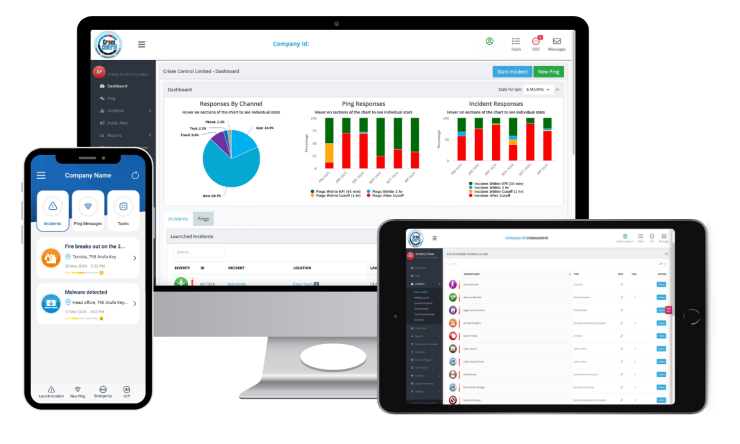
Solutions such as Crises Control support this approach by helping manufacturers digitalise business continuity planning while complementing existing operational procedures. Features such as incident management, role-based communication, task management, operational dashboards, stakeholder communication, audit trails and post-incident reporting help organisations recover in a coordinated and structured way instead of reacting to problems as they appear.
Technology cannot eliminate production downtime.
What it can do is reduce the wider business impact by giving every department the visibility, structure and shared information needed to recover more effectively.
Recovery Starts Long Before Equipment Fails
Many organisations invest heavily in maintenance because preventing equipment failure is clearly important.
Preventing disruption is only one part of the equation.
Manufacturers also need to prepare for the reality that some incidents cannot be prevented. Equipment will fail. Suppliers will experience delays. Utilities may be interrupted. Severe weather, cyber attacks or fires can affect operations without warning.
Business continuity planning is about preparing the organisation to continue operating despite those disruptions, identifying critical activities, assigning recovery responsibilities and maintaining essential services while normal operations are restored. This approach is reflected in internationally recognised guidance such as ISO 22301 and ISO 22313, which encourage organisations to prepare for response, recovery and continual improvement rather than focusing only on prevention.
The organisations that recover most effectively are usually those that have already answered the difficult questions before the incident begins.
For example:
- Which production activities must restart first?
- Which customers are most affected?
- Who communicates with suppliers?
- Which departments need immediate updates?
- What decisions can managers make without waiting for senior approval?
- How will recovery progress be monitored across the business?
Answering these questions in advance allows recovery to begin immediately instead of being developed during the disruption itself.
Manufacturers often invest significant time reducing the likelihood of downtime.
The same level of attention should be given to reducing the impact when downtime inevitably occurs.
Better Business Continuity Begins Before Downtime Happens
Every manufacturer works to prevent production downtime through maintenance, inspections and continuous improvement.
Those investments are essential, but no organisation can remove risk completely.
The real question is not whether a production line will stop one day. It is whether the business can continue operating effectively when it does.
Manufacturers that recover well recognise that downtime is rarely just an engineering problem. It affects customers, suppliers, employees, production schedules and commercial commitments all at once. The organisations that limit disruption are those that prepare the whole business to respond together, not just the maintenance team.
If your organisation is reviewing its approach to manufacturing continuity planning, ask one important question:
If a critical production line stopped for the next four hours, would every department know exactly what to do without waiting for further instructions?
The answer often reveals opportunities to strengthen business continuity, improve operational coordination and reduce the hidden costs of downtime before the next disruption occurs.
Solutions such as Crises Control help manufacturers strengthen operational resilience through digital business continuity plans, structured incident management, role-based communication, task management, stakeholder communication, operational visibility and post-incident reporting. By bringing these capabilities together within a single platform, organisations can move from reacting to downtime to managing recovery in a coordinated and controlled way.
FAQs
1. What Is Business Continuity Software?
Business Continuity Software helps organisations prepare for, manage and recover from operational disruptions. It brings together business continuity planning, incident management, communication, task management and operational visibility within a single platform, helping every department coordinate recovery using the same verified information.
2. Why Is Production Downtime More Than A Maintenance Issue?
Production downtime affects much more than manufacturing equipment. It can delay customer deliveries, disrupt supply chains, reduce employee productivity, create contractual risks and damage customer confidence. Effective recovery requires coordinated decision-making across the entire organisation, not just the maintenance team.
3. How Does Manufacturing Incident Management Software Support Business Continuity?
Manufacturing Incident Management Software helps organisations coordinate operational incidents by connecting emergency communication, incident reporting, task management and operational visibility. When integrated with Business Continuity Software, it supports a structured recovery process that keeps leadership and operational teams aligned throughout the incident.
4. What Should A Manufacturing Business Continuity Plan Include?
A manufacturing business continuity plan should identify critical business activities, define recovery priorities, assign responsibilities, establish communication procedures, document stakeholder management processes and outline how production, suppliers and customer commitments will be managed during disruption. The plan should also be reviewed and exercised regularly to ensure it remains effective.
5. How Often Should Manufacturers Review Their Business Continuity Plans?
Business continuity plans should be reviewed regularly and whenever significant operational changes occur, such as new production lines, facility expansions, supplier changes, technology upgrades or organisational restructuring. Reviews should also take place after exercises and real incidents so lessons learned can be incorporated into future planning.
This article was drafted with AI assistance and reviewed by the Crises Control team. Featured image: AI-generated.