
Incident Management Software is a digital platform that manages the full lifecycle of an operational event, from initial detection through response and resolution to formal review. While organisations often focus on responding quickly, the real value of an incident is realised afterwards. A well-executed post-incident review should identify what worked, uncover where the response fell short, and turn those findings into measurable improvements. Without a structured review process, organisations risk repeating the same mistakes, carrying the same operational weaknesses forward and gradually reducing confidence in their resilience over time.
A financial services firm suffers a serious network outage affecting two regional offices during a critical processing window. The incident is resolved within four hours, customer services resume and normal operations return. Two weeks later, the Head of Business Continuity brings together the response team to understand what can be learned before the next disruption.
Eight people sit around the table with different recollections of what happened. One person believes the escalation happened at eleven in the morning. Another is certain it was closer to half past twelve. The notifications were sent through a mass notification system, but no one can quickly locate the acknowledgement data. The business continuity plan was activated, but no one is certain which version was followed or whether every assigned task was completed.
The meeting ends with a list of broad recommendations rather than meaningful operational improvements. Instead of identifying the exact points where the response slowed, communication broke down or decisions were delayed, the team relies on collective memory and general observations. The opportunity to strengthen future resilience is largely lost because the review is based on recollection rather than evidence.
What a Post-Incident Review Is and Why It Matters
A post-incident review is a structured examination of an incident after it has closed, conducted to understand what happened, assess whether the response was effective, identify what could have been done differently, and establish specific actions to improve future performance. It is sometimes called a post-incident analysis, a lessons learned review, or, in more technical environments, a retrospective.
The review matters for two distinct reasons. The first is operational learning. Organisations that review their incidents with rigour improve over time. They identify the specific points where communication broke down, the tasks that were completed late or not at all, the escalation decisions that took longer than they should have, and the procedural gaps that the incident exposed. That knowledge, translated into specific actions and tracked to completion, raises the capability of the organisation to respond to future events.
The second reason is compliance. Regulatory frameworks governing financial services organisations in the United Kingdom and Europe require organisations to demonstrate that they learn from incidents. The FCA’s operational resilience framework, for example, requires firms not only to respond within their defined impact tolerances but to review responses and update their plans accordingly. DORA requires financial entities to document major incident reviews and make them available to regulators on request. A post-incident review without reliable data to support it cannot meet these requirements credibly.
A post-incident review is only as valuable as the quality of the data that supports it. Opinions and recollections produce discussion. Data produces insight, accountability, and defensible compliance evidence.
What a Structured Post-Incident Review Requires
A structured post-incident review requires four inputs: a complete incident timeline, a record of every communication and its outcome, a record of every task assigned and its completion status, and a clear account of the decisions made and by whom. All four are outputs of a well-managed incident management process. None of them can be reliably produced from memory alone.
The incident timeline forms the backbone of the review. It allows the review team to examine the sequence of events precisely: when the incident was first detected, when it was formally declared, when the first notification was sent, when the escalation decision was made, when recovery began, and when the incident was closed. Without precise timestamps, the timeline is an approximation, and the review is a discussion of approximations rather than an analysis of facts.
The communication record shows who was contacted, through which channels, when, and whether they responded. For financial services organisations using Mass Notification Software, this record should show not just who received the alert but who acknowledged it, what they said, and whether non-responders were escalated to. If the communication ran through informal channels for any part of the incident, that part of the record is missing.
The task completion record shows which actions were assigned, to whom, whether they were completed, and how long they took. This is the layer that most manual incident management processes cannot produce reliably, because tasks assigned verbally or through messaging applications are not tracked to completion in any systematic way.
Without task completion data, a post-incident review cannot determine whether the business continuity plan was executed correctly. It can only determine that it existed. These are very different things for a compliance auditor.
Common Mistakes in Post-Incident Reviews
The most common mistake is treating the post-incident review as a debrief rather than an analysis. A debrief is a discussion of what happened based on what participants remember. An analysis is an examination of what the incident record shows. The two produce very different outputs. Debriefs produce general observations. Analyses produce specific, actionable findings with named owners and defined deadlines.
The second mistake is reviewing only the major events and ignoring the gaps. The most valuable learning in any incident review is often found in the transitions between events: the fourteen minutes between the incident declaration and the first notification, the gap in task completion data for a specific role, the non-responder rate for a particular branch location. These are the details that reveal where the process actually broke down, and they are only visible in the data.
The third mistake is failing to close the loop. A review that produces actions but does not track them to completion is not a review. It is a meeting. The actions from a post-incident review need to be assigned to named individuals, given realistic deadlines, and followed up systematically. Incident Reporting Software that integrates the review process with task management ensures that actions identified in the review are tracked through the same system used to manage incidents.
How Mature Is Your Post-Incident Review Process?
Not all post-incident reviews deliver the same value. Some organisations hold a discussion and document a few observations. Others use reliable operational data to identify specific improvements, assign actions and strengthen future response capability.
The maturity model below shows how post-incident review processes typically evolve.
Maturity Level | Typical Approach | Business Outcome |
Level 1: Discussion | Teams rely on memory and informal conversations after an incident. | Lessons are subjective, inconsistently documented and often forgotten. |
Level 2: Documentation | An incident report is produced using meeting notes, emails and participant recollections. | Some improvements are identified, but gaps and inconsistencies remain. |
Level 3: Evidence-Based Review | Reviews are supported by a complete incident timeline, communication records, task history and decision logs. | Findings are based on facts rather than recollection, improving accountability and governance. |
Level 4: Continuous Improvement | Review findings are translated into updated response plans, assigned actions and measurable improvements that are tracked to completion. | Each incident strengthens operational resilience and improves future response capability. |
Level 5: Operational Learning | Incident data is analysed across multiple incidents and exercises to identify recurring risks, trends and systemic weaknesses. | The organisation continuously improves its operational resilience and can demonstrate ongoing learning to regulators, auditors and senior leadership. |
Organisations rarely progress from Level 1 to Level 5 overnight. Maturity develops by capturing reliable incident data, conducting structured reviews and ensuring that every finding results in measurable improvements. The most resilient organisations treat every incident, whether real or simulated, as an opportunity to strengthen their people, processes and plans before the next disruption occurs.
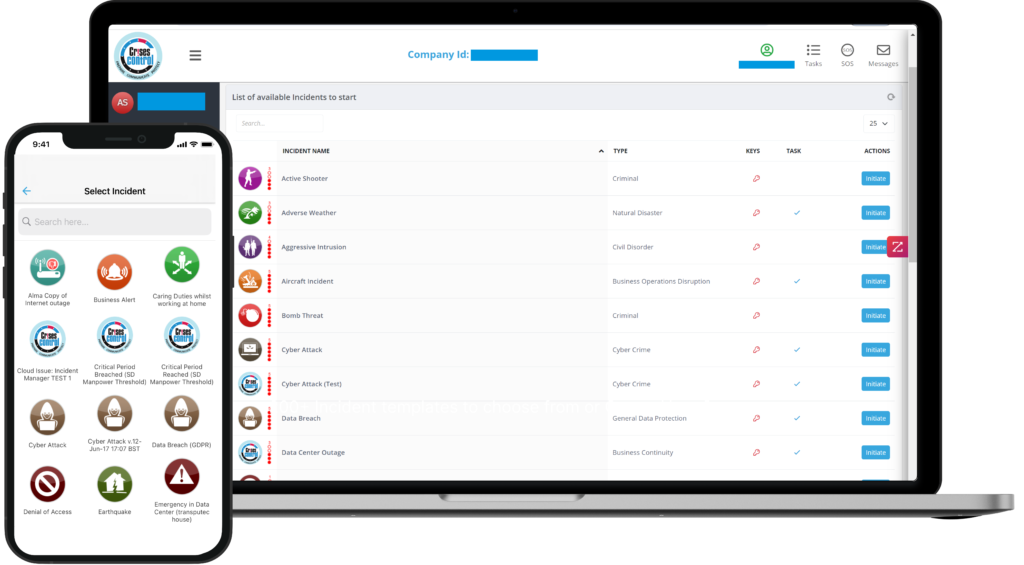
Interested in our Incident Management Software?
Flexible Incident Management Software to keep you connected and in control.
The Challenge of Reviewing Incidents Managed Informally
Organisations that manage incidents informally, through phone calls, messaging applications, and unstructured email threads, face a particular challenge in conducting post-incident reviews. The incident data they need to support the review either does not exist or exists in a fragmented form that cannot be easily reconstructed into a coherent picture.
Crisis Management Software that does not capture the full incident lifecycle, from notification through task management to formal close, cannot produce the data needed for a substantive review. The review is conducted without the evidence it needs, and the findings are correspondingly limited. For organisations required to demonstrate to regulators that they review incidents and update their plans accordingly, a review conducted without reliable data is not a strong compliance demonstration.
Some organisations attempt to address this by running parallel systems: using a Mass Notification Software platform for communications and a separate tool for task management, then attempting to reconcile the two data sets for the post-incident review. This approach produces the siloed system problem discussed elsewhere in this series: the data sets do not perfectly align, the timestamps are inconsistent, and the reconciliation introduces its own errors and approximations.
How Incident Management Software Supports Effective Post-Incident Reviews
Effective Incident Management Software should support the response as it happens while creating the operational data needed for a meaningful post-incident review.
A platform that executes the response generates, as a natural byproduct of that execution, the data needed for a meaningful post-incident review. Crises Control’s audit trail captures every action taken during an incident in real time: the exact moment of activation, every notification sent and its delivery status, every response received, every task assigned and completed, every escalation, and the formal close of the incident.
When the post-incident review is conducted, the team is not working from memory. They are working from a structured incident record that shows precisely what happened, in what order, at what time, and who was responsible for each action. The timeline is not an approximation. It is the system record. The communication data is not an estimate. It is the platform’s delivery and response log.
For a financial services firm required to demonstrate to the FCA that it reviews incidents and updates its plans accordingly, this means the review is substantive rather than procedural. It can identify specific process gaps, because the data shows exactly where the gaps occurred. It can produce specific actions, because the data shows exactly what went wrong and where. It can demonstrate to a regulator that the review was based on reliable evidence rather than participant recollections.
For organisations using Crises Control’s integrated approach, the business continuity plans activated during the incident are embedded in the platform. The review can examine not just whether the plan was activated but which tasks were completed, which were delayed, and which were skipped. That level of detail turns the review from a procedural exercise into a genuine improvement mechanism.
Organisations that conduct quarterly continuity testing through the platform can review those tests with the same rigour as real incidents, building a continuous improvement record that is available to auditors as evidence of the organisation’s commitment to operational learning.
A Practical Framework for Post-Incident Reviews
For organisations establishing or improving their post-incident review process, a five-stage framework provides a reliable structure.
- Data gathering. Before the review meeting, collect the complete incident record: the notification log, the response data, the task completion record, the timeline, and the decision log. If any of these elements are missing or incomplete, note the gap explicitly. It is data about the data.
- Timeline reconstruction. Build the incident timeline from the system data, not from participant accounts. Where there are gaps, identify them. The gap itself is a finding.
- Gap analysis. Examine the timeline and the task completion data to identify where the process did not perform as expected. Look for notifications that were late, tasks that were incomplete, escalations that took longer than the defined protocol, and non-responders who were not followed up. Each gap is a specific finding.
- Action generation. For each finding, define a specific action, assign it to a named owner, and set a realistic deadline. Generic actions such as “improve communications” are not useful. Specific actions such as “update the Emergency Response Team contact list to include the new regional directors by a named date” are actionable.
- Tracking and closure. Track actions to completion through the same system used to manage incidents. When all actions are closed, update the relevant business continuity plans and test the updates in the next scheduled continuity exercise.
The purpose of a post-incident review isn’t to explain the last incident.
It’s to improve the next one.
Conclusion
Post-incident reviews are only as valuable as the data that supports them. Organisations that rely on informal incident management processes will conduct reviews that reflect what participants remember, which is a poor basis for operational learning and a weaker basis for regulatory compliance. Incident Management Software that captures the full incident lifecycle automatically provides the data foundation that makes post-incident reviews genuinely useful.
For financial services and insurance organisations required to demonstrate continuous improvement in their operational resilience, the post-incident review is one of the primary mechanisms for doing so. Getting it right requires the right systems, the right data, and the right process. All three are within reach for organisations that take the investment in structured incident management seriously.
To see how structured post-incident reviews work in practice, get a free personalised demo.
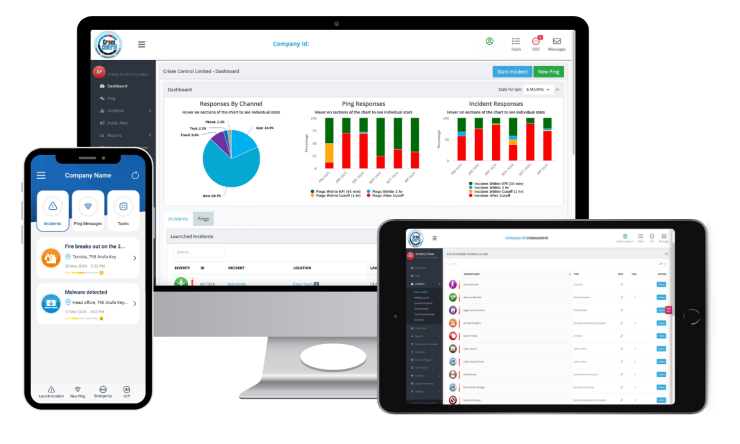
FAQs
1. What is Incident Management Software and how does it support post-incident reviews?
Incident Management Software manages the full lifecycle of an operational event, from detection through response to formal review. It supports post-incident reviews by generating a complete, contemporaneous record of every action taken during the incident: every notification, every response, every task assignment, every escalation. That record provides the data foundation for a substantive review rather than a discussion of recollections. Without it, post-incident reviews are limited by the accuracy of participant memory.
2. What is a post-incident review and what should it include?
A post-incident review is a structured examination of an event after it closes, designed to understand what happened, assess the effectiveness of the response, and identify specific improvements. A rigorous review should include a complete incident timeline built from system data, a communication record showing who was notified and who responded, a task completion record showing which actions were taken and which were missed, and specific improvement actions with named owners and defined deadlines. Incident Reporting Software that captures all of these elements during the incident makes the review significantly more substantive.
3. How often should organisations conduct post-incident reviews?
Post-incident reviews should be conducted after every significant incident and after every planned continuity test. For financial services organisations operating under the FCA’s operational resilience framework, the review is not optional: firms are required to demonstrate that they learn from incidents and update their plans accordingly. Crisis Management Software that integrates the review process with the incident management system makes it practical to conduct reviews consistently, rather than reserving them for only the most serious events.
4. What role does Mass Notification Software play in post-incident review data?
Mass Notification Software contributes communication data to the post-incident review: who was alerted, through which channels, when, and who responded. This is a valuable component of the review, but it is not sufficient on its own. A complete post-incident review also requires task completion data, escalation logs, and a decision record. Organisations that use Mass Notification Software as part of a broader Incident Management Software platform can access all of these data types from a single source.
5. How does Incident Management Software for Finance help meet regulatory requirements for post-incident learning?
Incident Management Software for Finance supports regulatory requirements for post-incident learning by generating the complete, reliable incident record that substantive reviews require. For organisations subject to FCA operational resilience rules, DORA, or ISO 22301, the ability to demonstrate that reviews are conducted, based on reliable data, and produce specific improvement actions that are tracked to completion, is a core part of the compliance evidence base. The best incident management platforms integrate the review process into the incident lifecycle, making it a natural output rather than a separate administrative task. Learning how to create an incident audit trail for compliance starts with using a platform that generates one automatically.