
Managing major operational disruptions in aviation and transport is the structured process by which an organisation activates, coordinates, and sustains its response to an event that threatens the integrity of core operations at scale. A major disruption at this level does not affect one flight, one vehicle, or one site in isolation. It cascades across scheduling, staffing, communications, customer service, and regulatory reporting simultaneously.
On 26 December 2022, Southwest Airlines was managing what appeared to be a significant but familiar weather event. Within 48 hours, the situation had become a systemic collapse. Nearly 17,000 flights were cancelled over ten days, approximately two million passengers were affected, and the company ultimately faced losses estimated at 800 million dollars alongside a 140 million dollar regulatory fine (NPR 2023). The weather was the trigger. The absence of a coordinated, scalable operational response was the cause.
That distinction matters more than the event itself. Major disruptions do not fail organisations because the original trigger was unmanageable. They fail organisations because the response structure could not scale when it needed to.
What Makes a Disruption Major in Aviation and Transport?
Not every incident becomes a major operational disruption. A minor ground delay becomes major when the scheduling system cannot absorb it and cascades to affect dozens of connecting flights. A single vehicle breakdown becomes major when it triggers a ripple across depot operations, delivery commitments, and customer service. A localised IT fault becomes major when the systems it connects are not in redundancy and a whole operational tier goes dark.
Major disruptions share one defining characteristic: they outgrow the capacity of the normal response structure. The duty manager cannot handle it alone. The ops centre cannot contain it through existing channels. The escalation process hits its limits, and the organisation discovers, in real time, exactly which parts of its response plan were theoretical and which were functional.
For aviation, the most common major disruption triggers include: aircraft emergencies requiring multi-agency coordination, severe weather causing airport closure or mass flight disruption, cyberattacks on airline or airport systems, large-scale fuel supply failures, pandemic-level impacts on crew availability, and terror threats requiring full lockdown and law enforcement coordination. For transport and logistics, the equivalents include multi-vehicle collisions involving hazardous materials, fleet-wide cyberattacks on logistics software, port or terminal shutdowns affecting supply chains, and large-scale driver shortages caused by industrial action or epidemic.
In each case, the organisation is not dealing with a single problem. It is dealing with a problem that has already become several problems simultaneously.
5 Gaps That Emerge When Managing Major Disruptions in Aviation and Transport
1. No clear activation threshold
Most organisations have a major incident plan. Very few have a clear, pre-agreed threshold for activating it. The result: responders spend the first critical minutes of a major disruption debating whether it qualifies as major. By the time the decision is made, the window for containing the initial impact has often closed. Activation thresholds need to be objective, pre-defined, and triggerable without requiring consensus under pressure.
2. Communications fracture before coordination begins
When a major disruption is declared, the first instinct is to communicate. Phone calls go out. Emails are sent. Group chats fill up. The problem is that these channels do not confirm receipt, do not assign responsibility, and do not distinguish between information and action. Within minutes, the communication infrastructure is overwhelmed and the people most needed for response are spending their time managing messages rather than managing the incident.
3. No cross-functional visibility during the response
In a major aviation disruption, the airline, the airport authority, ground handling, fuel suppliers, security, emergency services, and customer service teams all need to act. In a major transport disruption, operations, dispatch, safety, customer logistics, and regulatory compliance teams all need to coordinate. Without a shared operational picture, each team manages its own corner of the disruption. No one can see the full picture. Decisions made by one team create problems for another. Recovery slows.
4. Recovery is declared before it is complete
Pressure to return to normal operations is enormous during a major disruption. That pressure often leads to early declarations of recovery before the operational situation is genuinely stable. In aviation, this means flights are reinstated before the knock-on scheduling impacts have been cleared. In transport, it means distribution resumes before rerouting is confirmed. The secondary disruption that follows is often more damaging than the original event, because the response team has already stood down.
5. The audit trail is assembled from memory
Major disruptions attract regulatory scrutiny. The CAA, EASA, FAA, national transport authorities, and in some cases law enforcement will want a detailed account of what happened, when, who decided what, and how communications were managed. In organisations that rely on phone calls, emails, and verbal briefings during an incident, that account is reconstructed after the fact. It is partial, inconsistent between individuals, and legally vulnerable. For aviation operators in particular, incomplete incident documentation is not a minor issue. It is a compliance failure.
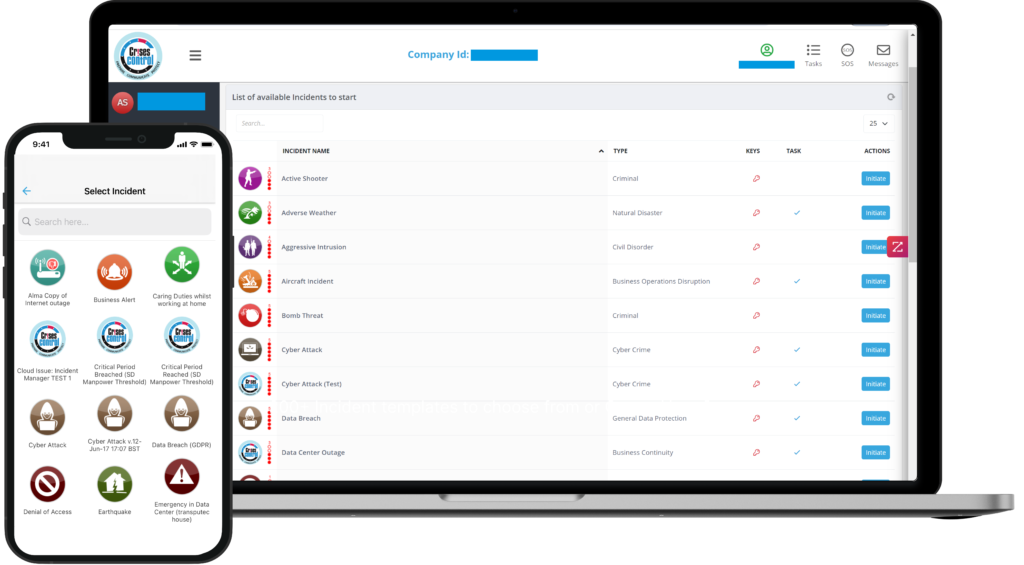
Interested in our Incident Management Software?
Flexible Incident Management Software to keep you connected and in control.
What Effective Major Disruption Management Looks Like in Practice
The difference between a major disruption that is contained and one that becomes a crisis is almost always in the first thirty minutes. Organisations that contain disruptions quickly share a set of operational characteristics that have nothing to do with their planning documents and everything to do with their execution tools.
Southwest Airlines’ December 2022 collapse cost an estimated 800 million dollars and resulted in a 140 million dollar regulatory fine (NPR 2023). The National Transportation Safety Board identified coordination and communication failures as central to the scale of the disruption.
Effective major disruption management starts before the incident is declared, with pre-configured response workflows: defined escalation thresholds, pre-assigned team roles, pre-built communication trees, and pre-loaded task checklists for each disruption type. When the incident occurs, the response plan activates automatically rather than being assembled under pressure.
During the incident, every team works from the same operational picture. Updates flow in one direction: into the platform, and out to all stakeholders simultaneously. No one team has a newer version of events than another. Task completion is tracked in real time, not chased through phone calls. Escalation happens automatically when tasks are not completed within defined windows.
For aviation teams, this means that a ground emergency, a security alert, or a runway incursion can trigger the right response chain within seconds, not minutes. For transport teams, a multi-vehicle collision involving hazardous materials, a warehouse fire, or a cyberattack on fleet management systems can activate the full response plan without waiting for a manual cascade through radio and phone.
The organisations that contain major disruptions fastest are not the ones with the best plans. They are the ones with the fastest, most coordinated execution.
After the incident, the response is documented automatically. Every alert, every acknowledgement, every task update, and every communication carries a timestamp. Post-incident reporting is generated from the record rather than reconstructed from memory. Regulators receive a complete, consistent account.
The Execution Gap That Planning Tools Cannot Close
Business continuity planning tools document what should happen during a major disruption. They are essential. But documentation is not execution. A plan that sits in a shared drive is not accessible in the first thirty seconds of a major incident. A contact list that lives in a spreadsheet does not confirm receipt. A checklist in a PDF does not track completion or escalate when items are missed.
General communication tools fill some of the gap. Teams move to group chats and mass emails. But these tools were built for everyday conversation, not crisis coordination. They have no escalation logic, no task structure, no confirmation workflows, and no audit trail that meets regulatory standards.
The gap is execution.
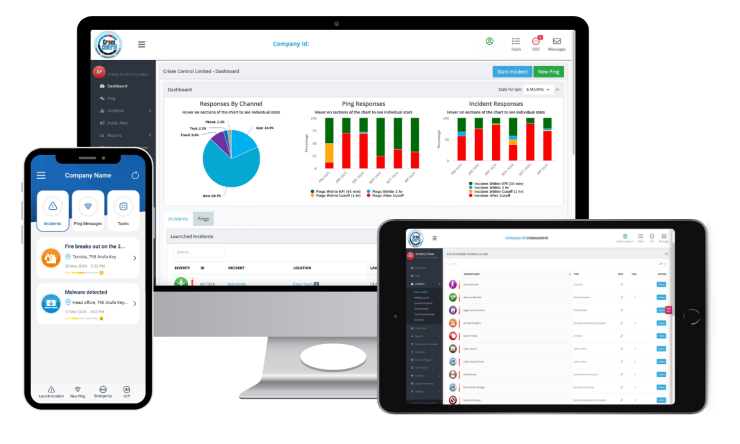
Effective major disruption management requires more than planning or communication alone. Organisations need a platform that combines alerts, task management, escalation, operational visibility and reporting into a single coordinated response. Crises Control is designed to provide that execution layer.
How Crises Control Handles Major Aviation and Transport Disruptions
Crises Control is designed to help aviation and transport organisations coordinate major operational disruptions from the moment an incident is declared through to full recovery. Rather than relying on disconnected communication channels and manual processes, the platform brings alerts, task management, escalation, operational visibility and reporting together in a single response workflow.
When a major disruption occurs, response teams can be activated simultaneously across multiple communication channels, ensuring the right people receive the right information without delay. Two-way acknowledgement tracking provides immediate visibility into who has responded, while automated escalation helps maintain momentum if critical actions are not acknowledged or completed within defined timeframes.
As the incident develops, teams work from a shared operational picture. Tasks are assigned, tracked and updated in real time, allowing incident commanders to monitor progress, coordinate multiple functions and make informed decisions based on live operational data rather than fragmented updates.
Every alert, acknowledgement, decision and task is recorded automatically throughout the response. This creates a complete audit trail and enables structured post-incident reporting without relying on manual reconstruction, helping organisations demonstrate operational accountability and meet regulatory reporting requirements.
Whether responding to an aircraft emergency, a cyberattack, a major weather event, a fleet incident or a supply chain disruption, Crises Control provides the execution layer that helps organisations maintain coordination when operational complexity is at its highest.
Could Your Organisation Manage a Major Disruption Today?
Before the next disruption occurs, ask five simple questions.
- Does the organisation have a defined, objective threshold for declaring a major disruption, one that does not require consensus under pressure?
- Can the response plan be activated within sixty seconds, across all relevant teams, without manual relay?
- Does every team in the response see the same real-time operational picture, updated automatically as the situation changes?
- Is every action, task, and communication during a major disruption recorded automatically with a timestamp?
- Does the post-incident report generate from the live record, or does it require reconstruction from memory?
If the answer to any of these is uncertain, book a Crises Control demo to see how the platform closes the gaps that matter most when a major disruption hits.
FAQs
1. What qualifies as a major operational disruption in aviation and transport?
Managing major operational disruptions in aviation and transport refers to events that exceed the capacity of normal operational response: situations where multiple teams must coordinate simultaneously, where regulatory reporting is triggered, and where the risk of cascading failure is significant. In aviation, this includes aircraft emergencies, airport closures, terror threats, and large-scale system failures. In transport, it includes hazardous materials incidents, fleet-wide cyberattacks, port shutdowns, and large-scale supply chain failures.
2. How is managing major disruptions different from managing everyday incidents?
Everyday incidents can typically be managed within a single team or function, using existing communication channels and normal escalation procedures. Major disruptions require cross-functional coordination across multiple teams simultaneously, automated escalation when normal channels fail, and real-time documentation for regulatory compliance. The tools that work for everyday incidents, group chats, email chains, phone trees, cannot scale to major disruption requirements.
3. What is the biggest cause of major disruption failures in aviation and transport?
The most consistent failure mode is coordination rather than the initial trigger. Major disruptions escalate when response teams cannot share a common operational picture, when alerts go unconfirmed, and when escalation relies on manual decisions under pressure. The Southwest Airlines December 2022 collapse is a well-documented example: the scheduling technology failed, but the inability to coordinate recovery at scale turned a manageable disruption into a systemic crisis.
4. What regulations apply to major incident response in aviation?
A well-designed incident response platform handles the full operational spectrum: major emergencies such as aircraft incidents or terminal evacuations, medium events such as passenger medical emergencies or IT outages affecting flight scheduling, and routine activities such as fire drills and safety inspections. Using the same platform for drills as for live incidents means teams are already familiar with the system when a major event occurs.
5. How quickly should a major operational disruption response be activated?
The best platforms alert all designated teams within seconds of an incident being declared, across SMS, voice, push notification, email, and app simultaneously. The key operational advantage is that simultaneous multi-channel notification removes the sequential delay of manual phone cascades and radio relay chains. In incidents where response time is measured in minutes, that difference is significant.