
Incident Management Software is a digital platform that structures how organisations detect, respond to, and document operational events. A defensible incident record is the output of that process: a complete, consistent, and auditable account of what happened during an event that can withstand scrutiny from regulators, auditors, or legal review. Building that record reliably requires more than good intentions. It requires the right systems, designed to capture the right information from the moment an incident begins.
Consider an insurance company that experiences a serious cyber attack affecting several of its operating systems. The response team acts quickly. They isolate the affected systems, notify the relevant internal stakeholders, and begin recovery procedures. Two weeks later, the regulatory authority asks for the organisation’s incident record: who was notified, when, through which channels, what decisions were made, who authorised the escalation, and how long the recovery took.
The response team assembles the best record they can from email threads, calendar entries, notes taken during the incident, and memory. The record is broadly accurate, but several timestamps are approximate. The name of the individual who authorised a key decision appears in some documents as a role title and in others as a personal name. The escalation timeline has a forty-minute gap that no one can fully account for.
The regulator does not conclude that the organisation responded badly. It concludes that the organisation cannot prove how it responded. That is a significantly worse position to be in.
What Makes an Incident Record Defensible
A defensible incident record has four characteristics: completeness, consistency, contemporaneity, and attributability. Each of these is difficult to achieve through informal means and becomes reliable only when the record is generated automatically by the system used to manage the incident.
Completeness means that every significant action taken during the incident is recorded. Not just the notifications sent, but the decisions made, the escalations triggered, the tasks assigned and their completion status, the status updates posted, and the formal close of the incident. A record that captures notification but not response, or response but not decision, is incomplete and therefore not fully defensible.
Consistency means that the record tells a single coherent story, with timestamps that agree across all elements. If the notification log shows an alert sent at 14:32 and the incident report shows it at 14:45, the inconsistency invites the question of which record is correct, and raises the possibility that neither is entirely reliable.
A defensible incident record is not the most detailed record possible. It is the most accurate record possible, generated from a single reliable source rather than assembled from multiple imperfect ones.
Contemporaneity means the record was created at the time of the event, not reconstructed afterwards. Reconstructed records are inherently less reliable because they depend on memory, which degrades rapidly under the cognitive pressure of a crisis. Courts, regulators, and auditors all treat contemporaneous records as significantly more credible than retrospective accounts.
Attributability means every action in the record is linked to a specific individual or role. A record that shows “notification sent” is useful. A record that shows “notification sent by Head of Business Continuity at 14:32 to Emergency Response Team via SMS and push notification, with 87% acknowledgement rate within 15 minutes” is defensible.
Why Informal Processes Cannot Build Defensible Records
The fundamental problem with informal incident response processes is not that the people involved perform badly. In most organisations, the people managing incidents are experienced, motivated, and capable. The problem is that informal processes do not generate the contemporaneous, attributable, consistent records that define a defensible account.
When a crisis response is managed through phone calls, the decisions made in those calls are not recorded. When it runs through group messaging applications, the record is a thread of messages with no formal structure, no task tracking, no escalation log, and no clear indication of who held decision-making authority at each point. When updates are communicated verbally, they exist only in the memories of those who heard them.
For a financial services organisation with four thousand employees across multiple locations, the scale of the problem is significant. Running a quarterly continuity test through Mass Notification Software and collecting delivery receipts is a start. But if the underlying incident management process, the decisions, the escalations, the task assignments, the formal close, relies on informal tools, the compliance evidence from that test is limited to the notification layer. Everything else is either missing or reconstructed after the fact.
The gap between what actually happened and what can be proven to have happened is the compliance risk. Incident Reporting Software closes that gap by generating the proof automatically, at the time of the event.
The Reconstruction Problem
Reconstructing an incident record after the event is a common practice and a significant compliance risk. Reconstruction is what organisations do when they realise, after an incident has closed, that they need a formal record and the record was never generated in real time.
The reconstruction process typically involves gathering email threads, reviewing call logs, interviewing the people who were involved, and assembling a timeline that approximates what happened. This can produce a reasonable account of the main events. But it cannot produce timestamps accurate to the minute, cannot recover decisions made in verbal exchanges, and cannot resolve disagreements between participants about the sequence of events.
Auditors and regulators are familiar with reconstructed records. They can usually identify them by the rounded timestamps, the absence of intermediate steps, and the tendency for the narrative to align suspiciously neatly with the organisation’s own procedures. A reconstructed record is not necessarily dishonest. But it is not contemporaneous, and it is not as defensible as a record generated in real time by the system used to manage the incident.
The Siloed System Problem
A second common pattern is the siloed system: the organisation uses one platform for mass notifications, another for task tracking, and a third for incident reporting, and the three systems do not share data or timestamps. When the incident record is assembled, the information from each system needs to be manually reconciled, and the reconciliation is rarely perfect.
In this scenario, the Mass Notification Software shows delivery times. The task management system shows task assignment times. The incident reporting tool shows a timeline assembled from those two sources plus notes. If a regulator or auditor examines all three, they will find small discrepancies in timestamps, different terminology for the same individuals or roles, and gaps where information from one system was not captured in another.
Each individual discrepancy may be trivial. Collectively, they create the impression of an organisation whose incident records are assembled rather than generated, which is a materially weaker compliance position.
How Incident Management Software Builds Defensible Records by Design
Most competitors either notify people or document plans. Crises Control executes the response. Built for real incidents, not demos.
Defensible records are not built after the event. They are generated during it. Crises Control is designed so that the incident record is a natural output of managing the incident within the platform, not a separate task performed after the event closes.
When an incident is activated in Crises Control, the audit trail begins immediately. Every notification sent is logged with the precise time, the channel used, the recipient group, and the sender identity. Every response received is logged with the respondent identity and the time of receipt. Every task assigned records the assignee, the instructions, the assignment time, and the completion status.
For a financial services firm managing a cyber attack, this means the decision to escalate to the executive team, taken at a specific time by a named individual, is recorded in the platform at the moment it happens. The notification to the Emergency Response Team, sent three minutes later, is logged with delivery confirmations. The tasks assigned to the IT recovery team are tracked to completion. The formal close of the incident is timestamped.
The result is a record that is complete, consistent, contemporaneous, and attributable. It was not assembled from multiple sources. It was not reconstructed from memory. It was generated automatically by the system used to manage the incident.
For organisations managing incidents across multiple sites and required to prove their response capability to auditors, Crises Control supports post-incident reporting that draws directly from the platform’s audit trail. The report and the log share the same timestamps, the same participant data, and the same event sequence. There is no reconciliation required and no risk of discrepancy between the two records.
For organisations with compliance obligations under DORA, FCA operational resilience rules, or ISO 22301, the platform’s native audit and reporting capabilities align with the evidence requirements those frameworks specify. For organisations that operate under GDPR and need to ensure employee data is handled correctly during crisis communications, Crises Control operates within GDPR-compliant workflows.
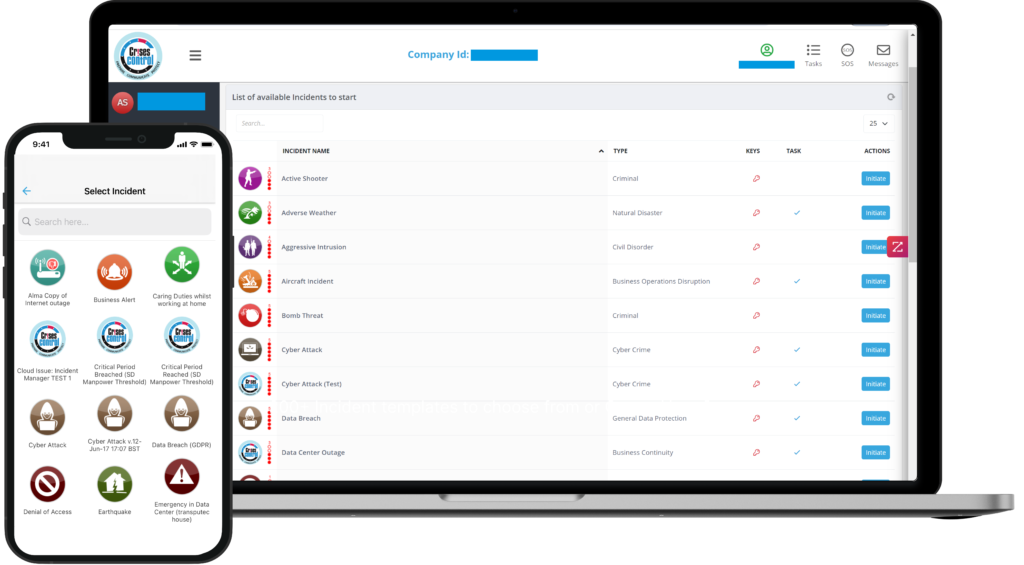
Interested in our Incident Management Software?
Flexible Incident Management Software to keep you connected and in control.
A Framework for Evaluating Your Current Records
For organisations reviewing their current incident records against a defensibility standard, four questions are worth answering honestly.
First: are your incident records generated in real time or assembled after the event? If the answer is the latter, the records are reconstructed rather than contemporaneous, and their reliability is limited by the accuracy of memory and the completeness of whatever notes were kept during the incident.
Second: do your notification logs and your incident reports come from the same system? If the answer is no, there will be discrepancies between them, and those discrepancies are a compliance vulnerability.
Third: does every action in your incident record carry a precise timestamp and a named individual or role? If actions are logged by system function rather than by individual user, or if timestamps are rounded to the nearest fifteen minutes, the attributability of the record is weaker than it should be.
Fourth: have you tested your records under audit conditions? Running a simulated regulatory review of your most recent significant incident, examining the record as an auditor would examine it, is the most reliable way to identify the gaps before a real regulator does. Crises Control’s incident management features are designed to produce records that pass exactly this kind of examination.
Conclusion
Building defensible incident records is not a documentation task performed after an incident closes. It is a systems design decision made before the incident begins. Incident Management Software that generates complete, consistent, contemporaneous, and attributable records automatically, as a byproduct of managing the incident, is the only reliable way to build a compliance position that holds under scrutiny.
For financial services and insurance organisations operating under regulatory frameworks that demand evidence-based demonstrations of operational resilience, that system design decision is one of the most consequential choices a Head of Business Continuity, a CISO, or a COO will make. The cost of getting it wrong is not just a regulatory finding. It is the inability to prove that a capable organisation responded well to a real event.
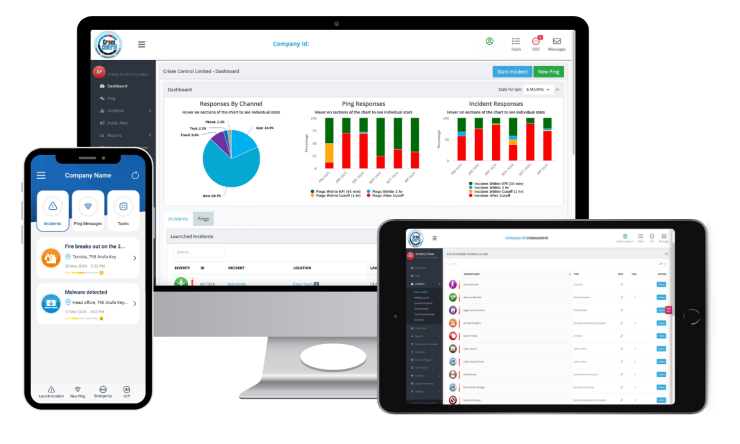
To see how defensible incident records are built in practice, get a free personalised demo.
FAQs
1. What is Incident Management Software and how does it help build defensible records?
Incident Management Software is a platform that structures the full lifecycle of an incident, from detection through to resolution and review. It helps build defensible records by generating audit trails automatically in real time, ensuring every action is logged with a timestamp and user attribution the moment it occurs. Unlike records assembled after the event from emails and notes, records generated by a purpose-built platform are contemporaneous, consistent, and attributable.
2. What makes an incident record defensible under regulatory review?
A defensible incident record has four characteristics: it is complete, capturing every significant action from activation to close; consistent, with timestamps that agree across all elements; contemporaneous, generated at the time of the event rather than reconstructed afterwards; and attributable, linking every action to a specific individual or role. Incident Reporting Software that generates records automatically during the incident delivers all four characteristics by design.
3. How does Crisis Management Software reduce the risk of incomplete incident records?
Crisis Management Software reduces the risk of incomplete records by managing the entire response within a single platform. When notifications, task assignments, escalations, and status updates all flow through one system, the audit trail captures them all automatically. There are no gaps from actions taken in informal channels, no discrepancies between records from different systems, and no reliance on participants to document their own actions under pressure.
4. Why is manual reconstruction of incident records a compliance risk?
Manual reconstruction is a compliance risk because it produces records that are retrospective rather than contemporaneous. Regulators and auditors treat contemporaneous records as significantly more credible, because they reflect what was actually recorded at the time rather than what individuals recall or choose to report. Reconstructed records often have rounded timestamps, missing intermediate steps, and narrative coherence that can raise questions about their accuracy. Mass Notification Software logs are useful as one component, but they need to be complemented by a full incident management record generated in real time.
5. How do you create an incident audit trail for compliance as Incident Management Software for Finance?
For financial services organisations, creating a defensible incident audit trail for compliance requires a platform that logs every incident action automatically, generates structured reports directly from that log, and supports the specific regulatory requirements of the sector, including FCA operational resilience rules, DORA obligations, and ISO 22301 alignment. The best Incident Management Software for Finance does all of this without requiring additional manual documentation, ensuring the compliance record is built into the incident management process rather than treated as a separate task.