
The emergency exercise finishes exactly as planned.
The evacuation alarm sounds, personnel leave the affected area, supervisors report to their muster points and the incident controller announces that everyone has been accounted for. After a short debrief, the exercise is declared a success.
On paper, everything worked.
Yet as people return to work, a different set of questions begins to emerge. Did every contractor actually receive the evacuation alert? Could the incident team confirm who acknowledged the instruction? Was it clear who owned each critical decision? If the situation had escalated, would the right people have been notified quickly enough? Could anyone accurately reconstruct what happened during the exercise?
These questions often reveal more about an organisation’s preparedness than the exercise itself.
Incident Management Software helps organisations activate emergency plans, coordinate response teams and maintain visibility throughout an incident. During an emergency exercise, it also helps answer a more important question: not whether the emergency plan exists, but whether it performs under realistic operational conditions.
An emergency drill should expose weaknesses in communication, accountability, escalation and decision-making before those weaknesses affect a real incident.
That is what separates a useful exercise from one that simply fulfils a requirement.
The most valuable drills are rarely the ones that run perfectly. They are the ones that uncover communication gaps, unclear responsibilities and broken processes while the consequences are still simulated. Every weakness identified during an exercise becomes an opportunity to strengthen the organisation before it faces a real emergency.
For HSE Managers, Emergency Response Managers, Business Continuity Managers and Operations Directors, a successful exercise should leave the organisation with fewer assumptions and more evidence.
What Makes An Emergency Exercise Valuable?
An emergency exercise is a controlled test of how people, processes and technology work together during an incident.
In oil and gas operations, that may involve a simulated gas release, a refinery evacuation drill, equipment failure or another operational scenario requiring several teams to respond at the same time.
While evacuation time is often measured, it is only one indicator of performance. A well-designed exercise should answer the operational questions that matter most.
- Did the right people receive the emergency notification?
- Were acknowledgements monitored and followed up?
- Were contractors and visitors included in the response?
- Did every team understand its responsibilities?
- Did escalation happen at the right time?
- Could the organisation accurately reconstruct the response afterwards?
These questions form the basis of effective oil and gas emergency drill best practices because they evaluate the quality of the response rather than simply confirming that procedures were followed.
An emergency exercise should leave the organisation with a clearer understanding of where improvements are needed, giving response teams practical evidence they can use to strengthen future incidents.
The Biggest Misconception About Emergency Drills
One assumption deserves to be challenged.
Many organisations judge an emergency exercise by one outcome: everyone reached the muster point safely.
That measures only part of the response.
A successful evacuation does not automatically mean communication was effective, responsibilities were clear or the incident was managed efficiently. It is entirely possible for an exercise to appear successful while still hiding weaknesses that would slow decision-making during a real emergency.
The purpose of an oil and gas incident response exercise is not to demonstrate perfection. It is to create enough operational pressure to expose where communication breaks down, where responsibilities overlap and where important information becomes difficult to manage.
If an exercise finishes without identifying opportunities for improvement, it may not have challenged the organisation enough.
The best emergency drills do not prove that the plan works.
They reveal where it needs to work better.
Problem 1: Some People Never Receive The Alert
Imagine the exercise begins with a simulated gas release.
The evacuation alert is issued immediately. Most employees receive it within seconds and begin moving towards their muster points.
Two maintenance contractors never see the notification.
Nobody notices until they arrive several minutes later after hearing colleagues discussing the exercise.
On paper, the drill is still recorded as a success. In reality, it has exposed one of the biggest risks in emergency communication.
An alert only protects people if it reaches every person who needs to act.
Oil and gas facilities rarely consist of permanent employees alone. Contractors, visitors, inspectors and specialist maintenance teams may all be working across different locations, often using different devices or communication methods. If even one group falls outside the notification process, the exercise has highlighted a genuine operational weakness.
This is why Emergency Notification Software is designed to support multiple communication channels, including SMS, voice calls, mobile push notifications and email, while allowing incident teams to confirm who received the alert.
The objective is not simply to send a notification quickly.
It is to know that the right people received it.
Problem 2: Nobody Can Confirm Who Acknowledged The Alert
Receiving an emergency notification is only the first step.
The real question is whether people acted on it.
During the exercise, supervisors confirm that their teams have evacuated safely. Later, an engineer explains that he only saw the notification twenty minutes after it was sent because his mobile device had been left inside a locker.
The organisation is left asking an important question.
Would anyone have realised this during a real emergency?
Delivery reports cannot answer that question.
Acknowledgement tracking provides a much clearer picture by showing who has confirmed the instruction, who has not responded and who may require further follow-up. That visibility becomes increasingly important when personnel are spread across multiple operational areas or remote facilities.
Employee Safety Software and Emergency Notification Software help organisations build accountability into the response instead of relying solely on manual phone calls or verbal confirmation.
A well-designed exercise should never stop at asking: “Was the message delivered?”
It should also ask: “Who confirmed they understood it, and who did not?”
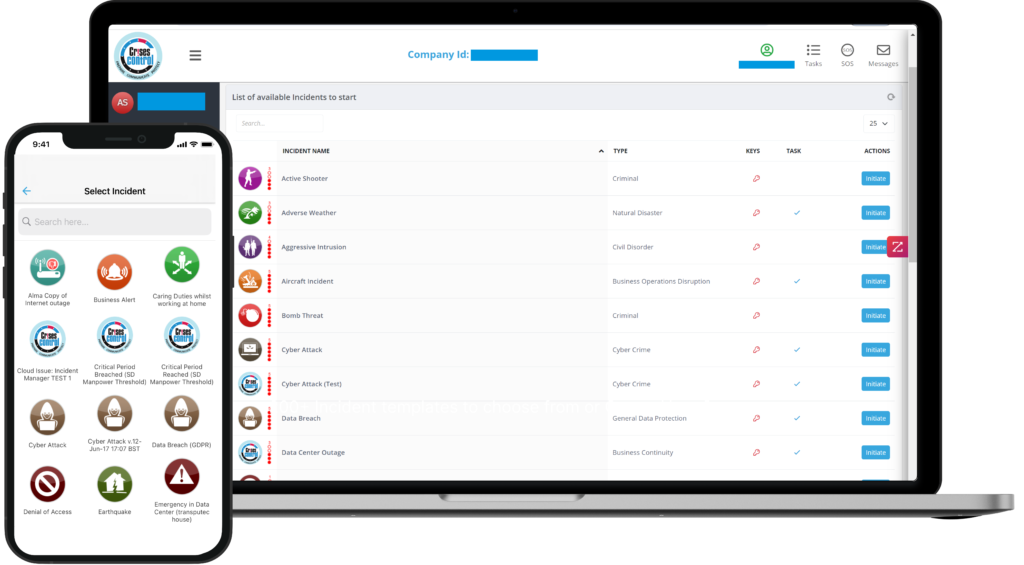
Interested in our Incident Management Software?
Flexible Incident Management Software to keep you connected and in control.
Problem 3: Contractors Fall Outside The Process
Many organisations believe they are testing their emergency procedures.
In reality, they are only testing their employees.
Contractors often work for different companies, report to different supervisors and move between operational areas throughout the day. During an incident, they may be just as exposed to risk as permanent staff, yet they are frequently managed through separate communication processes.
That creates a dangerous assumption.
If contractors are excluded from the exercise, the organisation may leave believing its emergency response worked when, in reality, it only worked for part of the workforce.
A realistic refinery evacuation drill should include everyone who could be affected by the incident, including contractors, temporary workers, visitors and specialist maintenance teams.
The value of an emergency exercise is not measured by how many people successfully evacuate.
It is measured by whether every person who needed information actually received it.
Problem 4: Responsibilities Overlap And Decisions Slow Down
Halfway through the exercise, the scenario changes.
The simulated gas release is spreading beyond the original area and the Exercise Controller asks whether production should be reduced.
Operations believe Engineering should make the recommendation.
Engineering assumes Operations owns the decision.
HSE is waiting for confirmation before advising personnel.
Leadership expects an immediate update.
Nobody is avoiding responsibility.
Everyone believes someone else owns the next decision.
This is one of the most valuable weaknesses an emergency exercise can expose because it rarely appears in written procedures. On paper, responsibilities often seem clear. Under operational pressure, they become much less certain.
The exercise should confirm that every critical decision has a clearly identified owner before a real incident demands it.
Ask questions such as:
- Who declares the operational incident?
- Who authorises production changes?
- Who informs contractors and visitors?
- Who updates senior leadership?
- Who decides when escalation is required?
If different teams give different answers, the exercise has achieved exactly what it should. It has identified uncertainty while there is still time to remove it.
Problem 5: Escalation Depends On Manual Phone Calls
Every emergency plan includes escalation procedures.
The real test is whether those procedures still work when several things happen at once.
During the exercise, a contractor cannot be accounted for and additional support is required.
The Incident Controller begins making phone calls.
The first person does not answer.
The second is already dealing with another issue.
A third call finally reaches the right person.
The delay is only a few minutes, but the exercise has revealed another operational weakness.
Manual escalation becomes increasingly difficult as incidents become more complex. More people become involved, more decisions need to be made and it becomes harder to remember who has already been contacted and who still needs to be informed.
This is where Incident Management Software helps strengthen emergency exercises. Predefined escalation workflows allow organisations to notify the next responsible person automatically if an acknowledgement is not received or a task remains incomplete.
The objective is not to remove people from the response.
It is to remove unnecessary delays from the coordination process.
Problem 6: Nobody Can Reconstruct What Happened Afterwards
The exercise finishes.
The debrief begins.
Then the most valuable questions are asked.
- When was the incident declared?
- How long did it take to activate the response team?
- When was Engineering first notified?
- Who authorised the simulated shutdown?
- When was the missing contractor identified?
Nobody can answer every question with confidence.
People remember events differently. Notes are incomplete. Some decisions were made during phone calls while others happened in face-to-face conversations.
Without an accurate incident record, the organisation loses one of the biggest benefits of running the exercise in the first place.
A post-exercise review should do more than describe what happened. It should explain why decisions were made, where communication slowed down and which parts of the response need to improve before the next incident.
A structured incident timeline allows organisations to review:
- When key decisions were made
- Who completed each task
- Where communication slowed
- Which escalations worked as planned
- Which actions created unnecessary delays
The most valuable outcome of an emergency exercise is not the exercise itself.
It is the evidence it provides to make the next response stronger.
Manual Exercises Versus Digitally Supported Exercises
Emergency exercises have always depended on experienced people, clear procedures and confident leadership.
Technology should strengthen those foundations, not replace them.
The biggest difference between a manual exercise and a digitally supported one is not how the response begins. It is how information moves as the situation becomes more complex.
Manual Exercise | Digitally Supported Exercise |
Phone calls used to activate teams | Automated role-based notifications |
Paper attendance lists | Digital acknowledgement tracking |
Manual escalation | Predefined escalation workflows |
Separate notes held by different teams | Shared operational picture |
Debrief relies on memory | Complete incident timeline and activity record |
Neither approach guarantees a successful exercise.
An experienced incident team can still manage an emergency using manual processes, while digital tools cannot compensate for poor planning or unclear procedures.
The advantage of digital support is that it reduces the amount of information that depends on individual memory, handwritten notes or separate conversations. It gives everyone involved a clearer understanding of what has happened, what still needs attention and who owns the next action.
The objective is not to digitise an emergency exercise.
It is to make weaknesses easier to identify while there is still time to improve them.
How Incident Management Software Helps Strengthen Emergency Exercises
The best emergency exercises test far more than whether people know where to go.
They test whether the organisation can communicate clearly, coordinate multiple teams, manage accountability and maintain operational awareness while the situation continues to change.
This is where Incident Management Software supports the exercise.
Instead of acting as another communication tool, it provides a structured framework for managing the response. Emergency plans can be activated consistently, response teams notified according to predefined roles and responsibilities assigned without relying on a series of manual phone calls or emails.
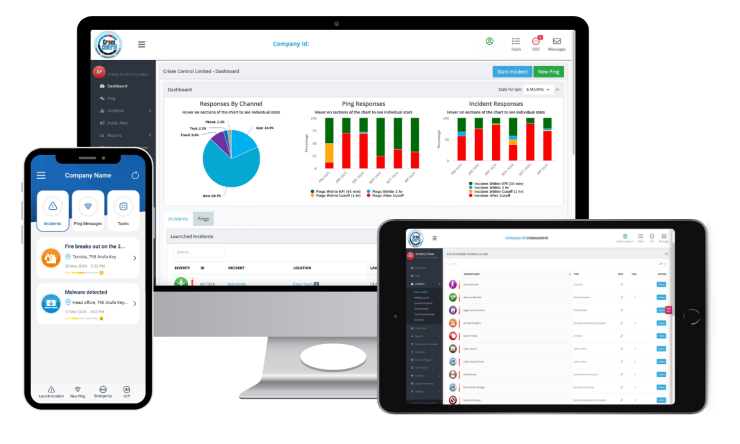
During the exercise, response teams can monitor acknowledgements, track outstanding actions, review escalation progress and maintain a shared operational picture as events develop. Afterwards, the complete incident timeline provides valuable evidence for the debrief, making it easier to understand what happened, why decisions were made and where improvements are needed.
Solutions such as Crises Control support this approach by helping organisations digitalise emergency plans while continuing to follow their existing operational procedures. Combined with Emergency Notification Software and Employee Safety Software, they provide greater visibility, stronger accountability and more consistent coordination throughout the exercise.
Technology does not make good decisions.
People do.
Its role is to make sure those people have the information they need to make better ones.
The Most Valuable Emergency Drill Is The One That Reveals Weaknesses
It is easy to finish an emergency exercise feeling reassured because everyone reached the muster point and the scenario unfolded exactly as planned.
That feeling can be misleading.
A successful drill is not one where nothing goes wrong. It is one that uncovers problems while the consequences are still simulated.
- Perhaps a contractor never received the alert.
- Perhaps two managers believed the other owned a critical decision.
- Perhaps escalation depended on a series of unanswered phone calls.
- Perhaps nobody could accurately reconstruct the response during the debrief.
These findings should not be viewed as failures.
They are evidence that the exercise has achieved its purpose.
Every weakness identified during a drill is an opportunity to improve the emergency plan before a real incident tests it under genuine operational pressure.
For organisations reviewing their oil and gas emergency drill best practices, the most valuable question is not: “Did the exercise go well?”
It is: “What did the exercise teach us that we did not know before?”
That shift in thinking transforms emergency exercises from compliance activities into one of the most effective ways to strengthen operational resilience.
If your organisation is reviewing how it plans, coordinates and evaluates emergency exercises, Crises Control can help support structured incident activation, reliable communication, acknowledgement tracking, task management and detailed post-exercise reporting.
FAQs
1. What Should An Oil And Gas Emergency Drill Test?
An effective oil and gas emergency drill should test more than evacuation procedures. It should assess whether emergency notifications reach the right people, acknowledgements can be confirmed, contractors and visitors are included, responsibilities are clearly assigned, escalation follows the emergency plan and the organisation can accurately reconstruct the response afterwards. The objective is to identify weaknesses before a real incident exposes them.
2. How Does Incident Management Software Improve Emergency Exercises?
Incident Management Software helps organisations activate emergency plans, notify response teams, assign responsibilities, monitor progress and maintain a shared operational picture throughout an exercise. It also creates a complete incident timeline, making it easier to review decisions, identify communication gaps and improve future emergency responses.
3. Why Should Contractors Be Included In A Refinery Evacuation Drill?
Contractors, visitors and temporary workers are often spread across different operational areas and may not follow the same reporting structure as permanent employees. A refinery evacuation drill should include everyone who could be affected by an incident so communication, accountability and evacuation procedures are tested across the entire workforce rather than only direct employees.
4. How Can Emergency Notification Software Support Emergency Drills?
Emergency Notification Software helps organisations send emergency alerts through multiple communication channels, including SMS, voice calls, email and mobile push notifications. It also provides acknowledgement tracking, allowing incident teams to see who has received and responded to instructions, making it easier to identify communication gaps and improve accountability during emergency exercises.
5. What Is The Biggest Mistake Organisations Make During Emergency Exercises?
One of the biggest mistakes organisations make is judging an emergency exercise solely by whether everyone evacuated successfully. A well-designed exercise should expose weaknesses in communication, accountability, task ownership, escalation and coordination. If an exercise finishes without identifying areas for improvement, it may not have challenged the organisation under realistic operational conditions.