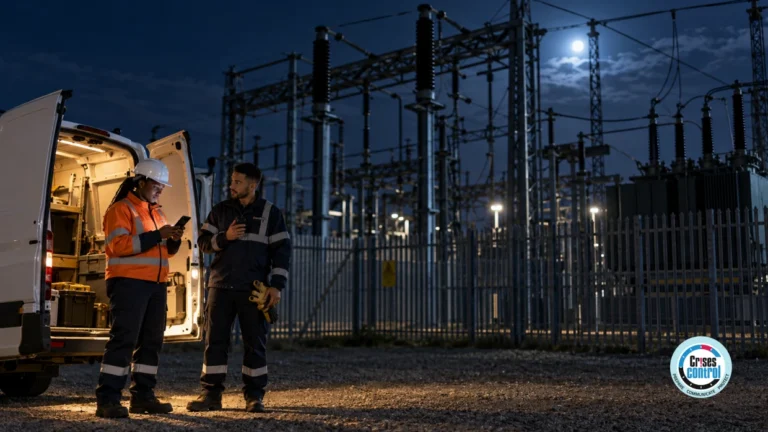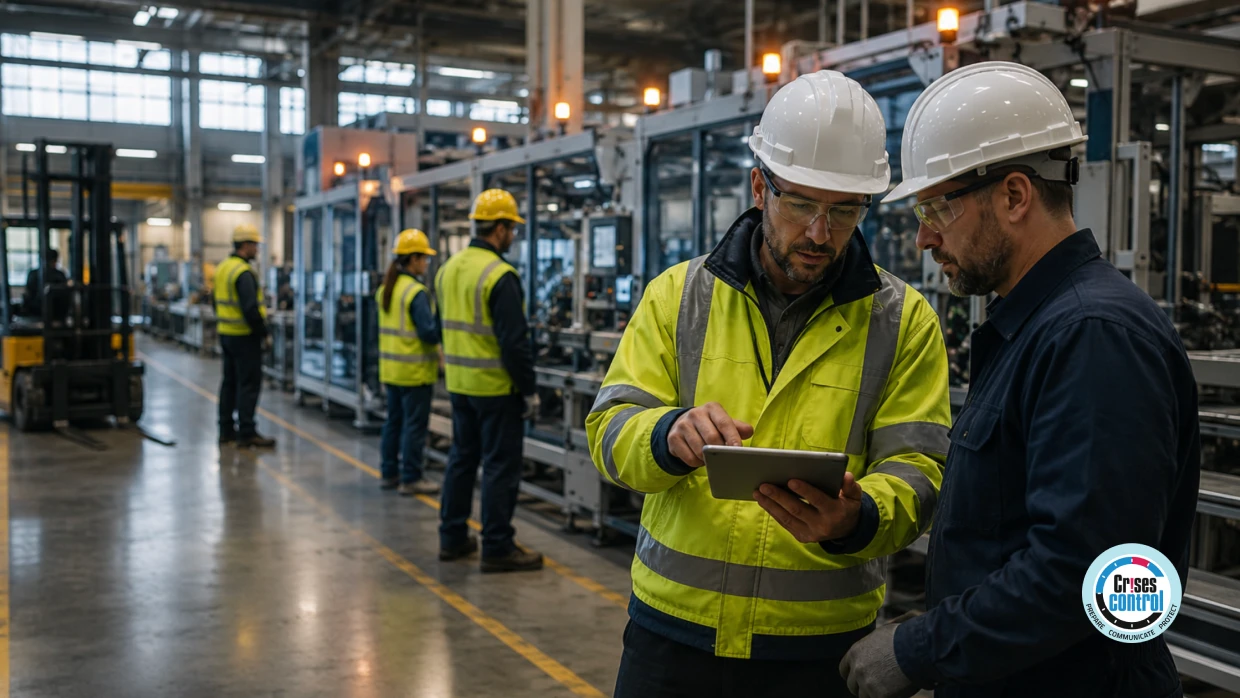
A production line stops unexpectedly.
Within seconds, operators shut down surrounding equipment to prevent further damage. Maintenance engineers begin diagnosing the fault while supervisors assess how long production will be affected. Warehouse teams ask whether customer orders can still be fulfilled. Procurement contacts suppliers to source replacement parts, while customer service prepares for conversations with clients whose deliveries may now be delayed.
The equipment failure may have occurred on a single production line, but the operational impact quickly extends across the entire business.
This is where many manufacturers discover that the equipment itself is only part of the problem.
The greater challenge is coordinating people, priorities and decisions while production is under pressure. Operations, maintenance, health and safety, logistics, procurement, leadership and external suppliers all require accurate information to perform their roles. If those teams begin working from different versions of the same incident, production downtime can increase long before the faulty equipment has been repaired.
This is where Manufacturing Incident Management Software delivers value beyond maintenance management systems or production reporting. Rather than focusing solely on repairing equipment, it provides a structured way to coordinate the wider operational response. Incident management, communication, task management and Business Continuity Software capabilities work together to help every department understand what has happened, what actions are underway and what needs to happen next.
For manufacturers operating complex production environments, downtime is rarely measured only in lost output. It can affect customer commitments, supply chains, regulatory obligations, workforce scheduling and commercial performance. The speed of the repair remains important, but the quality of the operational response often determines whether disruption lasts one hour or an entire shift.
What Is Manufacturing Incident Management Software?
Manufacturing Incident Management Software is a platform that helps manufacturers coordinate operational incidents that disrupt production. It brings together communication, incident management, task coordination and operational visibility so every department can respond using the same verified information.
Whether the incident involves equipment failure, fire, a hazardous material release, a cyber attack or a utility outage, the goal remains the same: protect people, minimise disruption and restore production safely and efficiently.
Unlike traditional maintenance processes, which focus on diagnosing and repairing equipment, Manufacturing Incident Management Software provides a broader operational view. It helps leadership coordinate response activities, assign responsibilities, maintain situational awareness and support informed decision-making throughout the incident.
Effective incident management is not just about fixing the technical fault.
It is about ensuring every department works together to reduce production downtime management challenges, maintain business continuity and return operations to normal as quickly and safely as possible.
Why Equipment Failures Rarely Stay In The Maintenance Department
One of the biggest misconceptions in manufacturing is that equipment failures are maintenance problems.
In reality, major production failures quickly become operational incidents that affect the entire organisation.
Operations teams need to understand how production schedules will change. Maintenance engineers require resources, technical information and specialist support to restore equipment. Warehouse teams assess available inventory, procurement begins sourcing replacement components and logistics evaluates how deliveries will be affected. Senior leadership needs reliable information to make commercial decisions, while customer-facing teams prepare to communicate delays to clients.
The machine may have stopped.
The business has not.
Every minute of uncertainty increases operational pressure. Decisions multiply long before repairs are complete, and those decisions depend on shared, verified information rather than isolated updates from individual departments.
This is why manufacturers with strong manufacturing operational resilience treat major equipment failures as organisation-wide incidents rather than maintenance events. The organisations that recover fastest are often those that coordinate their response as effectively as they repair the equipment.
Why Production Downtime Is More Than A Maintenance Problem
When a production line stops, the immediate priority is naturally to restore the equipment.
However, the longer an incident continues, the less it becomes a maintenance issue and the more it becomes a coordination challenge.
One of the biggest misconceptions in manufacturing is that restoring production is simply a matter of repairing the failed equipment.
While repairing the machine is essential, it is rarely the activity that determines how quickly normal operations resume.
Every department immediately faces different priorities.
- Operations needs to know whether production can be redirected to another line.
- Maintenance requires specialist engineers, spare parts and access to technical documentation.
- Health and Safety must confirm that repairs can be carried out safely before work begins.
- Warehouse teams assess available inventory to determine whether existing stock can meet customer demand.
- Procurement begins sourcing replacement components and establishing supplier lead times.
- Customer service prepares to update clients if delivery commitments are likely to be affected.
- Senior leadership evaluates the wider commercial and operational impact.
Each decision depends on information from another team.
When updates are shared through phone calls, emails, messaging applications and verbal conversations, delays quickly begin to accumulate. People spend valuable time searching for information, confirming decisions and determining who is responsible for the next action instead of progressing the recovery.
The equipment fault may remain unchanged, but the operational disruption continues to grow.
This is why production downtime management should be viewed as an organisational challenge rather than a technical one. The speed of recovery depends not only on repairing the equipment, but also on how effectively the wider business coordinates its response.
The organisations that recover most effectively are not necessarily those with the fastest maintenance teams.
They are the organisations that coordinate every part of the operational response alongside the technical repair.
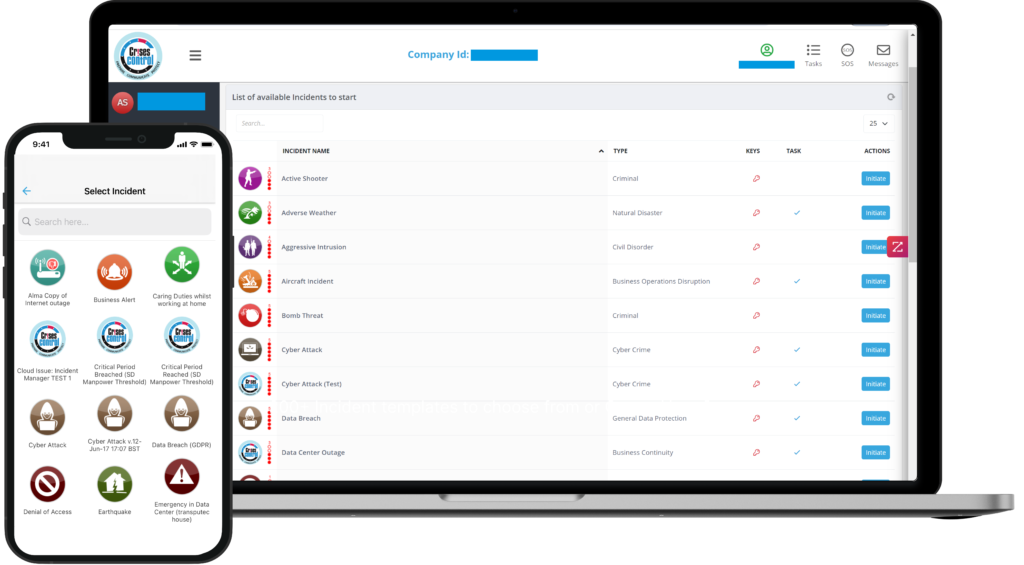
Interested in our Incident Management Software?
Flexible Incident Management Software to keep you connected and in control.
Manual Coordination Creates Hidden Downtime
Many manufacturing organisations still rely on manual processes to coordinate operational incidents.
An equipment failure often triggers dozens of phone calls, emails, radio messages and conversations across the plant. Individual departments maintain their own updates while leadership attempts to piece together the overall situation from multiple sources.
This approach can work during minor disruptions.
It becomes far more difficult when an incident involves multiple departments, external contractors, suppliers or several production lines.
Manual coordination often creates challenges such as:
- Different departments working from different information.
- Delays in assigning critical tasks.
- Limited visibility into which actions have been completed.
- Difficulty tracking decisions for later review.
- Uncertainty about who is responsible for the next action.
- Inconsistent communication with internal and external stakeholders.
Each delay may appear insignificant on its own.
Together, they can extend production downtime, increase operational costs and make recovery more difficult than the equipment failure itself.
The objective is not simply to communicate more frequently.
It is to ensure every team is working from the same operational picture, with clearly defined responsibilities and real-time visibility into how the incident is progressing.
What A Coordinated Manufacturing Response Looks Like
When an equipment failure occurs, repairing the machine is only one part of the recovery.
An effective response ensures every operational decision supports a safe, efficient and coordinated return to production.
That begins with establishing a shared operational picture.
Leadership needs to understand what has happened, which production lines are affected, whether employee safety has been compromised and what actions are already underway. At the same time, maintenance teams require the resources to diagnose the fault, operations must evaluate alternative production options and logistics may need to adjust delivery schedules.
These activities should not happen in isolation.
They should form part of one coordinated operational response where every department understands its responsibilities and can see how the wider incident is developing.
A structured response typically includes:
- Immediate incident activation.
- Clear allocation of roles and responsibilities.
- Accurate operational updates shared across departments.
- Task assignment and progress tracking.
- Ongoing assessment of production impact.
- Communication with suppliers, contractors and customers where required.
- Continuous review until normal operations resume.
This approach reduces uncertainty, limits duplicated effort and enables leadership to make informed decisions as the situation evolves.
The objective is not simply to restore production.
It is to restore production with confidence that employee safety, product quality and operational continuity have been maintained throughout the response.
How Manufacturing Incident Management Software Supports Operational Coordination
This is where Manufacturing Incident Management Software supports manufacturers beyond equipment maintenance and production monitoring.
Rather than treating communication, task management, incident reporting and Business Continuity Software processes as separate activities, an integrated platform brings them together into one structured operational response.
When a major equipment failure occurs, authorised personnel can activate an incident immediately, notify the appropriate teams according to their roles and assign response activities without relying on multiple phone calls or fragmented messaging groups.
As the response develops, leadership gains visibility into:
- Which departments have acknowledged the incident.
- What actions have been assigned.
- Which tasks have been completed.
- Outstanding operational risks.
- The wider impact on production and business continuity.
This shared operational picture enables operations, maintenance, health and safety, procurement, logistics and senior leadership to make decisions using the same verified information rather than separate departmental updates.
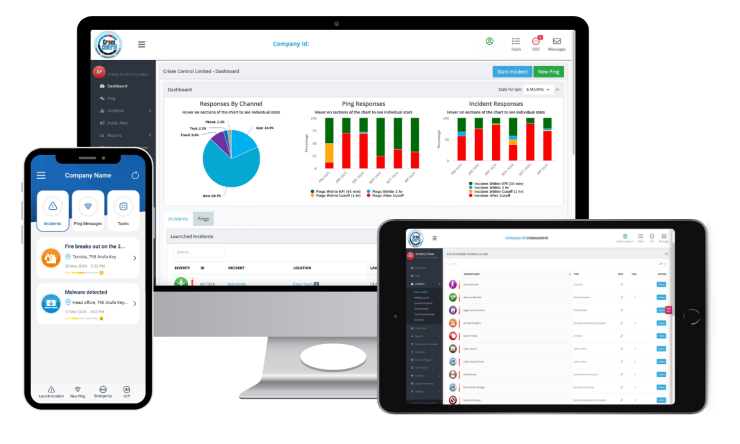
Solutions such as Crises Control support this approach by helping manufacturers digitalise incident response while working alongside existing operational procedures. Features including role-based notifications, incident activation, task management, acknowledgement tracking, operational dashboards, stakeholder communication and comprehensive incident reporting help organisations coordinate their response from the initial equipment failure through to post-incident review.
Technology does not repair machinery. It gives the people responsible for restoring operations the visibility, structure and coordination needed to recover more effectively.
Better Recovery Begins Before Equipment Fails
Every manufacturer invests in maintaining critical equipment. Preventive maintenance, inspections and asset management all help reduce the likelihood of unexpected failures. No organisation, however, can eliminate operational disruption entirely.
The question is not whether equipment will fail. It is whether the organisation can coordinate its response effectively when it does. The difference between one hour of downtime and one day of disruption is rarely the equipment itself. More often, it is how effectively operations, maintenance, health and safety, logistics and leadership work together using the same verified operational information.
Manufacturers that recover quickly do not necessarily have better machinery. They have better coordination. They establish a shared operational picture, make informed decisions faster and ensure every department understands its role throughout the response. That level of coordination reduces unnecessary downtime, protects employee safety, strengthens manufacturing operational resilience and helps maintain customer confidence during significant disruption.
If your organisation is reviewing its approach to production downtime management, ask one important question:
Would every department know exactly what to do if a critical production line stopped today?
The answer often reveals opportunities to strengthen operational resilience and business continuity long before the next incident occurs.
Solutions such as Crises Control help manufacturers move from reactive incident response to coordinated operational resilience through structured incident activation, role-based communication, operational visibility, task management, incident reporting and business continuity support.
FAQs
1. What Is Manufacturing Incident Management Software?
Manufacturing Incident Management Software is a platform that helps manufacturers coordinate operational incidents that disrupt production, including equipment failures, fires, chemical spills and utility outages. It brings together incident reporting, communication, task management and operational visibility so every department can respond using the same verified information. This improves decision-making, reduces production downtime and supports a faster return to normal operations.
2. How Can Manufacturers Reduce Production Downtime After Equipment Failure?
Reducing production downtime management requires more than repairing the failed equipment. Manufacturers should establish clear incident response procedures, assign responsibilities before an incident occurs, maintain effective communication between departments and ensure leadership has real-time visibility of the situation. Coordinated decision-making helps minimise delays, protect employee safety and restore production more efficiently.
3. Why Is Business Continuity Planning Important In Manufacturing?
Manufacturing business continuity planning helps organisations maintain critical operations during disruptions such as equipment failures, cyber attacks, severe weather or utility outages. Effective planning enables manufacturers to prioritise essential production activities, coordinate recovery efforts and reduce operational and commercial disruption while protecting employees and customer commitments.
4. How Does Incident Management Software Improve Factory Equipment Failure Response?
Incident Management Software improves factory equipment failure response by helping manufacturers activate response plans, notify the appropriate teams, assign tasks, track progress and maintain a shared operational picture throughout the incident. This structured approach reduces confusion, improves accountability and enables leadership to make informed decisions under operational pressure.
5. Why Is Operational Coordination More Important Than Equipment Repair Alone?
Repairing equipment restores production capacity, but coordinated decision-making restores business operations. During a major incident, operations, maintenance, logistics, procurement, health and safety and leadership all require accurate, shared information to perform their roles effectively. Manufacturers with strong manufacturing operational resilience understand that the speed of recovery depends on how well people, communication and operational activities are coordinated, not simply how quickly the equipment is repaired.
6. How Often Should Manufacturers Test Their Incident Response Plans?
Manufacturers should review and test their incident response plans regularly, particularly after significant operational changes, the introduction of new production lines, major maintenance projects or real operational incidents. Regular exercises help confirm that communication, responsibilities and recovery procedures remain effective under operational pressure while supporting continual improvement, stronger business continuity and greater operational resilience.
This article was drafted with AI assistance and reviewed by the Crises Control team. Featured image: AI-generated.