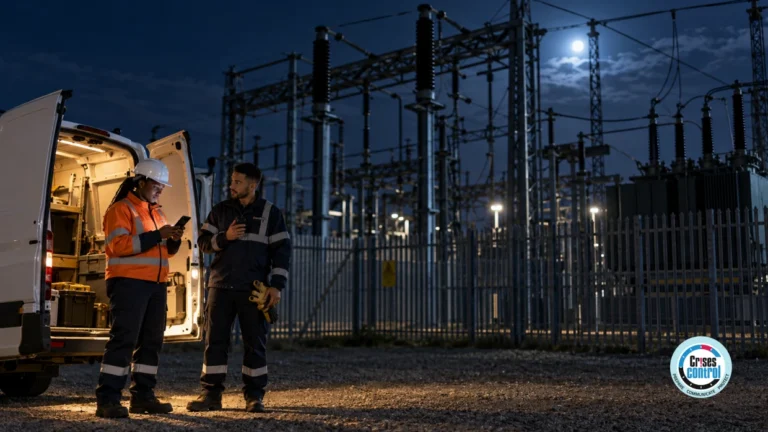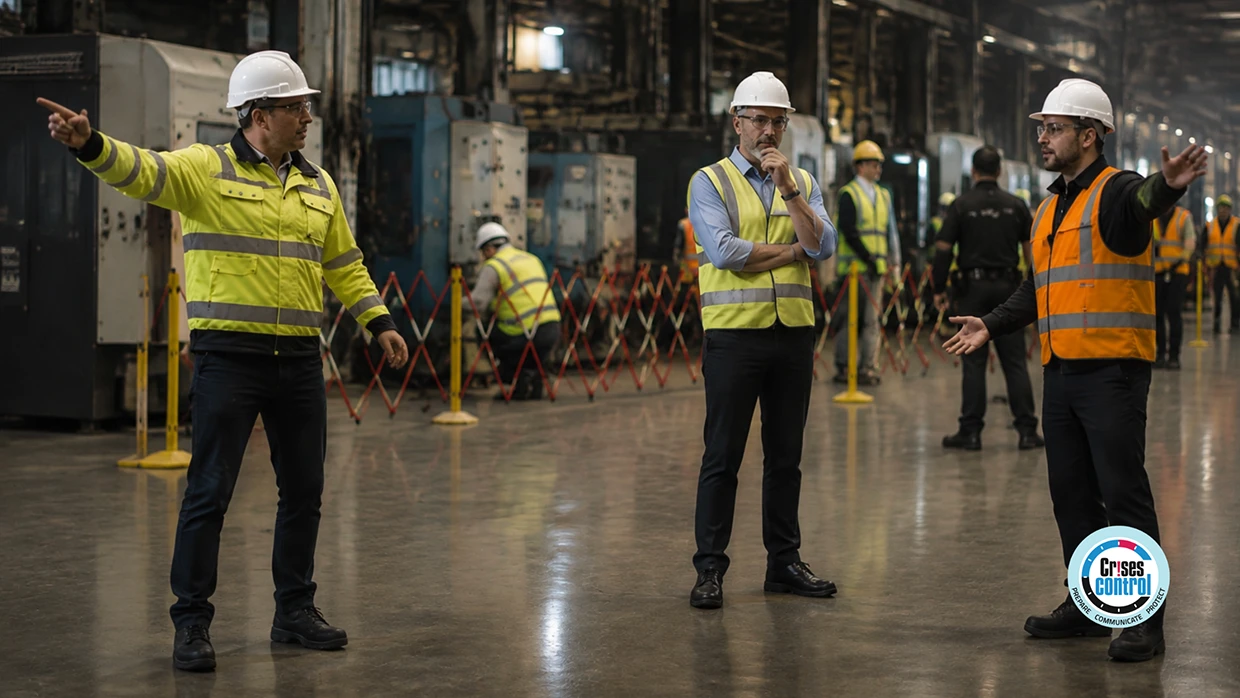
A fire alarm sounds inside a manufacturing facility.
Within moments, operators stop production, maintenance teams begin shutting down equipment and the Environmental, Health and Safety (EHS) team heads towards the affected area. Security begins restricting access while supervisors account for employees and contractors. Senior leadership wants to know whether the incident is contained, whether production can continue and whether customer deliveries are likely to be affected.
At first glance, the response appears organised because everyone is communicating.
Within minutes, though, different departments begin working from different information.
One supervisor believes the fire is confined to a single production line. Maintenance has already isolated additional equipment because they believe the risk is spreading. Security has redirected contractors to an assembly point that operations was never told about. Leadership receives conflicting updates about the extent of the disruption, making it difficult to decide whether production should restart or remain suspended.
The problem is not that people have stopped communicating. The problem is that communication has become fragmented.
This is where Emergency Notification Software delivers value beyond simply sending alerts. During a fast-moving manufacturing incident, organisations need more than the ability to notify employees. They need every team to receive accurate information, understand their responsibilities and make decisions using the same operational picture. When Manufacturing Incident Management Software, structured communication and operational visibility work together, organisations are far better placed to manage disruption safely and efficiently.
For manufacturers, communication is rarely the first thing to fail during an emergency. More often, it is the first weakness that exposes weaknesses in coordination, decision-making and operational visibility across the wider organisation.
What Is Emergency Notification Software?
Emergency Notification Software is a platform that helps organisations communicate quickly with employees, contractors and other stakeholders during operational incidents. It delivers urgent information through multiple communication channels while supporting acknowledgement tracking, role-based messaging and coordinated incident response.
Effective emergency communication goes far beyond distributing alerts. Manufacturing organisations also need to know who has received critical instructions, who has acknowledged them, what response activities are underway and whether leadership has an accurate understanding of the situation as it develops.
This is why modern Emergency Notification Software is increasingly integrated with incident management, task coordination and operational visibility. Rather than simply broadcasting information, it helps every department work from the same verified information throughout the incident.
For organisations looking to strengthen their wider incident response capability, our guide to Manufacturing Incident Management Software explains how coordinated incident management helps reduce disruption across equipment failures, chemical spills and other operational emergencies.
Why Manufacturing Communication Breaks Down During An Emergency
Most manufacturing organisations already have ways to communicate during emergencies.
The challenge begins when several departments need different information at exactly the same time.
Operations wants to understand whether production can continue safely. Maintenance requires technical updates before isolating equipment. The EHS team needs accurate information about employee safety, while leadership is already assessing the wider operational and commercial impact.
Every department is trying to answer a different question, and each team is receiving updates from different people. Before long, multiple versions of the same incident begin circulating throughout the organisation.
This is not caused by poor communication.
It is caused by communication without coordination.
The organisations that manage incidents most effectively understand that sending information is only one part of the response. The real objective is ensuring every team understands the same situation so decisions can be made confidently under operational pressure.
The Common Assumption That Creates Communication Failures
One of the most common assumptions in manufacturing is that once an emergency alert has been sent, communication has been handled.
In reality, sending an alert is only the beginning.
An emergency notification tells people that something has happened. It does not automatically provide every department with the information needed to make informed operational decisions.
Consider a fire affecting a production area.
Operations needs to know which production lines remain available and whether manufacturing can continue elsewhere. Maintenance needs confirmation that equipment has been isolated before entering the area. The EHS team requires accurate information about employee safety and potential hazards. Security is controlling access to the site, while leadership is already assessing operational disruption, customer commitments and business continuity.
Everyone may receive the same alert, but very few people need the same information afterwards.
This is why effective manufacturing emergency communication depends on far more than speed. It relies on structured information sharing, clearly defined responsibilities and continuous coordination as the incident develops. The Ontario Incident Management System (IMS) identifies communication, coordination, collaboration and flexibility as the core principles of effective incident response, recognising that responders achieve better outcomes when they work towards common objectives using shared information.
Organisations that focus only on sending alerts often discover that communication becomes fragmented as the incident develops. Those that respond most effectively treat communication as an ongoing operational process rather than a single event.
Where Manufacturing Communication Usually Breaks Down
Communication failures rarely happen because people stop talking.
They happen because different departments begin working from different versions of the same incident.
A supervisor believes production can restart on one line. Maintenance is still waiting for confirmation that equipment has been isolated safely. The EHS Manager has established an exclusion zone that operations has not yet been informed about, while leadership is receiving updates from several departments that all describe the incident differently.
None of these people are deliberately sharing incorrect information. They are simply making decisions based on the information available to them at that moment. As the situation develops, those separate conversations become increasingly difficult to reconcile.
Many manufacturing organisations still rely on a combination of phone calls, emails, radios and messaging applications during emergencies. While these communication methods remain valuable, they often create separate streams of information that are difficult to combine into one reliable understanding of the situation.
Without a shared operational picture, common challenges quickly emerge:
- Different departments receive conflicting updates.
- Important decisions are delayed while information is verified.
- Response activities are duplicated or overlooked.
- Leadership spends valuable time collecting updates instead of directing the response.
- Contractors and external responders receive inconsistent instructions.
- Decisions become difficult to review after the incident has ended.
These problems are rarely caused by a lack of communication. They are caused by communication that is not coordinated.
Incident management guidance consistently highlights the importance of maintaining a common operating picture so every responding team works towards the same objectives using the same verified information.
Why Manual Communication Creates Operational Pressure
During a major manufacturing incident, information changes continuously.
New hazards are identified, equipment is isolated, production priorities change, contractors arrive on site and customers may need to be informed. Regulatory reporting requirements may also begin to emerge, creating another layer of communication and decision-making.
If these updates rely entirely on individuals remembering who to call, forwarding emails or relaying messages between teams, delays become difficult to avoid. Information is repeated, misunderstood or reaches some departments much later than others.
The issue is not whether employees are communicating enough.
It is whether everyone involved can access the same accurate information at the same time.
Manufacturers with mature emergency response processes understand that Emergency Notification Software is only one part of a much wider coordination strategy. Their objective is not simply to distribute messages quickly. It is to ensure every operational decision is supported by consistent, verified information from the beginning of the incident through to recovery.
What A Coordinated Manufacturing Communication Strategy Looks Like
Effective communication during a manufacturing emergency is not measured by how quickly the first alert is sent. It is measured by how effectively information continues to flow as the incident develops.
The response should begin by establishing a shared operational picture that every responding team can trust. Leadership needs to understand what has happened, which production areas are affected and what actions are already underway. At the same time, operations, maintenance, EHS, security and contractors all require information that is relevant to their own responsibilities.
Communication should make decision-making easier, not create additional work.
Industry guidance consistently highlights the importance of maintaining common objectives, clearly defined responsibilities and a common operating picture so every responding team can work together effectively.
A coordinated communication strategy typically includes:
- Immediate incident activation.
- Role-based notifications so each team receives relevant instructions.
- Acknowledgement tracking to confirm critical messages have been received.
- Regular operational updates as the situation develops.
- Clear allocation of responsibilities across departments.
- A shared operational picture for leadership and response teams.
- Documented decisions and communications for post-incident review.
- Ongoing communication until production has safely returned to normal.
This approach reduces uncertainty, prevents conflicting information from spreading across the organisation and allows leadership to focus on directing the response rather than chasing updates from multiple departments.
Effective communication is no longer just about sending information. It is about ensuring every decision is based on the same understanding of the incident.
How Emergency Notification Software Supports Operational Coordination
This is where Emergency Notification Software becomes much more than a mass messaging tool.
During a manufacturing emergency, communication, decision-making, task management and incident coordination all happen at the same time. Trying to manage these activities through separate phone calls, emails, messaging applications and handwritten notes quickly creates unnecessary complexity.
An integrated incident management platform brings these activities together into one coordinated operational response.
When an incident is declared, authorised personnel can activate predefined response plans and notify the appropriate teams according to their roles. Instead of relying on individuals to remember who should be contacted next, the response follows an established workflow that helps critical activities begin without unnecessary delays.
As the incident develops, leadership gains visibility into:
- Which teams have acknowledged emergency notifications.
- What actions have been assigned.
- Which tasks have been completed.
- Outstanding operational risks.
- The impact on production and business continuity.
- Decisions and communications recorded throughout the incident.
This shared operational picture enables Operations Directors, Plant Managers, EHS Managers, maintenance teams and senior leadership to make decisions using the same verified information rather than fragmented departmental updates.
Solutions such as Crises Control support this approach by helping manufacturers digitalise emergency response while complementing existing operational procedures. Multi-channel notifications, role-based communication, acknowledgement tracking, task management, operational dashboards, incident reporting and post-incident documentation help organisations coordinate incidents from the initial alert through to recovery while maintaining greater visibility throughout the response.
Technology cannot make operational decisions.
It gives the people making those decisions the visibility, structure and shared understanding they need to coordinate the response with confidence.
Better Communication Begins Before The Emergency
Every manufacturing organisation invests in emergency procedures, employee training and response planning. These measures reduce risk, but they cannot prevent every incident.
The real question is not whether an emergency notification can be sent. It is whether the organisation can continue coordinating people, information and decisions after that notification has been delivered.
Manufacturers that respond effectively understand that communication is an ongoing operational process rather than a single message. They establish a shared operational picture, ensure every team receives information that is relevant to its responsibilities and give leadership the visibility needed to make informed decisions as the situation develops.
If your organisation is reviewing its approach to manufacturing emergency communication, ask one important question:
If a major incident happened today, would every department be working from the same version of events?
The answer often highlights opportunities to strengthen communication, coordination and operational resilience long before the next emergency occurs.
Solutions such as Crises Control help manufacturers move beyond sending alerts by supporting structured incident activation, role-based communication, acknowledgement tracking, operational visibility, incident coordination and business continuity. Instead of simply helping organisations communicate faster, the platform helps every team coordinate their response using the same verified information throughout the incident.
Frequently Asked Questions
What Is Emergency Notification Software For Manufacturing?
Emergency Notification Software helps manufacturers communicate quickly and consistently during operational incidents. It delivers role-based alerts to employees, contractors and leadership while supporting acknowledgement tracking, task management and operational visibility. Rather than simply sending messages, it helps ensure every team receives the information they need to respond safely and make informed decisions.
Why Do Manufacturing Emergencies Often Become Communication Failures?
Manufacturing emergencies rarely become communication failures because messages are not sent. They become communication failures when departments begin working from different information, updates are delayed or leadership cannot build a shared understanding of the situation. Coordinated communication enables operations, maintenance, EHS, security and leadership to make decisions using the same verified information, reducing confusion and supporting a more effective response.
How Does Manufacturing Incident Management Software Improve Emergency Communication?
Manufacturing Incident Management Software improves emergency communication by bringing together notifications, incident reporting, task management and operational visibility within one structured platform. Instead of relying on separate phone calls, emails or messaging applications, response teams can coordinate activities, monitor progress and maintain a shared operational picture throughout the incident.
What Should A Factory Emergency Notification System Include?
A factory emergency notification system should do more than send alerts. It should support role-based communication, multi-channel notifications, acknowledgement tracking, escalation workflows, task assignment, operational dashboards and incident reporting. Together, these capabilities help manufacturers coordinate emergency response while giving leadership real-time visibility into the developing situation.
Why Is A Shared Operational Picture So Important During A Manufacturing Emergency?
A shared operational picture ensures every department is working from the same verified information throughout an incident. This reduces conflicting instructions, improves decision-making and allows operations, maintenance, EHS, security and leadership to coordinate their activities more effectively. Effective communication is measured not by how many messages are sent, but by how well the organisation maintains a common understanding of the incident from beginning to end.
How Often Should Manufacturers Test Their Emergency Communication Procedures?
Manufacturers should review and exercise their emergency communication procedures regularly, particularly after operational changes, the introduction of new production lines, changes to staffing, contractor arrangements or real incidents. Regular exercises help confirm that communication channels, responsibilities and response processes remain effective under operational pressure while identifying opportunities for continual improvement before a real emergency occurs
This article was drafted with AI assistance and reviewed by the Crises Control team. Featured image: AI-generated.