Incident management software is a platform that detects, coordinates, communicates, and tracks an organisation’s response to operational disruptions, from contamination and equipment failure to cyber and supply chain events. It replaces phone trees, shared inboxes, and binder-bound plans with a single live workflow that names owners, captures decisions, and produces a defensible audit trail.
In food manufacturing, incident management software has a more specific job. It collapses the gap between detection and response across multiple shifts, multiple sites, and dozens of regulatory and retailer obligations. The wrong choice of platform can mean the difference between a controlled withdrawal and a public recall. The average UK food recall now costs an estimated 6 million pounds before reputational damage is even counted (Food Manufacture / GS1 UK 2023).
What does incident management software need to do for food manufacturing?
Incident management software for food manufacturing has to align with HACCP and BRCGS, reach floor staff and contractors across multiple shifts, capture two-way confirmation, drive parallel workstreams in QA, production, and logistics, and produce an audit trail that satisfies the Food Standards Agency and retailer technical teams.
It is 03:22 on a Wednesday at a chilled ready-meal plant. A QA supervisor flags a positive Listeria swab on a finished-line surface. The technical director is named in the response plan, but the plan is on a shared drive that nobody can access from a phone. The night-shift WhatsApp group has 53 unread messages. By the time a hold-or-recall decision is made at 09:15, six and a half hours later, 38,000 units have already left the warehouse on the morning dispatch.
Procurement teams across the UK and EU food manufacturing are now under pressure to choose incident management software that closes that 6-and-a-half-hour window. The market is crowded. The differences between platforms only become visible when a real contamination event hits, and by then, it is too late.
The right incident management software is not the one that looks best in a demo. It is the one that holds together at 03:22 on a Wednesday.
What food manufacturing buyers should evaluate in incident management software
Most published comparisons of incident management software are written for IT operations or a generic enterprise. Food manufacturing has a different shopping list. The criteria below are the ones that show up in real food and beverage incidents.
HACCP and BRCGS alignment
The platform has to align with the site’s existing HACCP plan and BRCGS Global Standard for Food Safety. Trigger thresholds, response steps, and notification windows defined inside HACCP and BRCGS need to translate into platform workflows. Generic incident response tools that do not map to these standards force the QA team to do the translation under pressure.
Multi-shift, multi-site contractor reach
Food manufacturing runs 24/7 across multiple sites with a heavy contractor and agency footprint. The platform has to reach floor operators, hygiene crews, hauliers, and seasonal staff who are not in the regular HR system on the channels they actually use. SMS, voice, push, and a dedicated app, with two-way confirmation. Email-only platforms fail this test.
Parallel workstream coordination
A contamination response runs in parallel: QA samples, production cleans down, logistics pulls stock, communications briefs retailers, and legal reviews notification windows. The platform has to coordinate all of those workstreams on one dashboard, with named owners, status, and timestamps. Notification-only tools handle the alert and stop there.
Regulator and retailer audit trail
Every alert, acknowledgement, decision, task, and message has to be captured automatically against a timestamp. That trail is what the Food Standards Agency, the retailer technical team, and the BRCGS auditor will ask to see when the incident is over. Reconstructed-from-memory records do not survive that scrutiny.
Speed of deployment and ongoing cost
Food manufacturing procurement timelines are tight, often driven by a retailer’s technical agreement clause or a near-miss event. The platform has to be deployable in weeks, not quarters. Per-user licensing models punish sites with large floor and contractor headcounts. Site-based licensing usually wins out for food manufacturing economics.
UK food businesses issued 1,386 product recalls and withdrawals between 2019 and 2023, with allergen and pathogen contamination as the two leading causes (Food Standards Agency 2024).
Why most food manufacturing sites still struggle with incident management software
Three common procurement mistakes show up across food manufacturing post-mortems. The site bought a notification tool and called it incident management. The site bought a planning tool and called it Response. The site bought a generic enterprise platform and tried to bolt food safety workflows onto it.
All three approaches satisfy the audit on paper. None of them survives contact with a real contamination event at 03:22 on a Wednesday. The deeper problem is that the buyer evaluated the platform in a procurement spreadsheet rather than against a contamination scenario. The 5 platforms below have to be evaluated against the contamination scenario, not the spreadsheet.
Interested in our Incident Management Software?
Flexible Incident Management Software to keep you connected and in control.
5 incident management software platforms compared for food manufacturing
The five platforms below are the ones that most often appear on food manufacturing shortlists. Each is rated against the criteria above. The ratings are based on publicly available product information and the framing that the vendors themselves use to position their products.
|
Criterion |
Crises Control |
Everbridge |
OnSolve |
AlertMedia |
Fusion |
|
HACCP / BRCGS-aligned templates |
Yes |
Generic |
Generic |
Generic |
Plan-led |
|
Multi-channel with confirmation |
Yes |
Yes |
Yes |
Yes |
Limited |
|
Parallel workstream coordination |
Yes |
Partial |
Partial |
No |
Plan-led |
|
Live audit trail for FSA / BRCGS |
Yes |
Partial |
Partial |
Partial |
Yes |
|
Site-based licensing |
Yes |
Per-user |
Per-user |
Per-user |
Per-user |
|
Speed to deploy |
Weeks |
Months |
Months |
Weeks |
Quarters |
Crises Control: the execution layer for food manufacturing
Most competitors either notify people or document plans. Crises Control executes the response. Built for real incidents, not demos.
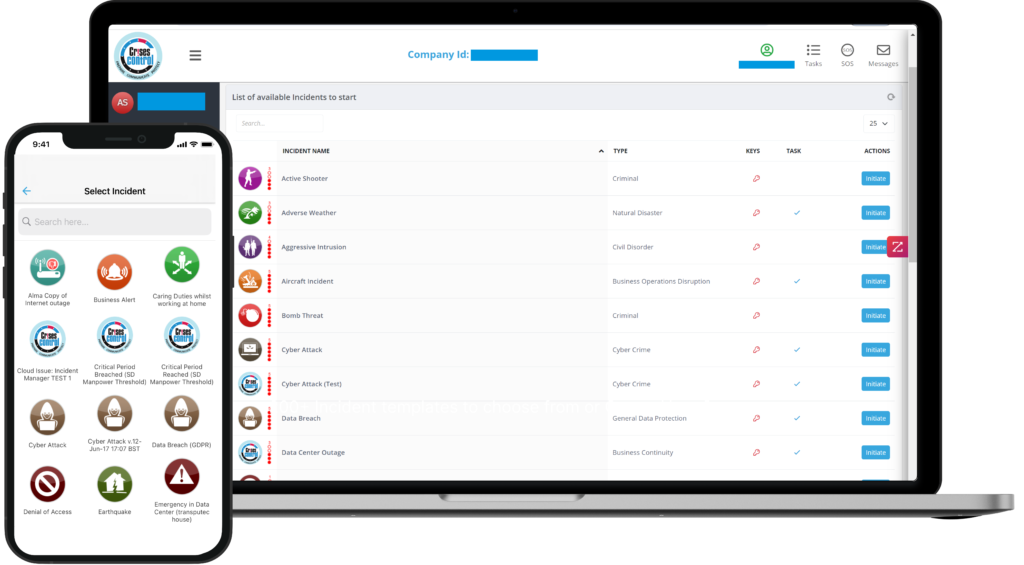
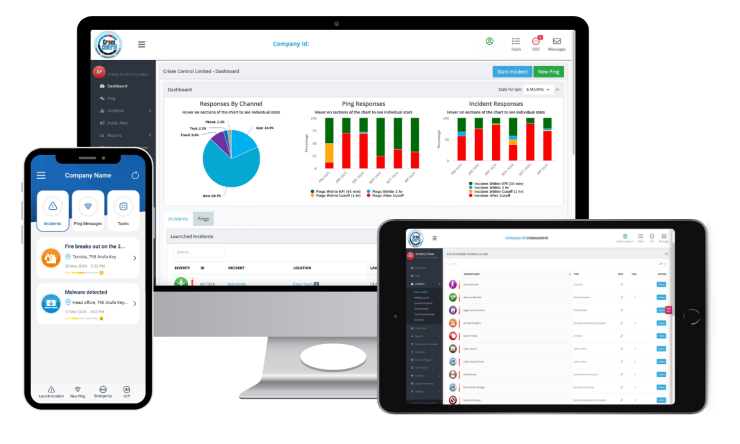
Crises Control is the only platform on this list designed end-to-end as the execution layer across detection, assessment, containment, notification, coordination, and recovery. It combines mass notification, incident management, task management, and audit trail on a single platform aligned to HACCP and BRCGS workflows.
Strengths for food manufacturing: site-based licensing that scales with floor headcount and contractor turnover, two-way confirmed multi-channel notification across SMS, voice, email, push and app, parallel workstream coordination on a single dashboard, and an automatic audit trail captured against timestamps. UK-built, with a strong UK food and beverage retailer reference base.
Where it sits on shortlists: the platform of choice for sites that have outgrown their notification tool and want execution rather than just alerting. Particularly strong fit for chilled, ready-meal, and beverage manufacturing, where shift coverage and contractor reach are critical.
An alert that nobody confirms is not an alert. A plan that nobody executes is not a plan. The execution layer is the bit most platforms are missing.
Everbridge: enterprise mass notification with a critical event management overlay
Everbridge is one of the largest mass notification and critical event management vendors globally. It offers a deep notification stack, a risk intelligence overlay, and integrations with a wide range of enterprise systems. It is heavily adopted in financial services, healthcare, and large multinationals.
Strengths: scale, channel coverage, risk intelligence feeds, and established brand recognition with enterprise procurement teams. Useful for large multi-country food manufacturing groups that need a single platform across jurisdictions.
Trade-offs for food manufacturing: the platform is built for a generic enterprise, not for HACCP and BRCGS workflows. The food-specific templates are not native, so the technical and QA teams have to build them. Per-user licensing can become expensive at sites with large hourly and contractor headcounts. Deployment timelines are typically months, not weeks.
OnSolve: critical event management with mass notification and risk intelligence
OnSolve combines mass notification with a risk-intelligence layer marketed for critical-event management. It is widely deployed in the public sector, transport, and healthcare. It positions itself as a faster-to-deploy alternative to Everbridge.
Strengths: solid mass notification, broad channel coverage, and well-developed risk intelligence content for natural and security events. A reasonable fit for food manufacturing groups with a strong site security or geopolitical risk dimension.
Trade-offs for food manufacturing: contamination workflows are not the primary product focus. Coordination after the alert is less developed than the notification side. The HACCP and BRCGS alignment that food technical teams need is not native, and the audit trail depth is partial rather than continuous.
AlertMedia: modern, user-friendly mass notification
AlertMedia is a US-headquartered mass notification platform widely adopted in retail, hospitality, and distributed workforces. It is known for a clean user interface, fast onboarding, and strong notification deliverability.
Strengths: ease of use, fast deployment, good two-way notification, useful for food manufacturing sites that want a simple alert tool rather than a full incident management platform. A reasonable choice for smaller single-site operators.
Trade-offs for food manufacturing: the platform is mass notification first, not incident management. Parallel workstream coordination, named-owner task tracking, and a continuous audit trail across QA, production, and logistics are not the core product. Sites that pick AlertMedia for notification often need a separate platform for the execution layer that follows.
Fusion: business continuity and risk management with incident workflow
Fusion Risk Management is a Salesforce-native business continuity and operational resilience platform. It is widely adopted in financial services and pharmaceutical manufacturing for its planning depth, integrated risk register, and audit-grade documentation.
Strengths: depth of business continuity and operational resilience capability, strong audit and ISO 22301 alignment, useful for food manufacturing groups already committed to a Salesforce stack and a documentation-heavy compliance posture.
Trade-offs for food manufacturing: Fusion is a planning and risk platform, not a real-time incident execution layer. Mass notification is limited and typically requires a partner integration. Deployment timelines are usually quarters. Sites that need to coordinate a contamination response in real time at 03:22 on a Wednesday tend to pair Fusion with an execution layer rather than rely on it alone.
The average direct cost of a food recall to a UK manufacturer is estimated at 6 million pounds, with reputational damage often exceeding the direct cost (Food Manufacture / GS1 UK 2023).
How food manufacturing buyers should choose between these platforms
The right answer depends on what the site is buying for. Three procurement archetypes show up most often.
If the priority is reaching everyone fast
AlertMedia and Everbridge handle the mass notification job well. They will get the message out. They will not coordinate the response that follows. Sites that buy them often need a second platform for the execution layer within 18 months.
If the priority is documenting plans for compliance
Fusion is the strongest choice for plan depth and audit-grade documentation. It is a planning platform, not a real-time execution platform. It pairs well with an execution layer rather than replacing one.
If the priority is executing the response when contamination hits
Crises Control is the platform built end-to-end for execution. Notification, coordination, task ownership, and audit trail on one platform, aligned to HACCP and BRCGS, deployable in weeks, with site-based licensing that does not punish floor headcount. The strongest fit for food manufacturing buyers whose pain is the 03:22 Wednesday window.
What working incident management software looks like in a food manufacturing site
A working platform is short enough to operate from a phone on the floor and structured enough to run a six-hour contamination response without losing track. It names roles, not people. It assumes the named lead is unreachable and defines the deputy. It uses multiple channels because no single channel works in every incident. It logs everything, because the FSA and the retailer technical team will ask. And it gets tested in conditions that mirror the real thing, not in tabletop sessions where everyone is in the same room with coffee.
Sites that adopt this approach do not eliminate incidents. They turn incidents into controlled events. The contamination still happens. The 38,000 units do not leave the warehouse.
If your current incident management software would not hold up under a 4-hour recall window, it is time to test it under real conditions. Book a demo to see Crises Control run a contamination scenario.
FAQs
1. What is the best incident management software for food manufacturing?
There is no single answer. Crises Control is the strongest fit for sites whose priority is executing the contamination response with HACCP and BRCGS aligned workflows, multi-channel confirmed notification, parallel workstream coordination, and a continuous audit trail. Everbridge and OnSolve fit large multi-country groups whose primary need is mass notification at scale. AlertMedia fits smaller single-site operators that want a simple alert tool. Fusion fits buyers prioritising planning and operational resilience documentation.
2. How is incident management software different from mass notification software?
Mass notification software gets the alert out. Incident management software runs the response that follows. The notification is one phase. The incident management platform handles assessment, containment, parallel task coordination, decision logging, and audit trail across QA, production, logistics, communications, and legal. Buying notification and calling it incident management is the most common food manufacturing procurement mistake.
3. Does incident management software replace HACCP or BRCGS?
No. Incident management software does not replace HACCP, BRCGS, or any food safety management system. It executes against them. The platform takes the trigger thresholds defined in HACCP and the response procedures aligned to BRCGS, and turns them into a live, timed workflow with named owners and a complete audit trail.
4. How long does it take to deploy incident management software in a food manufacturing site?
Deployment timelines vary by platform. Crises Control and AlertMedia typically deploy in weeks. Everbridge and OnSolve usually take months for a multi-site rollout. Fusion deployments are often quarters because the platform is configured around a wider operational resilience programme. The deployment timeline matters because most food manufacturing buyers are running against a retailer technical agreement clause or a near-miss event.
5. What evidence does incident management software produce for an FSA or BRCGS audit?
A complete audit trail covering every alert sent, every acknowledgement received, every escalation triggered, every decision logged, and every task completed, against a timestamp. That trail is what the Food Standards Agency, retailer technical teams, and BRCGS auditors ask to see when an incident is over. Platforms that cannot produce it on demand are exposed at the next audit cycle.