
At 10:41 on a Thursday morning, a parent receives a message from another parent.
“There are police outside the school.”
Nobody knows whether the message is accurate, but within minutes it has been forwarded dozens of times. Screenshots begin appearing in WhatsApp groups. Questions appear on local Facebook community pages. Reception phones start ringing, and some parents leave work to collect their children before the school has released a single official update.
Inside the school, the situation looks very different.
Pupils are safe. Staff are following established procedures. The leadership team is working closely with the emergency services to understand what is happening and what decisions need to be made next.
Outside the school gates, uncertainty is spreading faster than information.
For the Headteacher, the emergency has changed. Protecting pupils remains the priority, but there is now another challenge that cannot be ignored. Hundreds of parents want immediate answers, even though the situation is still developing.
- How quickly can every parent receive accurate information?
- Who approves the first message?
- How do you reassure families without sharing information that has not yet been confirmed?
- And how do you stop rumours becoming the version of events that parents trust most?
These are no longer communication questions. They are operational questions that influence how calmly the school can manage the incident.
This is where Emergency Notification Software becomes an important part of the wider emergency response. Its purpose is not simply to send messages. It helps schools deliver clear, consistent information through multiple communication channels, reducing confusion while allowing leadership teams to stay focused on safeguarding pupils and coordinating the incident itself.
Many schools invest considerable time planning how they will respond to emergencies such as fires, lockdowns or severe weather. Far fewer spend the same amount of time planning how they will communicate with parents while those incidents are unfolding.
That gap matters.
For many families, the emergency is shaped by the information they receive rather than the incident itself. If official updates are delayed, parents naturally look elsewhere. They rely on messages from their children, social media posts, local community groups or conversations with other parents. Some of that information may be accurate. Much of it is incomplete, taken out of context or based on assumption.
By the time the school sends its first update, many parents have already formed their own picture of what is happening.
For Headteachers, Principals, School Business Managers and Communications Leads, effective emergency communication is about much more than keeping parents informed. It protects trust, reduces unnecessary disruption and allows the leadership team to concentrate on managing the incident instead of responding to hundreds of individual enquiries.
What Makes Parent Communication So Difficult During A School Emergency?
Parent communication is one of the few parts of an emergency response that becomes more demanding as the incident develops.
A fire may be brought under control within minutes. A lockdown may continue while police complete their assessment. An evacuation may last longer than expected while buildings are declared safe. Throughout every stage of the response, parents are waiting for information, even when the school does not yet have every answer.
School leaders therefore face a difficult balance. Waiting too long to communicate allows rumours to fill the information gap. Communicating before information has been verified can create unnecessary confusion and damage trust.
The goal is not to have every answer immediately. The goal is to ensure parents always know they are receiving reliable information from the school.
An effective school parent emergency notification system should help leadership teams answer practical questions before an incident ever happens, including:
- How quickly can every parent receive an official update?
- Which communication channels should be used first?
- Who is responsible for approving emergency messages?
- How often should updates be shared?
- How will misinformation be corrected if it starts spreading online?
- How will communication continue if the incident lasts several hours?
These questions sit at the centre of effective emergency communication for schools because they focus on maintaining confidence while the situation continues to change.
The Biggest Misconception About Parent Communication During An Emergency
Many schools believe the most important message they will send is the first one.
In reality, the first message is only the start of the conversation.
Parents rarely expect schools to have every detail within the first few minutes of an emergency. What they expect is honest, timely communication that continues as new information becomes available.
The real challenge is maintaining that flow of information while the leadership team is also working with emergency services, supporting staff, safeguarding pupils and making decisions that affect the rest of the school day.
Successful communication is not measured by the number of messages sent. It is measured by whether parents know where to find trusted information, whether speculation is reduced and whether the leadership team can continue managing the incident without becoming overwhelmed by individual enquiries.
The schools that communicate most effectively are rarely those with the largest communications teams. They are the schools with a clear communication process, defined responsibilities and the right tools to deliver accurate information consistently throughout the incident.
The First 10 Minutes: Parents Know Something Has Happened Before They Know What Happened
One of the biggest challenges schools face is that the first official update is rarely the first message parents receive.
Before the leadership team has agreed what to say, pupils may already have sent text messages home. Someone walking past the school may have shared photographs of emergency vehicles online. Local community groups begin discussing what they can see outside the school gates, and parents start piecing together information from multiple sources, none of which tell the full story.
By the time the school prepares its first message, many parents have already formed an opinion about what is happening.
That creates immediate pressure for school leaders. Parents are not simply looking for information. They are looking for reassurance that the school is aware of the situation, managing it and will continue to keep them informed.
The first message does not need to explain every detail of the incident because, at this stage, the leadership team may not yet have every answer. Instead, it should achieve three clear objectives:
- Confirm that the school is managing an incident.
- Reassure parents that established emergency procedures are being followed.
- Explain when and how further updates will be provided.
This early communication helps establish the school as the most trusted source of information before rumours become more influential than official updates.
This is where Emergency Notification Software can make an immediate difference. Rather than relying on individual emails, website updates or social media posts, schools can send a consistent message across SMS, email, mobile notifications and other communication channels simultaneously, helping every parent receive the same information at the same time.
The purpose of the first message is not to answer every question.
It is to build confidence that the school is in control and that reliable updates will follow.
Ten To Twenty Minutes: Reception Can No Longer Be The Communication Hub
As the incident develops, the pressure often shifts from the leadership team to the reception desk.
Phone calls arrive one after another. Parents want to know whether their children are safe. Some ask if they should collect them immediately. Others want clarification after reading conflicting information on social media.
Reception staff naturally want to help, but they are rarely in the best position to provide operational updates while an incident is still unfolding.
This is where many communication plans begin to break down.
If every concerned parent needs to contact the school individually, reception quickly becomes overwhelmed. Senior leaders are interrupted for updates, staff repeat the same information dozens of times and attention is pulled away from managing the emergency itself.
A structured communication process changes that balance.
Instead of waiting for parents to contact the school, the school communicates proactively. Parents know where official information will come from, when they can expect the next update and which channels will be used throughout the incident.
This simple change delivers two important benefits. Parents feel informed without needing to chase information, and reception staff remain available to support the operational response rather than managing hundreds of repeated enquiries.
The goal is not to stop parents contacting the school.
The goal is to stop communication becoming a second emergency for the leadership team to manage.
Twenty To Forty Minutes: Different People Need Different Information
As more information becomes available, the communication challenge changes again.
A single message is no longer enough because different groups now need different information.
Parents want reassurance and practical guidance.
Teachers need operational instructions.
Support staff require updates about their responsibilities.
Governors or academy trust leaders may need a strategic briefing.
Emergency services continue sharing new information that influences the school’s response.
Trying to manage these conversations through separate email chains, phone calls and handwritten notes quickly becomes difficult, particularly when several members of the leadership team are communicating at the same time.
One of the most common mistakes is assuming everyone should receive the same update.
In reality, effective communication is role based.
Each audience needs information that helps them make the right decision without being distracted by unnecessary detail.
This is where Incident Management Software complements Emergency Notification Software. Rather than treating communication as a series of disconnected messages, leadership teams can coordinate updates alongside tasks, responsibilities and operational decisions. Everyone receives information that is relevant to their role while leaders maintain a shared operational picture of the incident.
The benefit is not simply faster communication.
It is clearer communication that supports better decision-making across the entire school.
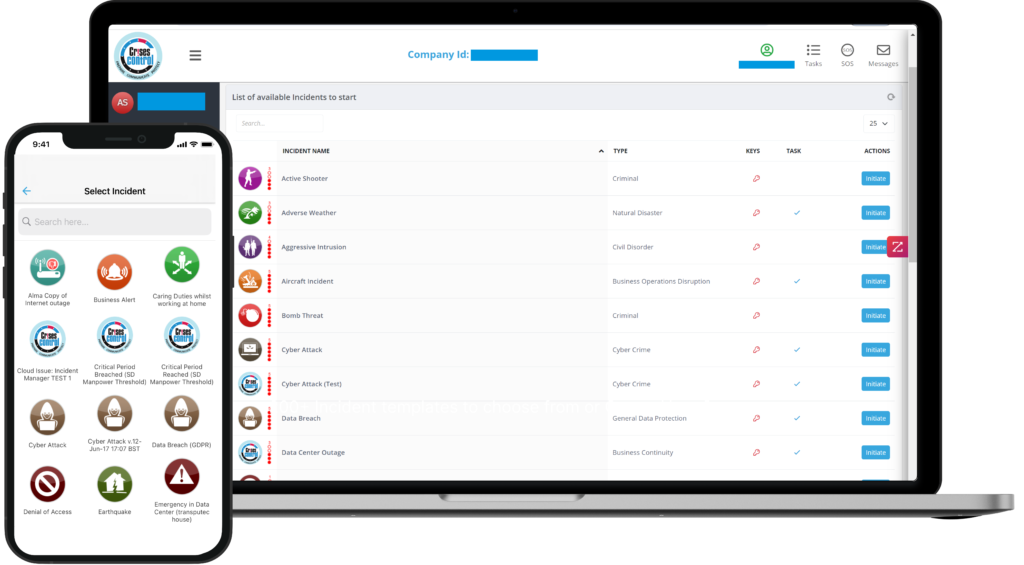
Interested in our Incident Management Software?
Flexible Incident Management Software to keep you connected and in control.
Forty To Sixty Minutes: Trust Becomes The Priority
By the time the incident has been ongoing for almost an hour, most parents have received the first official update.
Now they want something different.
They want to know what has changed.
Silence during this stage is often interpreted as uncertainty. Parents may assume the situation has become worse simply because they have not heard anything further.
This is why emergency communication should never be treated as a single announcement. It should be planned as an ongoing conversation that continues until the incident has been resolved.
Before an emergency ever occurs, schools should already know:
- When the next update will be issued.
- Who is responsible for approving each message.
- Which communication channels will be used.
- How new information will be shared.
- How parents will be informed that the incident has ended.
Having these decisions agreed in advance removes unnecessary pressure from the leadership team during the emergency itself.
Regular updates are valuable because they demonstrate that the school remains engaged, continues to assess the situation and is committed to keeping parents informed as circumstances change.
Parents do not expect perfect information.
They expect honest, reliable communication from a source they trust.
Schools that maintain that trust are often the ones that recover most effectively once the incident has ended.
Manual Parent Communication Versus A Structured Communication Process
Schools have been communicating with parents during emergencies long before digital communication platforms existed. Strong leadership, clear procedures and confident decision-making remain the foundation of an effective response.
Technology does not replace those strengths.
What it changes is how information is shared, coordinated and reviewed while an incident is still unfolding.
During a manual response, communication is often spread across several different activities at the same time. Reception staff answer incoming phone calls, senior leaders draft email updates, messages are uploaded to the school website and someone monitors social media for emerging rumours. Each task may be manageable on its own, but together they can become difficult to coordinate when hundreds or even thousands of parents are seeking information simultaneously.
A structured communication process brings those activities together. Instead of relying on multiple people working across separate systems, leadership teams can distribute consistent information, monitor message delivery and continue coordinating the wider incident from a single operational picture.
Manual Parent Communication | Structured Communication Process |
Individual phone calls to concerned parents | Multi-channel notifications sent simultaneously |
Email updates created manually | Pre-approved message templates activated quickly |
Separate website and social media updates | Consistent communication across multiple channels |
Staff manually answering repeated questions | Proactive updates reduce incoming enquiries |
Information stored across different systems | Centralised communication record |
Debrief based on memory and email history | Complete timeline of messages and decisions |
Neither approach guarantees a successful emergency response. An experienced leadership team can communicate effectively using manual processes, particularly during smaller incidents. Equally, technology cannot compensate for unclear responsibilities or poor planning.
The real advantage of a structured approach is that it removes unnecessary complexity. Leadership teams spend less time repeating information, searching for updates or coordinating different communication channels, allowing them to focus on protecting pupils and managing the incident itself.
The goal is not to introduce more technology.
It is to make communication more reliable when the school is under the greatest pressure.
How Emergency Notification Software Supports Parent Communication During School Emergencies
As an emergency develops, communication quickly becomes part of the operational response rather than a separate administrative task.
Parents are waiting for updates. Staff continue carrying out safeguarding responsibilities. Emergency services provide new information. Leadership teams make decisions that affect the rest of the school day.
At that point, the question is no longer whether another message should be sent.
The question becomes whether the right information is reaching the right people without creating additional work for the people managing the incident.
This is where Emergency Notification Software supports schools. Rather than acting as another messaging tool, it provides a structured framework for managing communication throughout an incident.
When combined with Incident Management Software, communication becomes part of a coordinated response rather than a series of separate activities. Leadership teams can:
- Activate emergency communication plans immediately.
- Send role-based updates to parents, staff and governors.
- Deliver messages through SMS, email, voice calls and mobile notifications.
- Monitor message delivery and acknowledgements where appropriate.
- Record every communication as part of the incident timeline.
- Maintain a shared operational picture as the incident develops.
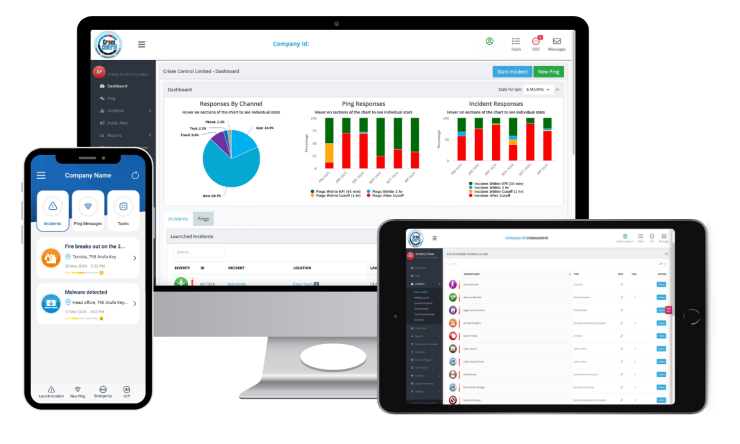
Solutions such as Crises Control support this approach by helping schools digitalise emergency plans while continuing to follow their existing safeguarding policies and emergency procedures. Communication, task management and incident coordination remain connected, allowing leadership teams to work from the same information throughout the response.
Technology cannot decide what should happen next.
Its value lies in helping the people making those decisions work from the same, accurate and up-to-date information.
A Parent Communication Readiness Checklist
Every school has a communication policy.
The more useful question is whether that policy can be put into practice when the pressure is real.
Before the next emergency exercise, ask:
- Can every parent receive an official update within a few minutes?
- Is the first emergency message already written and approved as a template?
- Does every member of the leadership team know who approves communications?
- Can parents receive updates through more than one communication channel?
- Is there a plan for correcting misinformation if it begins spreading online?
- Can every communication be reviewed afterwards as part of the incident debrief?
If any of these questions cannot be answered confidently, the next emergency exercise has already identified an opportunity to improve.
The Most Effective Parent Communication Starts Before The Emergency
Many schools review parent communication after an incident has finished.
The stronger approach is to review it before the next incident begins.
Parents understand that emergencies are unpredictable. They do not expect schools to have every answer immediately. They do expect clear, timely and trustworthy communication from the people responsible for their children’s safety.
Schools that communicate well during emergencies are rarely those that send the greatest number of updates. They are the schools with a clear communication process, defined responsibilities and a shared understanding of how information will be managed from the first notification until the final update.
When communication is planned with the same care as evacuation procedures, safeguarding responsibilities and emergency response plans, leadership teams can concentrate on managing the incident rather than managing uncertainty.
If your school is reviewing how it communicates with parents during emergencies, Crises Control can help support structured communication, coordinated incident management, multi-channel notifications and comprehensive post-incident reporting.
FAQs
1. What Is The Best Way To Communicate With Parents During A School Emergency?
The best way to communicate with parents during a school emergency is to provide clear, accurate information as early as possible through trusted, official channels. Schools do not need to have every answer before sending the first update, but they do need to acknowledge that an incident is being managed and explain when further information will be provided. Parents are far more likely to remain calm when they know the school is communicating openly and consistently. A structured communication process also helps reduce misinformation, prevents reception teams from becoming overwhelmed with phone calls and allows school leaders to remain focused on safeguarding pupils and managing the incident itself.
2. How Does Emergency Notification Software Help Schools During An Emergency?
Emergency Notification Software helps schools communicate with parents, staff, governors and other stakeholders quickly and consistently during an emergency. Instead of relying on separate emails, phone calls or website updates, leadership teams can send approved messages through multiple communication channels such as SMS, email, voice calls and mobile notifications at the same time. When integrated with Incident Management Software, communication becomes part of the wider emergency response, allowing schools to coordinate updates, maintain a record of every message and review the entire communication process after the incident has ended. This improves accountability while reducing the administrative burden on school staff.
3. Why Is Parent Communication So Difficult During School Emergencies?
Parent communication becomes difficult because information often spreads faster than official updates. Pupils may send text messages home, photographs can appear on social media within minutes and local community groups often begin discussing the situation before the school has confirmed exactly what has happened. School leaders therefore face two challenges at the same time: managing the emergency on site while also becoming the most trusted source of information for parents. Without a clear communication plan, rumours can quickly replace facts, increasing anxiety for families and creating additional pressure for the leadership team.
Why this change? This question is far more likely to appear in AI search results because it directly reflects the central argument of your article.
4. What Should A School Parent Emergency Notification System Include?
A school parent emergency notification system should do much more than send mass messages. It should help schools communicate consistently throughout the entire incident by supporting multiple communication channels, allowing leadership teams to issue updates to different audiences where appropriate and providing a reliable record of every message that has been sent. An effective system should also fit naturally into the school’s wider emergency response, making it easier to coordinate parent communication alongside safeguarding, operational decision-making and incident management. This allows schools to keep parents informed while maintaining a clear overview of the developing situation.
5. How Often Should Schools Update Parents During An Emergency?
There is no single rule that applies to every emergency because each incident develops differently. Rather than sending updates at fixed intervals, schools should communicate whenever there is meaningful new information or when parents need reassurance that the situation is still being managed. Even if there are no major developments, a brief update explaining that the incident remains under control and that further information will follow can help reduce uncertainty and prevent rumours from spreading. Schools should decide in advance who approves emergency communications, which channels will be used and how parents will be informed when the incident has been resolved. Planning these decisions before an emergency occurs makes communication far more effective when it matters most.