During an emergency, universities rarely suffer from a lack of information.
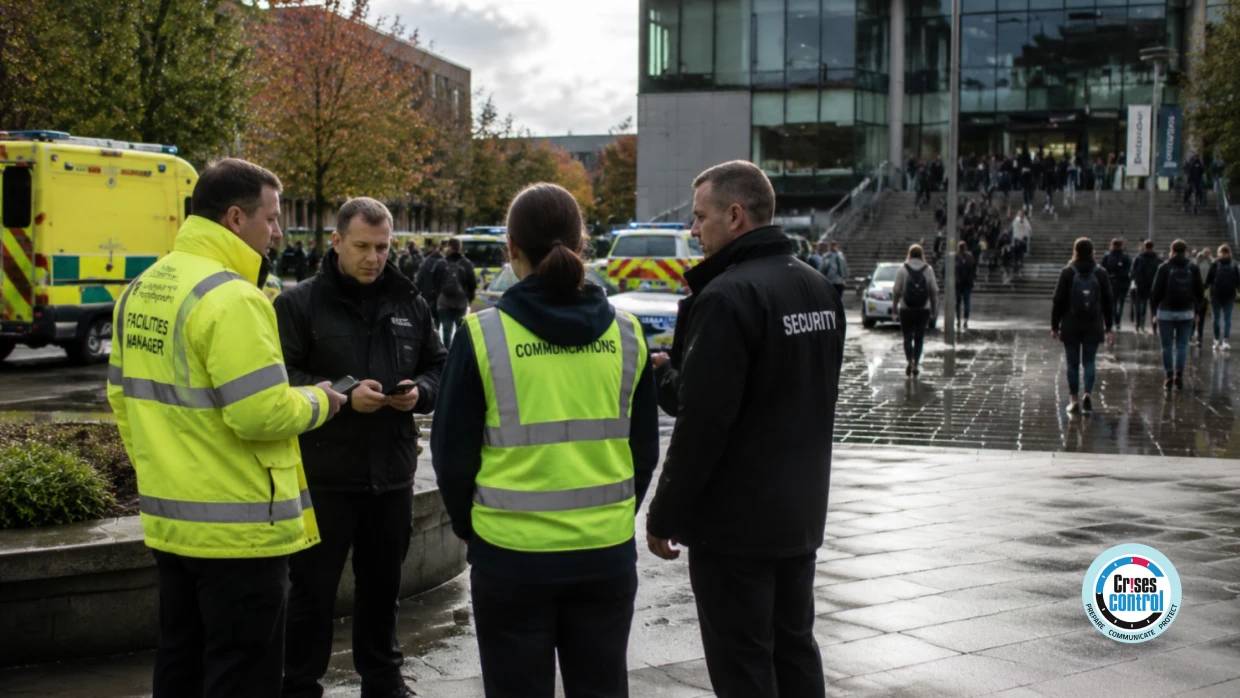
Security teams receive updates from officers on the ground. Facilities teams know which buildings have been secured. Academic departments hear directly from lecturers. Communications teams prepare messages for staff and students while senior leadership speaks with emergency services and external stakeholders.
Every department has information, but very few decision-makers have the complete operational picture.
This is one of the biggest operational challenges universities face during a fast-moving incident. Decisions about campus operations, staff safety, student welfare and business continuity often need to be made within minutes, yet those decisions are frequently based on fragmented updates arriving from different people, through different communication channels and at different times.
The result is not necessarily poor communication. In many cases, communication is happening constantly. The challenge is that each department develops its own understanding of the incident based on the information available to it. Security may know where officers have been deployed, Facilities may be managing access to affected buildings, academic leaders may be deciding whether lectures should continue and the communications team may already be responding to enquiries. Each decision is logical in isolation, but without a shared operational picture, they may not support the wider response.
This is where Incident Management Software delivers value beyond incident reporting or emergency notifications. Rather than simply helping universities communicate faster, it helps create a common understanding of what is happening across the organisation. By bringing together incident reporting, communication, task management and live operational updates, decision-makers can coordinate their actions using the same verified information instead of relying on fragmented conversations.
For universities operating across multiple faculties, buildings or campuses, this capability has become increasingly important. The speed of a response still matters, but the quality of that response depends on something more fundamental: whether every decision-maker is working from the same operational picture.
What Is A Shared Operational Picture?
A shared operational picture is a real-time, continually updated view of an incident that provides authorised responders with consistent, verified information as events unfold. Rather than relying on separate phone calls, emails, messaging apps or verbal updates, everyone involved in the response works from the same operational understanding of what has happened, what actions are underway and what still requires attention.
In a university environment, this shared visibility is particularly important because incidents rarely involve a single department. Security teams, Facilities, academic staff, student services, communications, IT and senior leadership may all have responsibilities within the first few minutes of an emergency. Each team contributes valuable information, but unless that information is brought together, leadership is left trying to make strategic decisions without a complete understanding of the situation.
A shared operational picture helps overcome this challenge by creating a single source of operational truth. It enables leadership teams to understand how an incident is developing, identify where resources are needed, monitor the progress of response activities and maintain confidence that every department is working towards the same objectives.
Ultimately, a shared operational picture is not defined by technology. It is defined by the organisation’s ability to maintain operational awareness so communication, coordination and decision-making remain aligned throughout an incident.
Why Universities Don’t Have An Information Problem
One of the biggest misconceptions in emergency management is that organisations struggle because they do not have enough information.
Universities often experience the opposite.
As soon as an incident begins, information starts arriving from every direction. Security officers report what they are seeing on the ground. Lecturers contact department heads. Students share updates through messaging platforms. Facilities teams monitor access to buildings, while IT, Communications and senior leadership receive their own streams of information from internal and external sources.
Universities rarely struggle because they lack information. They struggle because nobody has the complete operational picture.
The real challenge is transforming dozens of individual updates into a single, trusted operational picture that everyone can use to make informed decisions.
Without that shared understanding, information naturally becomes fragmented. Different departments begin solving different parts of the same incident without fully understanding how their decisions affect one another. A faculty may suspend teaching while another continues operating as normal. Facilities may secure one area without realising security teams have redirected resources elsewhere. Communications may prepare an update based on information that has already changed.
None of these decisions are unreasonable.
They simply reflect the reality that every team is acting on a different version of the incident.
This is why operational awareness should be viewed as a leadership capability rather than simply a communication function. Effective campus incident management depends on more than sharing updates quickly. It depends on ensuring that every critical decision is informed by the same accurate, verified operational picture.
For university leaders, the most valuable question is therefore not: “How quickly can we distribute information?”
It is: “How quickly can every decision-maker understand the same situation?”
The answer to that question often determines whether an emergency response remains coordinated or gradually becomes fragmented as the incident develops.
Why Information Silos Develop During University Emergencies
Information silos rarely develop because people choose not to communicate. More often, they are the natural result of how universities operate.
Every department has different responsibilities, different priorities and different reporting lines. During an emergency, Security focuses on protecting people and assessing immediate risks. Facilities work to secure buildings and maintain safe access. Academic leaders decide whether teaching can continue, while Communications prepares updates for staff, students, parents and, where necessary, the media. Senior leadership is responsible for overseeing the wider operational response and maintaining confidence across the institution.
Each team performs its role effectively.
The difficulty is that each team sees only one part of the incident.
As information moves through phone calls, emails, messaging platforms and verbal conversations, separate streams of information begin to develop. Every department gradually builds its own understanding of the situation based on the updates it has received, rather than from a single, verified operational picture.
This fragmentation rarely causes immediate failure. Instead, it creates hesitation.
Leaders spend valuable time confirming information that another team may already have verified. Departments repeat conversations because they are unsure whether colleagues have received the latest update. Decisions that should take seconds begin taking minutes because everyone is trying to establish which information is current.
During a fast-moving emergency, those delays accumulate.
The operational challenge is no longer responding to the incident itself. It is ensuring that every department is responding to the same incident rather than different interpretations of it.
Why Communication Alone Isn’t Enough
Universities often invest significant effort in improving emergency communication, and rightly so. The ability to notify staff and students quickly remains a critical part of any emergency response.
However, communication alone does not guarantee effective coordination.
Sending an alert tells people that something has happened. It does not automatically provide the operational context needed to make informed decisions.
After an initial notification has been sent, new questions immediately emerge.
- Has the incident been verified?
- Who is leading the response?
- Which buildings or campuses are affected?
- Have critical teams acknowledged the notification?
- What actions have already been completed?
- Which tasks remain outstanding?
- Should normal operations continue elsewhere on campus?
These questions cannot be answered by communication alone.
They require continuous operational awareness.
This is where many organisations unintentionally create additional pressure for leadership teams. As information changes, people begin requesting updates through phone calls, emails and messaging groups. Valuable time is spent chasing information instead of coordinating the response.
Communication starts the response. Shared operational awareness allows the response to continue effectively.
What Better Decision-Making Looks Like
The strongest university responses are not always those that communicate first.
They are the ones that maintain a shared understanding of the incident from the first report until normal operations resume.
When decision-makers are working from the same operational picture, priorities become clearer and responsibilities become easier to coordinate.
- Security understands where resources are deployed.
- Facilities know which buildings remain operational.
- Academic leaders can make informed decisions about teaching.
- Communications shares verified information instead of assumptions.
- Senior leadership can focus on strategic decisions rather than reconciling conflicting reports.
This approach also improves accountability.
Instead of asking who received an email or who was informed by telephone, leadership teams can understand which actions have been assigned, which have been completed and where additional support is required.
Operational visibility becomes more than a convenience. It becomes the foundation for confident leadership during uncertainty.
Interested in our Incident Management Software?
Flexible Incident Management Software to keep you connected and in control.
How Incident Management Software Supports Universities
This is where Incident Management Software supports universities in a way that extends far beyond emergency notifications.
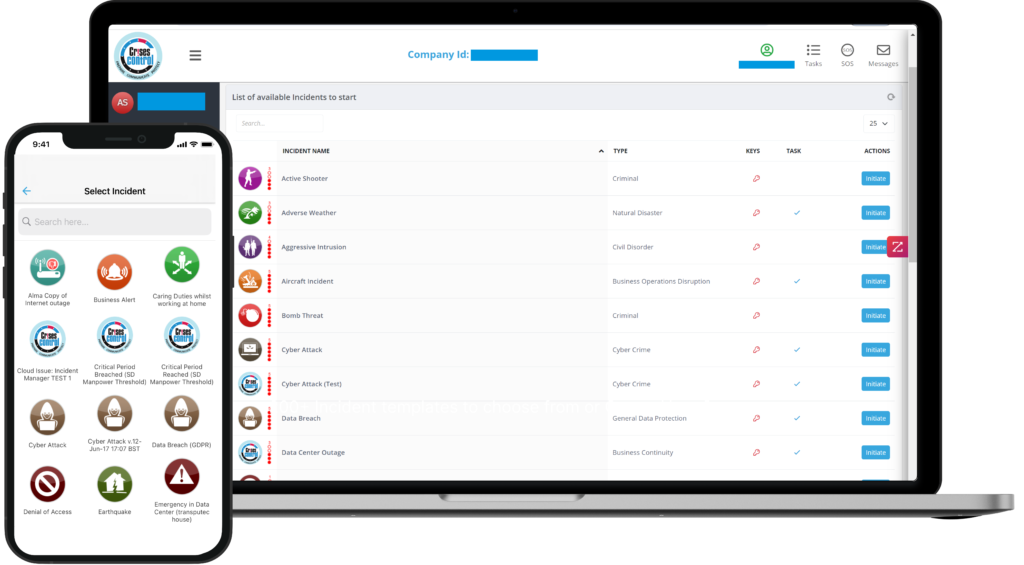
Rather than treating communication, task management and incident reporting as separate activities, an integrated platform connects them into a single operational response. Incident activation, role-based communication, task assignment and live operational updates all contribute to one shared operational picture, enabling authorised teams to make decisions using the same verified information.
For universities operating across multiple faculties or campuses, this shared visibility helps reduce uncertainty at every stage of the response. Security, Facilities, academic departments, Communications and senior leadership no longer rely on disconnected conversations to understand what is happening. Instead, they can coordinate their responsibilities through one structured incident management process.
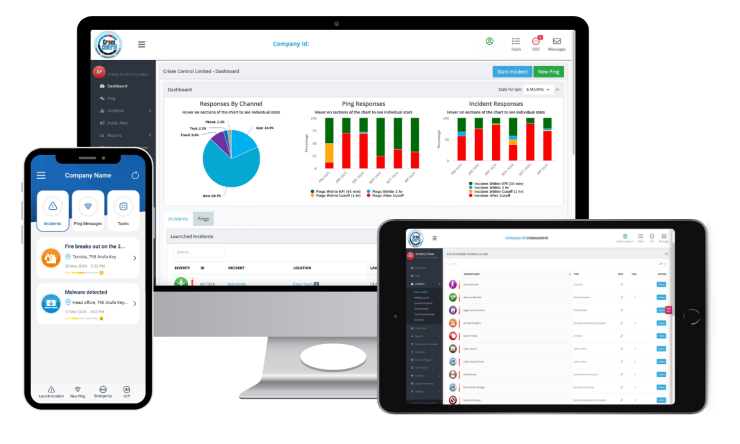
Solutions such as Crises Control help universities digitalise their university emergency response plan while supporting existing governance and emergency procedures. Features including role-based notifications, the SOS Panic Button, acknowledgement tracking, escalation workflows, task management, multi-campus communication and comprehensive incident reporting help leadership teams maintain operational awareness throughout the lifecycle of an incident.
Technology does not replace experienced professionals. It gives those professionals the visibility needed to make faster, better-informed decisions together.
Better Decisions Begin With A Shared Operational Picture
Universities have always balanced openness with safety, collaboration with security and academic freedom with operational responsibility. Those priorities will not change.
What must continue to evolve is the way universities manage information during an emergency.
The difference between an effective response and a fragmented one is rarely the commitment or capability of the people involved. More often, it is whether those people are working from the same understanding of what is happening.
That is why a shared operational picture has become such an important capability for modern universities.
When Security, Facilities, academic departments, Communications and senior leadership all have access to the same verified operational information, decisions become more consistent, coordination improves and uncertainty is significantly reduced.
If your university is reviewing its approach to campus incident management, ask one simple question:
Would every decision-maker be working from the same operational picture if an emergency happened today?
The answer often reveals opportunities that communication tools and written procedures alone cannot address.
Solutions such as Crises Control help universities strengthen operational visibility through structured incident activation, role-based communication, task management, multi-campus coordination, acknowledgement tracking and comprehensive post-incident reporting.
FAQs
1. What Is A Shared Operational Picture During A University Emergency?
A shared operational picture is a real-time view of an incident that gives authorised responders access to the same verified information as events unfold. Instead of relying on separate phone calls, emails or messaging apps, Security, Facilities, academic departments, Communications and senior leadership all work from a single operational understanding of the situation. This improves coordination, reduces uncertainty and supports faster, more informed decision-making throughout the response.
2. Why Is Incident Management Software Important For Universities?
Incident Management Software helps universities coordinate incidents by bringing together incident reporting, communication, task management and operational visibility within one platform. Rather than acting solely as an alerting tool, it enables leadership teams to activate response plans, assign responsibilities, monitor progress and maintain a shared operational picture across one or multiple campuses. This helps improve campus incident management while supporting staff safety, operational continuity and more consistent decision-making.
3. How Does University Emergency Communication Improve Decision-Making?
Effective university emergency communication is about more than sending messages quickly. Decision-makers need accurate, consistent and verified information throughout an incident so they can understand what is happening, assess changing risks and coordinate an appropriate response. When communication is combined with operational visibility and role-based coordination, universities can reduce confusion, avoid conflicting decisions and respond more effectively to developing situations.
4. What Is The Difference Between Emergency Notification Software And Incident Management Software?
Emergency Notification Software focuses on delivering urgent alerts through channels such as SMS, email, voice calls and mobile push notifications. Incident Management Software goes further by helping organisations coordinate the entire response. It combines emergency communication with task management, acknowledgement tracking, escalation workflows, incident reporting and a shared operational picture, allowing universities to manage incidents from the initial alert through to post-incident review.
5. Why Is A Campus Emergency Notification System Important For Multi-Campus Universities?
A campus emergency notification system helps universities communicate consistently across multiple campuses during an emergency. Staff and students can receive verified information at the same time, reducing confusion and limiting the spread of misinformation. When integrated with Incident Management Software, notifications become part of a coordinated response that supports campus incident management, role-based communication, operational visibility and a structured university emergency response plan across the entire institution.