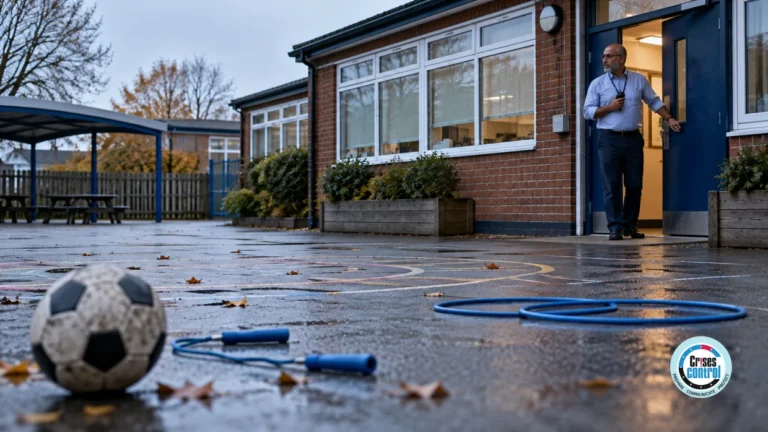
The Headteacher finishes presenting the annual safeguarding and emergency preparedness update.
Policies have been reviewed, lockdown drills completed, emergency contact lists updated and business continuity plans refreshed.
The governing board thanks the leadership team and moves to the next agenda item.
For many schools, this is where the conversation ends.
For effective governance, it is where the most important questions should begin.
School governors are not responsible for managing emergencies. Their role is to provide strategic oversight, challenge assumptions and ensure the school is prepared to protect pupils, staff and visitors when an incident occurs. That responsibility extends beyond confirming that policies exist. It requires confidence that those policies can be translated into effective action under operational pressure.
This distinction matters because schools are expected not only to have emergency plans, but also to demonstrate that those plans can be implemented effectively under pressure. Schools face a wide range of potential disruptions, from severe weather and utility failures to safeguarding incidents, cyber attacks, medical emergencies and security threats. While each incident requires a different response, governors share the same responsibility in every case: ensuring the school can respond in a coordinated, well-governed and resilient way.
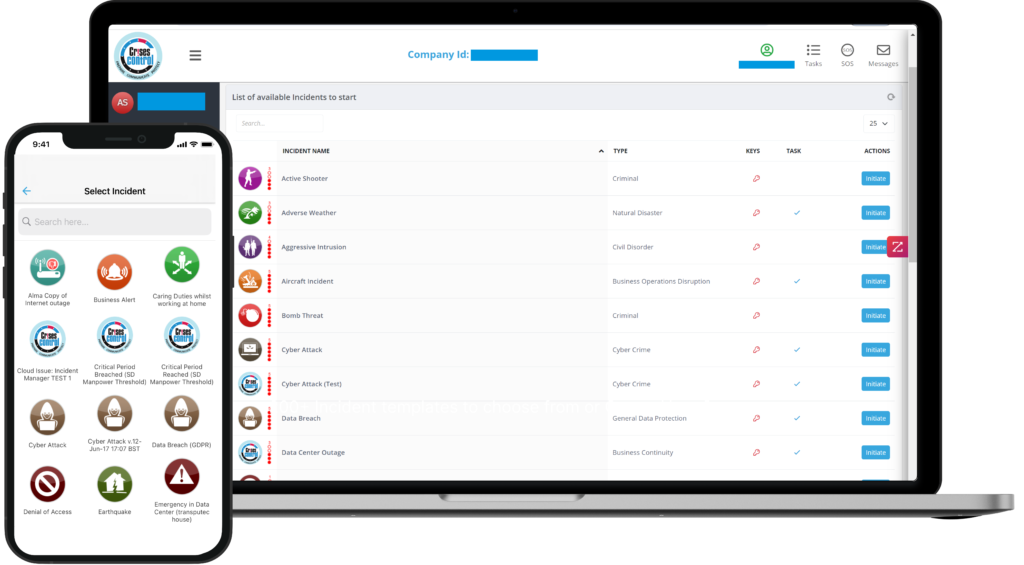
This is where Incident Management Software can support school leadership and governance. Rather than simply providing a platform for reporting incidents or sending emergency notifications, it helps schools demonstrate that emergency plans are supported by clear responsibilities, structured communication, operational visibility and documented decision-making.
The question for governors is therefore not simply: “Does our school have an emergency plan?”
It is: “How do we know that plan will work when it is needed most?”
The ten questions in this guide are designed to help governing boards move beyond compliance and evaluate whether their school’s emergency preparedness is genuinely effective.
What Is School Emergency Preparedness Governance?
School emergency preparedness governance is the process of providing strategic oversight to ensure a school can respond effectively to emergencies while protecting pupils, staff, visitors and normal operations. It involves challenging assumptions, reviewing evidence, understanding risks and confirming that emergency plans can be implemented successfully under real operational conditions.
For governors, preparedness should not be measured by the existence of policies alone. Effective oversight requires confidence that leadership teams can communicate quickly, coordinate multiple responsibilities, maintain safeguarding, support business continuity and demonstrate accountability throughout an incident.
This means asking questions that go beyond compliance.
Instead of asking whether a plan exists, governors should ask whether the school can demonstrate that the plan has been tested, understood by staff and supported by the processes needed to make informed decisions during an emergency.
The Common Assumption Governors Should Challenge
One of the most common assumptions in school governance is that if emergency plans have been written, reviewed and approved, the school is prepared.
In reality, documentation is only one part of preparedness.
A school may have comprehensive policies covering safeguarding, lockdown procedures, evacuation, business continuity and emergency communication. However, the existence of these documents does not automatically mean staff can implement them confidently during a fast-moving incident.
Operational pressure changes everything.
An emergency rarely unfolds according to a written procedure. Information is incomplete, decisions must be made quickly and several incidents may occur simultaneously. Headteachers, senior leaders and support staff must balance pupil safety, safeguarding responsibilities, communication with parents, coordination with emergency services and the continuity of school operations, often within the first few minutes.
This is where governors have an important role.
Their responsibility is not to manage the incident itself. It is to ask whether the school has demonstrated that its plans can be translated into effective action when normal routines no longer apply.
Preparedness should therefore be measured by evidence, not assumption.
Why Governors Need Evidence, Not Assurance
Many schools review emergency plans annually, conduct lockdown exercises and confirm that emergency contact details remain up to date. These activities are important and should form part of every school’s emergency preparedness programme.
They should not, however, be mistaken for proof that the school is ready.
A plan may never have been tested under realistic operational conditions. Staff who understand their responsibilities during an exercise may respond differently when faced with uncertainty, conflicting information or the pressure of protecting pupils while making time-critical decisions.
This is why effective governance depends on constructive challenge.
When leadership presents emergency preparedness updates, governors should feel confident asking how the school knows its arrangements will work under operational pressure. That does not mean questioning the commitment or competence of school leaders. It means seeking evidence that supports confidence.
Governors should therefore look beyond whether activities have been completed and ask what those activities revealed.
For example:
- Did the exercise identify communication gaps between staff and leadership?
- Were visitors, contractors and temporary staff included in emergency procedures?
- Could leadership monitor which staff had acknowledged emergency instructions?
- Were responsibilities clear throughout the incident?
- Did the exercise improve the school’s emergency response plan?
Evidence may also include the outcomes of business continuity reviews, incident reports, acknowledgement records, emergency communication testing, post-incident reviews and the improvements made following previous exercises.
These conversations move governance beyond compliance and towards operational confidence. Rather than simply confirming that emergency preparedness activities have taken place, governors can evaluate whether those activities have genuinely strengthened the school’s ability to respond when it matters most.
Schools that can demonstrate continual learning are generally better prepared than those that simply confirm policies are in place.
The following ten questions provide a practical framework for governing boards to evaluate school emergency preparedness more effectively. Rather than focusing on compliance alone, they encourage governors to examine the leadership, communication, accountability and operational processes that determine how their school is likely to perform during a real emergency.
1. How Do We Know Every Member Of Staff Will Receive Emergency Instructions?
During an emergency, communication must extend beyond permanent teaching staff. Schools often rely on supply teachers, teaching assistants, administrative staff, contractors, catering teams and visitors, all of whom may have responsibilities during an incident.
Governors should ask how emergency instructions are distributed, how quickly they can reach everyone on site and whether the school can confirm that critical messages have been received.
Questions worth exploring include:
- How are emergency messages delivered?
- Can acknowledgements be monitored?
- Are temporary staff included in emergency communication?
- What happens if someone does not receive the alert?
Emergency Notification Software can help schools move beyond simply sending messages by providing visibility into who has received, acknowledged and acted upon emergency instructions.
2. Can Leadership Build A Clear Operational Picture During An Incident?
The first few minutes of an emergency are often characterised by uncertainty.
Different members of staff report different pieces of information. Reception receives calls from concerned parents. Senior leaders begin speaking with emergency services while safeguarding leads assess immediate risks.
Governors should ask whether leadership can quickly build one reliable understanding of the situation rather than relying on multiple phone calls, emails and verbal updates.
A useful discussion might include:
- How is incident information collected?
- Who verifies new information?
- How are decisions recorded?
- Can leadership see what actions are already underway?
Good decisions depend on accurate operational awareness rather than fragmented updates from different departments.
3. Have We Tested More Than The Plan?
Many schools carry out lockdown drills and emergency exercises every year. The more important question is whether those exercises identified weaknesses. An exercise should challenge assumptions rather than simply confirm procedures.
Governors should ask:
- What did the most recent exercise reveal?
- What improvements were made afterwards?
- Were communication gaps identified?
- Were responsibilities clear throughout the exercise?
Every exercise should strengthen the school’s emergency preparedness rather than simply demonstrate compliance.
4. Are Roles And Responsibilities Clearly Defined?
During an emergency, uncertainty about responsibility can delay important decisions.
Governors should understand whether every critical role has been clearly allocated before an incident occurs.
For example:
- Who declares an incident?
- Who communicates with parents?
- Who coordinates with emergency services?
- Who oversees safeguarding?
- Who manages business continuity?
- Who records decisions for post-incident review?
Clearly defined responsibilities reduce duplication, minimise confusion and support more confident decision-making under pressure.
5. Can The School Demonstrate Business Continuity As Well As Emergency Response?
An emergency response does not end once the immediate risk has been managed. Schools must also consider how education, safeguarding and essential services will continue during disruption.
Governors should ask whether the school’s business continuity planning covers scenarios such as:
- Severe weather
- Utility failures
- Cyber incidents
- Building closures
- Staff shortages
- Major safeguarding incidents
Effective school business continuity planning helps minimise disruption while ensuring critical services continue wherever it is safe and appropriate to do so.
Interested in our Incident Management Software?
Flexible Incident Management Software to keep you connected and in control.
6. How Do We Know Visitors And Contractors Are Included In Emergency Procedures?
Schools are responsible for far more than pupils and permanent staff. Parents, governors, contractors, delivery drivers, supply teachers and external professionals may all be on site when an incident occurs.
Governors should ask whether emergency procedures extend beyond those who work at the school every day.
Questions to consider include:
- How are visitors informed during an emergency?
- Are contractors briefed on emergency procedures when they arrive?
- Can the school account for everyone on site?
- Are evacuation, lockdown and safeguarding procedures clearly communicated to non-employees?
Emergency preparedness should reflect the reality of a busy school environment, not just the permanent workforce.
7. Can We Demonstrate Accountability Throughout An Incident?
During an emergency, decisions are made quickly and often under significant pressure. After the incident, governors may need to review what happened, identify lessons learned and demonstrate that appropriate procedures were followed.
This is difficult if decisions, actions and communications have not been recorded.
Governors should ask:
- How are decisions documented?
- Can the school demonstrate who completed each action?
- Is there a reliable incident timeline?
- How are lessons identified and shared?
Good governance depends on evidence rather than memory.
8. How Does The School Learn From Exercises And Real Incidents?
Emergency preparedness should be viewed as a continual process rather than a one-off annual review.
Every lockdown exercise, safeguarding concern, severe weather event or operational disruption provides an opportunity to strengthen future preparedness.
Governors should ask:
- What improvements were identified after the last exercise?
- Have those improvements been implemented?
- How are lessons communicated across the school or trust?
- Are emergency plans updated following reviews?
Schools that continually evaluate and refine their response are generally better prepared than those that rely on the same procedures year after year.
9. Could We Demonstrate Our Preparedness If We Were Asked?
Preparedness is often discussed with confidence until someone asks for evidence.
Governors should consider whether the school could demonstrate:
- When emergency plans were last reviewed.
- How staff training is monitored.
- How emergency communication is tested.
- The outcomes of recent exercises.
- Improvements made following previous incidents.
Being able to demonstrate preparedness provides greater confidence than simply confirming that policies exist.
10. Are We Measuring Confidence Or Compliance?
This may be the most important question of all.
Many governing boards receive assurance that policies have been approved, exercises have been completed and emergency plans are available.
Those are important governance activities. They are not, on their own, evidence that the school is prepared for a real emergency.
Preparedness should be measured by the school’s ability to communicate effectively, coordinate multiple responsibilities, protect pupils and staff, maintain business continuity and adapt as an incident develops.
Governors should therefore ask themselves one final question:
If an emergency happened tomorrow, what evidence gives us confidence that our response would work under operational pressure?
Preparedness is not measured by the existence of a plan. It is measured by the confidence governors have that the plan will work when it matters most.
How Incident Management Software Supports School Governance
School governors are not expected to manage emergencies.
They are expected to provide assurance that their school is prepared to manage them effectively.
That requires more than policies, annual reviews and completed checklists. It requires evidence that emergency plans can be activated, communication can be coordinated, responsibilities are understood and decisions can be documented while an incident is unfolding.
This is where Incident Management Software supports both operational response and governance.
Rather than treating emergency communication, incident reporting and business continuity as separate activities, an integrated platform brings them together into one structured response. School leaders can activate predefined emergency plans, notify staff according to their roles, assign responsibilities, monitor acknowledgements and maintain a complete record of actions and decisions throughout the incident.
For governors, this provides greater confidence that emergency preparedness is supported by evidence rather than assumption.
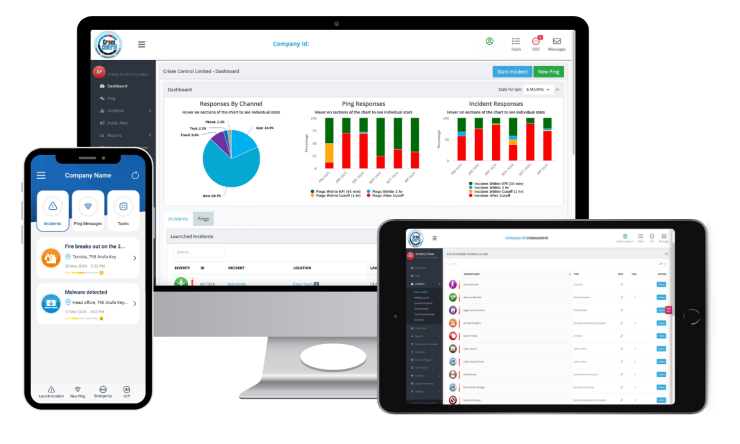
Solutions such as Crises Control help schools digitalise their school emergency response plan while supporting existing safeguarding procedures and governance frameworks. Features including role-based response activation, Emergency Notification Software, acknowledgement tracking, audit trails, incident reporting, business continuity documentation, operational visibility and post-incident reporting help schools demonstrate preparedness while continually improving their response.
Technology does not replace experienced leadership.
It provides the visibility, accountability and evidence that support better governance before, during and after an emergency.
Better Governance Begins Before The Emergency
School governors play a vital role in protecting pupils, supporting school leadership and ensuring resilience across their organisation.
That responsibility extends beyond confirming that policies exist.
It means asking whether emergency plans have been tested, whether leadership can coordinate effectively under pressure and whether the school can demonstrate that its response will work when it matters most.
The ten questions in this guide are intended to help governing boards move from assurance to confidence.
By challenging assumptions, reviewing evidence and encouraging continual improvement, governors can strengthen school emergency preparedness while helping leadership teams build a safer, more resilient school.
If your governing board is reviewing its approach to emergency preparedness, ask one final question:
What evidence gives us confidence that our school is ready for the next emergency?
The answer is often more valuable than the emergency plan itself.
Solutions such as Crises Control help schools move from assurance to evidence through structured incident management, role-based communication, audit trails, operational visibility and business continuity support.
FAQs
1. What Should School Governors Review As Part Of Emergency Preparedness?
School governors should review more than emergency policies. Effective oversight includes examining communication processes, safeguarding arrangements, business continuity planning, incident management procedures, staff responsibilities, emergency exercises and post-incident reviews. The objective is to understand whether the school’s arrangements would work under operational pressure, not simply whether documentation exists.
2. How Does Incident Management Software Support School Governance?
Incident Management Software helps schools demonstrate preparedness by bringing together emergency communication, incident reporting, task management and operational visibility within one structured platform. Governors benefit from improved audit trails, acknowledgement tracking, reporting and evidence that emergency procedures have been tested and followed.
3. Why Is Emergency Notification Software Important For Schools?
Emergency Notification Software enables schools to communicate rapidly with staff and other key stakeholders through multiple channels during an emergency. When integrated with incident management, it also allows leadership teams to monitor acknowledgements, coordinate actions and maintain a shared operational picture throughout the response.
4. What Is The Difference Between Compliance And School Emergency Preparedness?
Compliance demonstrates that policies, procedures and training are in place. School emergency preparedness demonstrates that those arrangements have been tested, reviewed and can be implemented effectively during a real incident. Governors should seek evidence of operational capability rather than relying solely on documented compliance.
5. Why Should Governors Review School Business Continuity Planning?
Emergencies do not always require a full school closure. Events such as severe weather, cyber incidents, utility failures or safeguarding concerns may disrupt teaching while requiring critical services to continue. Reviewing school business continuity planning helps governors understand how the school intends to protect education, pupil welfare and essential operations during periods of disruption.
6. How Often Should School Governors Review Emergency Preparedness?
School governors should review emergency preparedness at least annually as part of their governance responsibilities. However, additional reviews should take place after significant incidents, emergency exercises, major organisational changes or updates to the school’s risk profile. Rather than simply confirming that policies have been updated, governors should examine the outcomes of drills, incident reports, business continuity reviews and lessons learned to ensure the school’s emergency response plan continues to reflect operational realities. Regular oversight helps move emergency preparedness from a compliance exercise to a process of continual improvement.