
At 11:15 on a Tuesday morning, the university campus looks exactly as it should.
Students hurry between lectures carrying backpacks and laptops. Researchers make their way towards laboratory buildings. Visitors arrive for meetings while contractors unload equipment outside a lecture theatre. Prospective students follow campus tour guides across the grounds, and hundreds of people move between buildings without attracting a second glance.
Among them is an individual who appears to belong.
He walks into a lecture theatre, sits quietly through part of a class and blends into the normal rhythm of the day. Nobody challenges him because there is nothing about his appearance that suggests he should not be there. Like everyone else around him, he looks like a university student.
A short time later, the situation changes.
Several members of academic staff are assaulted before security teams fully understand what is happening. Emergency services are called, lecturers and students seek safety, and information begins spreading across the university through phone calls, messaging apps and word of mouth. Staff on neighbouring campuses hear fragments of the story while others continue teaching because they have no idea an incident is unfolding elsewhere.
When incidents like this are reviewed afterwards, the first question is often, “How did this person get onto campus?”
For most universities, that is the wrong place to start.
Universities are designed to be open environments where students, researchers, contractors, conference delegates and visitors move freely throughout the day. In many cases, members of the public also have legitimate reasons to be on campus, whether they are using the library, attending an event or visiting a café. Distinguishing between someone who belongs and someone who presents a risk is rarely straightforward.
A more useful question is this:
Why did nobody recognise that something was wrong until people were already being harmed?
That question sits at the centre of modern university campus security. The greatest challenge is often not preventing someone from entering the campus. It is recognising unusual behaviour early enough for the right people to share information, assess the situation and coordinate an appropriate response before uncertainty turns into an operational incident.
This is where Incident Management Software supports universities in a very different way from traditional security systems. Rather than focusing only on what happens after an incident has been declared, it helps create operational visibility while events are still unfolding. By connecting communication, incident coordination and real-time information, leadership teams can build a shared understanding of what is happening and make informed decisions more quickly.
Universities do not need to become closed campuses to improve safety.
They need to recognise developing incidents sooner, communicate verified information faster and coordinate a consistent response across every team and every campus.
What Is Campus Incident Management?
Campus incident management is the structured process of identifying, communicating, coordinating and resolving incidents that affect the safety, security or operation of a university. It brings together people, processes and technology so that the right teams receive accurate information at the right time, allowing decisions to be made with confidence as an incident develops.
For universities, this extends well beyond physical security. A campus incident could involve an aggressive individual, a laboratory accident, severe weather, a cyber attack, a major IT outage, a protest that disrupts teaching or an emergency affecting multiple campuses. While every scenario requires a different operational response, they all depend on the same principle: leadership teams need a clear, shared understanding of what is happening before they can coordinate an effective response.
The Biggest Misconception About University Campus Security
Many universities invest heavily in physical security. CCTV monitors key buildings, security officers patrol campuses, access controls protect sensitive facilities and emergency procedures are reviewed regularly. These measures are all valuable, but they can create a false sense of confidence when they are viewed as the complete security strategy.
The greatest challenge facing modern universities is rarely a lack of security infrastructure. More often, it is a lack of shared operational awareness.
A CCTV camera can record an incident without anyone noticing it in real time. A security officer may respond quickly in one part of the campus while another faculty remains unaware of what is happening. A lecturer may recognise concerning behaviour but have no simple way to alert colleagues beyond making a phone call. The information exists, but it remains isolated within different departments instead of forming a complete operational picture.
This is why many university incidents do not become operational emergencies until somebody reports them. By then, valuable time has already been lost.
University leaders therefore need to ask a different question. Instead of asking, “How secure is our campus?”, they should ask, “How quickly can the right people build a shared understanding of what is happening before the situation becomes more serious?”
That shift in thinking moves campus security beyond protecting buildings. It becomes an exercise in improving visibility, communication and coordination across the entire university.
Why Universities Often Do Not See An Incident Developing
Most university security incidents do not begin with an obvious emergency. They begin with behaviour that appears completely ordinary.
Someone walks onto campus carrying a backpack, enters a lecture theatre, visits the library or spends time in a communal area. Nobody challenges them because nothing immediately suggests they should not be there. In an open university environment, that is entirely normal.
Students move between buildings throughout the day. Researchers meet with external partners. Conference delegates attend events, contractors carry out maintenance and members of the public use cafés, libraries and sports facilities. From a security perspective, almost everybody appears to belong.
That is what makes campus incident management fundamentally different from managing security in schools, hospitals or secure industrial sites. The challenge is rarely whether someone can enter the campus. The challenge is recognising behaviour that falls outside the ordinary before it develops into something much more serious.
CCTV Cannot Create Operational Awareness
Many universities have invested heavily in CCTV, and for good reason. Cameras help security teams investigate incidents, provide evidence when something goes wrong and support law enforcement after an event has taken place.
What they cannot do on their own is tell decision-makers that something unusual is happening while there is still time to respond.
A camera may record an individual moving between buildings or entering a lecture theatre, but unless someone is actively monitoring that specific feed at that exact moment, nothing changes. In many cases, the footage only becomes relevant after a member of staff has already reported an incident.
This highlights an important distinction that universities often overlook.
Collecting information is not the same as creating operational awareness.
Large universities may have hundreds or even thousands of cameras spread across multiple buildings and campuses. No security team can watch every feed continuously while also responding to day-to-day incidents, supporting events and carrying out routine patrols. As a result, technology captures vast amounts of information, but recognising when that information requires immediate action still depends largely on people.
That is why many serious incidents are not identified by technology. They are identified by lecturers, students or members of staff who realise something is wrong and decide to report it.
By the time that happens, the incident has already moved beyond observation and into response.
Universities therefore need to think beyond surveillance. Operational visibility comes from connecting information, communication and decision-making, allowing leadership teams to understand what is happening as events develop rather than reconstructing them afterwards.
Communication Often Begins Too Late
Once someone recognises that an incident is unfolding, another challenge immediately appears.
How does that information reach everyone else who needs it?
In many universities, the answer still depends on a chain of individual conversations. A lecturer telephones reception. Reception contacts campus security. Security informs senior management. Another member of staff messages colleagues while someone else contacts the emergency services.
Every step makes sense on its own.
Together, they create delay.
While information moves from one person to the next, other parts of the university continue operating normally because nobody has told them anything different. Lecturers carry on teaching, students move between buildings and neighbouring campuses remain unaware that an incident may have implications for them as well.
The problem is rarely that people fail to communicate.
The problem is that communication follows organisational structures instead of operational needs.
An evolving incident does not wait for messages to move through departments one conversation at a time.
This is where Emergency Notification Software strengthens the wider response. Instead of relying on individuals to decide who should be contacted next, universities can notify predefined groups immediately through multiple communication channels. Academic staff, security teams, estates, senior leadership and other stakeholders receive the same verified information at the same time, reducing confusion and helping everyone work from a shared understanding of the situation.
Communication becomes faster, but more importantly, it becomes consistent.
Interested in our Incident Management Software?
Flexible Incident Management Software to keep you connected and in control.
A Multi-Campus University Is One Organisation, But It Rarely Responds Like One
Many universities operate across several campuses, each with its own buildings, security teams, operational priorities and local leadership.
During normal operations, that decentralised model works well.
During an unexpected incident, it can expose weaknesses that are far less obvious.
An assault on one campus may initially appear to be an isolated event, yet staff on another campus continue teaching because they have not received any information. Security teams elsewhere do not know whether the incident has been contained, whether they should increase vigilance or whether additional resources may be required.
Leadership teams are suddenly trying to answer two different questions at the same time.
How should the immediate incident be managed?
How should the rest of the university respond?
Without a structured approach to university emergency communication, different campuses often receive different versions of the same incident. Some are informed immediately, others hear about it through colleagues and some first learn about it from social media or local news.
That inconsistency creates more than communication problems.
It weakens confidence.
Staff begin questioning whether they have the latest information, whether further action is required and whether another campus knows something they do not.
An effective campus emergency notification system removes much of that uncertainty by ensuring verified information reaches every relevant campus, faculty and operational team simultaneously. Everyone understands what has happened, whether it affects their location and what actions are expected from them.
Instead of several campuses responding independently, the university begins operating as a single organisation.
Why The SOS Button Changes More Than The Initial Response
The value of an SOS panic button is often misunderstood.
Many people see it as a faster way of asking for help.
Its real value is that it removes uncertainty from the first few minutes of an incident.
Imagine a lecturer recognises that a situation is becoming threatening. Rather than leaving the room to find security or attempting to explain the situation over the phone while protecting students, they activate an SOS alert from their mobile device.
Within seconds, campus security, the emergency response team and other predefined contacts receive the alert together with the lecturer’s location. Responders no longer need to establish where the incident is happening before they can begin coordinating a response.
That single action also triggers something much more significant.
The organisation starts responding together.
Security teams know where assistance is required. Leadership knows an incident has been declared. Relevant staff receive role-based instructions, and if necessary, neighbouring campuses can be informed immediately. The lecturer is no longer responsible for contacting multiple people while managing an unfolding situation because the communication and coordination process has already begun.
That represents a fundamental shift in how universities manage incidents.
The SOS alert is not simply another notification.
It is the point at which isolated observations become a coordinated operational response.
Incident Management Is About Coordination, Not Just About Communication
One of the biggest misconceptions about Incident Management Software is that its primary purpose is sending alerts.
In reality, an alert is only the trigger. The real work begins after people know something has happened.
At that point, university leaders are no longer asking whether a notification has been delivered. They are trying to understand the situation well enough to make good decisions.
Questions quickly begin to emerge.
- Who is leading the response?
- Has campus security acknowledged the incident?
- Has anyone contacted the emergency services?
- Do neighbouring buildings need to continue operating normally?
- Should another campus be informed?
- Which staff members still need instructions?
- Who is recording the decisions being made?
None of these questions can be answered by communication alone. They require coordination.
That is why effective campus incident management is built around creating a shared operational picture. Every authorised responder should be working from the same information, understanding what has happened, what actions are already underway and where further attention is needed.
Without that shared understanding, departments naturally begin solving different versions of the same problem. Security may focus on the immediate threat while academic departments continue normal teaching. Estates teams may be unaware that access to a building needs to be restricted, while senior leadership tries to piece together updates arriving from several different sources.
The challenge is not a lack of commitment. It is a lack of visibility.
When everyone sees the same operational picture, decisions become faster, priorities become clearer and the entire university responds more consistently.
How Incident Management Software Supports University Campus Security
Open campuses will always involve a level of uncertainty.
Students, lecturers, researchers, contractors, visitors and members of the public will continue moving between buildings throughout the day because that openness is part of what makes a university successful.
The objective is not to eliminate that openness.
It is to ensure that when something unusual happens, the university can recognise it sooner, share accurate information quickly and coordinate an effective response across every affected location.
This is where Incident Management Software supports university operations.
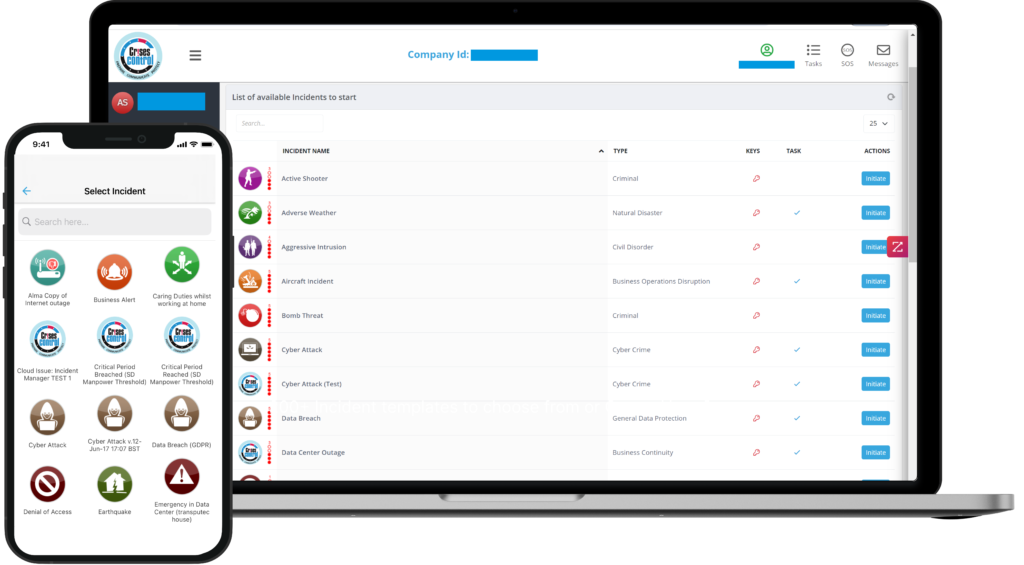
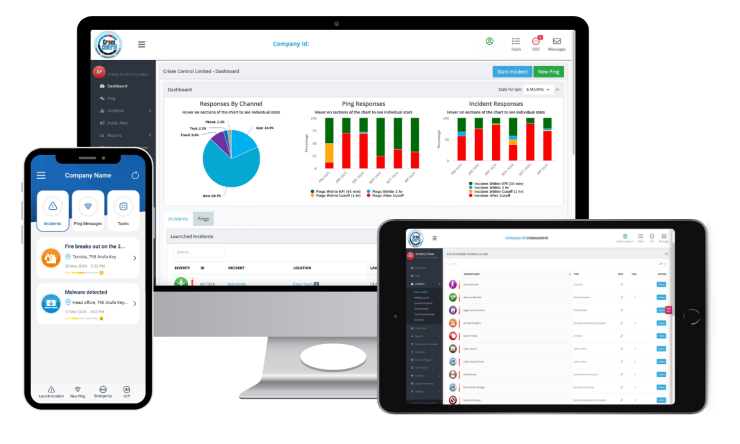
Rather than acting as another security application, it brings communication, task management and operational coordination into one structured response. Security teams, academic staff, estates, senior leadership and emergency responders can all work from the same operational picture while responsibilities, updates and decisions are managed in one place.
Solutions such as Crises Control support this approach by helping universities digitalise their university emergency response plan while continuing to follow their existing security procedures. Features including the SOS Panic Button, role-based notifications, acknowledgement tracking, multi-campus communication, escalation workflows and incident reporting help response teams coordinate incidents instead of simply reacting to them.
The technology does not replace experienced people. It gives them better information, at the right time, so they can make better decisions.
Universities Cannot Secure What They Cannot See
Universities have always balanced openness with safety. That balance should not change.
What should change is the ability to recognise when ordinary campus activity becomes something that requires immediate attention.
The incident at the beginning of this article illustrates an uncomfortable reality. The greatest challenge was not that an unauthorised individual entered the campus. It was that there was no shared understanding of what was happening until people had already been harmed.
That is the difference between security and operational visibility. Security focuses on preventing incidents wherever possible. Operational visibility helps universities recognise incidents earlier, coordinate their response more effectively and give leadership teams the information they need while events are still unfolding.
For universities reviewing their campus incident management strategy, the most valuable question is not: “Do we have enough security measures?”
It is: “If something unexpected happened on campus today, how quickly would the right people understand the same situation?”
The answer to that question often reveals opportunities that cameras, access control systems and written procedures alone cannot address.
If your university is reviewing how it manages incidents across one or multiple campuses, Crises Control can help strengthen operational visibility through structured incident activation, reliable communication, role-based task management, multi-campus coordination, SOS Panic Button functionality and comprehensive post-incident reporting.
FAQs
1. What Is Incident Management Software For Universities?
Incident Management Software helps universities identify, coordinate and manage security, safety and operational incidents from the moment they are reported until the response has been completed. Rather than acting as a standalone communication tool, it brings together emergency notifications, task management, incident reporting and operational visibility into one coordinated response.
During a university security incident, leadership teams can activate predefined response plans, assign responsibilities, monitor acknowledgements, coordinate multiple departments and maintain a shared operational picture across one or several campuses. This enables faster decision-making, reduces confusion and helps universities protect students, staff and visitors while maintaining normal operations wherever it is safe to do so.
2. Why Is University Campus Security Different From School Security?
University campus security presents unique challenges because universities are designed to be open environments rather than controlled sites. Students, researchers, contractors, conference delegates, visitors and members of the public often move freely between buildings, making it difficult to distinguish normal activity from behaviour that may require attention.
Unlike schools, where attendance and access are usually more tightly controlled, universities must balance accessibility with safety. A strong university emergency response plan therefore depends on more than physical security measures. It also requires effective situational awareness, structured communication and coordinated incident management so leadership teams can recognise developing risks and respond consistently across the organisation.
3. How Does Emergency Notification Software Improve University Emergency Communication?
Emergency Notification Software improves university emergency communication by allowing verified information to be shared quickly and consistently with the people who need it most. Universities can send alerts through multiple communication channels, including SMS, email, voice calls and mobile push notifications, ensuring staff and responders receive the same information at the same time.
When integrated with Incident Management Software, notifications become part of a wider operational response instead of isolated messages. Leadership teams can issue role-based communications, monitor acknowledgements, assign tasks and keep everyone working from the same operational picture. This reduces confusion, limits misinformation and helps universities coordinate incidents more effectively as events continue to develop.
4. Why Is A Campus Emergency Notification System Important For Multi-Campus Universities?
A campus emergency notification system helps universities maintain consistent communication across multiple campuses during an incident. Without a structured approach, different locations may receive information at different times, rely on unofficial sources or make decisions based on incomplete updates.
A centralised communication platform allows leadership teams to notify the appropriate campuses immediately, send role-based instructions, monitor acknowledgements and keep security teams, academic staff and operational leaders informed throughout the incident. This creates greater consistency across the organisation, improves coordination between campuses and supports a faster, more confident response during complex emergencies.
5. What Should Universities Review To Improve Campus Incident Management?
Universities should regularly review whether their campus incident management processes provide decision-makers with the information they need while an incident is still unfolding. An effective review should examine how incidents are reported, how quickly security teams are notified, whether lecturers and staff can request assistance easily, how communication is coordinated across multiple campuses and whether leadership teams have real-time visibility of the response.
It is also worth assessing whether emergency communication plans, escalation procedures, role-based responsibilities and post-incident reporting work together as one coordinated process rather than as separate activities. Identifying these operational gaps during routine reviews or emergency exercises allows universities to strengthen preparedness before a real incident exposes weaknesses.