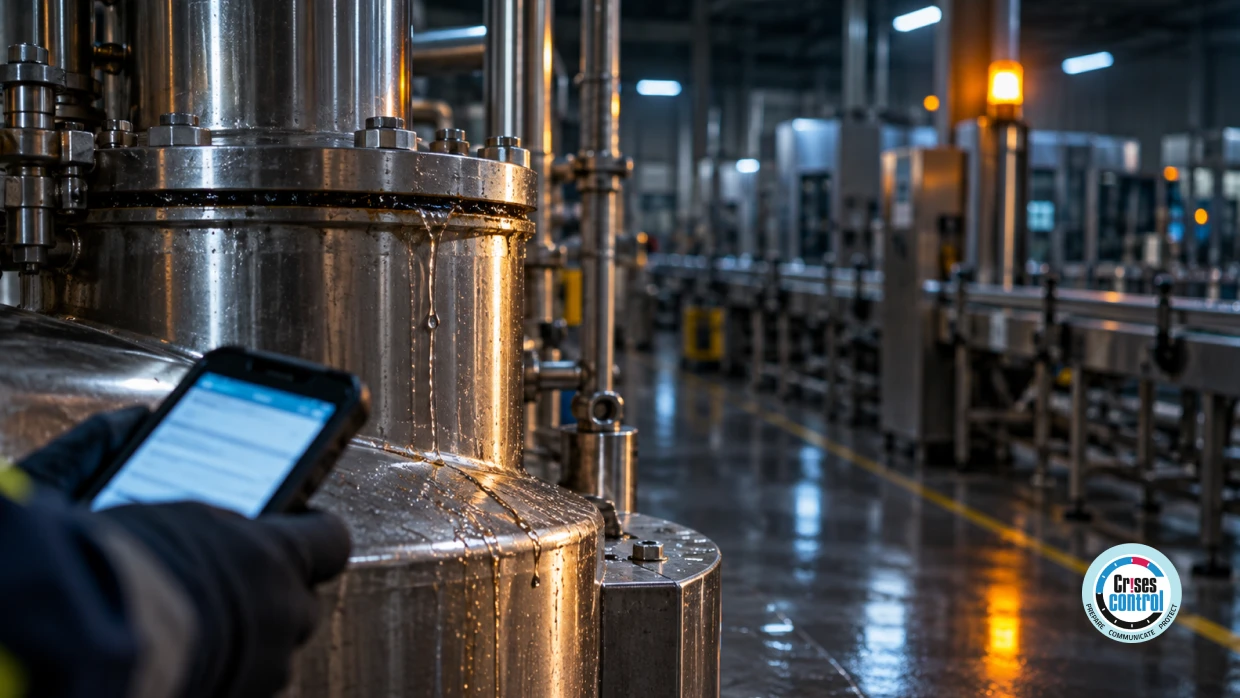
Safety escalation procedures are written for an ordinary Tuesday. They name a supervisor, a radio channel and a form, and assume all three are free. An incident takes all three at once, which is usually when somebody spots a pressure vessel seal weeping on filling line three, two hours into a ransomware containment.
Safety escalation during an incident is a routing problem, not a courage problem: the operator nearly always speaks up, and the concern nearly always stops with the first person who is too busy to act on it.
Safety escalation during an incident means moving a hazard one person can see into the hands of someone with the authority to stop work, fast enough to matter, and leaving a record that outlasts the shift. Most plants have the people. Few have the route.
What Does Escalating A Safety Concern During An Incident Actually Mean?
Escalation is handing a safety concern to a named person who can decide to stop, isolate or carry on, and recording that handover. Reporting the concern after the shift is something else. So is mentioning it in passing. Escalation ends when someone with the authority to act has acknowledged it.
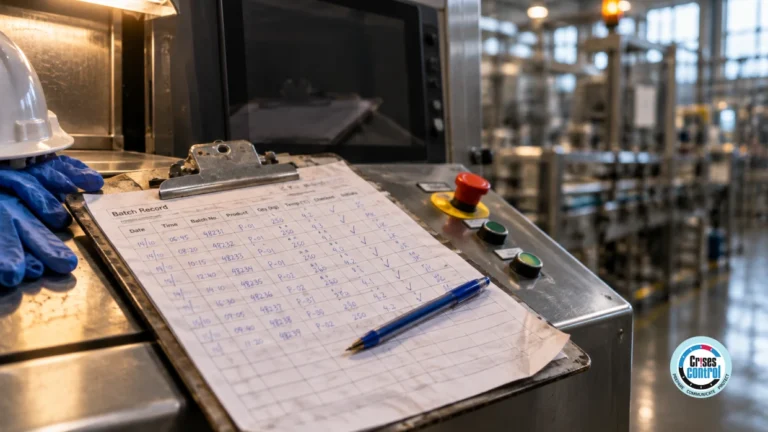
Three things have to travel together on the floor. The hazard in plain words. The location, precise enough to walk to. And the name of the person now holding it. Lose one and the concern becomes a rumour: a conversation about line three that nobody can pin to a vessel, and a handover sheet that says nothing. Those three fields are most of what escalation amounts to, and paper loses them first.
What Changes About Safety Escalation During An Incident?
During an incident the usual route is occupied. The supervisor is on a bridge call, the control room is working the primary event, and the channel that normally carries a concern may be the one that is down. Safety escalation during an incident depends on having a second route that does not fail with the first.
Plants build the escalation path on the assumption that the path is healthy, so the path and the primary incident share a dependency: the same network, the same supervisor, the same three people. We wrote earlier this week about reaching the plant floor when the network is down. The reverse journey has the same flaw, and that shared dependency is the single biggest weakness in safety escalation during an incident.
Who Does An Operator Tell When Raising A Safety Concern During A Plant Incident?
The operator tells one named role. One person, agreed before the shift started. On most sites that is the shift supervisor during normal running and the incident lead once an incident has been declared, with the site's health, safety and environment (HSE) duty officer as the standing alternative when neither answers inside an agreed time.
Naming that fallback in advance is what stops a concern circling the site. A group is not a destination. Posting a hazard into a busy incident channel feels like escalation and performs like broadcasting, because nobody in the group has been told the concern is theirs. The same logic decides who owns the call to restart production: a decision with no name against it is a decision nobody has made. Settling who receives what in advance turns safety escalation during an incident from a judgement call made under pressure into a rule.
The table sets out the five routes an operator actually has during an incident, and what each one leaves behind.
Which Safety Concerns During An Incident Have To Reach A Regulator?
Some have to, by law, and an operator's concern is often the first sighting of one. In Great Britain, a defined list of dangerous occurrences is reportable even when nobody has been hurt, among them the failure of a pressure system with the potential to cause death.
That list is Schedule 2 of the Reporting of Injuries, Diseases and Dangerous Occurrences Regulations 2013, known as RIDDOR, and it also covers the hazardous escape of a substance in the workplace. It cuts both ways for safety escalation during an incident. Upward, because a concern that turns out to be a reportable dangerous occurrence has a clock running on it, and the hours it spent sitting with a busy supervisor are hours you cannot account for later. Downward, because section 44 of the Employment Rights Act 1996 protects an employee from detriment for bringing circumstances connected with their work, which they reasonably believed were harmful, to the employer's attention by reasonable means, where there is no safety representative or where raising it through one was not reasonably practicable. An operator who speaks up mid-incident is using a protected right, not interrupting.
As at October 2026, that is the position in Great Britain. Reporting duties and worker protections differ by jurisdiction, so treat this as orientation and check your own regulator rather than reading it as legal advice.
How Does Crises Control Support Frontline Incident Escalation In Manufacturing?
Crises Control gives the operator a second route that does not depend on finding a person. The SOS function in Employee Safety Software sends an escalation from a phone using press-and-hold activation, carries the employee's name and GPS location where that is enabled, creates an incident record automatically, and notifies the responders configured for that site.
Those responders are whoever the site has set: security, first aid, supervisors, the incident manager. The button is the least interesting part of it. The route works whether or not the supervisor can be found. The escalation lands as a record, so it exists at 06:00 whoever was on shift. And it arrives already attached to an incident, which means frontline incident escalation in manufacturing stops being a separate conversation running alongside the one everybody is already having. Once the route no longer needs a person to be findable, safety escalation during an incident stops depending on who happens to be on shift.
What the platform does not do is judge. It does not decide whether that seal is weeping badly enough to stop filling line three, who is competent to isolate the vessel, or whether the occurrence is reportable. Those stay with the plant's own people and its own procedures. Location is attached to the emergency event. Crises Control does not track employee movement continuously in the background, and that limit is deliberate.
From there the concern follows the lifecycle the rest of the platform is built around. Manufacturing Incident Management Software gives the incident its roles and timeline, task assignment turns the decision into named work with a completion state, and the record feeds incident reporting for the regulator, the insurer and the next audit. We covered the middle of that chain in tracking manual work while systems are down.
Frontline Escalation Checklist For Plant Teams
Work through this before the next night shift, not during it. It is the short version of what good escalation looks like on a site where it actually works.
- Name the role that receives a safety concern during normal running, and the role that receives it once an incident has been declared.
- Name the standing fallback, and the number of minutes after which an operator moves to it without asking permission.
- Give every operator a route that does not depend on the site network, the radio channel or a named individual being reachable.
- Require three fields on every escalation: the hazard in plain words, the location, and who now holds it.
- Make acknowledgement explicit, so the operator knows someone has picked the concern up.
- Attach the escalation to the live incident record, so it survives the handover and the shift pattern.
- Review, after every incident, which concerns were raised, how long each took to reach a decision, and which ones met a reporting threshold.
What Changes On The Next Night Shift
The operator on filling line three will notice the seal either way. What changes is where the concern goes in the forty seconds after she notices it. On a site with one route, it goes to whoever she can find, and the record of it is a line on a handover sheet nobody reads. On a site with a second, independent route, it goes to a named responder with a timestamp, a location and an incident number, and safety escalation during an incident has an answer that holds on a night shift as well as it does in a planning meeting.
Most plants do not need a bigger platform to get there. They need the frontline route built, the fallback named, and the escalation landing somewhere that keeps a record. If you want to see what that looks like against your own shift pattern and site layout, book a demo and bring your current escalation procedure with you.
Frequently Asked Questions
What is safety escalation during an incident?
Safety escalation during an incident is the act of handing a hazard to a named person with the authority to stop, isolate or carry on, by a route that does not depend on the primary incident. An escalation needs the hazard in plain words, a precise location and the name of the person now holding it. The usual path is often occupied, so sites need a named fallback and an agreed number of minutes after which an operator uses it.
What is frontline incident escalation in manufacturing?
Frontline incident escalation in manufacturing is the practice of letting the people closest to the hazard raise it directly, from where they are standing, without routing it through a supervisor first. It treats the operator as a sensor with authority to escalate, not as a witness who reports later. It is one half of safety escalation during an incident, and a named receiving role is the other. Crises Control supports it through the SOS function in Employee Safety Software, and the incident it opens is coordinated like any other in manufacturing incident management software.
Who should an operator tell when raising a safety concern during a plant incident?
One named role, agreed in advance: the shift supervisor during normal running, the incident lead once an incident has been declared, and a standing fallback such as the site's health, safety and environment duty officer when neither answers in time. A group chat is not a destination, because nobody in it has been told the concern is theirs.
Does a safety concern raised during an incident have to be reported to a regulator?
Sometimes, and the operator's concern is often the first sighting of it. In Great Britain, Schedule 2 of the Reporting of Injuries, Diseases and Dangerous Occurrences Regulations 2013, known as RIDDOR, lists dangerous occurrences that are reportable even when nobody has been hurt. A pressure system failure with the potential to cause death is reportable in its own right. Duties differ by jurisdiction, so check your own regulator.
What is the difference between an SOS escalation and a mass notification?
Direction. A mass notification goes out from the organisation to its people, while an SOS escalation comes in from one person to a named responder. Alerting answers who was told; escalation answers who was listening. Both are needed, and in Crises Control the inbound escalation opens the incident that the outbound alerting then works inside.
This article was drafted with AI assistance and reviewed by the Crises Control team. Featured image: AI-generated.