Public sector organisations are under increasing pressure to respond to emergencies quickly, transparently, and consistently. Whether it is severe weather, infrastructure failure, public safety incidents, or large-scale service disruption, the expectation is the same: decisions must be fast, actions must be coordinated, and outcomes must be accountable.
However, many government and local authority teams still rely on fragmented communication tools such as emails, phone calls, spreadsheets, and disconnected reporting systems. While these tools may work in day-to-day operations, they often break down during high-pressure incidents.
This is where Emergency Response Management Software becomes essential. It provides a structured, real-time framework for managing incidents while ensuring every decision and action is recorded, traceable, and auditable.
In the context of public sector accountability, this visibility is not optional. It is a core requirement.
Why Public Sector Accountability Is Becoming More Complex
Public sector organisations are no longer judged solely on whether they respond to an incident, but on how effectively and transparently they manage it.
Several factors are driving this shift:
- Increased public scrutiny of government response times
- Multi-agency coordination across local and national bodies
- Higher expectations for real-time communication with the public
- Regulatory and audit requirements for decision traceability
- Growing complexity of infrastructure and service networks
In this environment, accountability depends on having a clear, documented record of every action taken during an emergency.
Emergency Response Management Software helps achieve this by centralising incident management and creating a single source of truth across all responding teams.
The Accountability Gap in Traditional Emergency Response
Without structured systems, public sector emergency response often suffers from what can be described as an “accountability gap.”
This gap appears when:
- Decisions are made across multiple communication channels
- Incident updates are inconsistent between departments
- There is no unified timeline of events
- Actions are not logged in real time
- Post-incident reporting relies on memory and manual reconstruction
These issues make it difficult to answer key questions after an incident, such as:
- When was the incident first escalated?
- Who made critical decisions?
- What actions were taken and when?
- How quickly were resources deployed?
- Were all stakeholders properly informed?
Emergency Response Management Software closes this gap by automatically recording every stage of the incident lifecycle.
How Emergency Response Management Software Strengthens Public Sector Accountability
At its core, Emergency Response Management Software is designed to improve coordination and visibility during crises. However, its greatest impact in the public sector is accountability.
It achieves this in several ways:
1. Centralised Incident Management
All incident information is stored in one system, ensuring that every stakeholder works from the same live data set.
This eliminates confusion caused by fragmented communication and ensures a consistent version of events.
2. Real-Time Decision Tracking
Every action taken during an incident is recorded as it happens.
This includes:
- Escalation decisions
- Resource deployment
- Communication updates
- Task assignments
This creates a transparent decision trail that can be reviewed after the incident.
3. Multi-Agency Coordination Visibility
Public sector incidents often involve multiple organisations, including emergency services, local councils, transport authorities, and national agencies.
Emergency Response Management Software ensures all parties operate within a shared environment, improving coordination and accountability across agencies.
4. Structured Incident Workflows
Standardised workflows ensure that every incident follows a consistent process, regardless of who is responding.
This reduces variation in response quality and ensures compliance with internal and external procedures.
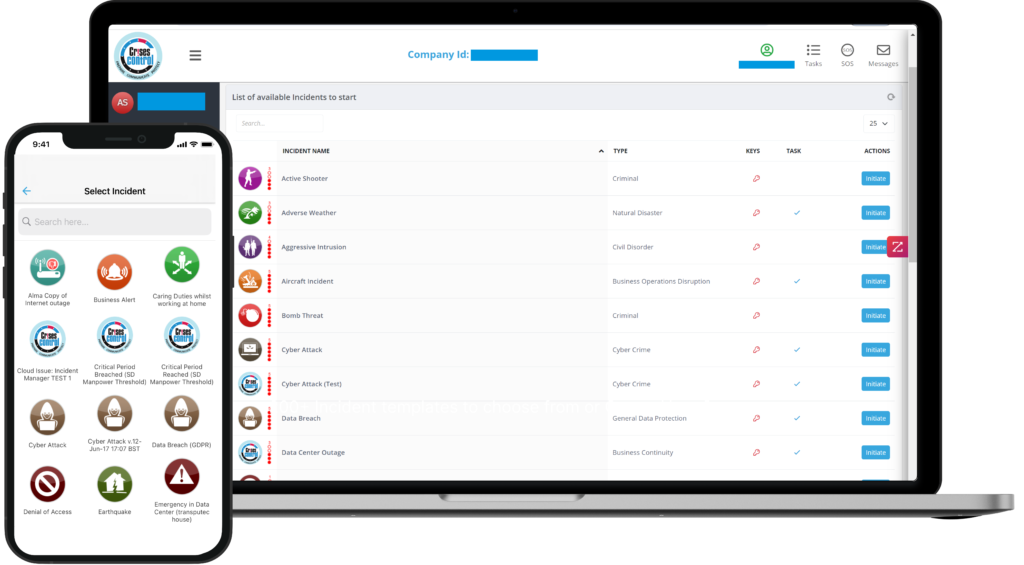
Interested in our Incident Management Software?
Flexible Incident Management Software to keep you connected and in control.
Emergency Operations Platforms and Public Sector Oversight
An Emergency Operations Platform extends the capabilities of emergency response systems by providing deeper situational awareness and command-level oversight.
These platforms typically include:
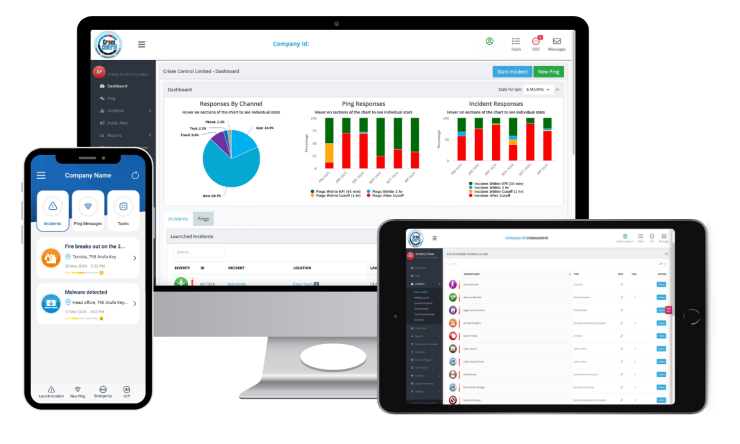
- Live dashboards showing incident status
- Resource allocation tracking
- Geographic incident mapping
- Communication logs across teams
- Performance reporting tools
For public sector leaders, this level of visibility is essential for maintaining oversight and ensuring that response efforts remain aligned with operational priorities.
Improving Emergency Response Management for Local Government
At the local level, accountability becomes even more important due to direct public impact.
Emergency response management for local government requires:
- Fast coordination across departments
- Clear communication with residents
- Accurate reporting for council leadership
- Compliance with national emergency frameworks
- Evidence-based post-incident reviews
Emergency Response Management Software supports local governments by providing a structured system for managing these responsibilities in real time.
It ensures that no action is lost, no decision is undocumented, and no stakeholder is left uninformed.
From Reaction to Accountability: A Shift in Public Sector Culture
One of the most important changes enabled by Emergency Response Management Software is the shift from reactive crisis management to accountable, structured response.
Instead of relying on informal coordination during emergencies, organisations move towards:
- Defined roles and responsibilities
- Documented escalation paths
- Real-time reporting structures
- Post-incident analysis frameworks
This shift improves not only operational performance but also public trust.
Post-Incident Reporting and Audit Readiness
Accountability does not end when the incident is resolved. In fact, this is where scrutiny often increases.
Public sector organisations are expected to provide:
- Full incident timelines
- Decision logs
- Communication records
- Resource deployment evidence
- Performance evaluations
With Emergency Response Management Software, all of this information is automatically captured during the incident, making post-event reporting significantly faster and more accurate.
This reduces administrative burden and improves audit readiness.
Why Accountability Improves Public Trust
Public trust in government response is closely tied to transparency and consistency.
When organisations can clearly demonstrate:
- What happened
- When it happened
- Who was responsible
- How it was managed
They build confidence in their ability to respond effectively to future incidents.
Emergency Response Management Software supports this by ensuring that accountability is built into the response process itself, rather than reconstructed afterwards.
Preparing for the Future of Public Sector Crisis Management
As emergencies become more frequent and complex, public sector organisations must continue to evolve their response capabilities.
Future-ready organisations will rely on:
- Integrated digital response platforms
- Real-time communication systems
- Data-driven decision support
- Automated reporting and audit tools
Emergency Response Management Software is a key foundation of this future, enabling organisations to respond faster while maintaining full accountability at every stage.
Conclusion
Public sector accountability is no longer defined solely by outcomes. It is defined by transparency, traceability, and the ability to clearly demonstrate how decisions were made during a crisis.
Emergency Response Mangement Software provides the structure needed to achieve this by centralising incident management, capturing real-time decisions, and ensuring full visibility across all response activities.
See how Crises Control helps public sector organisations improve accountability with real-time Emergency Response Mangement Software, integrated emergency operations tools, and structured incident management workflows.
From initial alert to final audit, our platform ensures every decision is captured, every action is traceable, and every response is accountable.
Book a free demo today to strengthen transparency, improve coordination, and enhance public sector resilience.
FAQs
1. What is Emergency Response Management Software?
Emergency Response Management Software is a digital platform that helps organisations prepare for, respond to, and recover from emergencies through coordinated communication, incident management, and real-time decision-making.
2. How does Emergency Response Management Software improve public sector accountability?
It records decisions, tracks response activities, and creates a complete audit trail, helping government organisations demonstrate transparency and accountability during emergencies.
3. What is the difference between Emergency Response Management Software and an emergency operations platform?
Emergency Response Management Software manages the full incident lifecycle, while an emergency operations platform provides centralised oversight, situational awareness, and coordination during emergencies. Many modern solutions combine both capabilities.
4. Why is emergency response management important for local government?
Effective emergency response management enables local governments to coordinate departments, communicate with stakeholders, allocate resources efficiently, and protect communities during critical incidents.
5. What are the benefits of Emergency Response Management Software?
Key benefits include faster response times, improved multi-agency coordination, real-time situational awareness, streamlined reporting, and greater transparency across emergency operations.