Written by Anneri Fourie | Crises Control Executive
AI is now part of crisis discussions in oil and gas boardrooms.
Leaders are being told that AI will accelerate decisions, interpret data instantly, and transform industrial incident response. At the same time, operations teams remain cautious. They know that when something goes wrong on site, responsibility cannot be outsourced to software.
The real problem is not whether AI can assist. It clearly can.
The real question is this: where does AI genuinely improve crisis response, and where does relying on it introduce new risks?
The solution is not replacing people. It is using AI as structured decision support inside disciplined workflows.
This article explains where AI crisis management adds value in industrial incidents, where its limitations become clear, and why the safest model in oil and gas is AI as an assistant rather than a decision-maker.
A Clear Definition Of AI Crisis Management
AI crisis management refers to the use of artificial intelligence to support information processing, decision support, communication drafting, and procedural guidance during crisis situations.
In practice, this includes:
- Analysing incoming data from multiple systems
- Summarising complex updates
- Suggesting relevant response procedures
- Assisting with structured communications
- Highlighting possible escalation pathways
It does not mean autonomous decision-making.
In safety-critical and regulated environments, accountability remains human. That distinction is fundamental.
Why AI Is Attractive In Oil And Gas Crisis Response
Industrial operations generate large volumes of information:
- Environmental sensor data
- Security notifications
- Operational logs
- Compliance documentation
During an incident, leaders must quickly interpret what matters and what does not. They must identify emerging risk, assign ownership, and coordinate response across sites and functions.
Manual processes struggle with scale and speed. Information sits across email threads, messaging platforms, monitoring dashboards, and phone calls. Context becomes fragmented.
AI in crisis management becomes attractive because it promises to reduce cognitive overload. It can consolidate, summarise, and structure information faster than humans alone.
Used properly, it reduces friction between signal and structured response.
Where AI Genuinely Helps In Industrial Incidents
Information Consolidation Under Pressure
One of the most practical uses of AI crisis management is summarisation.
During an environmental incident or industrial safety event, updates arrive constantly. AI can:
- Summarise lengthy message threads
- Highlight deviations from expected thresholds
- Extract key changes across reports
- Present concise briefings for leadership
This reduces time spent reading and increases time spent deciding.
Plan Retrieval And Structured Guidance
Industrial organisations maintain detailed emergency response plans. Under pressure, locating the correct section quickly is difficult.
AI decision support in emergencies is especially useful here.
An AI assistant embedded within an incident management platform can:
- Surface relevant parts of a crisis management plan
- Suggest structured next steps aligned with approved workflows
- Provide prompts that reinforce escalation rules
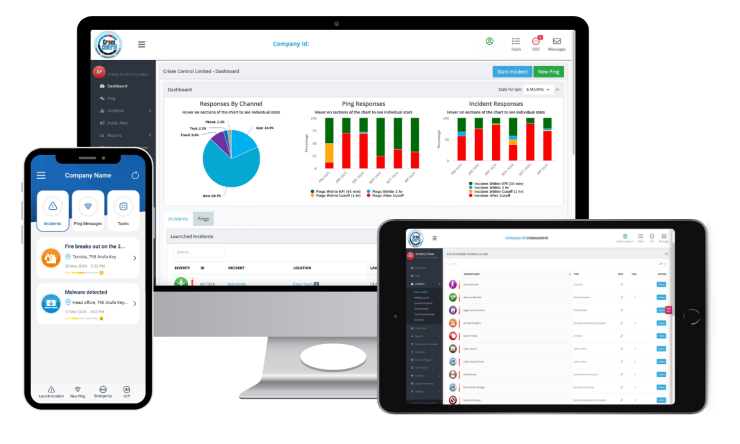
Within Crises Control, CRAiG operates in this way. It does not invent new procedures. It references and structures the organisation’s own documented plans.
That difference matters. AI is reinforcing governance, not overriding it.
Drafting Clear Communications
Industrial incidents require accurate internal and external updates. Drafting messages under stress introduces risk.
AI can assist by:
- Generating structured draft notifications
- Translating technical updates into clear language
- Maintaining consistency across communications
Human review remains essential. The value lies in speed and clarity, not automation of judgement.
Learning From Patterns Over Time
AI can analyse historical incident data to identify patterns such as:
- Delays between detection and ownership
- Recurring escalation bottlenecks
- Communication gaps between functions
This insight supports continuous improvement. It strengthens crisis management tools without replacing leadership.
A Real Scenario: Where AI Helps But Does Not Decide
Consider a gas processing facility where environmental sensors detect rising levels of a potentially hazardous substance.
Alerts trigger automatically. Operations receive data. IT confirms systems are functioning. Weather conditions suggest dispersion risk may increase overnight.
An AI assistant summarises:
- Current sensor readings
- Relevant containment procedures
- Historical incident comparisons
- Draft internal notifications
This saves time. It structures the situation clearly.
But the decision to escalate to full operational shutdown cannot be made by AI.
That decision depends on:
- Local staffing levels
- Wind direction and surrounding communities
- Ongoing maintenance activity
- Regulatory notification thresholds
- Business continuity implications
Human vs AI decision making becomes critical here. AI interprets patterns. Humans interpret context.
AI supports. Leaders decide.
Where AI Limitations In Crisis Response Become Clear
There is growing enthusiasm about autonomous systems managing crisis response. In industrial environments, that enthusiasm must be tempered by reality.
AI Lacks Contextual Judgement
Industrial incidents rarely fit neat categories.
An alert may appear routine but carry unique operational implications. AI systems rely on training data and defined patterns. They do not understand:
- Informal authority structures
- Site-specific sensitivities
- Regulatory relationships
- Political or reputational implications
AI limitations in crisis response appear when organisations assume pattern recognition equals situational awareness.
It does not.
AI Cannot Assume Accountability
Escalation decisions in oil and gas carry legal and regulatory consequences.
Regulators expect documented human judgement. If an escalation decision is questioned, a senior leader must explain:
- Why it was made
- When it was made
- What information was considered
An algorithm cannot accept responsibility. Delegating escalation to AI undermines governance.
Overreliance Creates New Risk
When teams begin to treat AI outputs as authoritative, cognitive discipline can weaken.
People may:
- Accept AI summaries without challenge
- Reduce independent analysis
- Assume structured language equals certainty
Overconfidence in AI can reduce healthy debate. Industrial response benefits from constructive challenge, not passive acceptance.
AI And The Myth Of Full Automation
A common belief is that AI will eventually automate crisis response completely.
In oil and gas operations, full automation faces clear constraints:
- Regulatory frameworks require human oversight
- Incident severity evolves unpredictably
- Ethical and legal accountability remains human
- Escalation decisions affect safety, communities, and reputation
Automation can trigger notifications. It can support workflow activation. It cannot replace leadership.
The organisations that attempt to remove humans from escalation loops risk introducing new blind spots.
The Right Model: Structured AI Within Crisis Management Tools
The effectiveness of AI in crisis management depends on integration.
If AI operates separately from incident workflows, it becomes commentary. It produces insights that may not translate into structured action.
When embedded inside a disciplined incident management platform, AI becomes practical.
Within Crises Control, CRAiG operates inside the same incident record used by teams. It:
- Supports plan navigation
- Reinforces escalation structures
- Assists with drafting communications
- Enhances clarity during evolving events
It does not sit outside the process. It works within it.
AI without workflow creates noise. AI within workflow supports action.
AI Is Only As Good As The Plans Behind It
Another overlooked reality is that AI systems rely on existing documentation.
If emergency response plans are outdated, fragmented, or poorly structured, AI will surface inconsistent guidance.
AI amplifies the quality of what it is trained on.
Organisations must first ensure:
- Crisis management plans are current
- Escalation paths are clearly defined
- Ownership structures are documented
- Continuity plans are digitally accessible
AI strengthens disciplined systems.
Balancing Human Expertise And AI Support
For leaders evaluating AI crisis management, a simple decision framework helps.
Use AI for:
- Summarising complex data
- Retrieving relevant procedures
- Drafting structured communications
- Identifying trends across incidents
Keep human authority over:
- Escalation decisions
- Regulatory statements
- Task ownership
- Final public communications
- Risk acceptance
This balance respects both technological capability and operational reality.
AI, Compliance, And Regulatory Reporting
Industrial incidents often lead to regulatory scrutiny.
Authorities expect:
- Timely escalation
- Clear decision-making
- Documented communication
- Evidence of ownership
AI can assist in preparing structured summaries for regulatory reporting for incident management. It can highlight timelines and extract decision points.
An incident management platform ensures that:
- Actions are time-stamped
- Ownership is recorded
- Communication is traceable
- Decisions are documented
AI enhances clarity. Structured workflows preserve accountability.
Choosing The Best Emergency Communication Solution In An AI Era
Many organisations now search for the Best Emergency Communication Solution with AI capability.
The better question is not whether AI exists.
It is whether AI strengthens structured crisis response.
A suitable platform should:
- Support reliable multi-channel communication
- Embed AI within incident workflows
- Reinforce role-based ownership
- Maintain clear audit trails
- Integrate crisis management tools with continuity planning
AI features alone do not improve resilience. Structure does.
Conclusion
AI crisis management is not about automation replacing leadership. It is about supporting leaders with clearer information, faster access to plans, and structured communication during complex incidents.
Used carefully, AI reduces cognitive overload and strengthens disciplined response. Used carelessly, it creates overconfidence and diffuses responsibility.
The safest and most effective model in oil and gas remains clear:
AI assists.
Humans decide.
Platforms enforce structure.
This is where structured systems matter. When AI is embedded inside a disciplined incident management platform such as Crises Control, it supports ownership rather than replacing it. It reinforces governance, preserves accountability, and keeps decision-making where it belongs.
If you are reviewing how AI fits into your crisis response strategy, examine how it integrates with your workflows, ownership model, and compliance obligations.
Request a FREE Demo