Written by Alma Davidson | Crises Control Intern
Why Post-Incident Learning Matters in Manufacturing
Manufacturing leaders know that no matter how refined a process may be, disruptive events will occur. Equipment failures, safety incidents and operational slowdowns are an almost inevitable part of maintaining large-scale production systems. What separates high-performance manufacturers from the rest is not that they avoid incidents altogether, but that they extract insight from them in a way that strengthens operations rather than assigning fault. Too often traditional reviews focus on who caused an incident rather than what conditions enabled it, which discourages teams from sharing vital knowledge. By adopting crisis management software for manufacturing and approaching post-incident learning without blame, organisations can preserve essential data, encourage open dialogue and build a continuous improvement cycle rooted in evidence and shared understanding. This shift not only builds stronger systems but also supports compliance and resilience in an increasingly demanding regulatory and operational environment.
What Is Crisis Management Software?
Crisis management software is a digital platform designed to support teams before, during and after significant incidents. In manufacturing, it helps organisations coordinate responses, capture structured data, automate communications and generate audit-ready reports that can be analysed later for learning and improvement. This type of software supports not only emergency response needs but also post-incident evaluations that feed back into strategy, training and compliance workflows. By centralising discovery and documentation, crisis management software creates a consistent, transparent stream of information every time something goes wrong.
Manufacturing environments are regulated, complex and high-risk. A single incident, even one that causes no injury, can disrupt production lines, cloud compliance obligations and shake confidence among teams. Traditional post-incident reviews often focus on identifying who made an error or which person should be accountable. While accountability has its place, a blame-oriented approach discourages honest reporting and weakens team engagement. Studies on post-incident review best practices emphasise that establishing psychological safety, where people feel secure reporting issues and gaps, leads to more effective learning outcomes.
In a manufacturing context, incidents may arise from equipment malfunction, procedural gaps or supply chain stress. If these events are analysed primarily to find fault, the deeper systemic issues remain unexamined and unresolved. Post-incident learning shifts the focus from blame to understanding. It asks: what happened, why did it happen and how can we prevent recurrence? When implemented well, this mindset drives continuous improvement and strengthens resilience against future disruptions.
The Shift to Blameless Culture
Blameless post-incident reviews are an approach increasingly recognised as essential to high-performance operations. In this model, reviews concentrate on systems, processes and conditions rather than individuals. Leadership must make it clear that reporting an incident is a contribution to improvement rather than an invitation to censure. Industry guidance on post-incident best practices emphasises creating psychological safety so that teams can participate openly and honestly in reviews, share context and contribute to root cause analysis without fear of reprisal.
Manufacturing professionals will recognise all too well that when blame enters the conversation, people become guarded. They may omit important details or minimize their role to protect their reputations. This hampers organisations’ ability to gather complete evidence and can propagate the same risks into future operations. A blameless approach ensures that the collective experience of everyone involved is used to make meaningful improvements.
How Crisis Management Software Supports Learning Without Blame
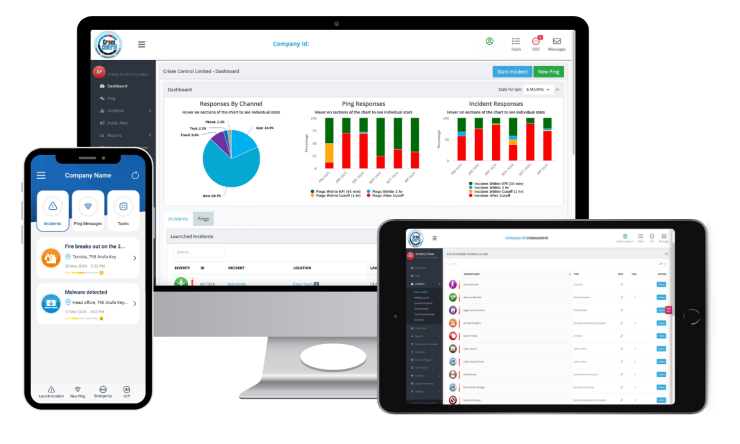
The practical value of crisis management software becomes evident in how it helps operational teams document, communicate and analyse incidents objectively. Rather than relying on human memory or fragmented manual reports, the software captures data the moment an incident unfolds. Timestamped logs, messages, task assignments and decision trails are all recorded in a way that shows what happened and when, free from the subjective biases that arise in recollection.
By capturing detailed information automatically, crisis management platforms help teams reconstruct events accurately. This transparency reduces the risk that personal recollections dominate the narrative. In many ways, having a clear, data-rich timeline encourages focus on systems and conditions rather than individuals.
Beyond data capture, effective crisis management software provides tools for analysing incident patterns across time. Repeat situations may reveal weaknesses in training processes, maintenance schedules or communication pathways. These insights are invaluable to leaders aiming to develop preventative strategies instead of reactive patches.
Integrating Compliance with Post-Incident Reviews
Manufacturers must meet regulatory requirements covering safety, environmental impact and operational continuity. Organisations that adopt systematic post-incident learning often find that they have richer documentation to demonstrate due diligence. Crisis management tools paired with Incident Reporting and Audit Software simplify compliance reporting by capturing audit trails of every action taken, every message exchanged and every corrective task assigned. This helps teams show regulators that they are not only aware of past incidents but have analysed them and applied corrective measures.
Compliance-focused analytics also help organisations anticipate and mitigate risks before they escalate into violations. Trends gleaned from historical incident data feed into compliance dashboards and strategic planning, aiding leaders in allocating resources where they are most needed.
Turning Reviews Into Continuous Improvement
Post-incident learning doesn’t end with a single review. When crisis management software is used consistently across a facility or group of sites, it creates a cycle of improvement. Pattern recognition becomes possible as leaders compare incidents across time, shifts and equipment types. These insights can motivate targeted training, upgrades to equipment, enhancements to safety protocols or changes in supplier contracts, all driven by evidence rather than intuition.
In practice, teams that embrace this systematic approach start asking better questions. Instead of “who caused this,” they ask “what conditions enabled this to occur?” and “how can we adjust our systems or workflows to prevent recurrence?” Over time, this approach reduces the frequency and severity of incidents, freeing teams from firefighting and enabling focus on strategic improvements.
Interested in our Incident Management Software?
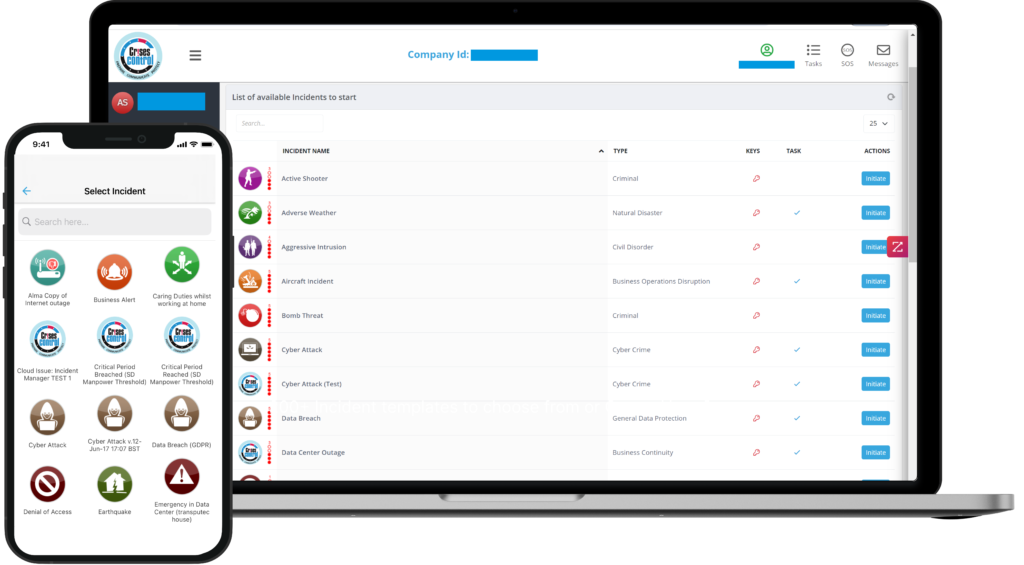
Flexible Incident Management Software to keep you connected and in control.
Best Practices for Blameless Post-Incident Reviews
Organisations looking to improve post-incident learning often adopt structured review templates and defined timelines for documentation. These templates guide teams on key aspects to record: what occurred, the conditions leading up to the event, contributing factors, response performance and follow-up actions. Many teams aim to complete a draft review within a set period, ensuring that details remain accurate and fresh.
Selecting a defined meeting cadence and involving the right people, those directly and indirectly involved, enriches the quality of insights. The goal is to build a culture where contributions are valued and where every incident becomes a resource for improvement rather than an occasion for punishment or blame.
Technology-Driven Learning and Human Factors
It is crucial to recognise that technology alone does not create a learning culture. Leaders must model the behaviour they seek, reinforce psychological safety and ensure that post-incident reviews are seen as constructive exercises. High quality crisis management software strengthens these cultural shifts by providing consistency, structure and visibility into how incidents are handled and learned from.
Software that enables collaborative reviews allows contributions from cross-functional teams. This can be particularly helpful in manufacturing, where incidents may span engineering, safety, production and quality assurance disciplines. Breaking down silos and engaging diverse viewpoints enriches the learning process and helps organisations identify unexpected root causes.
Real-World Considerations for Manufacturing Leaders
Manufacturers operate in environments where downtime is expensive and safety issues carry significant human and financial costs. Investing in a structured post-incident learning process delivers value by reducing risk, improving throughput and strengthening compliance readiness. When leaders consciously move away from blame and toward evidence-based improvement, they empower teams to share insights that genuinely strengthen operations.
Effective crisis management software supports these objectives by capturing a clear record of events and enabling teams to analyse data across incidents. The result is deeper insight into recurring patterns, clearer paths to corrective action and a stronger culture of ownership and improvement.
Conclusion
If your organisation aims to embed a culture of learning, strengthen compliance and turn incident insights into operational advantage, Crises Control offers a comprehensive crisis management software solution built for manufacturing environments. Get a free personalised demo.
If your organisation wants to truly embed a culture of learning, boost compliance, and turn the insights gained from incidents into real operational advantage, a blameless post-incident approach coupled with the right software is essential. Rather than dwelling on fault, a blameless review focuses on systems, processes and conditions that contributed to an event. This allows for an environment where teams feel safe to share information openly, learn together, and make meaningful improvements based on facts rather than fear.
In manufacturing, where downtime, compliance obligations and safety risks are ever present, capturing detailed, objective post-incident data with crisis management software helps leaders see beyond individual actions and focus on systemic resilience. By automating data capture, communication and structured post-incident review workflows, the platform transforms every incident into a source of insight that supports smarter decisions, clearer compliance documentation, and stronger operational strategies, all without the negative effects of blame culture.
With Crises Control’s robust crisis management capabilities tailored for manufacturing environments, organisations can build a repeatable process for analysing incidents, identifying trends, and driving improvements that matter. This empowers teams to respond faster, learn more effectively, and strengthen both safety and performance across the organisation.
Request a FREE Demo