Written by Anneri Fourie | Crises Control Executive
Most design agencies are used to juggling complexity. Teams work across studios, client sites, and home offices. Projects move between locations. People collaborate across time zones without thinking twice.
The problem appears when something goes wrong.
A burst pipe. A power outage. A fire alarm. A local transport shutdown. A security incident near an office. These events are not dramatic, but they are disruptive. When communication is slow or unclear, small incidents quickly turn into operational headaches.
Emergency response in many design firms still depends on email chains, chat messages, and whoever happens to be available at the time. This approach often creates confusion rather than clarity.
Emergency communication solutions for multi-site organisations exist to solve this exact problem. They give organisations a reliable way to alert staff, share clear instructions, and coordinate responses across locations, without relying on guesswork or informal messaging.
For design agencies, this is not about crisis theatrics. It is about keeping people safe, protecting client commitments, and staying in control when normal routines are disrupted.
This article explains why emergency response is so difficult in multi-site design offices, where common approaches fall short, and how organisations can build a response capability that works in real conditions.
What emergency communication solutions actually do
Emergency communication solutions are systems designed to send urgent, targeted messages to the right people at the right time. They support acknowledgement, escalation, and structured response actions, rather than open-ended discussion.
In practical terms, they allow an organisation to:
- Alert staff across multiple offices and working patterns
- Confirm who has received and acknowledged instructions
- Share clear guidance during incidents
- Coordinate actions across teams and locations
- Maintain visibility for leadership during disruption
When these systems are used well, they reduce confusion and help organisations make decisions with better information.
Why emergency response is difficult for design agencies
Design firms face a specific mix of pressures that make emergency response harder than it first appears.
Teams are spread out by default
Most mid-sized and large agencies operate with a combination of headquarters, satellite studios, project offices, and remote workers. Even people working on the same project may be based in different places.
During an incident, leaders are forced to answer basic questions very quickly:
- Which locations are affected?
- Who is currently at risk?
- Who needs to act and who needs to stay informed?
- Can work continue elsewhere?
Office-based communication methods assume people are present in one place. That assumption rarely holds true.
Creative work depends on continuity
Design work relies on momentum. Interruptions affect more than the immediate task. They disrupt handovers, reviews, and client interactions. When communication is unclear, teams lose time trying to work out what is happening rather than responding effectively.
Poor incident communication often causes more disruption than the incident itself.
Safety risks extend beyond offices
Design professionals frequently visit construction sites, client premises, and public locations. These environments carry their own risks, especially for lone workers. Without a clear way to raise an alert or request support, incidents can escalate unnecessarily.
A realistic scenario: a water leak across multiple studios
Picture a burst pipe overnight in a city-centre studio. By morning, the floor is unsafe and access is restricted. Some staff are already travelling in. Others are working remotely. Another office in a different city is unaffected and could absorb urgent work if informed early.
In many organisations, the response unfolds like this:
- Facilities contacts a small group by email
- Managers start sending messages on chat platforms
- Different versions of the situation circulate
- Some staff arrive at the office before being told not to
- Client teams delay updates because information is incomplete
Now consider the same situation with a coordinated mass notification system for global teams:
- A targeted alert is sent to staff assigned to the affected location
- Clear instructions confirm the office is closed and remote working applies
- Managers receive confirmation of who has acknowledged the message
- Other offices receive awareness updates to prepare for workload changes
- Leadership can see the status of the incident in one place
The incident is still disruptive, but uncertainty is reduced and decisions are easier to make.
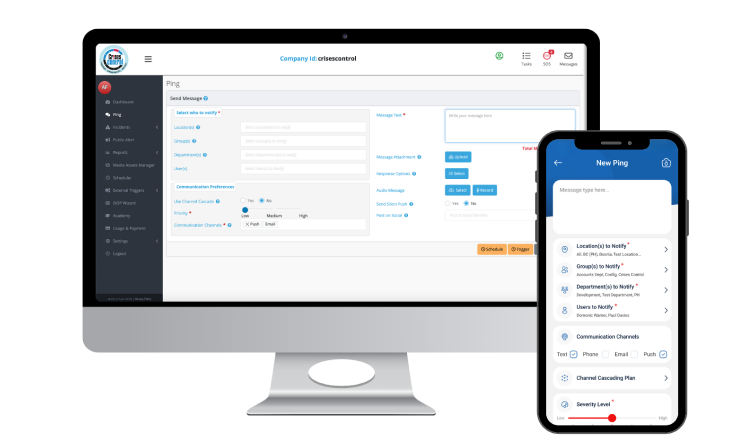
Interested in our Ping Mass Notification Software?
Efficiently alert everyone in seconds at scale with our Mass Notification Software.
Why common approaches fail when it matters
Many organisations believe they are prepared because they have plans and communication channels. These often fail under pressure.
Email and chat are not designed for emergencies
Email and collaboration tools are built for conversation. Messages can be missed, delayed, or lost among routine updates. There is no reliable way to confirm receipt or ensure urgency is recognised.
In an incident, unclear communication creates delays and mixed messages.
Plans exist but are not usable
Business continuity plans often sit in shared folders or internal portals. During an incident, staff may not know where they are or may not be able to access them.
This is why business continuity planning software for multi-location design firms is increasingly used. Plans need to be available on mobile devices and structured around actions, not documents.
Roles are assumed rather than defined
In many design agencies, responsibility during incidents is informal. People assume someone else is dealing with it. This leads to duplicated effort or, worse, inaction.
Clear role-based actions remove this uncertainty.
How to manage emergency response across multiple design offices
Effective response comes from clarity, not complexity. Technology helps when it supports real working practices.
Use a simple response structure
A practical emergency response structure includes:
- Incident types relevant to design operations
- Clear triggers for escalation
- Defined roles with specific responsibilities
- Agreed communication methods for emergencies
This structure should be tested against realistic scenarios, not just documented and forgotten.
Separate alerts from coordination
Emergency alerts should be short, direct, and authoritative. Discussion and coordination can follow once people are safe and informed.
An incident management platform with SOS alerts supports this by ensuring urgent messages cut through everyday noise.
Design for mobile and remote access
Incidents rarely occur when everyone is at their desks. Systems must work on personal devices and remain accessible during local outages.
Cloud-based access ensures teams can respond even when office systems are unavailable.
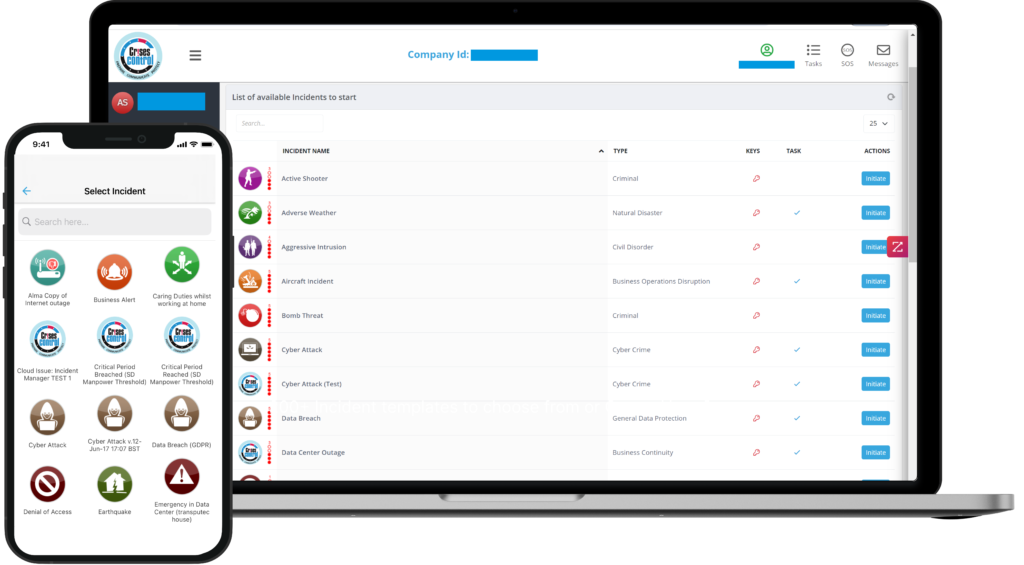
Interested in our Incident Management Software?
Flexible Incident Management Software to keep you connected and in control.
Emergency response system for creative studios and site-based teams
An effective emergency response system for creative studios and site-based teams reflects how people actually work.
Capabilities that matter in practice
- Location-based notifications rather than blanket messages
- Acknowledgement tracking to confirm staff safety
- Simple SOS functionality for lone workers
- Role-specific task lists that guide action
- Central visibility without unnecessary oversight
These features support both immediate response and informed decision-making.
Supporting people under pressure
During incidents, stress and uncertainty affect judgement. Clear instructions and limited choices reduce mistakes. Systems should guide action rather than rely on memory.
Digital workflows help standardise responses while leaving room for professional judgement.
Compliance and accountability across regions
Global design agencies operate under different safety and data protection requirements. While regulations vary, common expectations include:
- Demonstrating duty of care
- Documented response processes
- Clear records of decisions and communications
- Secure handling of personal data
Centralised crisis and incident management systems support this by maintaining consistent records across regions, reducing administrative burden after incidents.
Why a single global plan often fails
Many organisations assume one emergency plan can cover all locations. In reality, this approach struggles.
Local conditions differ. Buildings vary. Legal requirements change by region. Cultural expectations influence how people respond.
A shared framework with local adaptations works better. Core principles remain consistent, while location-specific details are embedded into digital workflows.
Manual versus digital approaches in real life
Manual approaches rely on memory and availability. They work when incidents are minor and predictable. They struggle when conditions change quickly.
Digital platforms do not replace leadership. They provide structure, visibility, and reliability when people are under pressure.
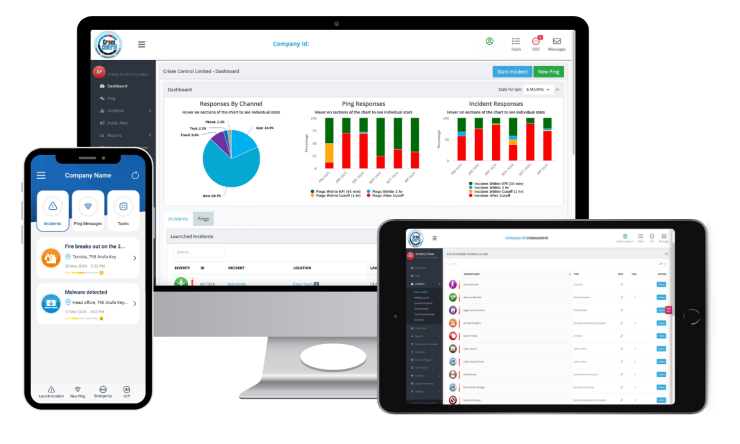
Crises Control supports organisations by digitalising crisis and continuity plans into clear, role-based actions, helping teams communicate and respond with confidence during disruption.
Measuring improvement in a practical way
Emergency response is hard to measure precisely. Instead of chasing abstract metrics, organisations should focus on practical outcomes:
- How quickly clear instructions are shared
- How many people acknowledge messages promptly
- How much confusion is avoided
- How easily leadership understands the situation
- How smoothly work continues where possible
These indicators reflect real resilience.
Supporting creativity without heavy process
Design agencies often worry that formal processes will slow them down. Effective emergency systems stay out of the way during normal work and become visible only when needed.
They support people when something goes wrong and fade into the background when it does not.
Final thoughts
Emergency response in multi-site design offices is not about rare disasters. It is about managing everyday disruption in a calm, organised way. Clear communication, structured response, and accessible plans protect people and keep work moving.
Crises Control provides practical tools that support this approach through reliable emergency communication, role-based incident response, and digital continuity planning.
To explore how this could work in your organisation, contact Crises Control.
Request a FREE Demo