Every emergency creates uncertainty.
Whether it is a severe weather event, cyberattack, public health emergency, infrastructure failure, or security incident, government agencies are expected to respond quickly, communicate clearly, and coordinate effectively across multiple departments.
The challenge is not simply responding to the event itself. It is managing people, information, and resources while conditions continue to change.
Citizens expect accurate updates. Emergency responders need clear direction. Leadership requires real-time visibility. Partner agencies must work together without delays or duplicated effort.
Meeting these expectations requires more than emergency plans stored in binders. It requires technology that enables organisations to activate response procedures, communicate with stakeholders, and coordinate every stage of an incident from one central platform.
This is where Emergency Response Management Software has become an essential tool for modern government agencies.
By combining incident management, mass notification, task coordination, and situational awareness, governments can move from reactive crisis management to proactive operational resilience.
The Growing Complexity of Government Emergency Response
Government agencies are responsible for protecting communities through an increasingly diverse range of emergencies.
Natural disasters continue to increase in frequency and severity. Cyber threats target public infrastructure. Public health emergencies require coordination across multiple organisations. Transportation disruptions, utility failures, and civil emergencies demand rapid action while maintaining public confidence.
No single department manages these incidents alone.
Emergency management teams often coordinate with law enforcement, fire services, emergency medical services, transportation authorities, utilities, healthcare organisations, schools, and elected officials.
Without centralised coordination, communication quickly becomes fragmented.
- Emails become buried.
- Phone calls are missed.
- Critical updates are delayed.
- Teams work from different versions of information.
These communication gaps slow decision making when every minute matters.
Emergency Response Management Software helps eliminate these challenges by providing a shared operational picture that keeps every stakeholder informed throughout the incident lifecycle.
Why Mass Notification Is More Than Sending Alerts
When people think about emergency communication, they often think about sending an emergency text message.
Effective mass notification goes much further.
The goal is not simply to send information. It is to ensure the right people receive the right information at the right time through the channels they are most likely to see.
Government agencies must often communicate with multiple audiences simultaneously, including:
- Emergency responders
- Government employees
- Department leaders
- Partner agencies
- Contractors
- Critical infrastructure providers
- Citizens
Each audience may require different information and different instructions.
Modern mass notification platforms allow organisations to send targeted alerts through SMS, email, voice calls, mobile applications, desktop notifications, and other communication channels from a single interface.
Delivery tracking and acknowledgement reporting provide valuable visibility into who has received important information and who may require additional follow up.
This helps agencies communicate faster while reducing confusion and improving accountability.
Incident Response Requires Coordination, Not Just Communication
Communication is only one piece of successful emergency management.
Responders also need to understand what actions must be taken, who is responsible, and whether those actions have been completed.
Emergency Response Management Software supports incident response by bringing together communication and operational coordination.
Instead of managing incidents through disconnected spreadsheets, emails, and phone calls, agencies can oversee response activities within a centralised platform.
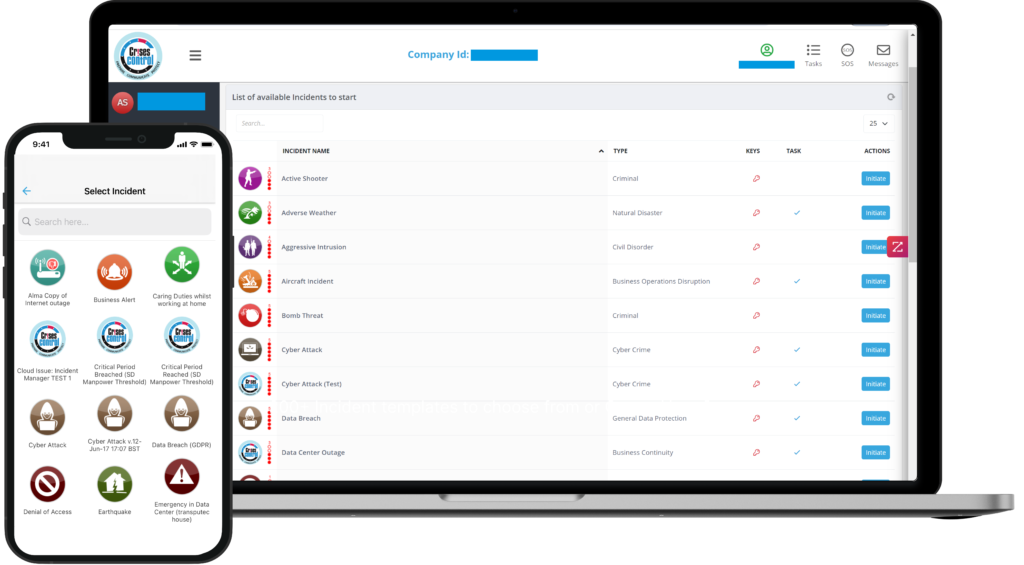
Key capabilities include:
- Incident reporting
- Automated task assignments
- Escalation workflows
- Resource management
- Digital emergency plans
- Situation reporting
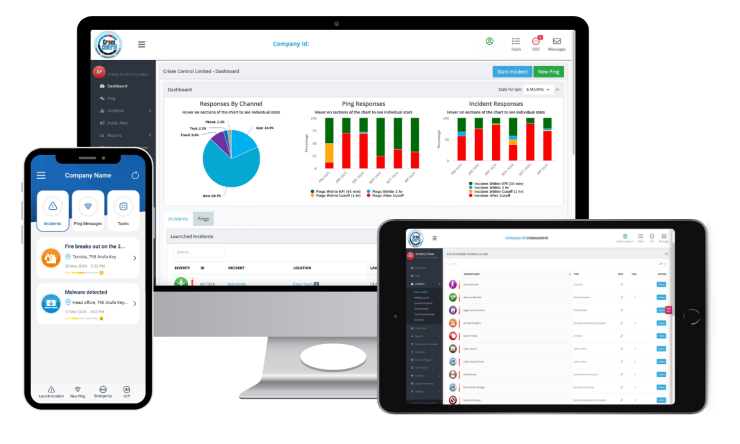
- Real-time dashboards
- Audit trails for post-incident reviews
These capabilities help leaders maintain situational awareness while ensuring every team understands its responsibilities throughout the response.
Interested in our Incident Management Software?
Flexible Incident Management Software to keep you connected and in control.
Lessons from the 1982 Tylenol Crisis
Although the challenges governments face today are very different from those faced by private companies, one of the greatest examples of crisis management still offers valuable lessons.
In September 1982, seven people in the Chicago area died after consuming Extra Strength Tylenol capsules that had been tampered with and laced with cyanide after leaving manufacturing facilities.
The incident quickly became national news.
Consumer confidence collapsed almost overnight.
Instead of waiting for investigators to identify every detail, Johnson & Johnson focused on protecting the public.
The company voluntarily recalled more than 31 million bottles of Tylenol across the United States, stopped advertising, worked closely with regulators and law enforcement, and held regular press briefings to provide accurate updates.
One of the most notable parts of the response was the creation of dedicated 1-800 crisis hotlines. Customers could call to receive verified information, ask questions, and understand what actions they should take.
Today, this may seem routine, but in 1982 it represented an important commitment to transparent communication.
The company also introduced tamper-evident packaging, which later became the industry standard for over-the-counter medications.
Within a year, Tylenol had recovered much of its market share because the public trusted the company’s actions.
The lesson for government agencies is clear.
People do not expect organisations to prevent every crisis.
They expect leaders to respond quickly, communicate honestly, and provide reliable information throughout the event.
Modern Emergency Response Management Software enables governments to apply these same principles using today’s technology.
Instead of relying on telephone hotlines alone, agencies can instantly reach thousands of people through multiple communication channels while coordinating operational activities behind the scenes.
Building Public Trust Through Better Communication
Public trust is one of the most valuable assets a government can have during an emergency.
When communication is delayed or inconsistent, misinformation spreads quickly.
Citizens may turn to unofficial sources for updates, creating unnecessary confusion and increasing operational challenges.
Emergency Response Management Software helps governments establish a single source of truth by centralising communication and ensuring every department works from the same verified information.
Whether communicating with internal teams or the public, consistency improves confidence and supports better decision making across the entire response effort.
The faster accurate information is shared, the less opportunity there is for rumors to fill the information gap.
How Crises Control Helps Government Agencies Respond with Confidence
Technology alone does not manage emergencies.
People, planning, and leadership remain essential.
However, technology provides the tools that enable those people to work together more effectively.
Crises Control helps government organisations strengthen emergency preparedness and incident response through an integrated platform that supports communication, coordination, and operational visibility.
With Crises Control, agencies can:
Accelerate Emergency Communications
Notify employees, emergency responders, contractors, leadership teams, partner agencies, and citizens through multiple communication channels while monitoring message delivery and acknowledgements in real time.
Coordinate Response Activities
Assign tasks, automate escalations, monitor progress, and maintain complete visibility across every stage of an incident.
Improve Situational Awareness
Provide decision makers with real-time dashboards, incident updates, resource status, and operational reporting that support faster and more informed decisions.
Digitise Emergency Plans
Give responders instant access to emergency procedures, checklists, contact lists, and response plans from any location.
Strengthen Multi-Agency Collaboration
Enable departments and external partners to coordinate through one centralised platform, reducing communication gaps and improving operational efficiency.
Learn from Every Incident
Maintain detailed reporting and audit trails that support after-action reviews, compliance requirements, and continuous improvement.
Preparing for Tomorrow’s Emergencies Today
Every emergency presents an opportunity to learn.
The organisations that respond most effectively are not necessarily those with the largest budgets or the most personnel.
They are the organisations that prepare before an incident occurs.
Government agencies that invest in Emergency Response Management Software strengthen their ability to communicate, coordinate resources, and make informed decisions under pressure.
The principles that helped Johnson & Johnson restore public confidence during the Tylenol crisis remain just as relevant today.
- Respond quickly.
- Communicate transparently.
- Coordinate effectively.
- Keep people informed.
Modern technology allows governments to apply those principles at a scale that was unimaginable in 1982.
Conclusion
Government agencies operate in an environment where emergencies can escalate rapidly and public expectations continue to rise.
Successful incident response depends on more than emergency plans. It requires the ability to communicate clearly, coordinate multiple stakeholders, and maintain situational awareness throughout every stage of an incident.
Emergency Response Management Software provides the foundation for achieving these goals by bringing together mass notification, incident management, task coordination, and emergency planning within a single platform.
As the Tylenol crisis demonstrated more than forty years ago, organisations that communicate openly and act decisively are far more likely to earn public trust. For today’s government agencies, combining those timeless leadership principles with modern emergency response technology can make all the difference when protecting communities, maintaining continuity, and strengthening resilience during critical events.
Ready to see how Crises Control can help your organisation improve emergency communications, streamline incident response, and enhance public safety?
FAQs
1. What is Emergency Response Management Software?
Emergency Response Management Software helps organizations prepare for, respond to, and recover from emergencies by centralizing communication, incident management, task coordination, and reporting.
2. Why is mass notification important for government agencies?
Mass notification enables governments to quickly distribute accurate information to employees, responders, partner organizations, and the public, helping reduce confusion and improve response times.
3. How does Emergency Response Management Software improve incident response?
It provides real-time situational awareness, automates workflows, coordinates tasks, tracks resources, and supports collaboration across multiple departments and agencies.
4. What can governments learn from the Tylenol crisis?
The Tylenol crisis demonstrated the importance of rapid communication, transparency, coordinated decision making, and maintaining public trust during a crisis. These same principles remain essential for government emergency response today.
5. How does Crises Control support public sector organizations?
Crises Control combines emergency notifications, incident management, emergency planning, task management, reporting, and real-time dashboards to help governments respond faster, coordinate more effectively, and improve operational resilience.