Major emergencies rarely affect a single organisation. Whether responding to widespread flooding, a major transport disruption, a cyber attack on public infrastructure or a large public event, government organisations must work alongside emergency services, healthcare providers, transport operators and utility companies to protect communities.
Each responding agency brings specialist knowledge and responsibilities, but without effective coordination even experienced teams can struggle to maintain a clear picture of rapidly changing events. Information may become fragmented, resources duplicated and critical decisions delayed.
As emergencies become increasingly complex, the ability to coordinate multiple organisations efficiently has become just as important as the response itself.
This is where Emergency Response Management Software provides significant value. By creating a shared operational environment for communication, incident management and decision-making, it enables organisations to work together more effectively throughout every stage of a critical event.
Why Multi-Agency Coordination Matters
Large-scale incidents require more than individual organisational responses. They demand collaboration between agencies with different priorities, procedures and communication methods.
Consider a severe flooding incident affecting several communities.
Local authorities may coordinate evacuations and temporary accommodation. Emergency services focus on rescue operations. Healthcare organisations prepare hospitals for increased demand. Transport providers manage road closures and service disruptions, while utility companies work to restore essential services.
Although each organisation has its own responsibilities, their actions are closely connected. Delays in sharing information or misunderstandings between agencies can affect the overall response.
Successful emergency management depends on every organisation working from the same operational picture.
Common Challenges During Critical Events
Despite detailed emergency plans, multi-agency responses often face operational challenges.
Disconnected Communication
Teams frequently rely on emails, telephone calls, messaging applications and spreadsheets to exchange information. Important updates can easily be missed or delayed.
Limited Situational Awareness
Different organisations may hold different pieces of information, making it difficult for leaders to understand the complete situation.
Manual Task Coordination
Assigning responsibilities manually increases the risk of duplicated effort, missed actions or unclear ownership.
Rapidly Changing Conditions
Critical events evolve quickly. Decisions made an hour earlier may no longer reflect current operational priorities.
Accountability
Following an incident, organisations must demonstrate what decisions were made, when they were made and why. Manual record keeping often creates unnecessary administrative challenges.
What is Emergency Response Management Software?
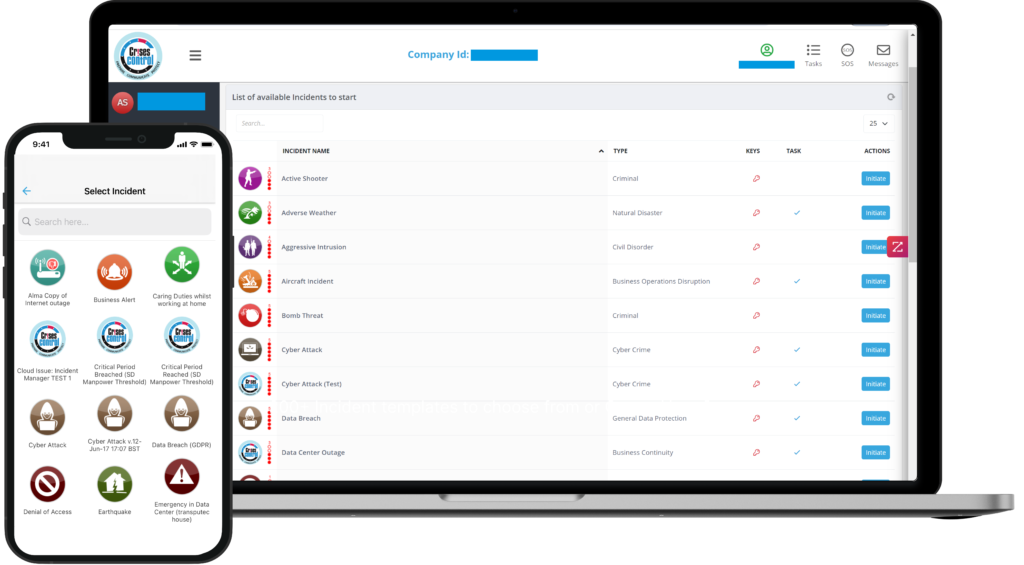
Emergency Response Management Software provides a central platform for planning, coordinating and managing emergency response activities.
Rather than relying on multiple disconnected systems, authorised users can access real-time operational information from one secure platform.
Typical capabilities include:
- Incident reporting
- Emergency notifications
- Task assignment
- Resource tracking
- Situation reporting
- Document management
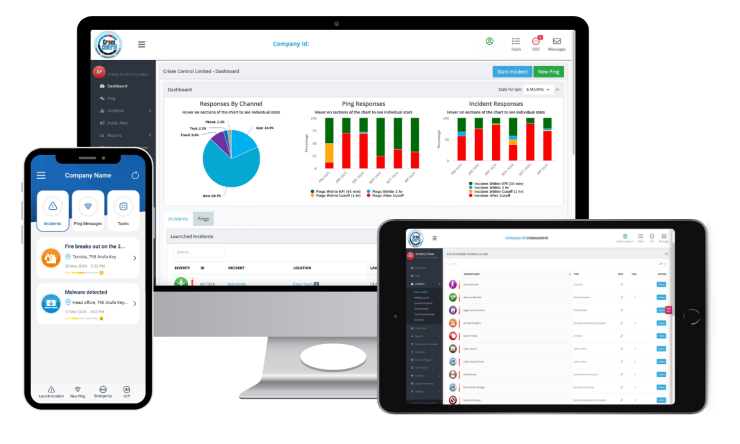
- Real-time dashboards
- Escalation workflows
- Audit trails
- Collaboration across multiple organisations
The platform supports both day-to-day incident management and major emergency response.
Interested in our Incident Management Software?
Flexible Incident Management Software to keep you connected and in control.
Creating a Common Operating Picture
One of the most valuable benefits of Emergency Response Management Software is the creation of a common operating picture.
Every responding organisation has access to the same verified information, reducing confusion and improving decision-making.
Instead of relying on multiple communication channels, authorised users can view:
- Current incident status
- Active response activities
- Assigned responsibilities
- Resource availability
- Operational priorities
- Outstanding actions
- Escalations
- Situation reports
This shared visibility enables leaders to make informed decisions using accurate and up-to-date information.
Improving Multi-Agency Communication
Communication is the foundation of effective emergency response.
Emergency Response Management Software supports communication by ensuring information reaches the appropriate people quickly and consistently.
Faster Emergency Notifications
Automated alerts allow organisations to notify response teams immediately when incidents occur.
Messages can be delivered through multiple communication channels, helping ensure critical information reaches responders without unnecessary delay.
Consistent Information Sharing
Rather than distributing separate updates through multiple systems, agencies work from one central source of information.
This reduces conflicting reports and ensures everyone understands the latest operational picture.
Better Collaboration
Shared incident logs, live updates and coordinated task management enable organisations to work together more effectively, even when teams are geographically dispersed.
Supporting Better Decision-Making
Emergency leaders must make important decisions under significant pressure.
Emergency Response Management Software supports this process by providing immediate access to operational data.
Instead of waiting for manual updates, decision-makers can monitor incidents as they develop, identify emerging risks and prioritise resources where they are needed most.
Automated workflows also help ensure that incidents are escalated appropriately and that key stakeholders are informed without delay.
This allows leadership teams to focus on strategic decision-making rather than administrative coordination.
Improving Accountability Across Agencies
During large incidents, accountability is essential.
Each organisation needs confidence that assigned actions are being completed while maintaining visibility of the overall response.
Emergency Response Management Software improves accountability by:
- Assigning clear responsibilities
- Tracking task completion
- Recording operational decisions
- Monitoring response timelines
- Maintaining comprehensive audit trails
Following the incident, these records support debriefs, regulatory reporting and continuous improvement initiatives.
Strengthening Emergency Preparedness
Effective emergency management begins long before an incident occurs.
The same platform used during emergencies can also strengthen preparedness by supporting:
- Emergency planning
- Training programmes
- Multi-agency exercises
- Response plan reviews
- Lessons learned
- Continuous improvement
Organisations that regularly practise coordinated response are better prepared when genuine emergencies occur.
Supporting Long-Term Public Sector Resilience
Public expectations continue to rise. Communities expect government organisations to respond quickly, communicate clearly and coordinate effectively during emergencies.
Emergency Response Management Software supports these expectations by helping organisations build long-term resilience.
Improved coordination not only strengthens emergency response but also enhances organisational confidence, public trust and operational efficiency.
As critical events become more frequent and increasingly interconnected, investment in collaborative emergency management capabilities becomes an essential part of public sector resilience.
Conclusion
Critical events demand more than individual organisational responses. They require multiple agencies to work together, share accurate information and coordinate actions under significant time pressure.
Emergency Response Management Software enables government organisations and public sector agencies to overcome many of the communication and coordination challenges that can slow emergency response. By providing a shared operational picture, improving crisis communication and supporting informed decision-making, the platform helps organisations respond more efficiently while protecting communities and critical services.
As emergency management continues to evolve, organisations that invest in collaborative technologies will be better positioned to manage complex incidents, strengthen resilience and deliver safer outcomes for the public.
Discover how Crises Control’s Emergency Response Management Software helps government and public sector organisations improve multi-agency coordination, strengthen crisis communication and respond to critical events with confidence.
FAQs
1. What is Emergency Response Management Software?
Emergency Response Management Software is a digital platform that enables organisations to prepare for, respond to and recover from emergencies by coordinating communication, managing incidents and improving operational visibility.
2. Why is multi-agency coordination important during critical events?
Critical events often involve several organisations with different responsibilities. Effective coordination ensures information is shared quickly, resources are allocated efficiently and response efforts remain aligned.
3. Which organisations benefit from Emergency Response Management Software?
Government departments, local authorities, emergency services, healthcare organisations, transport operators, utilities and other public sector organisations all benefit from improved coordination and communication.
4. How does Emergency Response Management Software improve crisis communication?
The software enables organisations to send real-time alerts, share incident updates, assign tasks and maintain a single source of accurate information throughout an emergency.
5. Can Emergency Response Management Software improve emergency preparedness?
Yes. It supports planning, training, exercises and post-incident reviews, helping organisations strengthen resilience and continuously improve their emergency response capabilities.