Airlines operate in one of the most complex and interconnected environments in the world.
Every day, flight operations depend on the seamless coordination of aircraft, crews, airports, air traffic control, ground handling providers, maintenance teams, and customer service departments. Even under normal conditions, maintaining reliable operations requires thousands of decisions and interactions across multiple stakeholders.
When disruption occurs, that complexity increases dramatically.
Severe weather, technical failures, cybersecurity incidents, airport disruptions, crew shortages, and security events can quickly impact flight schedules and passenger journeys. What begins as a single operational issue can rapidly cascade across multiple flights, airports, and operational teams.
The challenge is not simply resolving the incident itself.
The challenge is coordinating the response.
This is where Incident Coordination Software plays a critical role in strengthening airline operational resilience.
What Is Incident Coordination Software?
Incident Coordination Software is a platform designed to help organisations manage communication, decisions, tasks, and resources during operational disruptions.
Unlike systems that focus solely on monitoring or alerting, Incident Coordination Software provides a structured environment where teams can coordinate their response in real time.
For airlines, this typically includes:
- Centralised incident communication
- Automated notifications and escalations
- Real-time situational awareness
- Task assignment and tracking
- Cross-functional coordination
- Audit trails and reporting
The objective is simple: ensure that every team involved in the response is working from the same information and towards the same operational goals.
Why Airline Operations Are Vulnerable to Disruption
Aviation is built around tightly interconnected systems.
A delay affecting one aircraft can impact crew schedules, gate availability, passenger connections, maintenance plans, and airport operations. Research into airline disruption management shows that delays can propagate rapidly across airline networks, creating wider operational consequences if not managed effectively.
Common disruptions faced by airlines include:
- Severe weather events
- Aircraft technical issues
- Airport operational disruptions
- Air traffic control restrictions
- Cybersecurity incidents
- IT system outages
- Security incidents
- Fuel supply disruptions
Many of these incidents cannot be prevented entirely.
However, their impact can be significantly reduced through effective coordination and structured response processes. IATA and ICAO both emphasise the importance of coordinated emergency response planning and operational recovery within aviation resilience frameworks.
Where Coordination Challenges Typically Emerge
During an airline disruption, cross-functional aviation teams are often working simultaneously.
Operations Control Centres assess network impacts. Flight crews require updated instructions. Ground handling teams adjust airport operations. Customer service teams communicate with passengers. Engineering teams investigate technical issues. Leadership teams monitor the broader business impact.
Each group has access to different information and priorities.
Without effective coordination, organisations can experience:
- Delayed decision-making
- Conflicting communications
- Inconsistent situational awareness
- Inefficient resource allocation
- Extended recovery times
Industry experience consistently shows that fragmented communication is one of the biggest barriers to effective incident response in aviation.
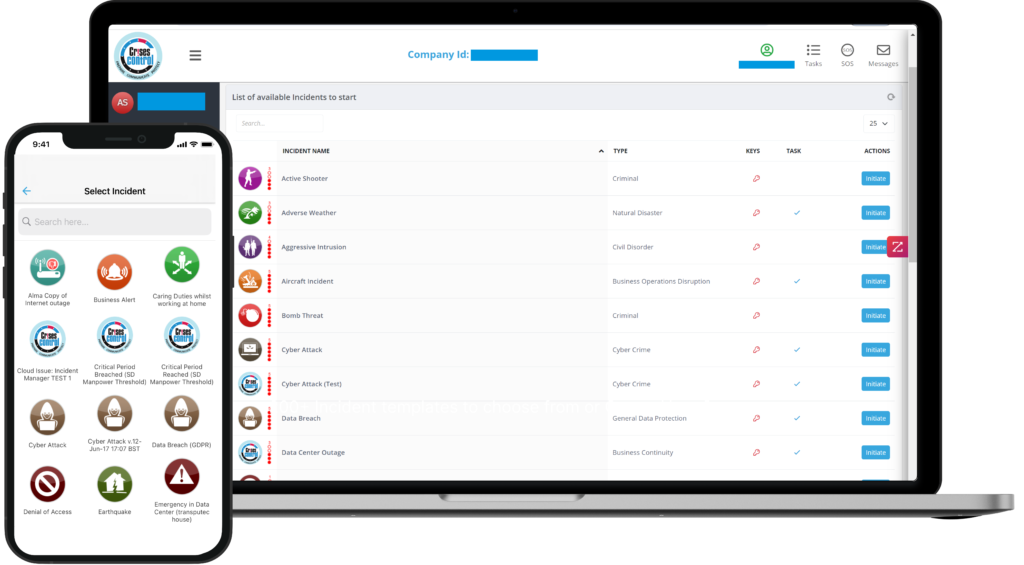
Interested in our Incident Management Software?
Flexible Incident Management Software to keep you connected and in control.
How Incident Coordination Software Improves Response
Creating a Single Operational Picture
One of the most important benefits of Incident Coordination Software is providing a shared operational view across all stakeholders.
Instead of relying on disconnected emails, phone calls, spreadsheets, and messaging platforms, teams can access the same real-time information through a centralised platform.
This improves visibility, reduces information gaps, and helps ensure decisions are based on the latest available information.
Accelerating Communication
During disruptions, speed matters.
Incident Coordination Software automates notifications and escalations, ensuring the right people are informed immediately. This reduces delays associated with manual communication processes and helps organisations mobilise response teams faster.
Improving Decision-Making
Effective decision-making depends on accurate situational awareness.
When all stakeholders have access to shared information, airlines can assess operational impacts more effectively and make faster decisions regarding passenger management, crew allocation, aircraft recovery, and airport operations.
Supporting Multi-Agency Coordination
Many aviation incidents involve external stakeholders including airports, ground handlers, emergency services, and regulatory authorities.
Industry guidance increasingly highlights the need for coordinated communication and collaboration between organisations during emergencies and operational disruptions.
Incident Coordination Software provides a common operating environment that helps maintain alignment between all parties involved.
Incident Coordination and Operational Resilience
Operational resilience is not defined by an airline’s ability to avoid disruption completely.
It is defined by how effectively the organisation can respond, adapt, and recover when disruption occurs.
Passengers expect timely information. Regulators expect structured response processes. Leadership teams require visibility and accountability. Operational teams need clarity and direction.
Incident Coordination Software supports these objectives by helping airlines:
- Improve communication consistency
- Strengthen incident response processes
- Maintain operational visibility
- Coordinate resources more effectively
- Accelerate recovery activities
- Capture lessons learned through audit trails
As aviation operations become increasingly dependent on digital systems and interconnected networks, structured coordination is becoming a critical component of resilience strategies.
How Crises Control Supports Airline Operational Resilience
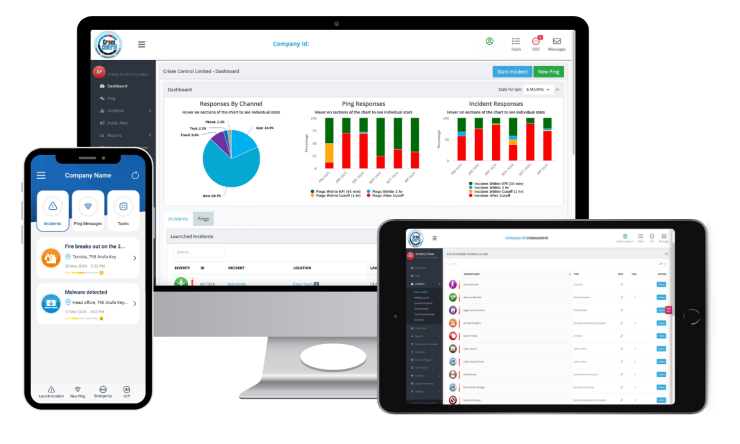
Crises Control helps airlines strengthen operational resilience through rapid communication, automated response workflows, and real-time incident coordination.
With Crises Control, aviation organisations can:
- Activate response teams instantly
- Automate notifications and escalations
- Coordinate actions across departments and external stakeholders
- Maintain real-time situational awareness
- Track tasks and accountability
- Capture comprehensive audit trails for review and compliance
By bringing communication, coordination, and incident management into a single platform, airlines can improve their ability to respond effectively when operational disruptions occur.
Final Thoughts
Disruption is an unavoidable reality of airline operations.
Weather events, technical failures, airport disruptions, cybersecurity incidents, and operational challenges will continue to test the resilience of aviation organisations.
What separates resilient airlines from those that struggle is not the absence of disruption, but the effectiveness of their response.
When teams remain aligned, information flows quickly, and decisions are coordinated, airlines can reduce operational impact, improve passenger communication, and accelerate recovery.
Incident Coordination Software provides the structure needed to make this possible.
As operational resilience becomes an increasingly important priority across the aviation sector, effective incident coordination is rapidly becoming a core capability for modern airlines.
Book a free demo today and discover how Crises Control can help your airline improve operational resilience through faster, more effective incident coordination.
FAQs
1. What is Incident Coordination Software for airlines?
Incident Coordination Software helps airlines coordinate communication, tasks, decisions, and resources during operational disruptions, emergencies, and crisis situations.
2. Why is incident coordination important for airline operational resilience?
Effective coordination ensures that operational, technical, customer service, and leadership teams work from the same information, reducing delays and accelerating recovery.
3. What types of incidents can Incident Coordination Software help airlines manage?
It can support responses to severe weather, flight disruptions, cybersecurity incidents, system outages, security events, aircraft incidents, and airport disruptions.
4. How does Incident Coordination Software improve communication during airline disruptions?
The software centralises updates, automates notifications, and provides real-time visibility across teams and stakeholders.
5. How does Incident Coordination Software support regulatory compliance?
It creates a complete audit trail of decisions, communications, and actions that can support investigations, reviews, and compliance requirements.