Written by Anneri Fourie | Crises Control Executive
A manufacturing site rarely experiences a single isolated problem.
A small event on the plant floor can quickly affect several systems at once. Equipment relies on network connections. Safety systems rely on building infrastructure. Production planning relies on digital platforms. When one piece fails, others often follow.
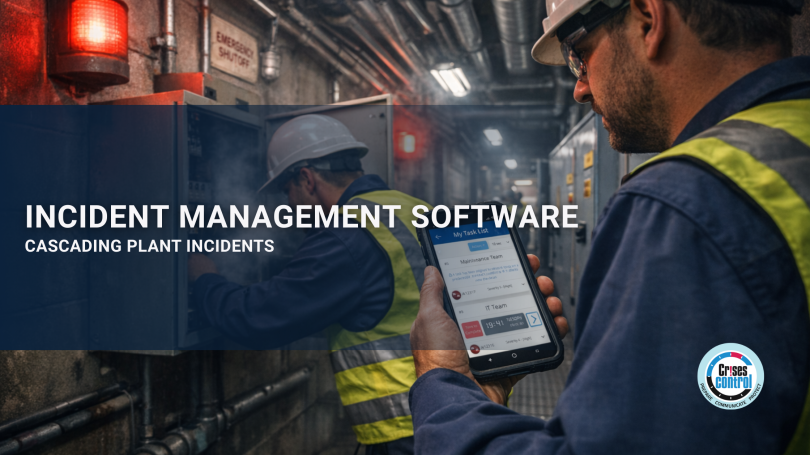
Imagine a simple event such as smoke detected in a utility room. At first it appears to be a facilities issue. Within minutes, access routes change, network equipment goes offline, and production supervisors lose access to internal systems. Contractors on site receive no updates because they are not connected to internal communication tools.
What began as a small building alert becomes a wider operational issue.
This is where organisations begin to see the value of incident management software. When systems and teams depend on each other, response needs to be structured, visible, and coordinated across the whole organisation.
Understanding how these cascading events develop helps manufacturing leaders prepare for them before they cause serious disruption.
Definition: Cascading Manufacturing Incident
A cascading manufacturing incident occurs when a single operational problem triggers secondary disruptions across connected systems.
In a modern facility, those systems often include:
- Production equipment
- Industrial control systems
- Internal software platforms
- Building infrastructure
- Workforce communication channels
Because these elements rely on each other, a disruption rarely stays contained.
One incident can quickly spread across departments and teams.
A Realistic Plant Floor Scenario
Consider a large manufacturing company operating multiple production lines and field teams.
Late in the morning, a facilities monitoring system reports smoke detected in a building utility room.
Maintenance staff begin investigating. At this point the situation looks routine.
Within a few minutes, several connected issues appear.
The building safety system restricts access routes. Staff must use alternative entrances and exits.
Network switches located in the same area lose connectivity. The internal web portal used by operations teams stops responding.
Production supervisors begin receiving calls from line managers reporting that scheduling tools are unavailable.
At the same time, several contractors working on site continue their work because they have not received any update about the developing situation.
What started as a facilities alert is now affecting operations, communication, and safety coordination.
The incident is cascading across the organisation.
The Pressure Created By Cascading Events
Plant managers quickly face several competing priorities.
- First is operational continuity. Production lines are running and delays affect delivery commitments.
- Second is workforce safety. Staff moving around the site need clear instructions if access routes change.
- Third is communication reliability. When information spreads through informal channels, confusion grows.
During an unfolding incident leaders need answers to practical questions:
- Which teams are affected right now?
- Are all employees safe?
- Which systems are unavailable?
- Who is responsible for coordinating the response?
When there is no clear operational picture, decisions slow down and risk increases.
Why Communication Often Breaks Down
Manufacturing organisations often rely on many communication tools.
These can include:
- Messaging platforms
- Phone calls
- Radios used by operational teams
- Public address announcements
During a disruption, these channels rarely stay aligned.
Messages may arrive late or reach the wrong people. Some employees receive several updates while others receive none.
Contractors and visitors are often the hardest group to reach. They may not have access to internal systems, yet they are still present on the site during incidents.
This fragmentation is one reason many organisations adopt an incident management system for manufacturing. A single operational channel for incident coordination removes uncertainty and ensures the same message reaches everyone involved.
Where Traditional Incident Response Struggles
Many plants still coordinate incidents using manual processes.
A typical approach might involve:
- Phone calls between supervisors
- Email updates to management
- Spreadsheets used to track response tasks
- Paper notes documenting what happened
These methods worked in smaller and less connected environments.
Manufacturing operations today rely on digital systems, distributed teams, and complex infrastructure. A manual response process cannot keep pace with that complexity.
Several problems tend to appear.
Delayed Decision Making
Leaders do not see the full operational picture because information arrives from multiple sources.
Incomplete Documentation
Incident timelines become difficult to reconstruct during audits or investigations.
Conflicting Instructions
Different departments may act on different versions of the same information.
When incidents cascade across systems, coordination becomes the main challenge.
Structured Response And Digital Coordination
A structured response model helps organisations manage these situations more effectively.
Instead of relying on informal communication, response actions follow a defined process.
Key elements of this approach include:
Early detection
Operational alerts identify issues before they escalate.
Central communication
Updates reach employees, contractors, and leadership through a single channel.
Role based responsibilities
Each team understands its responsibilities during an incident.
Task tracking
Response actions are assigned and confirmed.
Documented timelines
Incident events are recorded automatically.
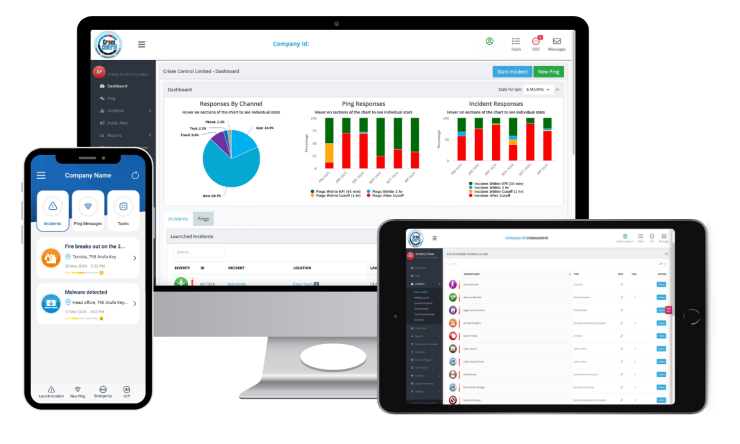
Platforms that provide incident management software capabilities bring these elements together into a single operational environment.
How Manufacturers Use Structured Incident Coordination
Many manufacturing organisations use coordinated response systems for events that happen regularly.
Examples include:
- Fire alarms or safety alerts within buildings
- Temporary access route changes across large sites
- Internet outages affecting production tools
- Internal platform failures
- Scheduled resilience testing exercises
Some organisations also run simulation exercises to prepare for cyber incidents.
During these tests, teams practise communication and task coordination. Leaders observe how quickly staff respond and where improvements are needed.
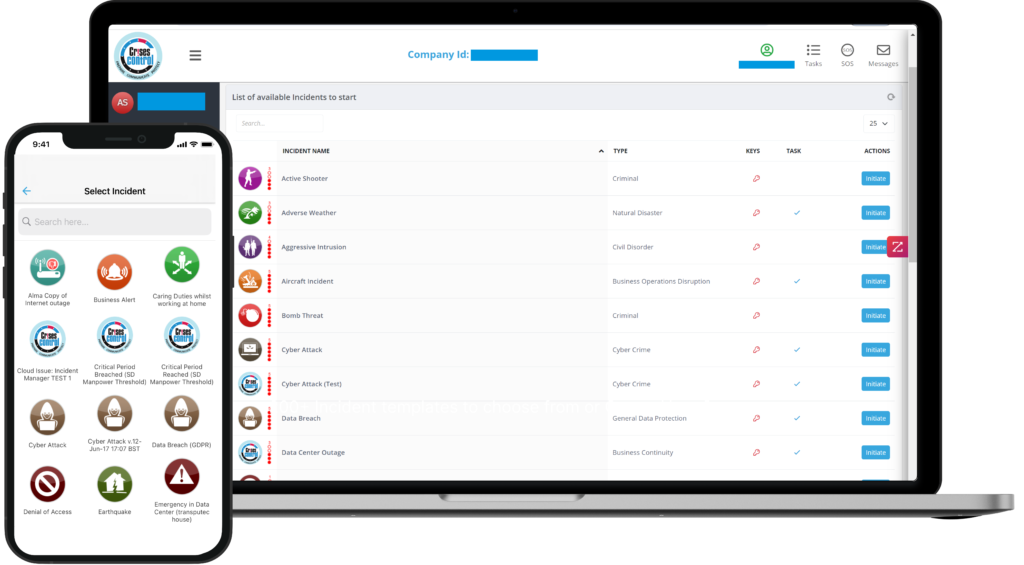
In regions exposed to natural hazards, incident modules are sometimes used to send earthquake alerts to employees. Workers confirm their safety through simple response options so leaders understand the situation quickly.
These practical uses show how structured critical incident management supports both safety and operational continuity.
Interested in our Incident Management Software?
Flexible Incident Management Software to keep you connected and in control.
A Common Misunderstanding About Plant Incidents
Many organisations treat safety events and operational disruptions as separate issues.
In practice they are closely connected.
A building incident can affect employee movement. A network failure can affect production control systems. A software outage can affect communication with teams on the floor.
Managing these events separately slows down response coordination.
A more effective approach views incidents as operational events that involve multiple departments.
Safety teams, IT teams, operations managers, and leadership all need the same situational awareness.
This is why organisations exploring operational resilience often research platforms described as the best mass notification software or integrated incident response tools. Communication alone is useful, yet coordination and task management are equally important.
Interested in our Ping Mass Notification Software?
Efficiently alert everyone in seconds at scale with our Mass Notification Software.
Practical Steps For Managing Cascading Incidents
Manufacturing leaders looking to improve resilience often focus on several practical actions.
Map Operational Dependencies
Understanding how systems depend on each other helps predict how incidents may spread.
Examples include:
- Production equipment connected to network systems
- Safety infrastructure connected to building utilities
- Operational software used by production supervisors
Mapping these dependencies highlights areas where cascading disruptions may occur.
Define Clear Response Roles
Every incident should have defined responsibilities.
Typical roles include:
- Incident lead
- Operational response teams
- Communication coordinators
- Safety oversight personnel
Clear ownership reduces confusion during response activities.
Standardise Communication Channels
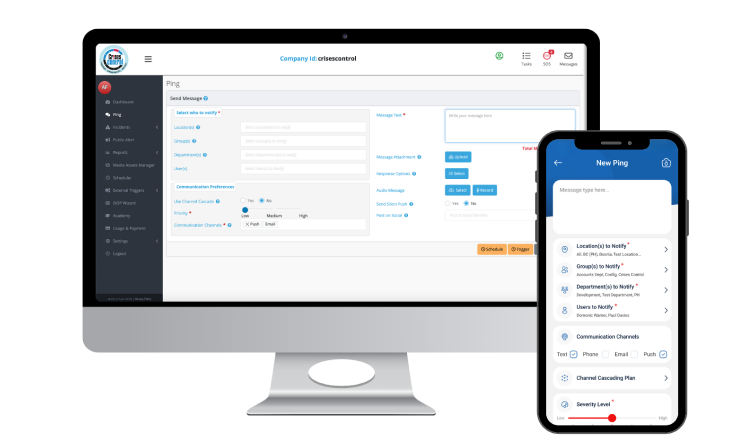
Incident communication should come from one trusted channel. This prevents conflicting updates and ensures employees receive accurate instructions.
Document Response Procedures
A clear incident response plan for manufacturing equipment failure allows teams to act quickly without waiting for instructions.
Run Regular Simulation Exercises
Testing incident response procedures through exercises helps organisations identify weaknesses before real incidents occur.
Compliance And Documentation Expectations
Manufacturing organisations operate under strict safety and operational regulations.
When incidents occur, investigators often ask several key questions:
- When was the incident first detected?
- Who approved response actions?
- What instructions were given to employees?
- How was the situation resolved?
Manual documentation often fails to capture these details clearly.
Digital coordination platforms provide reliable records of decisions, alerts, and response actions. These records support internal reviews and regulatory reporting.
The Human Factor During Operational Incidents
Even with advanced technology, incident response still depends on people.
During stressful events employees may experience:
- Information overload
- Confusion about authority
- Delayed decision making
Clear workflows reduce these pressures.
When employees know where to receive updates and how to contribute to the response effort, coordination improves and uncertainty decreases.
Strengthening Operational Preparedness
Cascading incidents are a normal reality in complex manufacturing environments.
They are rarely caused by a single failure. Instead they grow through interconnected systems and teams.
Structured response tools help organisations manage these situations more effectively. Platforms such as Crises Control allow organisations to digitalise response plans, coordinate role based actions, and communicate reliably during operational disruptions.
When leaders can see what is happening across the organisation, decisions become clearer and response becomes faster.
Manufacturing resilience depends on that clarity.
If your organisation is reviewing how incidents are coordinated today, it may be worth exploring how structured response platforms support safer and more controlled operations.
Request a FREE Demo