Written by Alma Davidson | Crises Control Intern
Financial institutions operate under some of the most demanding regulatory environments in the world. Banks, insurers, investment firms and payment providers are expected to demonstrate not only that they can prevent operational disruption, but also that they can respond to incidents in a controlled and transparent manner. When a significant disruption occurs, regulators will closely examine how the organisation detected the incident, how leadership responded, how communication was handled, and how recovery was managed.
This scrutiny is one reason why incident management software has become a critical capability for modern financial institutions. Incident management software is a digital platform that enables organisations to detect, manage and coordinate responses to operational disruptions while maintaining structured documentation of decisions, communications and response actions. In heavily regulated sectors such as finance, this structured record of response activity is essential because regulators increasingly expect organisations to demonstrate clear accountability during crisis management and emergency response.
A realistic operational situation in financial services
Imagine a scenario involving a mid sized retail bank operating across several European markets. The bank provides digital banking services, payment processing and lending products to millions of customers. Late on a Friday evening, the bank’s cyber security monitoring systems detect unusual login patterns affecting customer authentication services.
Within a short period of time, the issue escalates into a system outage that prevents customers from accessing online banking. Social media complaints begin to appear and the bank’s contact centre starts receiving a surge of calls from concerned customers.
The technical team initially suspects a system configuration error, but further investigation reveals that the disruption may involve a coordinated cyber intrusion attempt. As the response unfolds, senior management realises that the incident may trigger regulatory reporting requirements because customer services have been disrupted for a prolonged period.
At this stage the organisation must shift from technical troubleshooting into formal crisis management procedures. The bank must determine how the disruption occurred, how quickly it was detected, how customers were informed and how operational services will be restored.
Why regulators closely examine incident response
Regulators do not simply assess whether an incident occurred. They evaluate how the organisation managed the disruption and whether it demonstrated effective operational resilience.
Financial authorities expect firms to maintain robust response frameworks that protect customers and financial stability. When reviewing a disruption, regulators will often examine whether the organisation had a structured emergency response plan and whether the plan was followed during the incident.
This process often raises questions about the difference between risk management and crisis management. Risk management focuses on identifying potential threats and implementing controls that reduce the likelihood of disruption. Crisis management focuses on coordinating the response once an incident has already begun. Regulators expect financial institutions to demonstrate competence in both areas because operational resilience depends on preparation as well as response.
The information regulators expect during incident reviews
After a financial services incident, regulators typically request a detailed explanation of how the disruption unfolded and how the organisation responded. They will expect to see a clear timeline showing when the incident was detected, when escalation occurred and when response teams were mobilised.
They will also examine the internal decision making process. Regulators often want to understand which executives were responsible for coordinating the response and whether the organisation activated its crisis management framework in a timely manner.
Another key area of scrutiny is communication. Authorities want to confirm that customers, employees and external stakeholders received clear and accurate information during the disruption. Communication failures often attract regulatory attention because they can worsen the impact of operational incidents.
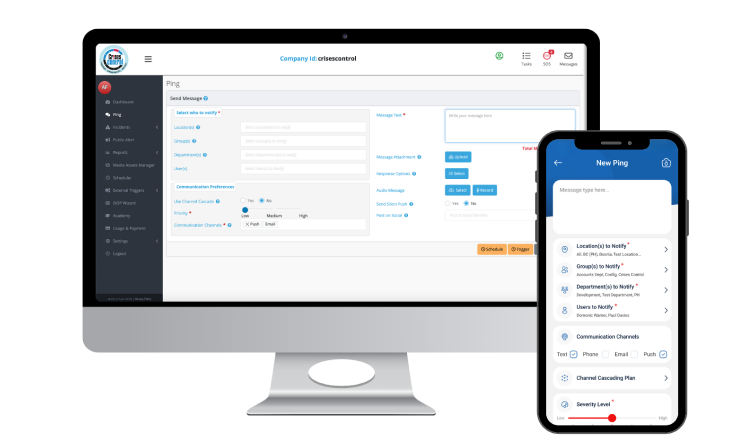
Emergency communication software helps financial institutions maintain consistent messaging during crises by enabling organisations to deliver structured alerts and updates to staff and stakeholders. This capability reduces the risk of confusion and ensures that communication records can be reviewed later if regulators request evidence of response procedures.
Interested in our Ping Mass Notification Software?
Efficiently alert everyone in seconds at scale with our Mass Notification Software.
Why documentation matters during regulatory reviews
One of the most common challenges organisations face after an incident is reconstructing what happened during the response. Teams may have communicated through multiple channels including email, phone calls and messaging applications. When regulators request a detailed timeline of events, organisations often struggle to assemble a complete and accurate account of the response process.
This challenge highlights the importance of structured incident documentation. Incident management software automatically records key response actions including incident declarations, task assignments and communication updates. This record provides a reliable timeline that can be reviewed by internal risk teams or external regulators.
For financial institutions, this documentation is not simply helpful. It is often required to demonstrate compliance with operational resilience expectations. Regulators want to confirm that the organisation maintained control of the situation and that response decisions were made using a defined crisis management process.
The structured response regulators expect to see
When regulators evaluate how an organisation handled an operational disruption, they typically look for evidence that a structured response framework was followed.
The first stage involves incident identification and classification. The organisation must demonstrate how the disruption was detected and how its severity was assessed. This step answers a frequently asked operational question about which is the first step in response planning. The first step is always the confirmation and classification of the incident.
The next stage involves escalation and response activation. Regulators expect to see that the organisation mobilised the appropriate teams quickly and assigned clear leadership responsibilities. The appointment of an incident commander or crisis coordinator is often considered an important indicator of structured response.
The third stage involves communication management. Authorities want to understand how the organisation kept employees informed and how customers were notified about service disruptions. In many cases regulators also examine how quickly public statements were issued and whether those communications were accurate.
Finally, regulators evaluate recovery actions. The organisation must demonstrate how services were restored and how the incident was contained to prevent further disruption.
Interested in our Incident Management Software?
Flexible Incident Management Software to keep you connected and in control.
Challenging the assumption that regulatory compliance is only about reporting
Many financial institutions assume that regulatory compliance after an incident primarily involves submitting a report to the relevant authority. While reporting is important, regulators are increasingly focused on the organisation’s ability to manage incidents effectively in real time.
Authorities want to see evidence that the organisation maintained situational awareness throughout the crisis and that response actions were coordinated across departments. They also want to see that decision making followed a structured crisis management framework rather than ad hoc reactions.
This shift reflects the growing importance of operational resilience within financial regulation. Supervisory bodies increasingly view incident response capability as a critical component of financial stability. Firms that cannot manage operational disruptions effectively may expose customers and markets to unnecessary risk.
The elements regulators expect in an emergency response plan
An effective emergency response plan provides a structured foundation for managing operational incidents in financial institutions. Regulators expect these plans to define how incidents are detected, how escalation decisions are made and how communication flows throughout the organisation.
The plan must clearly identify the roles and responsibilities of response leaders so that there is no confusion during critical moments. It should also define communication procedures that ensure employees, regulators and customers receive accurate information during disruptions.
Another important element of the emergency response plan is recovery coordination. Organisations must demonstrate that they have processes in place to restore critical services and maintain operational continuity during extended disruptions.
Digital platforms such as incident management software allow financial institutions to integrate these procedures into operational systems so that response plans can be activated immediately when incidents occur.
How digital platforms support regulatory expectations
Digital crisis management platforms are increasingly used by financial institutions to strengthen their incident response capabilities and improve regulatory readiness. These platforms allow organisations to digitise crisis management procedures and coordinate response teams through structured workflows.
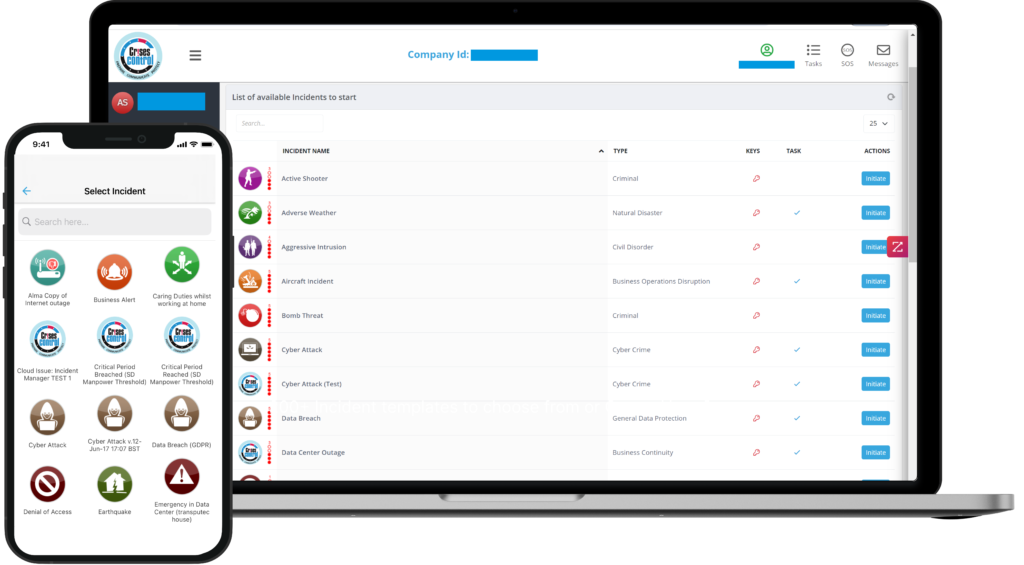
When an incident occurs, response leaders can activate predefined response plans and assign tasks to specific individuals. Communication tools allow alerts and updates to be distributed quickly across the organisation while maintaining a record of all messages.
Solutions such as Crises Control enable organisations to centralise incident coordination, maintain real time situational awareness and ensure that communication remains consistent during operational disruptions. This approach helps financial institutions demonstrate to regulators that their response processes are organised, documented and effective.
Lessons financial institutions should take from regulatory expectations
Regulatory reviews following incidents provide valuable insights into how organisations can strengthen their crisis management capabilities. One important lesson is that operational resilience requires preparation as well as response. Organisations must ensure that emergency response plans are regularly updated and tested.
Another lesson is that communication plays a central role in effective incident management. Clear communication reduces confusion during crises and helps organisations maintain trust with customers and regulators.
Finally, financial institutions must recognise that documentation and transparency are critical components of regulatory compliance. Regulators expect firms to demonstrate not only that they resolved the incident, but also that they managed the response in a structured and accountable manner.
Strengthening incident response in financial services
Operational disruptions will always occur in complex digital environments. What distinguishes resilient financial institutions is their ability to detect incidents quickly, coordinate response actions effectively and communicate clearly with stakeholders.
Incident management software supports these objectives by providing a structured framework for crisis management and emergency response. By digitalising response plans and centralising communication, organisations can maintain control during disruptions while demonstrating accountability to regulators.
Solutions such as Crises Control help financial institutions manage incidents more effectively by enabling coordinated response actions, reliable communication and structured documentation throughout the crisis lifecycle.
To learn how your organisation can improve its operational resilience and meet regulatory expectations during critical incidents, speak with the Crises Control team.
Request a FREE Demo