Written by Alma Davidson | Crises Control Intern
Financial institutions operate in an environment where disruption is no longer isolated. Cyber attacks, severe weather, and physical security incidents increasingly overlap, creating complex operational challenges that place immense pressure on risk and resilience teams. Organisations responsible for maintaining payment systems, customer access, and regulatory compliance cannot afford operational confusion during critical moments.
For banks, insurers, and investment firms, operational resilience is not simply a technical issue. It is a strategic requirement that affects customer trust, regulatory compliance, and market stability. When disruptions unfold across multiple operational domains at the same time, organisations must coordinate teams, communicate clearly, and maintain control of response actions.
Incident management software plays a central role in enabling that coordination. Incident management software is a digital platform that allows organisations to detect, manage, and resolve operational disruptions by coordinating response teams, communication channels, and response procedures in a structured and traceable way. In financial institutions, this capability has become essential as the complexity and frequency of incidents continues to grow.
A realistic operational situation inside a financial institution
Consider a realistic operational scenario involving a regional banking organisation responsible for digital banking services and payment infrastructure. The institution operates a technology and operations centre that manages core banking platforms and supports customer transactions across several regions.
Early on a Monday morning, the bank’s security operations centre detects abnormal network behaviour indicating the early stages of a ransomware attempt. While the cyber security team begins investigating the incident, meteorological alerts warn of severe storms approaching the region where the operations centre is located.
Within hours, heavy rainfall causes flooding in the surrounding area, which disrupts local power infrastructure and forces the evacuation of the operations centre. The organisation suddenly finds itself responding to three different incidents simultaneously. A potential cyber attack threatens digital systems, severe weather threatens infrastructure, and a physical security evacuation disrupts the workforce responsible for critical operations.
This situation illustrates a growing reality for financial institutions. Operational crises rarely occur in isolation. Cyber, environmental, and physical risks increasingly collide, creating a situation where multiple teams must act simultaneously while maintaining clear situational awareness.
The operational pressure created by converging incidents
When multiple disruptions occur at the same time, the organisation faces immediate operational pressure. Leadership must determine whether customer systems are compromised, whether trading and payment infrastructure remain operational, and whether staff safety has been fully addressed.
In these circumstances, teams across the organisation must collaborate rapidly. Cyber security teams investigate network threats while facilities teams address building safety concerns. Business continuity teams evaluate operational recovery options while senior executives determine whether regulatory reporting obligations have been triggered.
This moment highlights the difference between risk management and crisis management. Risk management focuses on identifying and mitigating potential threats before they occur. Crisis management focuses on coordinating actions when a disruption has already begun and immediate decisions must be made under pressure. Financial institutions must be capable of both disciplines in order to maintain operational stability.
Communication challenges during complex incidents
The most significant difficulty during a multi-domain incident is rarely technical. The primary challenge is communication. Teams often operate in different departments, use different tools, and follow different procedures. When a crisis unfolds, these divisions can slow the response effort.
In the banking scenario described earlier, internal teams must communicate quickly to understand what is happening and what actions must be taken. Cyber security analysts need to provide updates about the network threat while facilities teams report on the physical safety of the building. Business continuity teams must determine whether alternate work locations should be activated.
At the same time, employees need clear instructions regarding safety procedures and operational expectations. Staff members working inside the affected building require evacuation guidance, while remote staff require updates regarding operational changes. Emergency communication software enables organisations to send immediate alerts to employees through multiple channels, ensuring that messages reach the workforce even when normal communication systems are disrupted.
Communication is also required beyond the organisation itself. Financial institutions must maintain transparency with regulators and stakeholders when operational disruptions occur. In many jurisdictions, regulatory frameworks such as operational resilience requirements and DORA expect firms to demonstrate that they can manage incidents effectively while maintaining service continuity.
Where traditional response approaches struggle
Despite the complexity of modern incidents, many financial institutions still rely on traditional response approaches that were designed for simpler disruptions. These methods often involve static emergency response plans stored in documents, manual phone trees used to notify employees, and email chains used to coordinate response teams.
While these methods may appear adequate during small incidents, they frequently break down when events escalate quickly. Static documents are difficult to access when teams are working remotely. Manual communication methods slow down the distribution of information. Email threads become confusing when multiple teams attempt to coordinate actions simultaneously.
The fundamental problem with traditional approaches is that they rely heavily on manual coordination. When operational pressure increases, manual processes cannot keep pace with the speed at which decisions must be made. This is where critical event management software provides significant advantages by creating a centralised system for managing incidents and coordinating response actions.
Building a structured response approach
Returning to the scenario of the banking organisation, the first step in effective crisis management is the accurate identification and verification of the incident. Teams must determine whether the unusual network activity represents a genuine cyber attack and confirm the extent of the physical disruption affecting the operations centre. This step answers a common operational question about which is the first step in response planning. The answer is always the confirmation and classification of the incident.
Once the disruption has been verified, the organisation must activate its crisis management process. Leadership assigns an incident commander who is responsible for coordinating the response. Key response teams are mobilised and communication channels are established. Incident management software enables this process by providing predefined workflows that guide teams through each stage of the response.
Situational awareness becomes the next priority. Decision makers must understand which systems remain operational, which facilities are affected by the flooding, and whether customer services are at risk. A centralised incident management platform allows teams to update information in real time so that leadership can make informed decisions based on the latest operational data.
Communication must then be coordinated across the organisation. Employees receive safety alerts regarding the evacuation of the affected building. Cyber security teams coordinate their containment actions while business continuity teams prepare alternative operational arrangements. Emergency communication software ensures that messages reach the correct people quickly and consistently.
Challenging the assumption that incidents occur separately
Many organisations continue to treat cyber incidents and physical incidents as separate categories of risk. This assumption reflects an outdated view of operational disruption. Modern financial institutions rely on interconnected systems that link digital infrastructure, physical facilities, and communication networks.
When severe weather disrupts power infrastructure, it can also affect network availability and data centre operations. When cyber attackers target critical infrastructure, they may exploit the confusion created by natural disasters or operational disruptions. These overlapping threats mean that organisations must manage incidents through a unified operational resilience framework rather than isolated response procedures.
The integration of cyber security response, business continuity planning, and crisis communication has therefore become a defining feature of modern crisis management in the financial sector.
Understanding the elements of an emergency response plan
An effective emergency response plan provides a structured framework for managing operational disruptions. The plan defines how incidents are identified, how response teams are activated, and how communication flows throughout the organisation.
Within financial institutions, emergency response plans typically include procedures for incident classification, defined roles and responsibilities for response leaders, and communication protocols that ensure stakeholders receive timely updates. The plan also includes recovery procedures that guide the restoration of critical services once the immediate crisis has been stabilised.
One of the most important developments in modern crisis management is the digitalisation of these plans. Instead of storing procedures in static documents, organisations increasingly use incident management software to embed response plans directly into operational systems. This approach allows teams to activate response procedures instantly during an incident rather than searching through documentation while under pressure.
How digital platforms improve incident coordination
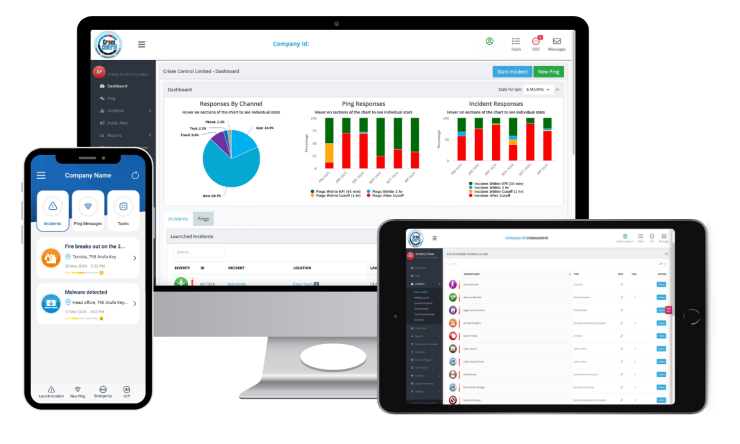
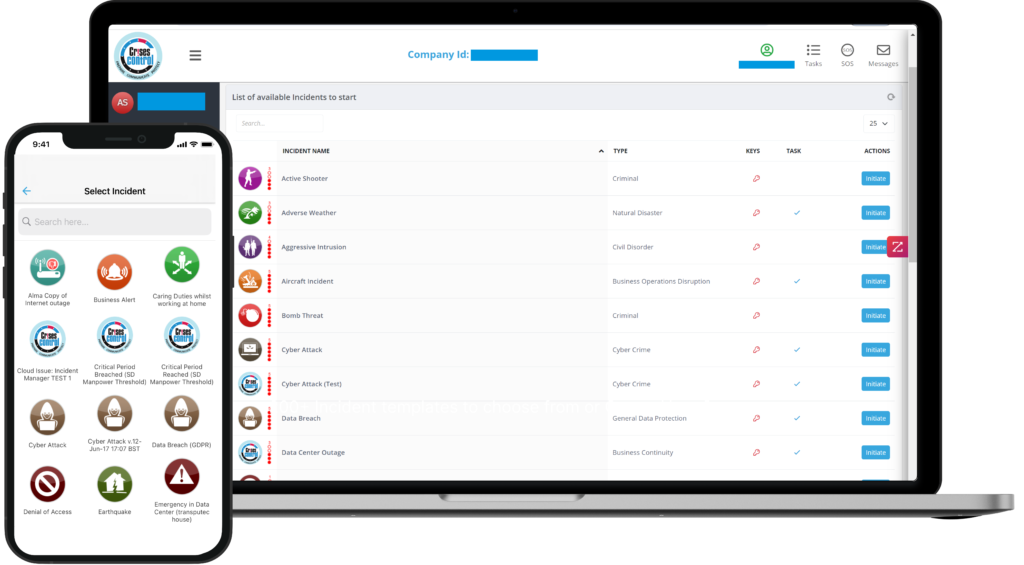
Digital crisis management platforms help organisations move beyond manual response methods and adopt a more structured approach to operational resilience. These platforms allow organisations to create digital playbooks that guide teams through response procedures step by step. They also allow response leaders to assign tasks to specific individuals while monitoring progress in real time.
Cloud accessibility ensures that response teams can continue coordinating their activities even if physical facilities are unavailable. Real time communication tools allow alerts and updates to reach employees through multiple channels, including mobile devices, SMS messaging, voice calls, and email.
Solutions such as Crises Control support this transition by helping organisations digitise crisis management plans and coordinate response teams through a secure cloud based platform. The result is improved situational awareness, faster communication, and greater control during critical incidents.
Interested in our Incident Management Software?
Flexible Incident Management Software to keep you connected and in control.
Lessons financial institutions should recognise
The scenario described earlier highlights several important lessons for organisations operating in the financial sector. Multi risk incidents are becoming increasingly common as cyber threats, climate related disruptions, and infrastructure challenges continue to grow. Organisations must therefore design crisis management processes that account for overlapping threats rather than isolated incidents.
Communication failures remain the most common cause of ineffective response efforts. Even well prepared organisations struggle when teams cannot share accurate information quickly. Structured communication platforms play a critical role in ensuring that the right people receive the right information at the right time.
Another important lesson is the need for speed. The earlier an organisation activates its response structure, the more effectively it can contain operational disruption and protect customer services. Digital platforms significantly reduce the time required to mobilise response teams and coordinate decision making.
Crisis management and emergency response in the finance sector
Operational resilience has become one of the most important priorities for financial institutions. Regulators increasingly expect organisations to demonstrate that they can maintain critical services even during severe disruptions. This expectation requires institutions to integrate crisis management, incident management, and emergency communication capabilities into a unified operational strategy.
Incident management software supports this objective by enabling organisations to coordinate response efforts across departments, maintain visibility into evolving incidents, and ensure that communication remains consistent throughout the response process.
For financial institutions facing a growing range of operational threats, structured incident coordination is no longer optional. It is an essential component of maintaining trust, stability, and regulatory compliance.
Strengthening incident response capabilities
Financial institutions cannot eliminate every operational threat, but they can significantly improve how they respond to disruption. By implementing structured response frameworks and digital coordination platforms, organisations can maintain control during complex incidents that involve cyber, environmental, and physical risks.
Platforms such as Crises Control help organisations digitise their crisis management processes, coordinate response teams, and maintain reliable communication during critical events.
To learn how your organisation can strengthen its operational resilience and crisis response capability, speak with the Crises Control team.
Request a FREE Demo