Written by Anneri Fourie | Crises Control Executive
Supply chain disruption rarely starts with a warning. A port closes overnight. A supplier loses access to systems after a cyber incident. Political unrest forces a logistics partner to suspend operations. The problem organisations face is not just the disruption itself, but the confusion that follows when teams do not know what is happening, who is affected, or what action to take.
In many cases, the real damage happens in the hours after the event. Messages are delayed, sent to the wrong people, or lost in overflowing inboxes. Regional teams wait for guidance while head office works with incomplete information. Decisions are made based on assumptions rather than facts.
This is where Mass Notification Software becomes essential. When supply chains stretch across countries and time zones, organisations need a reliable way to communicate quickly, gather updates, and coordinate action without adding noise or panic. The right approach turns communication into a stabilising force rather than another source of risk.
This article explains why supply chain disruption demands a different approach to communication, what often goes wrong, and how structured emergency communication helps organisations stay in control. It also shows how Crises Control supports this process in real operational settings.
Why supply chain disruption exposes communication weaknesses
Supply chains are built on interdependence. A single delay can ripple across manufacturing, transport, distribution, and customer delivery. Communication failures amplify this impact.
A common scenario looks like this:
A logistics hub in one country is forced to close due to local unrest. The local team sends updates by email. Some managers receive the message hours later. Others miss it completely. Procurement teams continue placing orders with affected suppliers. Customer-facing teams are left guessing about delivery timelines.
The issue is not a lack of effort. It is a lack of structure.
Traditional communication tools struggle because they are not designed for urgent, cross-border coordination. Email assumes people are available and paying attention. Phone calls do not scale. Messaging apps create parallel conversations with no single source of truth.
When communication breaks down, organisations face three immediate risks:
- Delayed decision-making due to missing or conflicting information
- Increased safety risk for staff and contractors
- Loss of trust from partners and customers
Mass Notification Software as a foundation for supply chain communication
Mass Notification Software provides a structured way to reach people quickly and consistently during disruption. It replaces improvised communication with a clear process that works under pressure.
Instead of asking who needs to know and how to reach them, teams can focus on what action is required.
At a practical level, this means:
- Sending alerts to defined groups based on role, location, or responsibility
- Using multiple channels to reach people wherever they are
- Tracking who has received and acknowledged messages
- Updating information as conditions change
For supply chain leaders, this creates clarity when uncertainty is at its highest.
How Mass Notification Software supports supply chain operations in practice
During a disruption, communication needs to change quickly. Early messages focus on awareness. Later updates focus on instruction and coordination.
Mass Notification Software supports this shift by allowing organisations to manage communication as an evolving process rather than a one-off message.
Practical example
A manufacturing organisation relies on components shipped through a major port. Severe weather forces the port to suspend operations.
Using Mass Notification Software, the organisation can:
- Alert logistics and procurement teams immediately
- Request status updates from regional managers
- Inform production planners of expected delays
- Update senior leadership with confirmed information rather than assumptions
As the situation develops, follow-up messages can direct teams to alternative routes or suppliers. The same system records responses and decisions for later review.
This approach reduces confusion and shortens recovery time.
Mass Notification Software in multi-site and cross-border environments
Global supply chains introduce complexity that local operations do not face. Time zones, language differences, and varying levels of system access all affect how messages are received.
Common challenges for global teams
- Alerts sent outside working hours are missed
- Staff rely on personal devices while travelling
- Corporate systems are unavailable during local outages
- Regional teams receive inconsistent instructions
Emergency communication must work regardless of these constraints.
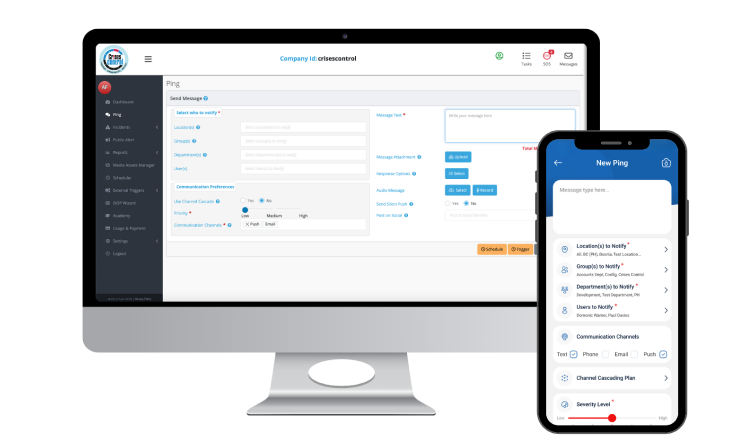
Crises Control is designed for organisations with distributed operations. Our platform provides a mass notification system for global teams by ensuring messages are delivered reliably through mobile, SMS, voice, email, app and Microsoft Teams.
The Crises Control mobile app allows staff to receive alerts and access critical information even when they are away from desks or corporate networks. This is particularly important for logistics, transport, and field-based roles.
Interested in our Ping Mass Notification Software?
Efficiently alert everyone in seconds at scale with our Mass Notification Software.
Emergency Communication Solutions that guide action, not noise
One of the biggest mistakes organisations make during disruption is sending too many messages without clear direction. This leads to alert fatigue, where recipients delay or ignore updates.
Emergency Communication Solutions must do more than broadcast information. They must support decision-making and action.
Crises Control links alerts directly to incident workflows. When a message is received, recipients know what is expected of them. This may include confirming safety, providing a status update, or carrying out a specific task.
Typical supply chain scenarios
- Political unrest affecting a transport corridor
- Cyber incidents at a key supplier
- Health and safety incidents at warehouses
- Border closures due to regulatory changes
In each case, structured communication reduces guesswork and speeds up response.
Critical Event Management Software and supply chain visibility
Communication alone is not enough. Leaders need visibility into what is happening across the supply chain.
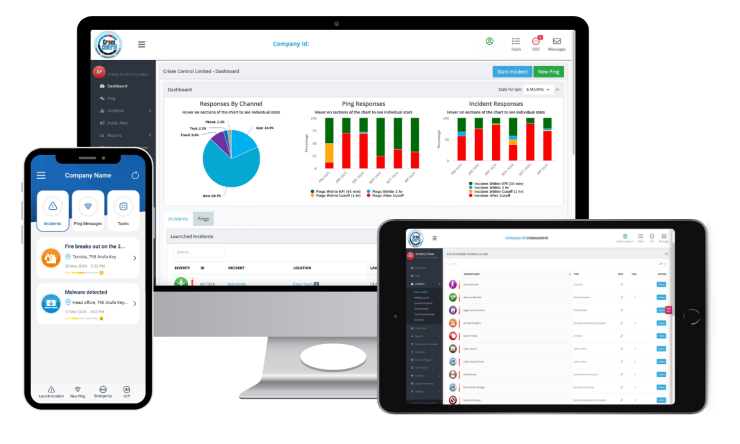
Critical Event Management Software connects alerts, incident updates, and decision logs into one view. This allows organisations to see which locations are affected, who has responded, and what actions are underway.
For supply chains, this visibility prevents small issues from escalating unnoticed.
Crises Control supports this by providing:
- Centralised incident tracking
- Real-time updates from affected teams
- Role-based access for decision-makers
- Clear records of actions taken
This helps leadership teams move from reactive to informed decision-making.
Incident Management Software for coordinated response
Supply chain incidents often involve multiple teams acting at once. Without coordination, effort is duplicated or misdirected.
Incident Management Software provides structure by assigning tasks, tracking progress, and documenting outcomes. This is especially important when incidents last days or weeks.
A common failure during prolonged disruption is loss of continuity. Staff rotate, handovers are missed, and decisions are forgotten. A structured incident platform prevents this by maintaining a shared operational record.
Crises Control allows organisations to:
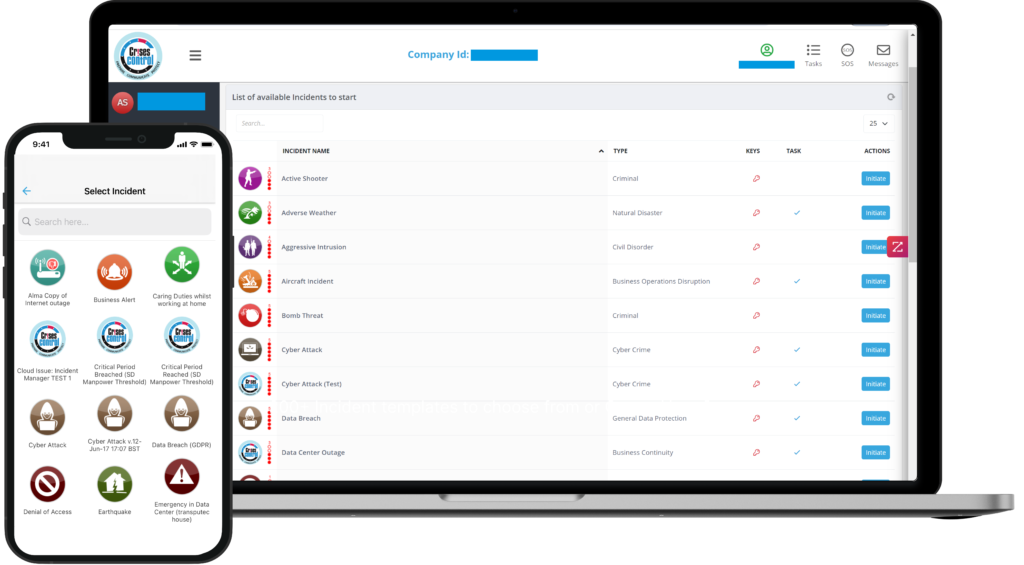
- Log incidents as they occur
- Assign responsibilities clearly
- Track actions and updates
- Review performance after the event
This creates learning rather than repeated mistakes.
Interested in our Incident Management Software?
Customise your Crisis Incident Management Software to meet your specific needs with our flexible tools & stay connected and informed during the crisis and incident management process
Real-time incident alerts for employees and partners
People remain the most important part of the supply chain. Protecting staff, contractors, and partners is both a legal duty and a practical necessity.
Real-time incident alerts for employees ensure safety information reaches those who need it without delay. This includes evacuation instructions, access restrictions, and welfare checks.
Crises Control supports two-way communication so staff can confirm their status or report local conditions. This feedback improves situational awareness and supports better decisions at central level.
Emergency communication solutions for multi-site organisations
Supply chains often span dozens or hundreds of locations. Communication must scale without losing precision.
Targeted messaging allows organisations to notify only those affected, reducing unnecessary disruption for others. This approach also improves response rates since messages are relevant to recipients.
For organisations managing ports, warehouses, manufacturing sites, and offices, this level of control is essential.
Compliance, reporting, and accountability
Supply chain incidents often involve regulatory oversight. Organisations may need to demonstrate how they protected people, managed risk, and communicated during disruption.
Crises Control supports this through:
- Secure storage of incident records
- Clear audit trails of alerts and responses
- Reporting aligned with frameworks such as ISO 22301
- GDPR-compliant handling of personal data
This reduces pressure during audits and post-incident reviews.
How Crises Control supports supply chain resilience
Crises Control brings together mass notification, incident management, and business continuity in a single platform. It is designed for organisations that operate across borders and face real-world disruption.
Rather than relying on disconnected tools, teams gain a clear, structured way to communicate, coordinate, and recover.
Next steps
Supply chain disruption cannot be avoided. Confusion and delay can.
Organisations that invest in structured emergency communication are better prepared to protect people, manage disruption, and recover faster.
Crises Control helps organisations strengthen their communication during supply chain incidents through reliable alerts, clear workflows, and real-time visibility.
Contact us to get a free personalised demo.
Request a FREE Demo