Written by Anneri Fourie | Crises Control Executive
Organising live events is a high-stakes operation. Whether it is a music concert, theatre performance, sports match, or a seasonal market, organisers face many moving parts and public exposure. One small disruption, such as a technical failure, a security incident, or a delayed response, can quickly affect safety, audience experience, and operational continuity.
Traditional methods of communication like phone trees, radios, or email chains often fail when events are crowded, noisy, or spread across multiple locations. Delayed messages or miscommunication can lead to confusion among staff, slow responses, and sometimes serious incidents.
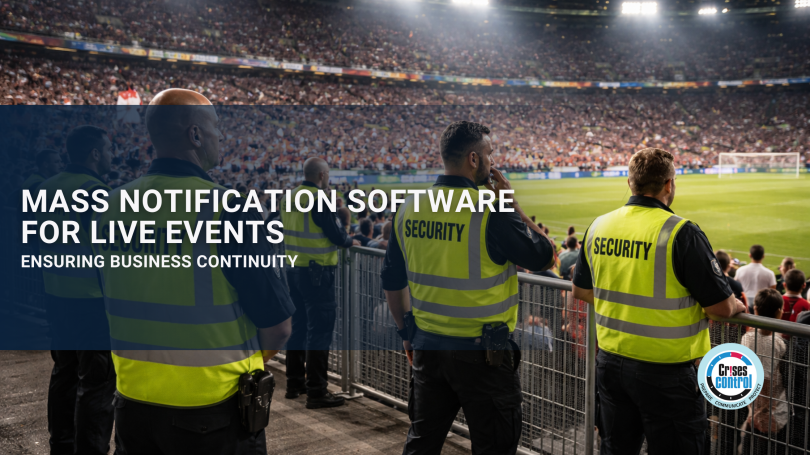
Mass notification software for live events offers a practical solution. By delivering real-time emergency alerts to staff and security teams, coordinating across venues, and automating acknowledgments, this software ensures that teams can respond quickly and effectively to maintain continuity, safety, and audience confidence.
What Mass Notification Software for Live Events Means
Mass notification software for live events is a digital system that allows organisers to send urgent messages to multiple teams instantly. A single person can trigger alerts that reach all relevant staff, with automated workflows to confirm receipt and escalate messages if necessary. This reduces human error and ensures that everyone knows exactly what action to take during an incident.
Key capabilities include:
- Role-based notifications so the right teams receive relevant instructions.
- Multi-channel delivery via SMS, email, voice, push notifications, or integrated apps like Microsoft Teams.
- Automated acknowledgment and escalation to track responses.
- Cross-site and multi-venue communication for events that span several locations.
- Audit trails for post-event reporting and compliance purposes.
These features turn continuity plans from static documents into practical tools that guide real-time responses.
Why Live Entertainment Events Are Different
Live events are not like typical office operations. They combine high public exposure, complex logistics, and fixed schedules. This makes continuity planning more challenging.
Common issues include:
- System outages: Ticketing platforms, digital signage, or betting systems can fail. Even short interruptions affect revenue and the audience experience.
- Crowd safety: Large crowds require coordinated action to manage incidents or evacuations safely.
- Cyber threats: Live events increasingly rely on digital systems, which can be targets for attacks.
- Multiple venues: Festivals or tours can span several locations, each with different teams and risks.
- Regulatory obligations: GDPR, health and safety, and local emergency regulations require careful communication and logging.
Manual communication methods struggle under these conditions. Phone chains are slow, radios can be ignored, and emails are not read immediately. This increases the chance of errors and delays, putting staff, attendees, and business operations at risk.
How Mass Notification Software Supports Business Continuity During Live Events
Using mass notification software for entertainment venues closes the gap between planning and action. It provides clear communication, accountability, and rapid response, helping events run safely even when problems occur.
Real-Time Incident Alerts
Front-of-house staff, security teams, and operations managers can trigger alerts from a mobile device or desktop. Messages reach all relevant teams immediately. For instance:
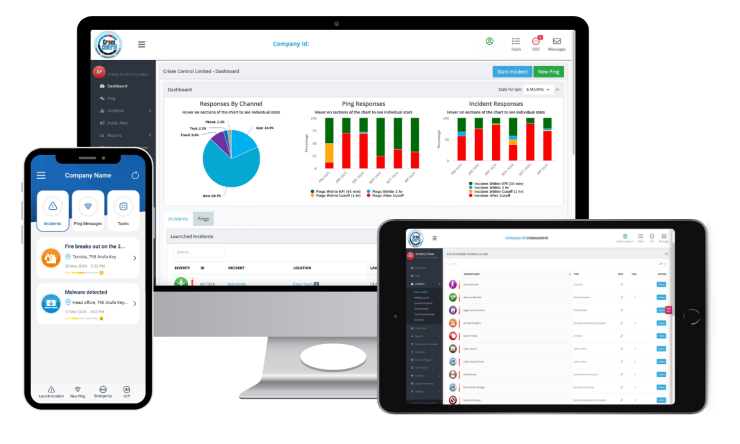
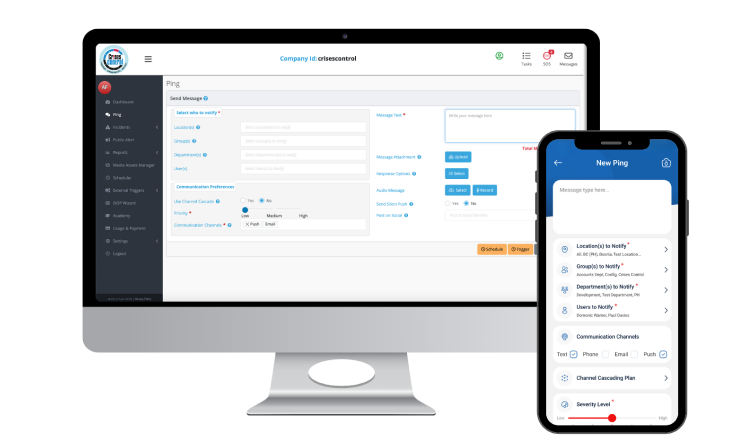
With Ping, front-of-house staff can send emergency messages instantly to teams across the venue, ensuring the show goes on safely.
This is critical in situations such as:
- Medical emergencies
- Crowd surges
- Equipment failures
- Security breaches
Every second saved improves safety and reduces disruption.
Automated Acknowledgment and Escalation
The software tracks who has received and acknowledged messages. If a recipient does not respond, the system escalates automatically to the next person or team. This ensures nothing falls through the cracks and all actions are accountable.
Cross-Site and Multi-Venue Coordination
For festivals, sports tournaments, or tours spanning multiple sites, mass notification software integrates all locations. Local teams communicate in real time while central control maintains oversight. This helps with:
- Coordinating security across multiple stadiums or festival stages
- Alerting staff about closures or evacuations
- Maintaining consistent instructions for all teams
Clear Role-Based Instructions
Alerts are not generic. Staff receive instructions specific to their role:
- Security: manage perimeters and direct crowds
- Operations: handle technical shutdowns or activate backup systems
- Front-of-house staff: communicate with attendees calmly and clearly
Role-specific guidance reduces confusion and ensures the response aligns with the overall continuity plan.
Interested in our Ping Mass Notification Software?
Efficiently alert everyone in seconds at scale with our Mass Notification Software.
Common Misconceptions About Event Continuity
Manual Call Trees Are Enough
Some organisers assume traditional channels are sufficient. In reality:
- Human coordination takes time
- Messages can be missed
- There is no automated escalation
This can delay critical responses and increase risks.
Technology Alone Solves Continuity
Mass notification software is powerful, but it works best when paired with well-documented continuity plans and experienced staff. Technology speeds up communication and provides visibility but cannot replace operational judgement.
Alerts Are Only for Emergencies
Alerts can also be used proactively:
- For rehearsals and drills
- To validate response plans
- To inform staff of non-critical operational updates
Using alerts for preparation ensures teams are familiar with the system before a real incident.
Implementing Mass Notification Software in Practice
Organisers should consider several factors when introducing digital alerts:
- Multi-channel redundancy: SMS, push notifications, email, voice, and collaboration channels like Microsoft Teams increase delivery reliability.
- Compliance requirements: GDPR, local health and safety regulations, and occupational safety standards should guide logging and reporting.
- Human factors: Staff must understand the system and their role in acting on alerts.
- Scenario planning: Identify likely disruptions such as system outages, crowd incidents, or severe weather, and create predefined workflows.
- Cloud access: Cloud-based systems maintain continuity even if local infrastructure fails.
Manual vs Digital Alerting
| Aspect | Manual Approach | Digital Mass Notification |
| Speed | Minutes to hours | Seconds |
| Tracking | Difficult to verify | Automated acknowledgment & escalation |
| Cross-site coordination | Limited | Integrated multi-venue communication |
| Error potential | High | Low, reduces missed messages |
| Scalability | Small teams only | Thousands of users across multiple locations |
Digital mass notification software improves decision-making, reduces human error, supports compliance, and allows resources to focus on actions that truly matter.
Best Practices for Live Event Continuity
- Map critical services and dependencies, including ticketing, PA systems, and security teams.
- Define alert triggers for likely disruptions such as IT failures, weather issues, or security threats.
- Assign role-specific actions and ensure staff understand their responsibilities.
- Test alerts in tabletop exercises and live simulations.
- Use multiple channels to maximise reach and redundancy.
- Maintain audit trails for compliance and post-event review.
These practices make continuity plans practical, not just theoretical.
Strengthening Event Resilience
Mass notification software transforms business continuity from a set of documents into real operational practice. By integrating real-time alerts, role-specific guidance, and multi-venue coordination, entertainment organisations can protect staff, audiences, and critical operations.
Cloud-based systems allow teams to respond even when local infrastructure fails, while automated tracking provides transparency and accountability. When continuity plans are digital, actionable, and understood by staff, events can recover from disruptions quickly and safely.
Organisers assessing their continuity approach should consider implementing a mass notification system that links planning, action, and reporting effectively.
Request a FREE Demo