
Incident Management Software: What Regulators Ask After School Incidents
Written by Anneri Fourie | Crises Control Executive The hardest part of a school incident is often not the event itself. It is the review that follows. A pupil goes missing during a trip. A fight breaks out and ends in injury. A suspicious individual is seen near the gate. Police attend. Staff respond. The […]
School Mass Notification System: Beyond Sending Alerts
Written by Anneri Fourie | Crises Control Executive A pipe bursts in a teaching block just before registration. Water spreads across corridors. Power may need to be cut. Students are arriving. Staff are walking in with coffee cups. Parents are already on the school run. A message is sent to staff:“Do not use Building B. […]
Mass Notification Software For When Campus Networks Fail In A Crisis
Written by Anneri Fourie | Crises Control Executive The Problem And The Practical Way Forward When something goes wrong on campus, communication often becomes the biggest challenge rather than the incident itself. A burst pipe, power outage, or safety concern can quickly turn into confusion if people do not know what is happening or what […]
Incident Management Software: Why Context Shapes Response For Schools And Universities
Written by Anneri Fourie | Crises Control Executive Incident Management Software is often discussed as a technology solution, yet its real value becomes clear only when something goes wrong and teams must respond quickly with incomplete information. In many schools and universities, incidents begin as small signals. A maintenance alert, a safety concern raised by […]
Incident Management Software That Proves Compliance After Hospital Emergencies
Written by Anneri Fourie | Crises Control Executive The Real Problem Hospitals Face After An Incident A patient deteriorates unexpectedly on a surgical ward in the early hours of the morning. The clinical team responds quickly. A Code Blue is called. Staff arrive within minutes and stabilise the patient before transferring them to intensive care. […]
Emergency Response Plan In Healthcare: Why Real Incidents Expose The Gaps
Written by Anneri Fourie | Crises Control Executive When A Well Practised Plan Meets A Real Incident An emergency response plan can look flawless in a boardroom. Staff know the steps. Exercises run smoothly. Everyone leaves the drill confident that the organisation is prepared. Then a real incident happens, and the same team that performed […]
Mass Notification System For Hospitals: When Alerts Go Out But Nobody Knows What To Do
Written by Anneri Fourie | Crises Control Executive Picture a busy Wednesday morning in a large NHS trust. A critical internal system goes down without warning. Within minutes, three departments are working from three different versions of what has happened. Clinical teams slow their workflows to compensate. Operations staff field calls from colleagues who have […]
Supported, Not Stressed: Creating a Trusted Pathway with an SOS Panic Button App
Written by Anneri Fourie | Crises Control Executive SOS panic button App hesitation in hospitals is rarely about technology. It is about human judgement under pressure. When something feels wrong in a hospital, the first reaction is rarely technical. It is human. A nurse notices a patient deteriorating faster than expected. A clinician senses tension […]
Emergency Response Plan In Healthcare: The First 90 Seconds That Shape Outcomes
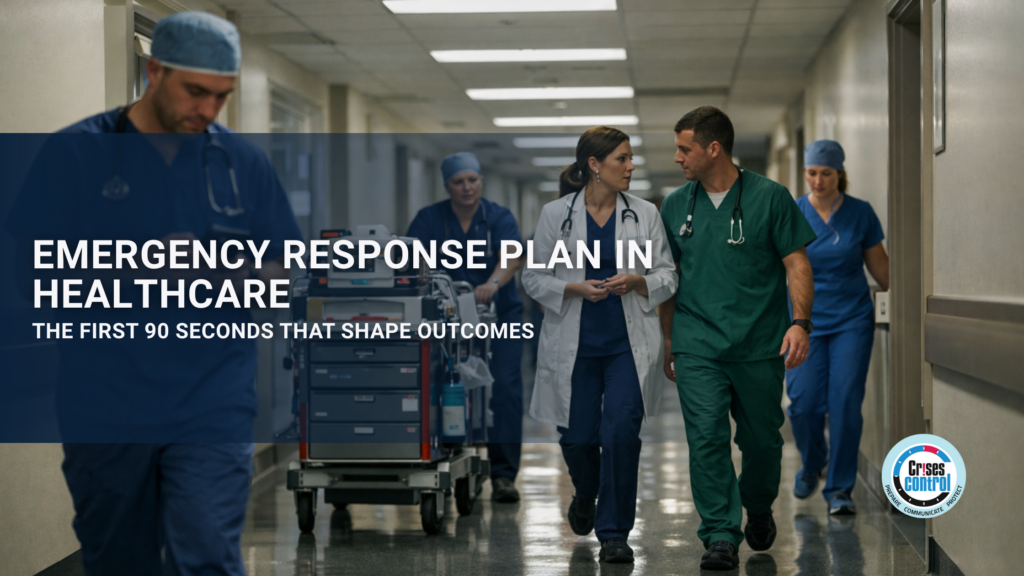
Written by Anneri Fourie | Crises Control Executive When a serious incident unfolds inside a hospital, the first moments shape everything that follows. Staff rarely lack skill or commitment. What often slows response is uncertainty about who should act, whether escalation is appropriate, and how to coordinate quickly across teams. An effective emergency response plan […]
Regulatory Incident Reporting After Spills, Fires, And Near Misses In Oil And Gas
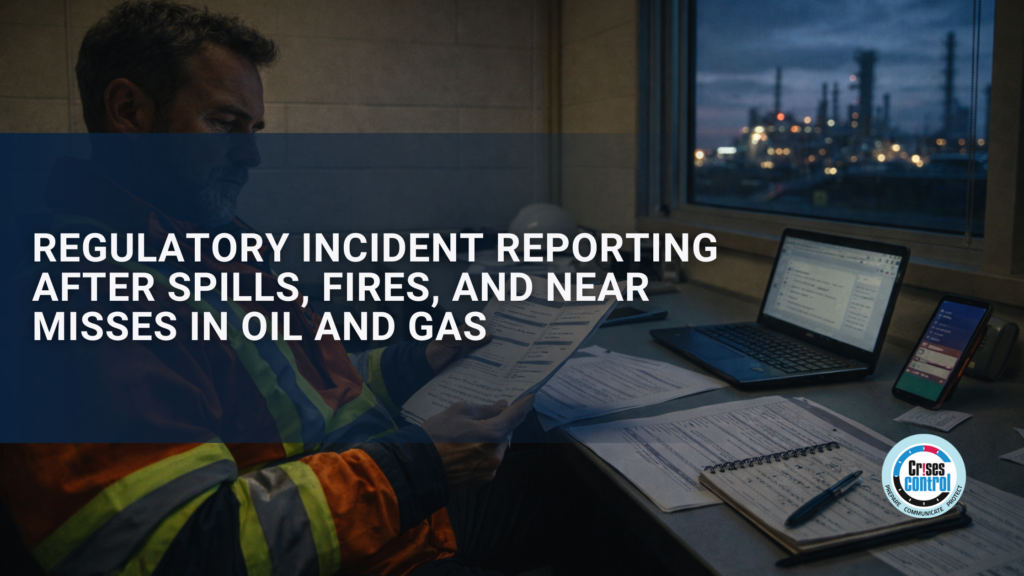
Written by Anneri Fourie | Crises Control Executive When a spill is contained or a fire is extinguished, there is usually a moment of relief. Production restarts. Equipment is inspected. Teams debrief informally. The immediate danger has passed. That is when the difficult questions begin. Who made the first escalation decision?When were authorities notified?What information […]