Written by Anneri Fourie | Crises Control Executive
Introduction: The Problem With AI In Crisis Response
A fire alarm goes off during a live event. At the same time, network systems start failing. Messages begin to flood in from different teams, clients want updates, and no one is fully sure what is happening yet.
This is the moment where most organisations realise a hard truth.
Their plans exist, but they are not usable under pressure.
Their tools exist, but they are not connected.
Their teams exist, but they are not aligned.
Now add AI into that situation.
Some organisations expect AI to step in and make decisions. That expectation creates risk. When decisions are made without full context, the outcome can be worse than the original incident.
The real value of AI crisis management is not decision-making. It is support. It helps teams stay structured, informed, and coordinated when pressure builds.
What Is AI Crisis Management
AI crisis management is the use of artificial intelligence to assist teams during incidents by guiding actions, surfacing information, and supporting communication.
It does not replace human judgement. It supports it.
In practice, this means AI can:
- Show the next step in a response plan
- Highlight key contacts and escalation paths
- Bring relevant information into one place
- Help teams stay focused on priorities
Why AI Is Entering Crisis Management Now
Incidents are becoming harder to manage for three reasons.
First, systems are more connected. A small issue can spread quickly across services, teams, and locations.
Second, communication channels have multiplied. Teams are using messaging apps, email, phone calls, and internal tools at the same time.
Third, expectations have changed. Clients and stakeholders expect fast, clear updates even when information is still evolving.
These conditions make it difficult to maintain control using manual processes alone. This is where AI in crisis management becomes relevant.
The Scenario: A Live Event Under Pressure
A global event company is running a large live event. Security teams, operations staff, and external partners are all involved.
During the event:
- A fire alert is triggered in one area
- Network instability affects internal systems
- Multiple teams report conflicting information
- Clients request immediate updates
At the same time, a technology partner managing business continuity plans is running tests for notification systems across different clients. Alerts are being triggered and acknowledged in parallel.
This creates a complex situation where multiple incidents overlap.
Organisations operating in these environments rely on structured platforms to send alerts, coordinate teams, and track response actions.
Even with the right tools in place, pressure builds quickly.
The Real Challenge: Human Decision Making Under Pressure
When incidents unfold, people do not follow perfect processes.
They are:
- Interpreting partial information
- Switching between communication channels
- Trying to understand what matters most
- Making decisions while being interrupted
This leads to common problems:
- Delays in response
- Conflicting actions
- Unclear ownership
- Loss of visibility
This is where incident management software plays a role, but software alone is not enough.
Teams still need guidance in the moment.
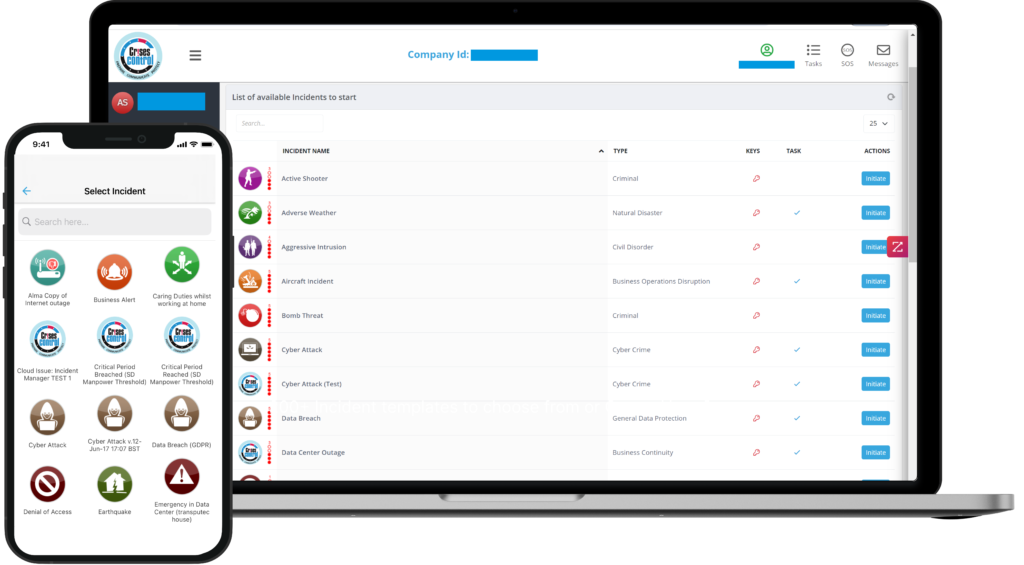
Interested in our Incident Management Software?
Flexible Incident Management Software to keep you connected and in control.
Crisis Management Vs Emergency Response
What is the difference between crisis management and emergency response?
Emergency response focuses on immediate actions to stabilise a situation. Crisis management focuses on coordination, communication, and decision-making across the wider organisation.
Both are connected. One handles the immediate issue, the other manages the broader impact.
Understanding this difference helps explain why AI should support coordination, not control decisions.
Where Traditional Approaches Break Down
Many organisations still rely on static documents, manual call trees, separate communication tools, and individual knowledge of processes, which makes it difficult to respond effectively when pressure builds during an incident.
These approaches fail during incidents because they assume people can think clearly under pressure.
In reality, plans are hard to find, communication becomes fragmented, and important steps are often missed when teams are under pressure.
This is why organisations start looking at AI emergency response tools for technology companies.
The Role Of AI: Support In The Moment
AI works best when it removes friction during an incident and helps teams stay focused on what needs to happen next. It does not take control. It supports the people managing the response.
Providing Context
AI can bring together relevant response plans, contact lists, and previous incident data in one place. This reduces the need to search for information across different systems and helps teams understand the situation more quickly.
Guiding Actions
AI can suggest next steps based on the situation, highlight role-specific tasks, and prompt required communications. This helps ensure that everyone knows what they are responsible for and keeps the response aligned across teams.
This is where AI assistants such as CRAiG, used within platforms like Crises Control, support teams by surfacing the right actions and information at the right time without taking control of decisions.
Reducing Cognitive Load
During incidents, people are processing too much information at once. This often leads to confusion or missed steps.
AI helps by filtering noise, highlighting what matters, and structuring information in a clear way. This allows teams to focus on making informed decisions rather than trying to piece together what is happening.
This is a clear example of how AI assists incident response without making decisions.
A Structured Response Approach In Practice
In the earlier scenario, a structured platform such as Crises Control allows teams to respond in a more organised way.
Immediate Alerting
- Alerts are triggered and sent through a central system
- Teams receive notifications instantly
- Acknowledgements are tracked
Role Based Coordination
- Each team knows their responsibility
- Actions are assigned and monitored
- Escalation paths are clear
Centralised Visibility
- All updates are captured in one place
- Decision-makers can see progress in real time
- Communication is consistent across teams
When combined with AI crisis management, this structure becomes easier to follow and maintain.
Manual Vs Digital Response


Challenging The Assumption: AI Should Decide
There is a growing belief that AI should take over decision-making during incidents.
This creates new risks.
AI does not fully understand organisational priorities, legal implications, or human impact, which is why human judgement remains essential during incident response.
Decisions during incidents often involve judgement that cannot be automated.
A better approach is to use AI to:
- Support decisions
- Provide structure
- Reduce confusion
This is where AI in crisis management delivers real value.
Practical Steps For Technology Organisations
Organisations looking to improve their response should focus on the following:
1. Make Plans Usable
Plans should be:
- Easy to access
- Broken into clear steps
- Assigned to roles
2. Bring Communication Into One Place
Avoid switching between tools. Use a central platform for alerts and updates.
3. Use AI As A Support Layer
AI should:
- Guide actions
- Surface information
- Help teams stay focused
4. Test Regularly
Run simulations to see how teams respond under pressure.
Why This Matters For Compliance And Resilience
Standards such as ISO 22301 and ISO 22320 expect organisations to have structured response processes.
This includes clear roles, reliable communication, and documented actions that ensure teams can respond in a structured and accountable way.
AI can support consistency, but responsibility remains with people.
Final Thoughts
Technology organisations are dealing with incidents that are more complex than before. Systems are connected, expectations are higher, and the margin for error is small.
The role of AI crisis management is to support teams in these moments. It helps them stay organised, communicate clearly, and act with confidence.
When combined with a platform like Crises Control, organisations can move from fragmented response to coordinated action.
The question is not whether AI should be used. The real question is how it should be used.
Get Started
If you are reviewing how your organisation manages incidents and want to see how structured response and AI support can work in practice:
Request a FREE Demo