Written by Paul Malinda | Crises Control Marketing Assistant
What Business Continuity Means in Practice
A technology operations team begins the morning expecting a normal maintenance window. Instead, a key internal system becomes unavailable, one client facing workflow slows down, and a building access issue means part of the team cannot get into the main office. None of these issues looks severe on its own. Taken together, they create confusion, delay, and pressure.
The real problem is not only technical faults. It is the fact that the team now needs to find the right continuity plan, confirm who owns which action, communicates clearly, and keeps operations moving while information is still changing.
This is where business continuity platform solves a real problem. It helps organisations keep plans usable, make responsibilities clear, and manage disruption in a more controlled way. Uptime still matters, but uptime alone does not protect continuity.
Business continuity is the ability to keep critical work going during disruption and recover in a controlled way. It is not just about systems being available. It is also about people knowing what to do, managers having a clear view of what matters most, and teams being able to respond without wasting time.
For technology organisations, continuity usually depends on a few simple things:
- plans that are current and easy to use
- clearrole basedresponsibilities
- reliable communication
- access to information from anywhere
- a practical way to track actions during disruption
That is why many organisations are moving away from static documents and towards a business continuity platform that supports real world response, not just annual reviews.
When Plans Exist But Are Hard To Use
A common mistake is assuming that having a plan means being ready.
In this scenario, the operations team has already done a lot of work. Plans exist. Review dates have been logged. Contact lists are stored in shared folders. Procedures cover service disruption, denial of access, supplier dependency issues, and communication escalation.
Then a live disruption exposes weakness.
The continuity lead needs to know which plan applies first. Operations managers need to understand what service commitments are affected. Client facing teams need accurate updates. Senior leaders want a clear picture. At the same time, some key staff are not in the office, and access to the usual folders is slower than expected.
The problem is not a lack of effort. The problem is that the plans are still too dependent on documents, memory, and manual coordination.
This is why business continuity platform for technology operations is a practical need, not a nice extra. The challenge is not writing plans. The challenge is making them usable when people are under pressure.
Why Pressure Builds So Quickly
Technology incidents rarely stay tidy for long. One issue often leads to another.
A disruption like this can affect:
- service delivery
- internal reporting
- customer communication
- supplier timelines
- access to tools
- leadership decisions
The pressure grows because different teams need different things at the same time. Operations wants clarity. Communications wants facts. Leadership wants impact. Support teams want direction. If the continuity process is slow or messy, people start filling gaps themselves.
That is when problems spread.
Plans Are Too Static
Many plans are still written as long documents that work well during planning sessions but poorly during live events. Teams have to search for the latest version, interpret what applies, and translate written steps into action.
Communication Becomes Messy
People switch between email, chat, phone calls, and direct messages. The same update gets repeated in different ways. Some people are informed too late. Others get too much information without knowing what to do with it.
Ownership Becomes Unclear
A plan may list roles, but that does not always mean tasks are actively assigned and tracked. When ownership is vague, delays are almost guaranteed.
These are not unusual failures. They happen because manual continuity processes depend too heavily on people remembering what should happen next.
Where Traditional Approaches Fall Short
Many organisations still manage continuity with a familiar mix of policy documents, spreadsheets, call trees, and personal knowledge. That can appear fine during an internal review. It often struggles during a live incident.
A manual approach creates obvious weaknesses:
- teams lose time looking for the latest plan
- contact details are not always current
- task owners are not confirmed quickly enough
- escalation depends on a few experienced people
- records for review are incomplete
This is where continuity planning and incident management software overlap. A continuity plan can explain what good response looks like. It cannot organise that response on its own while the situation is moving.
That gap matters. If teams have to coordinate actions through scattered messages and shared memory, the organisation is depending on effort instead of structure.
Interested in our Ping Mass Notification Software?
Efficiently alert everyone in seconds at scale with our Mass Notification Software.
Why Uptime Is Too Narrow A Measure
A lot of organisations still judge continuity by one question: did the system stay online?
That is too narrow.
A system can recover and the organisation can still perform badly if:
- teams cannot access plans quickly
- customer messages are delayed or inconsistent
- workarounds are unclear
- actions are missed or repeated
- leaders do not have a shared view of progress
This is the real point behind continuity beyond uptime. Business continuity is not only technical recovery. It is operational control during disruption.
Business continuity platform helps by making plans easier to access, maintain, and activate. Instead of treating continuity as a set of reference documents, it supports a live operating model that people can use under pressure.
It also supports better governance. Good practice under standards such as ISO 22301 is not only about having plans. It is also about maintaining them, reviewing them, and being able to show that they work in practice.
The Communication Problem Most Teams Underestimate
In the scenario above, the team is not just managing a technical issue. It is managing a communication problem.
Operations teams need clear instructions. Leadership needs a summary of business impact. Client facing teams need accurate updates. Plan owners need to know whether tasks are moving forward.
Without structure, organisations often fall into the same patterns:
- sending broad updates with too little context
- notifying the wrong people too often
- leaving key decision makers under informed
- relying onpersonal messagesinstead of controlled channels
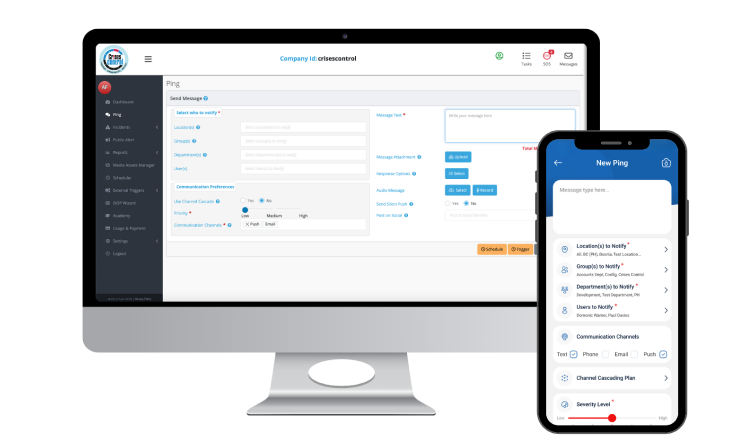
This is where a business continuity platform becomes useful in a very practical sense. It gives teams one place to manage plans, actions, and communications. That does not remove judgement. It removes friction.
Cloud access is especially important here. If a continuity event includes denial of access, remote working, or travel disruption, teams still need access to plans and actions without depending on one building or one server.
The Structured Response That Works Better
A stronger continuity model is usually built on a few clear principles.
Make Plans Active
Plans should be easy to launch, easy to review, and easy to follow. The response team should not need to read long narrative documents in the middle of a live issue.
Assign Actions Clearly
Teams need named owners, expected time frames, and clear escalation points. This is where incident management software supports business continuity by turning written intent into visible action.
Keep Communication Reliable
Notifications should reach the right people in the right way without forcing teams to improvise each time.
Maintain A Shared Picture
Decision makers need current information in one place. That helps them assess risk, prioritise resources, and communicate with confidence.
This is also how technology teams use continuity tools to reduce disruption. Faster recovery matters, but the bigger benefit is clearer coordination from start to finish.
Manual Versus Digital Continuity Management
The difference between manual and digital continuity management becomes clear very quickly during a live issue.
Manual Approach
- plans are stored across separate files and folders
- reviews depend on personal reminders
- updates are inconsistent
- tasks are coordinated through calls or email
- reporting is assembled after the event
Digital Approach
- plans are stored in one secure environment
- review cycles and ownership are visible
- workflows can be launched quickly
- tasks are assigned and tracked
- updates and actions are logged as the response unfolds
A digital model does not replace leadership. It gives leadership better support.
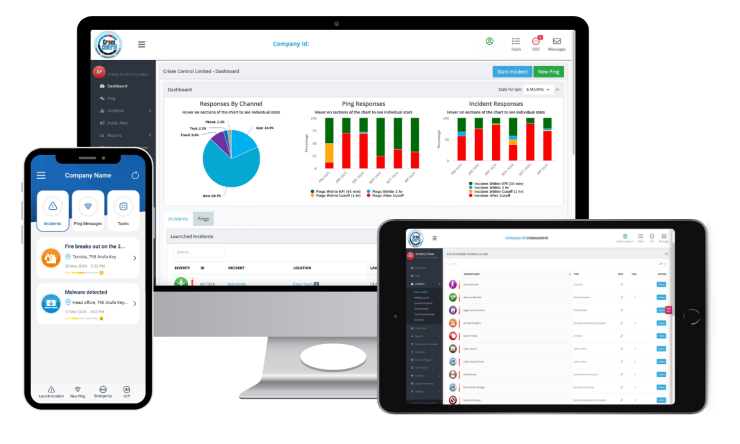
This is where Crises Control fits naturally as a practical example. It helps organisations digitalise plans, support role based response, maintain reliable communication, and access continuity information through the cloud. That is useful because continuity depends on execution, not just documentation.
A Common Assumption That Needs To Change
One assumption needs to be challenged directly.
Many organisations treat the completed continuity plan as the end result. It is not. It is the starting point.
If a plan is not reviewed, updated, tested, and translated into practical actions, it becomes a document rather than a capability. It may still look complete during an audit, but it will not guide a confident response when conditions change.
The real outcome is readiness.
Readiness depends on:
- accurateownership
- current contact information
- review discipline
- practical workflows
- communication that works under pressure
That is why business continuity software is more useful than a simple document store. It supports the ongoing work required to keep continuity plans alive and usable.
Practical Questions For Operations Leaders
If you are reviewing your current approach, start with a few simple questions.
Can Our Plans Be Used In Ten Minutes?
If the answer depends on one person knowing where everything is, the process is fragile.
Are Actions Assigned Or Only Described?
Written guidance has value. Assigned and trackable actions are much stronger.
Can We Communicate Clearly During Disruption?
A continuity process that depends on normal channels working normally is incomplete.
Do We Have Evidence Of Review And Maintenance?
Continuity is not a one off exercise. Review discipline supports resilience and good governance.
Can Teams Work From Anywhere?
Cloud access matters when office access is limited or teams are distributed.
A modern business continuity platform supports all of these areas. That is why continuity maturity is increasingly judged by usability, not just by whether a policy exists.
Final Thoughts
Technology organisations do not struggle with continuity only because systems go down. They struggle when plans are hard to use, communication becomes fragmented, and ownership is unclear at the very moment structure is needed most.
Business continuity platform helps organisations move beyond a narrow focus on uptime and build a more practical form of resilience. It supports plan maintenance, clearer actions, stronger communication, and more controlled recovery.
For teams building and maintaining continuity plans across complex operations, that shift matters. A strong process should not depend on memory, shared drives, or individual effort alone. It should be structured enough to work on an ordinary difficult day.
Crises Control is a practical example of this approach through digitalisation of plans, role based response, reliable communication, and cloud access.
Request a FREE Demo