Written by Anneri Fourie | Crises Control Executive
Assembly lines are the heartbeat of any manufacturing plant. They influence output, customer expectations, workforce planning and revenue. When production stops without warning, the impact is immediate and wide ranging. Missed delivery dates, financial penalties, wasted raw materials and lost confidence from suppliers and customers all follow. For motor vehicle manufacturers in particular, where schedules are tight and competition is fierce, even a short disruption can place an entire model line at risk.
Many organisations try to manage these situations with printed procedures, long email threads or improvised workarounds. These methods create confusion, slow progress and leave teams searching for answers when the pressure is highest. The problem is not usually a lack of planning. The issue is visibility, coordination and speed. When the right people are not informed at the right moment, the delay can turn a small interruption into a significant stoppage.
This is where Business Continuity Software brings genuine value. It gives manufacturing teams the structure, clarity and communication channels needed to keep production moving when conditions change quickly. The goal is not simply recovery. The goal is to protect output, keep staff safe and limit the spread of operational risks. This blog explores how modern continuity practices support assembly line environments, why motor vehicle manufacturing requires a tailored approach and how Crises Control supports teams working under real pressure.
Why Assembly Lines Face Higher Continuity Demands
Assembly lines depend on harmony between machinery, people, suppliers and digital systems. They rely on predictable timing and precise coordination. When any part of the chain breaks, the whole system feels the impact. These pressures are increasing year after year.
Key stress points include:
Highly integrated supply chains
Motor vehicle plants depend on just in time deliveries, cross border shipments and specialist components. A delay of a single part can affect dozens of workstations.
Complex automation
Modern lines rely on robotics, sensors and digital control units. Faults often require specialist engineers and cannot be fixed through manual intervention alone.
Regulatory pressure
Safety, quality and environmental rules are tighter than ever. Any incident, even a near miss, must be handled and recorded correctly.
Skills shortages
Experienced technicians are retiring, while new staff require time to build confidence. This affects the speed and accuracy of manual recovery steps.
Operational and digital risks
Cyber incidents, network failures, power issues or data faults can slow machines, stop communication and limit visibility of line performance.
With these factors combined, traditional continuity approaches are no longer enough. Production teams need tools that help them detect risk early, communicate clearly, activate recovery plans instantly and maintain full awareness of what is happening across the site.
How Business Continuity Software Supports Assembly Line Resilience
Business Continuity Software gives manufacturing plants a structured, coordinated method for preventing interruptions and responding when something goes wrong. It also provides clarity for teams, who often struggle with long documents or outdated communication steps.
Below are the essential capabilities that support continuity in assembly line environments.
1. Understanding the True Cost of Production Stoppages
Stoppages are expensive. Beyond the obvious impact on output, a wide range of hidden costs can influence long term performance.
Direct costs include:
- Idle workers
- Paused robotics and automation
- Energy waste during stoppage
- Late shipments
- Scrapped parts
- Emergency maintenance fees
Indirect costs include:
- Contract penalties
- Customer frustration
- Higher insurance exposure
- Pressure on logistics partners
- Extra overtime to recover
- Disruption to downstream operations
- Reduced capacity to fulfil future orders
The automotive sector experienced this clearly during the 2024 semiconductor shortage. Production lines slowed or stopped across Europe and North America due to part shortages. Plants with structured continuity planning recovered faster because they could redirect inventory, adjust schedules and coordinate teams without delay. Plants that relied on manual processes experienced longer shutdowns, higher costs and greater uncertainty among staff.
This example shows that resilience is not only about reacting to sudden incidents but maintaining clear visibility of the conditions that can influence production weeks or months ahead.
2. Strong Risk Assessment and Planning for Production Stability
Any effective continuity strategy begins with understanding where the line is most exposed. This step often reveals gaps that managers may not see during everyday operations.
Identify critical dependencies
These typically include:
- Key machines and robotics
- Material flow and supplier reliability
- Specialist skills
- Quality checkpoints
- Network and digital controls
- Safety procedures
- Energy supply
- Environmental conditions
- Maintenance availability
By mapping these dependencies, manufacturers can identify which areas need stronger protection or faster response options.
Assess supply chain risk
Continuity planning must include upstream and downstream risk, such as:
- Transport delays
- Supplier financial health
- Regional instability
- Variable lead times
- Spare part shortages
These factors influence how quickly the line can recover or continue running when conditions change.
Build tailored continuity plans
A strong continuity plan for assembly lines includes:
- Clear activation triggers
- Defined roles
- Escalation routes
- Step by step recovery actions
- Contact lists
- Internal and external communication templates
- Resource requirements
- Safety controls
Crises Control supports this by turning lengthy documents into digital workflows. These workflows are easy to follow and can be launched instantly without confusion.
3. Early Warning and Prevention for Assembly Lines
Preventing disruption is far more efficient than recovering from it. Modern manufacturing plants already use predictive tools, yet many struggle to turn early signals into coordinated action.
Predictive maintenance
Sensors and monitoring systems can identify:
- Vibration changes
- Heat increases
- Performance slowdowns
- Machine alignment issues
When these data sources connect to an alerting platform, the right teams can take action before the line stops.
Supply chain health monitoring
Indicators such as:
- Late shipments
- Reduced supplier output
- Communication delays
- Transport issues
can activate continuity workflows before production is affected.
Environmental monitoring
Motor vehicle plants face risks ranging from heat stress to severe weather. Automated alerts give teams the information they need to adjust staffing, protect equipment or secure the site.
Crises Control integrates with monitoring tools to send alerts to the right groups. This avoids delays and ensures that early signals turn into early action.
4. Business Continuity Software and Fast Incident Response
When something does go wrong, speed and clarity are essential. Delayed decisions often cause the most damage to production schedules.
Instant activation of recovery plans
A single action can launch the correct incident workflow. This removes guesswork and prevents teams from searching through documents while pressure is rising.
Smooth coordination across departments
Response often involves:
- Maintenance
- Operations
- Engineering
- Health and Safety
- Quality
- IT
- Procurement
Business Continuity Software gives every team a shared view of tasks, deadlines and progress.
Clear communication with the shop floor
Messages need to reach shift leaders, technicians, supervisors and contractors at the same time. Crises Control supports multi channel delivery through:
- Mobile app
- SMS
- Voice calls
- Desktop alerts
- Microsoft Teams
This reduces confusion and ensures instructions reach workers quickly.
5. Flexible Production Planning During Disruption
Even when a machine fails or a key part becomes unavailable, production can continue if teams have structured alternatives.
Common alternative actions include:
- Switching to backup suppliers
- Shifting production to another plant
- Changing shift patterns
- Adjusting workstations
- Running at partial capacity
- Temporarily replacing non critical components (where approved)
These options rely on clear communication and strong coordination. Without this, alternative actions can create further delays rather than solving the original problem.
Crises Control helps by syncing communication, keeping teams aligned and maintaining full visibility across the site.
6. Recovery and Improvement after an Incident
Every incident provides insight into how processes can be strengthened. Manufacturers that record and review these steps often see significant long term gains.
Key measures include:
- Root cause
- Time to identify the issue
- Time to notify staff
- Team readiness
- Supplier performance
- Communication delays
- Plan effectiveness
Crises Control stores all logs, actions and timestamps to support structured reviews, audits and compliance checks.
How Business Continuity Software from Crises Control Supports Production Stability
Crises Control gives manufacturers the tools needed to protect output, coordinate teams and reduce downtime.
Core capabilities include:
- Fast alerts across multiple channels
- Digital continuity plans
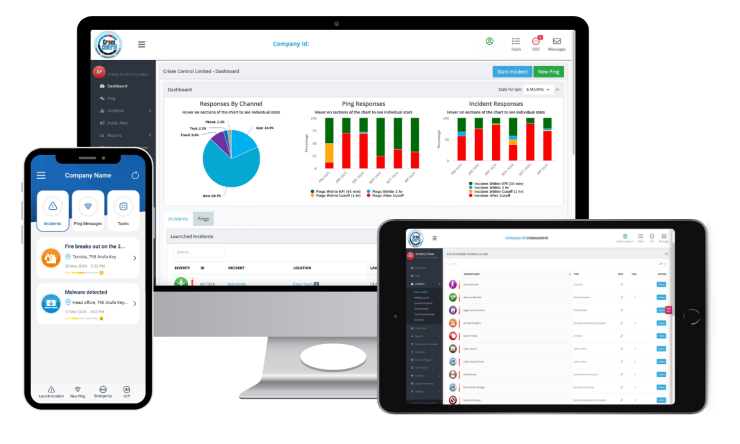
- Shared dashboards for response teams
- Clear task allocation
- Supplier and stakeholder communication
- Incident tracking from start to finish
- Audit ready reports
- Integration with monitoring tools and plant systems
For manufacturers with more than one site, Crises Control supports consistent planning and aligned processes across all locations. This helps organisations maintain compliance with standards such as ISO 22301, while also improving operational readiness.
Strengthen Your Assembly Line Continuity with Crises Control
Production stability cannot rely on manual steps or fragmented systems. It requires clear plans, reliable communication and coordinated action during pressure. Business Continuity Software gives manufacturers the structure and visibility needed to keep assembly lines running and protect output during challenging moments.
If you would like to see how our platform can support your continuity strategy, contact us to get a free personalised demo.
Request a FREE Demo