Written by Anneri Fourie | Crises Control Executive
2025 exposed a hard truth for many organisations. The disruption itself was not always the biggest problem. The real damage often came from slow, unclear, or fragmented communication. Systems failed, weather caused chaos, and infrastructure went offline, but what turned incidents into major disruptions was confusion about what was happening and what people were supposed to do.
For those responsible for crisis management, emergency communications, business continuity, or operational resilience, the year acted as a stress test. It showed which organisations could share information quickly and clearly, and which ones struggled to get a message out when it mattered.
The lesson is simple. Crises cannot always be prevented, but the impact can be reduced. Clear communication, sent early and backed by defined actions, keeps people safe and helps organisations stay in control. This article looks at the key crisis management lessons from 2025 and explains how the right tools and processes can help teams avoid repeating the same mistakes in 2026.
What went wrong for many organisations in 2025
Across industries, the same issues appeared again and again.
Teams relied on manual call lists that broke down when people were unavailable. Important updates were shared through email while staff were already dealing with system outages. Different departments sent different messages, leaving employees unsure which instructions to follow. In some cases, crisis plans existed but were stored in places people could not access during an incident.
The problem was not a lack of effort. People worked hard under pressure. The problem was that the way information moved inside organisations had not kept up with the speed and scale of modern incidents.
Organisations that handled disruption well did not have fewer incidents. They communicated faster, more clearly, and in a more organised way.
Lesson 1: Speed of communication shapes the outcome
One of the clearest lessons from 2025 was how quickly situations can spiral when people are left guessing.
During the Amazon Web Services outage in 2025, thousands of organisations lost access to critical systems at the same time. What stood out was how quickly updates were shared. Clear public statements and regular updates helped customers understand what was affected and what was not. That clarity allowed businesses to make decisions rather than wait in the dark.
Organisations that delayed confirming the situation internally experienced rumours, duplicated efforts, and wasted leadership time. In those cases, rumours spread, teams duplicated work, and senior leaders spent time chasing updates instead of directing the response.
Fast communication does not mean rushed or careless messaging. It means having a way to notify the right people as soon as an issue is confirmed, even if all the answers are not available yet.
Lesson 2: Weather events exposed weak communication structures
Extreme weather in 2025 showed how fragile communication can be when systems are under strain.
The Texas floods disrupted transport, utilities, schools, and healthcare services across large areas. Local authorities and organisations that issued early, clear alerts helped people make safer choices. Staff knew whether to report to work, switch to remote operations, or follow emergency procedures.
Where communication was delayed or inconsistent, the impact lasted longer. Some employees travelled into dangerous conditions because they had not received clear instructions. Others stayed away unnecessarily because they did not know services were still running.
This showed the benefit of one trusted channel to reach staff and confirm messages were understood. It also showed that communication plans need to work even when parts of the infrastructure are unavailable.
Lesson 3: Multi site organisations need coordinated messaging
Power outages across parts of Europe in 2025 affected organisations operating in several countries at once. These incidents revealed a common weakness.
Local teams often acted quickly, but without central coordination, messages varied by location. One office might instruct staff to stay home while another asked employees to report in. This created frustration and raised questions about leadership and preparedness.
Organisations with a central incident management platform handled this better. They were able to issue consistent guidance while still allowing local teams to act on site specific risks. Leaders could see who had been contacted and who still needed support.
For organisations spread across regions or countries, coordination is not about control. It is about making sure everyone is working from the same information.
Lesson 4: Manual communication fails under pressure
Many organisations still rely on phone trees, shared inboxes, or informal messaging groups during incidents. In calm conditions, these can work. Under pressure, they often fall apart.
People miss calls because they are dealing with the situation in front of them. Messages get buried. There is no clear record of who has been informed and who has not. Escalation depends on someone remembering to follow up.
In 2025, this led to repeated delays. Teams assumed others had been informed when they had not. Managers spent valuable time chasing acknowledgements instead of focusing on decisions.
Structured alerting systems remove that uncertainty. Messages go out at the same time, responses are tracked, and gaps are visible immediately. This reduces stress for everyone involved.
Lesson 5: Plans that cannot be activated are just documents
Another common issue in 2025 was the gap between written plans and real action.
Many organisations had crisis management plans and emergency response plans. When incidents happened, staff struggled to find them, access them, or understand which parts applied to their role. In some cases, plans were stored on internal systems that were unavailable during outages.
Organisations that performed better linked their plans directly to incident response. When an incident was declared, the relevant actions were assigned automatically based on role. People did not have to interpret long documents under pressure. They knew exactly what they were responsible for.
This is where business continuity software proved its value. It turned plans into practical steps rather than reference material that sits unused.
Lesson 6: Leaders perform best with a clear view of progress, not a flood of updates
Senior leaders in 2025 often described the same frustration. They were flooded with information but lacked clarity.
Emails, messages, and verbal updates arrived from different directions. It was hard to see what had already been done and what still needed attention. Decisions were delayed because no one had a complete picture.
When leaders had access to a single view showing who had been alerted, who had responded, and which actions were outstanding, decision making improved. They could focus on priorities rather than information gathering.
This kind of visibility reduces pressure on teams as well. People know their actions are seen and do not need to repeatedly report progress.
Lesson 7: Too many channels create confusion
A common reaction to past incidents is to add more communication channels. In practice, 2025 showed that this often makes things worse.
When staff receive the same message through several uncoordinated channels, they question which one is correct. Conflicting updates reduce trust and slow response.
Clear communication is not about volume. It is about consistency and authority. One message, sent through a system people recognise and trust, is more effective than five messages sent through different tools.
Compliance pressure raised the stakes
Regulatory expectations continued to increase in 2025. Organisations were expected to show not just what they planned to do, but what they actually did during incidents.
Being able to demonstrate when alerts were sent, who received them, and how decisions were made became essential. This applied across data protection, operational resilience, and sector specific regulations.
Manual records were often incomplete or inconsistent. Automated systems created a clear audit trail without adding extra work during an already stressful time.
How organisations can avoid repeating these issues in 2026
The lessons from 2025 point to a few practical steps.
First, review recent incidents with honesty. Look at where communication slowed things down or caused confusion.
Second, simplify how messages are sent during incidents. Reduce reliance on informal methods and make sure there is one clear way to reach people.
Third, connect plans to action. Make sure crisis and continuity plans can be activated quickly and are accessible when systems are under strain.
Fourth, test regularly. Exercises should focus on communication flow, not just theoretical scenarios.
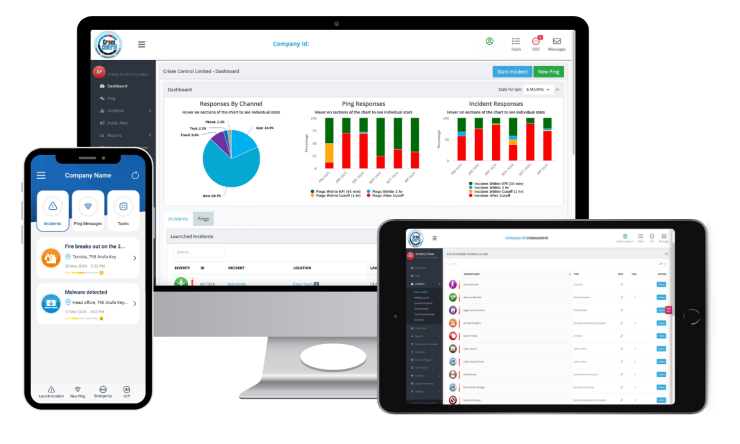
This is where platforms like Crises Control can support organisations. By bringing together mass notification, incident management, and business continuity planning in one place, teams can respond with more confidence and less guesswork. The value lies in clarity and structure, not complexity.
Looking ahead with confidence
The events of 2025 showed that disruption is part of modern operations. What separates resilient organisations is not whether incidents happen, but how they communicate when they do.
Clear, early communication reduces confusion, supports safer decisions, and limits disruption. The lessons from 2025 provide a practical guide for improving readiness in 2026.
Organisations that take time now to strengthen their communication processes will be better prepared when the next incident arrives.
Request a FREE Demo