Written by Anneri Fourie | Crises Control Executive
Banks operate across multiple branches, often in different cities or countries. A minor teller error, safety hazard, or suspected fraud can quickly escalate if communication is slow or unclear. A minor teller error, a safety hazard, or suspected fraud can quickly escalate if communication is slow or unclear. Delayed responses can put staff at risk, disrupt operations, and create compliance challenges with regulators.
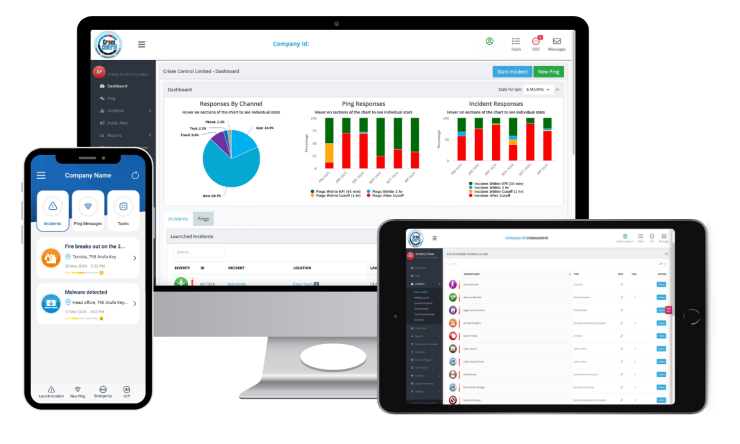
Crisis management software for banks provides a centralised, digital way to monitor, communicate, and respond to incidents. It ensures real-time alerts, tracks responses, and maintains records for audit and compliance purposes, allowing banks to manage incidents efficiently and safely across all locations.
Understanding branch-level incident challenges
Managing incidents across multiple branches presents specific pressures:
- Minor incidents that escalate: Operational errors, ATM malfunctions, or small security breaches can worsen if notifications are delayed or inconsistent.
- Major incidents with immediate risks: Physical damage, large-scale fraud, or violent incidents pose direct threats to staff and customers. Slow escalation can increase operational and reputational harm.
- Multi-branch coordination issues: Without centralised communication, messages can be contradictory or delayed, leading to confusion and operational gaps.
- Regulatory and compliance requirements: Authorities such as FCA, DORA, FFIEC, and OSFI require clear documentation of incident response and staff safety measures. Manual systems often fail to provide reliable evidence.
Traditional methods like phone trees, spreadsheets, or email chains do not guarantee immediate notification, accurate tracking, or a clear audit trail, leaving banks exposed to operational and regulatory risk.
How crisis management software improves incident response
Crisis management software shifts incident management from reactive to controlled and measurable. Key benefits include:
- Centralised communication: A mass notification system for multi-branch banks delivers instant alerts to the right teams, preventing confusion.
- Real-time response tracking: Managers can monitor SOS alerts, task completion, and acknowledgements in one platform.
- Role-specific guidance: Staff receive instructions tailored to their responsibilities, reducing errors.
- Compliance and audit support: Every action is logged, producing exportable trails for regulatory review.
- Cloud-based access: Plans remain accessible even if local IT systems fail, ensuring operational continuity.
This combination allows banks to manage both minor and major incidents efficiently, lowering operational disruption and safeguarding employees.
Practical scenarios in branch incident management
Fraud detection at a branch
A teller notices unusual withdrawal activity suggesting possible internal fraud. Without a centralised system, escalating the issue could involve multiple phone calls and delayed approvals. With a real-time employee alert system for operational disruptions across branches, the branch manager and compliance officer are notified instantly. The incident is logged, and each response step is tracked, enabling fast containment and evidence collection for regulators.
Safety incident during business hours
A fire alarm sounds or a physical altercation occurs. Staff can trigger an SOS alert via an incident management platform with SOS alerts, providing exact location details to security teams. Evacuation instructions and emergency protocols are delivered immediately, with acknowledgements tracked to confirm that staff follow guidance. This reduces confusion and the risk of injury.
Multi-branch operational disruption
A central IT failure impacts multiple branches. Uncoordinated alerts can create operational chaos. A mass notification system for multi-branch banks delivers structured instructions, assigns remedial tasks, and tracks completion. Staff receive consistent messaging, customers are informed, and branches continue operations within the limits of the disruption.
Common mistakes in branch incident management
Many banks continue using outdated methods that increase risk:
- Assuming manual communication is enough: Phone calls or emails cannot guarantee immediate receipt or acknowledgement.
- Neglecting compliance evidence: Without logged actions, regulators may question the bank’s response processes.
- Treating minor issues casually: Small incidents can escalate quickly if initial containment is delayed.
- Overlooking role-specific guidance: Generic instructions confuse staff and slow responses.
Addressing these mistakes improves operational resilience, staff safety, and regulatory compliance.
Manual versus digital incident management
| Aspect | Manual Approach | Digital Approach (Software) |
| Alert Delivery | Phone calls, emails | Instant mass notifications with read receipts |
| Response Tracking | Spreadsheets | Automated task tracking and SOS acknowledgements |
| Compliance Evidence | Manual reports | Exportable, timestamped audit trails |
| Multi-Branch Coordination | Inconsistent updates | Location-based alerts and centralised dashboards |
| Business Continuity | Reactive and slow | Structured, actionable, cloud-accessible |
Digital systems require initial investment and training, but they drastically reduce response times, errors, and compliance risks.
Regulatory compliance across regions
Banks operate under different regulations, but most require clear evidence of incident management and business continuity:
- UK: FCA, PRA, and operational resilience policies require documented incident response and communication testing. Logged alerts provide clear evidence.
- EU: DORA and GDPR mandate secure incident reporting and data protection. Platforms enforce access controls and maintain audit trails.
- Middle East: Central Bank regulations emphasise business continuity and controlled access. Cloud-hosted systems support regional management.
- USA: FFIEC, SEC, and FINRA frameworks require structured logs and rapid incident notifications. Digital tools streamline reporting.
- Canada: OSFI and PIPEDA require secure communications and privacy-aware incident reporting. Platforms provide encrypted alerts and exportable audit-ready logs.
A centralised platform ensures all branches follow consistent protocols and creates a traceable record for regulators without unnecessary administrative burden.
Reconsidering common assumptions
A written crisis plan alone is often not enough. In reality:
- Paper or static digital plans may be inaccessible during IT outages or branch closures.
- Static plans cannot adapt as incidents evolve.
- Manual escalation introduces errors and delays.
Crisis management software for banks makes plans actionable, measurable, and adaptable. Staff receive real-time guidance, and managers track responses as they happen. This improves response times, reduces risk, and creates a system that grows with operational needs.
Implementing an effective branch-level incident strategy
To manage incidents effectively, banks should:
- Map all branches and risk types: Identify likely scenarios such as fraud, safety hazards, or operational disruptions.
- Define role-based responsibilities: Clarify who responds, what actions are taken, and how communication flows.
- Integrate digital alerting: Use emergency communication solutions for banking operations to send real-time alerts, track tasks, and monitor acknowledgements.
- Test and review regularly: Simulate incidents to find gaps and refine procedures.
- Document for compliance: Ensure every alert, task, and acknowledgement is logged and exportable.
- Provide secure cloud access: Keep plans available even during IT or infrastructure failures.
This approach balances operational readiness, regulatory compliance, and staff safety.
Key benefits in practice
- Faster response times across all branches
- Reduced errors due to role-specific instructions and task tracking
- Improved staff safety with SOS alerts and location tracking
- Clear audit trails that satisfy regulators
- Continuity of operations even during IT or infrastructure disruptions
By handling incidents systematically rather than reactively, banks can protect staff, maintain operations, and demonstrate readiness to regulators.
Conclusion
Managing fraud, safety, and operational incidents across multiple branches is complex, and mistakes can have serious consequences. Manual communication or static plans are slow, prone to error, and difficult to audit.
Crisis management software for banks provides centralised alerts, role-based instructions, and traceable logs. It enables teams to respond quickly, keep operations running, and produce evidence for regulators. By digitalising incident management, banks transform reactive responses into structured, measurable actions, protecting staff and operations while meeting compliance obligations.
Request a FREE Demo