Written by Anneri Fourie | Crises Control Executive
The Problem Banks Face During Operational Disruptions
At 08:47 on a Tuesday morning, a regional bank begins its day as usual. Staff arrive at branches, customer transactions start flowing, and overnight IT maintenance appears successful.
Within minutes, two issues begin unfolding.
At one branch, an electrical fault triggers a fire alarm. Employees guide customers outside while building management begins investigating the cause.
At the same time, the bank’s authentication system begins failing across several locations. Staff cannot log into internal systems. Service desks start receiving calls from multiple branches.
Each event alone is manageable. Together they create confusion.
Branch managers need to tell staff whether buildings are safe to enter. IT teams must inform employees about login issues. Senior leadership needs a clear view of what is happening across the organisation.
What usually follows is a mix of emails, phone calls, and messages across internal chat tools.
Important updates get buried in message threads. Different teams share different versions of the situation. Leadership struggles to understand what actions have already been taken.
Banks often discover in moments like this that communication is not the real problem.
The problem is speed.
More precisely, the lack of two different speeds of communication.
An emergency communication system helps organisations separate immediate alerts from coordinated response activities. This distinction may seem small. In practice, it changes how incidents are managed across the organisation.
What An Emergency Communication System Actually Does
Many organisations think of crisis communication as sending messages quickly. That is only one part of the picture.
An emergency communication system allows organisations to notify employees, gather responses, coordinate actions, and keep a record of what happened during an incident.
In a banking environment, this capability becomes essential. Financial institutions operate across multiple locations with strict regulatory expectations and complex operational dependencies.
A well structured system supports several tasks during an incident.
- Notify employees quickly when a disruption occurs
- Provide clear instructions to affected teams
- Collect responses or safety confirmations
- Assign actions to response teams
- Maintain an audit trail of decisions and communications
This is where two communication speeds become important.
Why Crisis Communication Needs Two Different Speeds
Incidents rarely unfold in a single step. They evolve.
Communication must move quickly at first, then become structured as the response develops.
Speed One: Immediate Alerts
The first priority is awareness.
Employees need to know something has happened and what action they should take. This might involve leaving a building, avoiding a branch location, or preparing for system disruption.
This stage relies on mass notification software, which allows organisations to reach employees through SMS, mobile alerts, or voice notifications.
Banks use this capability for situations such as:
- fire alarms or evacuations
- severe weather warnings
- branch closures
- technology outages
- safety incidents
The purpose is clear communication. Employees should receive a short message with clear instructions.
Speed is essential at this stage, though speed alone does not solve the entire problem.
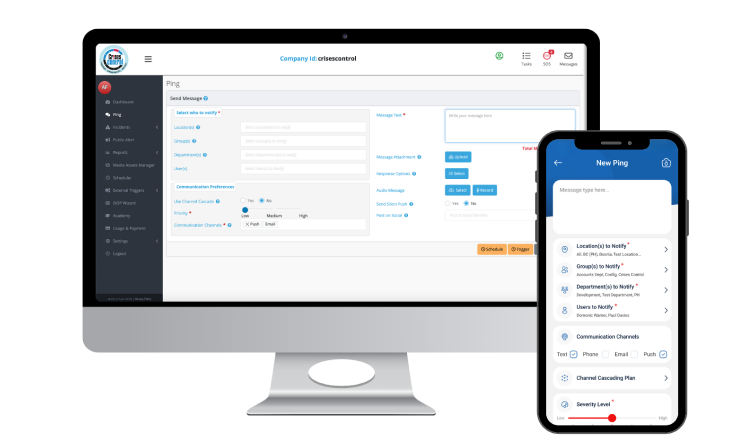
Interested in our Ping Mass Notification Software?
Efficiently alert everyone in seconds at scale with our Mass Notification Software.
Speed Two: Coordinated Incident Response
Once employees are informed, the organisation must begin managing the situation.
Response teams need to assess the issue, assign responsibilities, share updates, and track progress.
This stage requires structure.
Many organisations rely on incident management software to coordinate these activities. The platform becomes the central place where teams manage the response.
Typical actions include:
- activating response teams
- assigning tasks
- sharing response plans
- gathering updates from affected teams
- recording communication for governance
Without this structure, incidents quickly become difficult to manage.
The initial alert may reach employees quickly. The response that follows can still become disorganised.
Returning To The Morning Incident
Consider the branch fire alarm and authentication outage described earlier.
Employees at the affected branch receive an immediate message advising them to leave the building and wait for further instructions.
At the same time, IT teams notify employees across other locations that login issues are under investigation.
This is the first speed of communication.
The second speed begins when response teams activate.
Facilities teams inspect the building and report their findings. IT teams begin analysing authentication failures. Senior management reviews operational impact across the network.
Communication now moves through structured channels. Updates are recorded, responsibilities are assigned, and leadership gains a clear view of progress.
The same incident that initially created confusion now becomes manageable.
Where Traditional Communication Methods Break Down
Many banks still rely on informal communication during operational incidents.
These methods often include email threads, messaging platforms, and phone calls between teams.
These tools work well for daily collaboration. During incidents they introduce several risks.
Message Overlap
Different teams share updates across multiple channels. Employees receive mixed messages about the same situation.
Limited Visibility
Leadership teams struggle to understand which actions have already been taken and which teams are involved.
Missing Audit Records
Financial institutions must show how incidents were handled. When communication happens across different platforms, it becomes difficult to reconstruct what happened.
An emergency communication system creates a central structure for both alerts and coordinated response activities.
Real Situations Where Two-Speed Communication Matters
Financial institutions encounter a wide range of operational disruptions.
Several examples illustrate how communication needs change as incidents develop.
Building Incidents
Banks frequently deal with building related events such as fire alarms, power outages, or structural concerns.
Employees must receive clear instructions immediately. Response teams then need to assess building safety and coordinate reopening procedures.
Severe Weather Events
Branches across different regions may face storms, flooding, or extreme weather.
Employees need guidance about travel and workplace safety. Facilities teams must check building conditions and report status updates.
An emergency communication system for banks helps organisations reach employees quickly while coordinating response teams across multiple locations.
Cybersecurity Incidents
Cyber disruptions often affect several systems at once.
Employees may lose access to applications while IT teams investigate the cause. Communication must inform staff about affected systems while coordinating technical response efforts.
This illustrates how banks manage crisis communication during operational incidents, balancing immediate alerts with structured coordination.
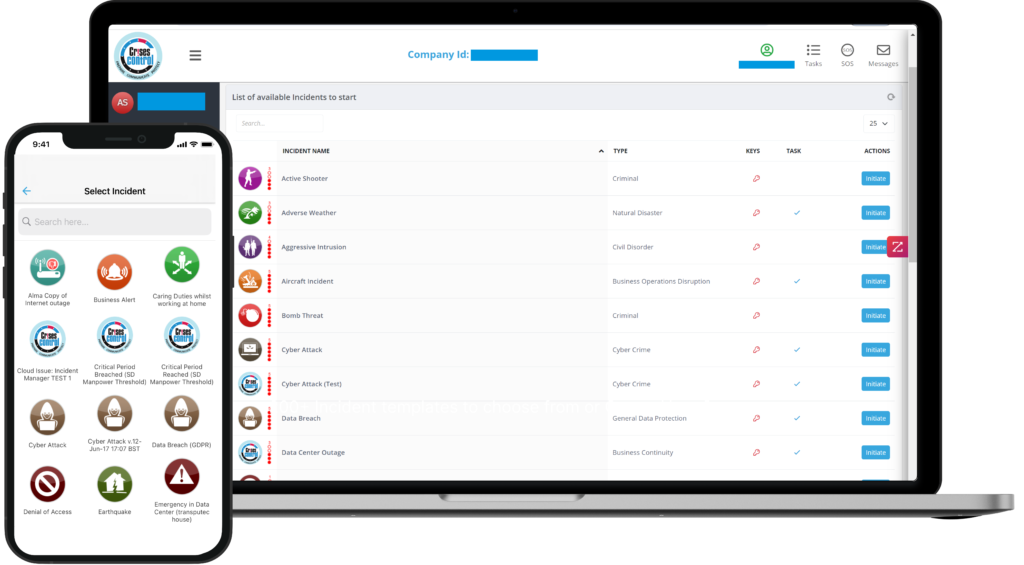
Interested in our Incident Management Software?
Flexible Incident Management Software to keep you connected and in control.
A Common Assumption That Causes Problems
Many organisations believe the most important aspect of crisis communication is speed.
Speed matters. It is not the only requirement.
Sending a fast alert does not guarantee the organisation will respond effectively.
Take a branch evacuation as an example. Employees leave the building quickly after receiving an alert. The situation still requires coordination.
Managers need to confirm everyone is safe. Facilities teams must investigate the cause. Leadership must decide when staff can return.
Without structured communication, response teams rely on fragmented updates and informal conversations.
Two communication speeds solve this problem.
Building A Structured Response Framework
Organisations that manage incidents well tend to follow a simple communication framework.
Step One: Detect And Notify
Once an incident is identified, relevant employees receive alerts with clear instructions.
Step Two: Activate Response Teams
Managers and response specialists receive incident notifications and begin assessing the situation.
Step Three: Coordinate Actions
Tasks are assigned and tracked. Updates are shared through structured communication channels.
At this stage, incident management software becomes essential for organising response activities.
Step Four: Maintain An Audit Trail
All communication and decisions are recorded. This creates a clear record of the organisation’s response.
Many financial institutions align these processes with recognised resilience standards such as ISO 22301, which emphasise documented response procedures and clear communication during disruptions.
Platforms such as Crises Control help organisations manage these steps by combining alerting, coordination, and audit tracking within a single system.
Governance And Regulatory Expectations
Operational resilience is a growing focus for financial regulators.
Banks must demonstrate that they can respond effectively to disruptions while maintaining critical services.
Communication plays a central role in this requirement.
Organisations must show that they can:
- reach employees during operational incidents
- coordinate response teams across locations
- record decisions and response actions
- demonstrate that procedures were followed
An emergency communication system supports these expectations by creating reliable communication records and structured response workflows.
Lessons For Financial Institutions Reviewing Their Communication Strategy
Financial institutions assessing their crisis communication approach often benefit from focusing on several practical principles.
Separate Alerts From Response Coordination
Alerting employees and managing incidents are different tasks. Treating them separately improves clarity.
Send Targeted Messages
Not every message should reach the entire organisation. Targeted communication reduces confusion.
Record Communication During Incidents
Maintaining an audit trail allows organisations to review incidents and demonstrate governance.
Make Response Plans Easy To Access
Digital access to business continuity plans ensures teams can find guidance when incidents occur.
Crises Control supports these practices by allowing organisations to distribute response plans, coordinate tasks, and maintain communication records within one platform.
Preparing For Future Operational Disruptions
Banks cannot predict every disruption they may face. Technology failures, building incidents, and external events will always occur.
What organisations can control is how they communicate during those moments.
Two-speed communication allows banks to alert employees quickly while coordinating response teams through structured processes.
This approach reduces confusion and helps leadership maintain visibility across the organisation.
Strengthening Crisis Communication With Crises Control
Financial institutions need communication systems that support both rapid alerts and coordinated response.
Crises Control helps organisations send targeted notifications, activate response teams, distribute business continuity plans, and maintain clear records of incident response activities.
The platform allows teams to communicate quickly while maintaining structure during operational disruptions.
If your organisation is reviewing its crisis communication capabilities and wants to explore how structured communication can strengthen operational resilience, we would be glad to show you how the platform works.
Request a FREE Demo