Written by Anneri Fourie | Crises Control Executive
When a serious incident unfolds inside a hospital, the first moments shape everything that follows.
Staff rarely lack skill or commitment. What often slows response is uncertainty about who should act, whether escalation is appropriate, and how to coordinate quickly across teams.
An effective emergency response plan removes that uncertainty, providing clarity and structure at the moment people need it most.
The challenge is that many healthcare organisations still rely on informal communication, verbal confirmation, or manual coordination during the earliest stages of an incident. Those small delays accumulate quickly and can affect both clinical outcomes and operational stability.
The solution is structured activation supported by clear ownership and reliable communication pathways that guide teams from recognition to coordinated response without hesitation.
This article explores why the first ninety seconds matter, what tends to break down in real environments, and how structured systems improve response across clinical and operational settings.
What Is An Emergency Response Plan In Healthcare
An emergency response plan is the structured framework that defines how incidents are detected, escalated, coordinated, and managed to protect patients, staff, and operations.
It establishes clear activation pathways so teams know how to respond without waiting for verbal confirmation or informal direction.
A strong healthcare emergency response plan for hospitals is operational. It works in busy clinical environments where competing priorities, noise, and pressure are constant.
Why The First 90 Seconds Shape The Entire Response
At the start of any incident, teams rarely have full information. What they do have is instinct, training, and whatever tools are immediately available.
If the response process is unclear, the early moments often involve hesitation. Staff seek confirmation, communication begins informally, and teams act locally without shared visibility.
These patterns create delay even when staff are acting quickly.
Structured activation removes uncertainty. It allows clinical teams to focus on care rather than coordination.
Post incident reviews frequently show that delays occur between recognising a problem and formally escalating it rather than between escalation and action.
Why Staff Hesitate Even When They Know What To Do
Healthcare professionals are trained to act decisively. Yet hesitation is common in real incidents.
Activation thresholds may feel unclear. Staff may worry about overreacting. Escalation pathways may feel informal or inconsistent.
When escalation depends on verbal confirmation or personal judgement, response becomes variable.
A hospital rapid response activation system provides clarity by making escalation simple, visible, and aligned with clinical protocols.
The Hidden Risk Of Informal Communication
Hospitals rely heavily on communication during incidents. When systems are fragmented, messages scatter across channels such as phone calls, overhead paging, messaging apps, and verbal updates.
Without structure, teams may not know who has been informed or whether instructions have been acknowledged.
A structured emergency communication system provides traceable alerts so teams know who has received information and what actions are underway.
Manual Versus Structured Response
Many organisations still rely on manual coordination methods. These approaches depend heavily on memory and individual discipline.
Manual response often results in unclear ownership, limited documentation, and fragmented communication.
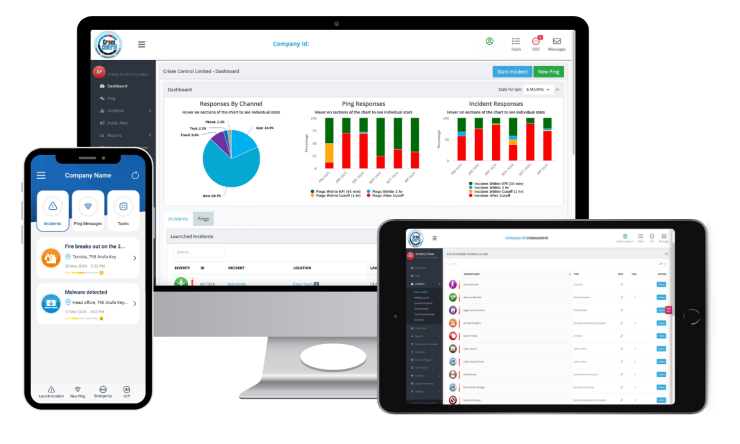
Structured response supported by crisis management software embeds process directly into workflow. Incidents can be declared quickly, roles assigned automatically, and visibility shared across departments.
The difference is clarity.
When Plans Exist But Are Not Operational
Hospitals invest significant effort in planning. Yet plans often remain static documents rather than live workflows.
During incidents, staff may struggle to translate written procedures into real time action.
Digitalised plans allow protocols to activate automatically, guiding teams through tasks aligned with organisational procedures.
The Role Of Ownership In Early Response
Unclear ownership is one of the most common failure points in healthcare incidents.
When alerts are broadcast without defined responsibility, teams respond in parallel rather than coordination.
Structured activation assigns ownership immediately, ensuring accountability and direction from the outset.
Real World Applications Across Healthcare Environments
Across healthcare organisations, Crises Control is helping teams embed structured response into daily operations rather than reserving it only for major emergencies.
In one environment, response workflows are integrated into hospital information systems so that disaster recovery plans can trigger automatically when disruptions occur. This ensures the right teams are notified and tasks distributed without manual coordination.
Another organisation uses structured notifications within its IT function to alert staff to system events, improving visibility between technical and operational teams and reducing the risk of disruption spreading unnoticed.
Some providers have embedded internal escalation protocols for security or safety alerts into their workflows so that when an incident occurs, managers are informed and tasks assigned immediately based on predefined procedures.
Environmental monitoring is another area where targeted alerts are proving valuable. Automated triggers notify staff when storage temperatures move outside acceptable ranges, allowing teams to respond quickly without relying on manual checks.
In surgical settings, structured activation tools enable rapid response teams to be alerted directly from operating rooms and nursing stations, ensuring support arrives quickly and consistently when clinical conditions change.
Structured communication is also being used to notify staff about operational disruptions such as weather closures, providing clear guidance and reducing uncertainty about whether to report to work or adjust schedules.
These examples reflect how organisations using structured response platforms like Crises Control are moving away from informal coordination and towards consistent, role-based activation pathways that reduce hesitation and improve coordination across different types of incidents.
Operational Pressure In Clinical Environments
Healthcare incidents rarely occur in calm conditions. They often coincide with high patient volumes, staff shortages, equipment issues, or IT disruptions.
Under pressure, teams revert to familiar behaviours. If processes rely on memory rather than structure, variability increases.
Structured systems provide consistency by embedding escalation logic into workflow, ensuring response remains disciplined even during challenging conditions.
Challenging A Common Assumption About Speed
Many organisations believe faster alerts automatically lead to better response.
Speed without coordination can create confusion. Multiple alerts without defined ownership may overwhelm teams rather than help them.
Effective response requires both speed and structure so alerts lead to clear action.
The Connection Between Early Response And Patient Safety
The first ninety seconds influence clinical outcomes by determining how quickly expertise is mobilised and communication begins.
When escalation is structured, teams receive clear instructions, leadership gains visibility early, and documentation begins immediately.
These factors support safer and more coordinated care.
Visibility Across Departments
Healthcare incidents often span multiple functions. Clinical teams, IT, facilities, and leadership must align quickly.
Shared visibility allows everyone to operate from the same information rather than fragmented updates.
This improves decision making and reduces duplication.
Learning From Incidents Rather Than Reconstructing Them
When response processes are informal, organisations must reconstruct timelines after events. This creates gaps and inconsistencies.
Structured systems create real time records that support learning, governance, and continuous improvement.
How Crises Control Supports Structured Healthcare Response
Crises Control supports healthcare organisations by turning documented plans into actionable workflows that activate during incidents.
This includes digitalisation of emergency response plans, role based incident activation, reliable multi channel communication, cloud access during disruptions, and automated audit trails.
The platform reinforces process discipline while allowing clinical teams to focus on care delivery.
What Leaders Should Evaluate
Healthcare leaders reviewing their response capability should consider how quickly incidents can be declared, whether ownership is clear from the outset, and whether communication is traceable and role based.
They should also assess whether plans translate easily into real time action and whether response timelines are captured automatically.
Bringing Speed And Structure Together
Healthcare organisations operate in environments where speed and precision must coexist.
The first ninety seconds test whether systems support staff or leave them navigating uncertainty.
An effective emergency response plan provides clarity at the moment it matters most and ensures teams move from recognition to coordinated action without hesitation.
For organisations reviewing their response capability, the question is simple.
Does your process support decisive action from the first moment, or does it depend on informal coordination?
Request a FREE Demo