Written by Anneri Fourie | Crises Control Executive
Incident Management Software is often discussed as a technology solution, yet its real value becomes clear only when something goes wrong and teams must respond quickly with incomplete information. In many schools and universities, incidents begin as small signals. A maintenance alert, a safety concern raised by staff, or a system outage. The challenge is not whether a plan exists. The challenge is whether people know what to do next.
Many education providers have well written procedures, yet when pressure builds, teams are forced to interpret fragmented information across multiple channels. This is where confusion begins and where response can slow down.
The organisations that manage incidents well are not simply those with plans. They are the ones that provide clear context, structured workflows, and shared visibility so that people understand the situation and act with confidence.
This article explores why context is essential in emergency response for education environments, using a realistic operational scenario to show how incidents unfold, where traditional approaches struggle, and how structured response frameworks help organisations stay in control.
What Incident Management Software Means In Practice
Incident Management Software is a digital platform that helps organisations detect, coordinate, communicate, and manage response to operational disruptions or emergencies.
Within education environments, it supports activation of emergency response plans, assigns responsibilities, and ensures communication reaches staff and students clearly and consistently.
It replaces uncertainty with clear steps.
The Incident: A Typical Morning Disruption
A large multi-site education provider begins the day as normal. Students arrive, classes start, and support teams carry out routine checks. A facilities team member then reports a burst pipe affecting one of the main teaching buildings using a mobile reporting application.
Almost immediately, questions begin to surface.
Should the building be evacuated?
Do classes need to move online?
Who needs to be informed first?
Is this a facilities issue or a wider operational incident?
At the same time, another campus reports intermittent network outages affecting teaching systems. Each issue alone is manageable, yet together they create uncertainty across the organisation.
This is where context becomes critical.
The Pressure That Builds During Incidents
Education leaders operate under constant responsibility. They must protect students and staff while maintaining continuity of learning. Decisions often need to be made before all facts are known.
In this situation, several risks begin to emerge:
- Students could enter an unsafe space
- Staff may receive conflicting instructions
- Operational disruption could spread
- Parents may seek reassurance
- Leaders may struggle to see the full picture
Pressure increases when incidents occur at the same time or when communication is fragmented.
Communication Challenges In Real Time
Most institutions rely on familiar tools such as email, phone calls, and messaging platforms. These tools work well for everyday communication but become difficult to manage during incidents.
Common challenges include:
- Staff are unsure which channel to monitor
- Messages circulate without full context
- Leaders cannot see who has received updates
- Teams operate separately without coordination
- Decisions are delayed because ownership is unclear
On campuses with inconsistent reception, relying on a single channel increases risk. Communication must reach people wherever they are.
Why Traditional Plans Often Struggle
Many organisations have detailed emergency response plans stored in shared drives or printed manuals. The difficulty appears when teams attempt to apply them under pressure.
Traditional plans can struggle because:
- They are static rather than actionable
- Staff must interpret procedures in real time
- Escalation paths may not be clear
- Communication relies on manual effort
- Leadership lacks real time visibility
The gap between planning and execution becomes clear when staff hesitate or when information spreads without coordination.
The Structured Response Approach
In this scenario, the organisation activates a structured workflow through its digital platform. The burst pipe is classified as an operational incident, which triggers predefined templates and task assignments.
Staff receive clear instructions advising that the affected building should not be used. Students scheduled in that location receive updates through multiple channels, ensuring no one arrives unaware.
At the same time, the network outage is tracked as a separate incident so technical teams can focus on resolution without confusion.
Structured response provides:
- Clear classification of incidents
- Defined responsibilities
- Coordinated communication
- Real time visibility
- Consistent messaging
This allows the organisation to respond proportionately while maintaining continuity where possible.
Turning Business Continuity Plans Into Action
Education providers invest time developing business continuity plans, yet applying them during live incidents can be challenging.
In this case, continuity plans are embedded into a digital platform. When an incident is triggered, guidance and tasks appear automatically for the response team. This removes the need to interpret lengthy documents and ensures actions align with established procedures.
Multi Channel Communication In Practice
Parts of the campus experience limited reception, so communication is delivered through SMS, mobile notifications, desktop alerts, and email.
Staff acknowledge messages through the desktop application, giving leadership confidence that instructions have been received.
This approach helps maintain a shared understanding across the organisation.
Preparing For High Severity Situations
While a burst pipe is manageable, education providers must also be prepared for serious safety incidents. Structured workflows help teams respond consistently across different types of events.
Rapid alerting tools allow immediate notification when urgent action is required. Clear escalation pathways help teams act without confusion.
Preparedness builds confidence across the organisation.
Challenging The Idea That Communication Alone Is Enough
There is a common belief that sending messages quickly is the key to effective response. Speed without clarity often creates confusion.
People need to understand:
- What is happening
- What they need to do
- Who is leading the response
- When they will receive updates
Without structure, communication becomes noise rather than guidance.
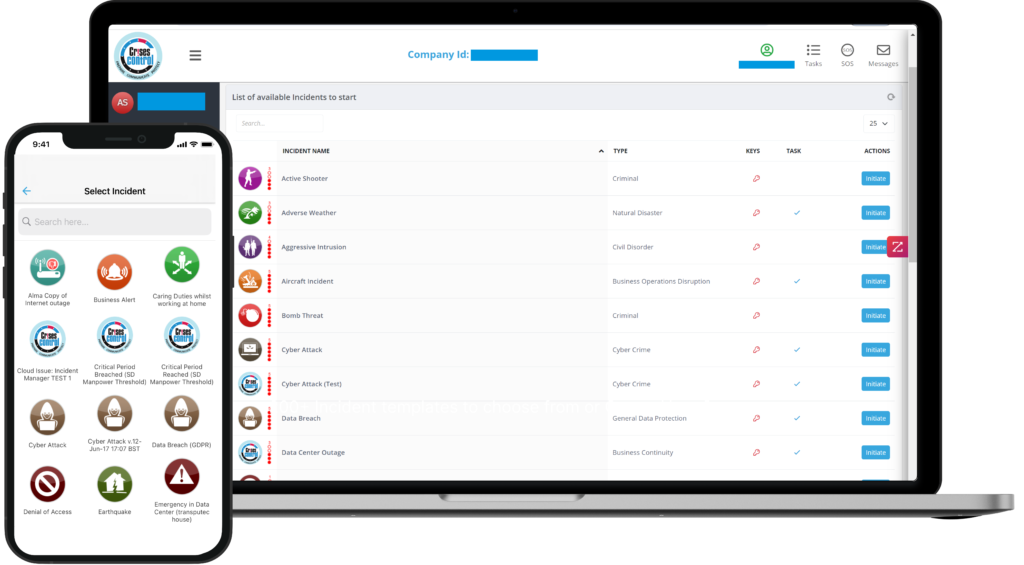
Interested in our Incident Management Software?
Flexible Incident Management Software to keep you connected and in control.
Manual Versus Structured Digital Response
Manual Approach
- Reliance on email and calls
- Limited visibility into progress
- Messages may be inconsistent
- Difficult to document decisions
- High pressure on individuals
Structured Digital Approach
- Guided workflows
- Clear ownership
- Real time dashboards
- Consistent communication
- Complete audit trail
The difference is clarity and confidence.
Meeting Accountability Expectations
Education organisations must demonstrate duty of care and effective response. After incidents, leadership often needs to show timelines, communication records, and decision logs.
Digital records provide clear evidence of how incidents were managed and support learning through reviews.
The Human Side Of Incident Response
Even experienced teams can hesitate when faced with uncertainty. People worry about overreacting or causing disruption.
Structured workflows provide clear guidance so staff understand when to escalate and what actions to take.
Practical Lessons For Education Leaders
- Make Plans Usable: Plans should be easy to activate during incidents.
- Focus On Clarity: Clear instructions help people understand their role.
- Use Multiple Channels: Redundancy ensures communication reaches everyone.
- Define Escalation Clearly: Staff should know when to raise concerns.
- Maintain Visibility: Leaders need a clear view of actions and progress.
How Technology Supports Coordinated Response
Platforms such as Crises Control help organisations bring plans to life by providing structured workflows, role based coordination, and reliable communication through cloud access.
By supporting visibility and coordinated action, organisations can manage incidents with greater confidence.
Looking Ahead: Building Confidence In Response
Education environments continue to grow in complexity. Multi site operations, digital learning environments, and increased expectations around safety require organisations to be ready for a wide range of situations.
Clear context supported by structured workflows helps organisations maintain continuity while protecting staff and students.
Conclusion: Context Turns Plans Into Action
Many organisations do not struggle because they lack procedures. They struggle because teams are forced to interpret fragmented information without clear structure to guide decisions.
Context closes that gap.
When response is supported by clear workflows, defined roles, and reliable communication, teams move from reacting to managing incidents with confidence. Staff understand when to escalate. Leaders see the situation clearly. Communication becomes purposeful.
As expectations around safeguarding and accountability continue to grow, the ability to demonstrate structured response is becoming a defining capability for education providers.
If you are reviewing whether your current approach would stand up under real operational pressure, this is the right moment to consider how structured response frameworks could strengthen coordination across your organisation.
Crises Control supports education providers by helping teams operationalise plans, coordinate response, and maintain reliable communication when it matters most.
Request a FREE Demo