Written by Anneri Fourie | Crises Control Executive
A manufacturing site receives an automated early earthquake alert at 09:17 on a Tuesday morning.
The tremor has not yet been felt. Machines are still running. Orders are still being processed.
Then production pauses.
Conveyors slow. Forklifts stop mid-aisle. A line supervisor looks up from his console and waits for direction. If he shuts down unnecessarily, the restart process could take hours. If he delays and the tremor hits, equipment and people could be at risk.
This is the real problem manufacturing leaders face. When one alert stops production, the pressure is immediate. Decisions must be made before there is full information. Safety, output, and reputation sit on the same scale.
The solution is not faster messaging. It is structured coordination. This is where Incident Management Software becomes operational infrastructure rather than background technology.
What Incident Management Software Actually Does
Incident Management Software is a digital system that coordinates communication, task assignment, responsibility, and documentation during disruption.
In manufacturing, that means:
- Activating a formal incident process
- Assigning clear roles and actions
- Confirming employee safety
- Tracking what has been completed
- Creating a time-stamped record of decisions
It turns a written emergency response plan into a live workflow.
Most manufacturers already have plans. The gap appears when those plans must be executed under pressure.
The First Ten Minutes After The Alert
In this scenario, the organisation operates across several facilities and includes office staff, production teams, and field engineers. The same system has previously been used for fire alerts, IT outages, access route changes, and simulation exercises.
When the earthquake warning arrives, it does not trigger a broadcast message alone. It activates a predefined incident structure.
Production supervisors receive zone-specific shutdown instructions.
Safety officers are assigned inspection responsibilities.
Field engineers receive guidance based on location.
All employees are prompted to confirm their safety through a simple response option.
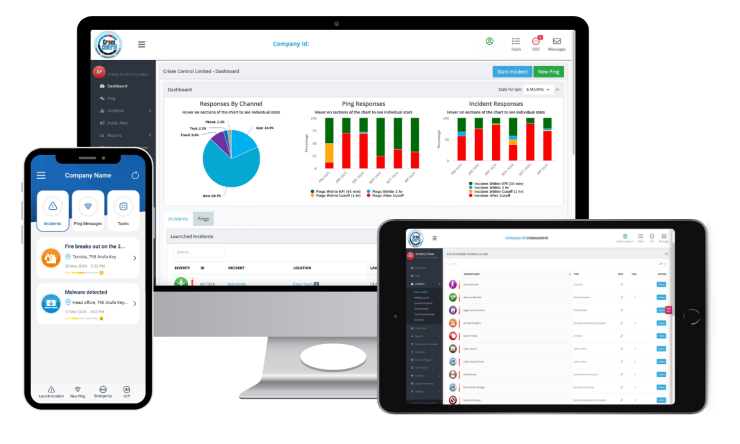
Within minutes, leadership can see who has acknowledged the alert and who has not. They can see which areas have paused operations and which safety checks are underway.
No one is guessing. No one is chasing contact lists.
That clarity reduces risk before any tremor is even felt.
Why Production Stoppages Create Wider Exposure
When a line pauses unexpectedly, the consequences move quickly beyond the shop floor.
Customers are expecting delivery. Raw materials are queued. Logistics partners are scheduled. Insurance policies contain conditions. Regulatory bodies may request documentation.
At the same time, the human element cannot be ignored. Heavy equipment must be secured properly. Hazardous materials must be checked. Contractors may still be on site. Field workers may be working remotely.
Leaders are balancing safety and operational continuity in real time.
The question is not simply how to restart production. It is how to respond when a manufacturing incident stops production without creating further risk.
Where Informal Response Methods Fall Short
Many facilities still rely on a mix of email, phone calls, messaging apps, and printed manuals. These tools are familiar. They feel sufficient during routine matters.
The weakness appears when events cross departments or sites.
Messages overlap. People assume someone else has taken ownership. Updates are shared verbally but not recorded. Later, when leadership reviews what happened, reconstruction depends on memory and scattered correspondence.
That lack of structure can damage credibility.
This is why incident management software for manufacturing has become a governance tool. It provides a single operational view. It assigns responsibility visibly. It records what happened and when.
Interested in our Incident Management Software?
Flexible Incident Management Software to keep you connected and in control.
The Difference Between Alerting And Coordination
There is a common belief that if you can send alerts quickly, you are prepared.
Alerting is communication.
Coordination is control.
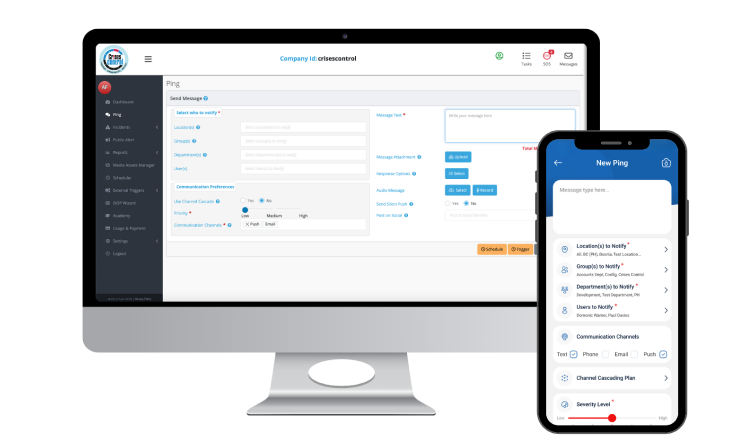
Mass notification software is designed to distribute information. That is essential. Yet distribution alone does not confirm execution.
During an early earthquake alert, it is not enough to inform staff. Leaders must know:
- Which lines have paused
- Which inspection tasks have started
- Whether anyone has reported injury
- Whether contractors have acknowledged the alert
Without that visibility, decision-making becomes reactive.
Interested in our Ping Mass Notification Software?
Efficiently alert everyone in seconds at scale with our Mass Notification Software.
When Emergency Becomes Crisis
An earthquake alert begins as an emergency response situation. Immediate safety checks take priority.
If production remains paused for several days, the situation moves into crisis management. Now the organisation must consider customer communication, supply chain disruption, regulatory engagement, and financial impact.
Structured incident management allows this transition to happen without losing documentation or accountability.
Standards such as ISO 22301 for business continuity and ISO 22320 for incident response emphasise defined roles and documented decisions. Digital coordination supports these principles in practice.
A paper plan can show intention. A live digital record shows execution.
A Structured Response In Action
Returning to the scenario.
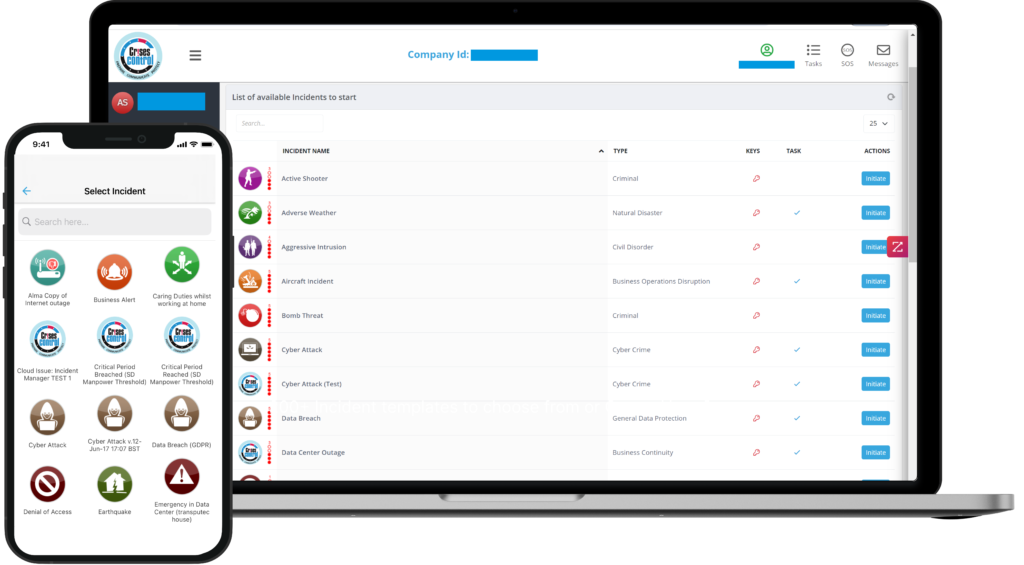
The alert triggers a predefined earthquake response template. The template reflects the organisation’s emergency response plan for factory production shutdowns.
Shutdown procedures are assigned by zone.
Inspection tasks are allocated to named individuals.
Safety confirmation is requested from all employees.
Leadership can monitor progress on a single dashboard.
Within twenty minutes, all employees have responded. Structural checks are underway. Senior management has visibility of the situation across sites.
If production needs to remain paused, recovery planning can begin immediately, supported by accurate data.
This approach does not remove uncertainty about the tremor itself. It removes uncertainty about organisational response.
The Human Side Of Operational Pressure
When disruption occurs, even experienced managers feel pressure.
Supervisors may hesitate. Engineers may prioritise what feels most urgent rather than what is most critical. Communication can shorten. Assumptions creep in.
Clear digital workflows reduce that cognitive load. Instead of debating who should act, individuals see their assigned tasks. Instead of phoning around to confirm safety, leaders see confirmation status in real time.
The technology supports human decision-making rather than replacing it.
Building Confidence Through Repetition
The organisations in this scenario did not wait for a major incident to test their systems.
They used structured incident workflows for fire drills, IT outages, and planned simulations. Each activation strengthened familiarity. Teams understood how to respond. Reporting improved.
Organisations that treat minor disruptions seriously tend to perform better during major ones. Familiarity builds discipline.
This habit also strengthens operational resilience across the wider business. IT teams, safety officers, and operations managers learn to coordinate within the same framework.
From Static Documents To Executable Plans
Most manufacturers have invested time in developing safety and business continuity documentation. That investment is not wasted.
The challenge is execution.
Digitalising those plans means breaking them into clear steps that can be activated instantly. It means ensuring access through secure cloud infrastructure, even if internal systems experience disruption.
Crises Control supports this by converting static documentation into role-based digital workflows. When an incident is activated, tasks and communication are aligned automatically with predefined procedures.
The aim is clarity, not complexity.
Questions Manufacturing Leaders Should Consider
If you are evaluating your own capability, consider these practical questions.
If an alert arrived right now:
- How would you formally activate an incident?
- Who would be responsible for each production zone?
- How would you confirm the safety of all employees and contractors?
- Could you see response status across multiple sites?
- Could you produce a clear incident report within an hour?
These questions often reveal where informal methods rely too heavily on memory and goodwill.
Why Documentation Matters More Than Ever
After any significant disruption, questions follow.
When was the emergency response activated?
Who authorised key decisions?
How was employee safety confirmed?
What evidence exists to support the timeline?
If answers rely on recollection, confidence weakens. If answers are supported by time-stamped records, confidence strengthens.
Incident Management Software ensures that documentation is created as events unfold, rather than reconstructed afterwards.
When One Alert Stops Production
A single alert can pause an entire manufacturing operation.
The true test of resilience is not whether the alert arrives. It is whether the response that follows is structured, accountable, and visible.
Clear coordination reduces risk. Defined ownership reduces confusion. Documented action reduces exposure.
If you are reviewing how your organisation manages disruption across sites and want to understand how structured digital coordination can support that process, get a free personalised demo.
Request a FREE Demo