Written by Anneri Fourie | Crises Control Executive
Do you struggle to prove how your organisation handled an operational incident?
Many financial institutions resolve disruptions quickly. Systems are restored, staff return to work, and the event appears closed.
The real challenge appears later.
An auditor asks for a clear record of what happened.
- Who informed staff?
- Who decided on the response?
- How were actions coordinated across locations?
- Where is the timeline showing how the organisation handled the situation?
For many institutions, the problem is not the incident itself. The problem is that the response was never properly recorded.
Small disruptions can become serious findings during internal or regulatory reviews. This often happens when communication is scattered across emails, calls, and informal messages.
A structured response process solves this issue. This is why many organisations now rely on incident management software to manage communication, coordinate teams, and maintain an accurate audit trail.
Why Minor Incidents Become Major Problems
Operational incidents rarely begin as large emergencies.
They usually start with something small.
- A branch loses internet connectivity.
- An internal system stops responding.
- A fire alarm forces staff outside for a building evacuation.
- Severe weather affects employees travelling to work.
At first, these events appear routine.
Teams respond quickly and restore operations. The disruption is forgotten.
Months later the same event appears in an audit review.
The questions shift from the event itself to the way the organisation handled it.
- Did employees receive clear instructions?
- Was the response coordinated across departments?
- Were decisions documented?
If the organisation cannot answer these questions clearly, the incident may raise concerns about governance and operational resilience.
The Real Problem: Communication During Incidents
Most operational response problems begin with communication.
Many organisations still rely on familiar tools during incidents.
- Email chains
- Messaging apps
- Phone calls between managers
- Manual notes taken during the event
These tools work well during normal operations. During disruptions they often create confusion.
- Messages arrive late.
- Staff receive conflicting updates.
- Managers struggle to understand the full situation.
In large organisations this confusion spreads quickly across departments and locations.
A structured communication process removes that uncertainty. Staff receive clear information, leadership teams maintain visibility, and the organisation can track exactly who has received updates.
A Typical Scenario In Financial Services
Imagine the following situation.
At 09:15 a branch reports that employees cannot access internal banking systems. Internet connectivity appears unstable.
The local IT team begins investigating.
Within twenty minutes two other branches report similar issues.
Customer service teams cannot retrieve account information. Call centre queues begin growing.
Managers begin asking questions.
- Is this a local network issue or a wider problem?
- Should other offices prepare for disruption?
- How should staff respond to customers?
- Who is responsible for coordinating the response?
At this stage uncertainty becomes the biggest risk.
If communication spreads slowly, different departments may act independently. Some teams may send their own updates. Others may wait for instructions.
Even if the technical issue is resolved quickly, the organisation may struggle to explain later how the situation was managed.
What A Structured Response Looks Like
Well prepared organisations follow a clear sequence when incidents occur.
Detection
The issue is identified by staff or monitoring systems.
Early Communication
Employees receive an initial update explaining the situation and any immediate actions.
Escalation
Leadership decides whether the issue requires a coordinated incident response.
Coordination
Specific teams receive defined tasks and responsibilities.
Monitoring
Leadership teams track updates and assess operational risk.
Documentation
Every communication and decision is recorded.
This structure ensures the organisation can show exactly how the event was handled.
Why Documentation Matters As Much As Speed
Many organisations believe the most important part of incident response is speed.
Quick communication is valuable. Speed alone does not solve the governance challenge.
Financial institutions must also demonstrate how decisions were made.
Auditors often review incidents by asking simple questions.
- When were employees informed?
- Who approved the response plan?
- Which teams were involved?
- When was the issue resolved?
Without reliable documentation, organisations struggle to provide clear answers.
This is why many institutions adopt incident management software for financial services compliance. The system records actions automatically, creating a timeline that can be reviewed later.
How Organisations Improve Communication During Incidents
Structured communication platforms allow organisations to inform employees quickly and clearly.
Early notifications may be used for routine operational issues such as:
- IT outages
- Network maintenance
- Severe weather alerts
- Building access restrictions
These alerts keep employees informed without triggering a full crisis response.
If the situation becomes more serious, organisations can escalate the event and coordinate a structured response.
Teams can then confirm safety, report operational impact, and receive clear instructions.
Interested in our Incident Management Software?
Flexible Incident Management Software to keep you connected and in control.
Lessons From Real Operational Use Cases
Across financial organisations the same patterns appear.
Some institutions send targeted alerts to inform staff about system disruptions or network maintenance.
Others launch structured incidents when events affect multiple locations or create operational risk.
Leadership teams often use these platforms to assess situations together before issuing instructions to the wider organisation.
This approach ensures that communication remains consistent and decisions are documented.
It also prevents departments from acting independently during uncertain situations.
Turning Response Plans Into Action
Many organisations already have response procedures documented.
- Business continuity plans
- Emergency response plans
- Crisis communication guidelines
These documents often exist as static files stored in internal systems.
During real incidents staff may struggle to locate the right document or understand the steps required.
Digital systems transform these plans into practical workflows.
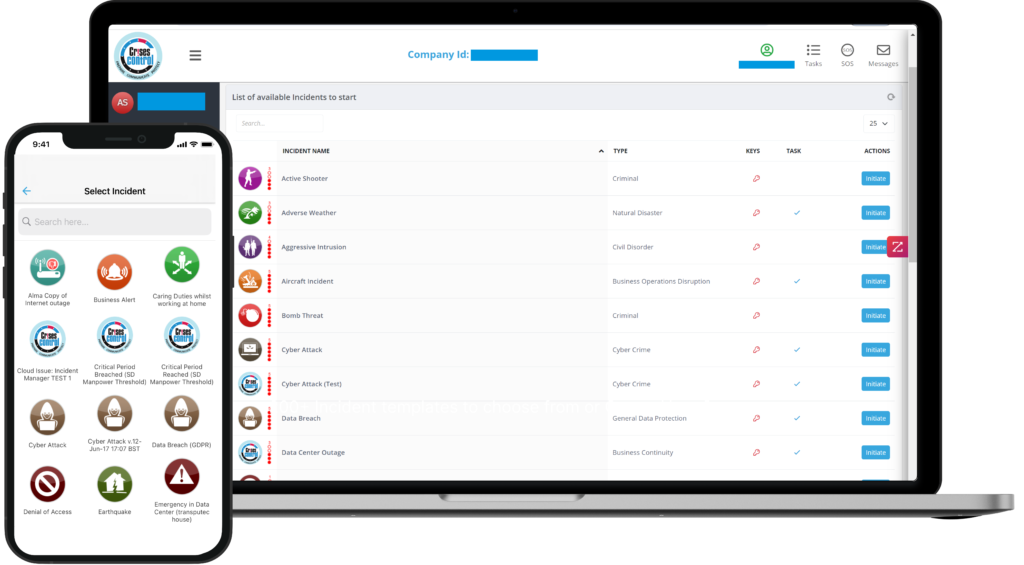
Teams receive tasks based on their roles. Response instructions appear automatically when an incident is activated.
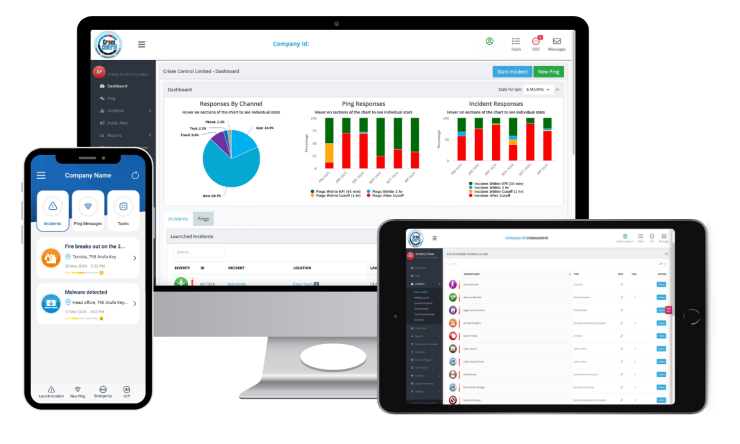
Platforms such as Crises Control allow organisations to store response plans securely and activate them quickly when needed.
This approach helps teams move from written plans to coordinated action.
Reliable Communication Across The Workforce
Financial institutions often operate across several locations.
Branches, offices, remote workers, and leadership teams may all need different information during an incident.
Many organisations rely on crisis management software to ensure communication reaches employees through several channels.
Common options include:
- SMS alerts
- Mobile notifications
- Email communication
These systems also allow organisations to confirm that employees received the message and understood the instructions.
This visibility helps leadership teams maintain control during developing situations.
The Role Of Business Continuity In Incident Response
Incident response forms part of a wider resilience strategy supported by business continuity software.
Business continuity planning focuses on maintaining operations when disruptions occur.
Typical areas include:
- Alternative working arrangements
- Recovery procedures for critical systems
- Workforce communication strategies
- Operational recovery priorities
Incident management tools support these plans by providing a clear way to activate them and coordinate teams.
Without reliable communication even well designed plans may fail during real incidents.
A Common Assumption That Causes Problems
Many organisations believe their response processes work well because they have never experienced a large crisis.
This assumption can hide weaknesses.
Small incidents involve fewer people and decisions remain local. Larger disruptions affect multiple teams and locations.
Communication becomes harder. Responsibilities become less clear.
When this happens organisations often realise that their response process relied on informal communication rather than a structured system.
Practical Questions For Financial Institutions
Leaders reviewing their incident response capabilities often start with simple questions.
- Can we reach every employee quickly when a disruption occurs?
- Do we have clear escalation triggers when minor issues develop into formal incidents?
- Are response actions automatically recorded?
- Can we provide a clear timeline showing how the organisation handled the situation?
These questions reflect how financial institutions manage operational incidents and regulatory findings.
The Importance Of A Clear Audit Trail
An audit trail provides a detailed record of how an incident was handled.
Typical records include:
- Notifications sent to employees
- Staff responses and confirmations
- Decisions taken by leadership
- Tasks assigned to response teams
- Updates showing when the issue was resolved
For financial institutions this documentation demonstrates that the organisation followed a structured response process.
Crises Control helps organisations maintain this visibility by recording communication and coordination activities during incidents.
Final Thoughts
Operational incidents in financial services often begin as small disruptions.
- A system outage.
- A building alarm.
- A network problem affecting a branch.
The outcome rarely depends on the event itself. The outcome depends on how clearly the organisation communicates, coordinates teams, and records decisions.
Structured systems allow organisations to manage incidents with clarity and maintain the documentation required for governance and audit reviews.
Platforms such as Crises Control support this approach by helping organisations organise response plans, communicate with employees, and maintain a clear record of actions taken during operational events.
If your organisation is reviewing how it manages operational disruptions and communication during incidents, exploring structured response platforms may be a useful next step.
Request a FREE Demo