Written by Anneri Fourie | Crises Control Executive
Incident management software helps organisations coordinate operational disruptions by providing structured response workflows, task tracking and emergency communication capabilities. In industries such as financial services, where system outages can affect trading platforms, payment infrastructure and customer services, maintaining control during incidents is critical.
Financial institutions rely heavily on collaboration tools such as Microsoft Teams to support day-to-day communication. These platforms allow teams to exchange messages, organise meetings and share information across departments quickly and efficiently.
During operational disruptions, however, communication alone is not enough. Effective crisis response also requires structured coordination to ensure that response teams are mobilised quickly, responsibilities are clearly assigned and recovery actions are tracked as the situation evolves.
Understanding the difference between communication and coordination is essential for organisations managing complex operational incidents.
A Realistic Scenario Inside a Financial Institution
Consider a mid-sized investment firm that manages digital trading platforms and client portfolio services across several regions. Like many organisations, the firm relies on Microsoft Teams as its primary collaboration platform.
During a trading day, the firm’s monitoring systems detect abnormal latency within the trading platform. Clients begin reporting delays in transaction execution while internal teams attempt to diagnose the issue.
Within minutes, the problem escalates into a service outage that prevents trades from being completed.
Engineers immediately begin discussing potential causes in Microsoft Teams channels while operations teams assess the impact on clients. Compliance teams recognise that the disruption may trigger regulatory reporting requirements because customers cannot execute trades during market hours.
Senior leadership now needs a clear view of the situation. Multiple teams are communicating actively, but information is spread across several conversations, meeting calls and chat threads.
The organisation faces a familiar challenge: communication is happening, but there is no central system coordinating the response.
What Is Incident Management Software?
Incident management software provides organisations with a structured environment for coordinating response efforts during operational disruptions.
Rather than relying only on conversations and message threads, incident management platforms organise the response process by allowing organisations to:
- Activate predefined incident response plans
- Assign responsibilities to response teams
- Track response actions and recovery tasks
- Maintain situational awareness during incidents
- Send emergency alerts to employees and stakeholders
By organising response activities in a single platform, incident management software helps organisations maintain control during fast-moving incidents where multiple teams must work together under pressure.
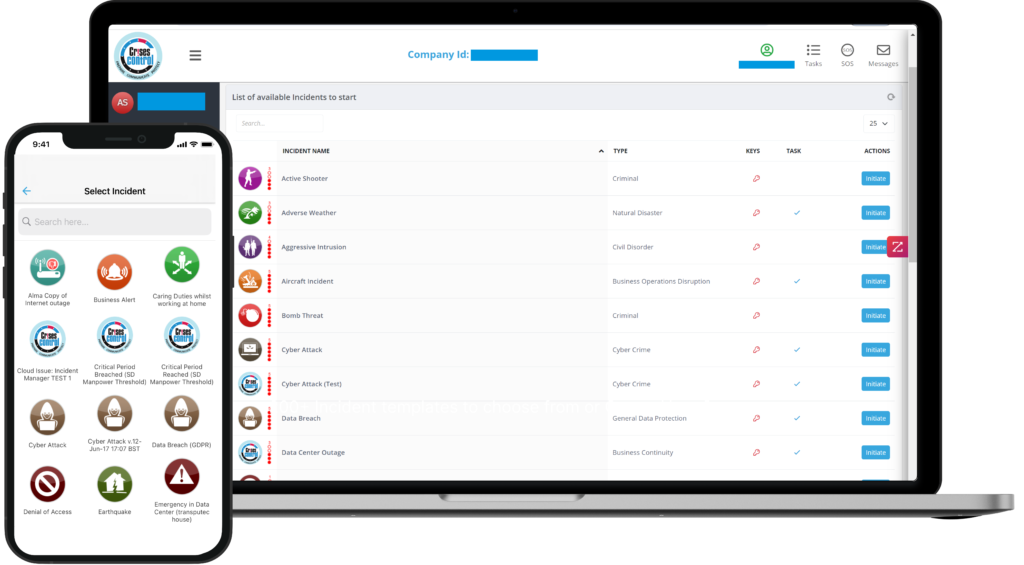
Interested in our Incident Management Software?
Flexible Incident Management Software to keep you connected and in control.
Communication Challenges During Fast-Moving Incidents
Microsoft Teams is extremely valuable during incidents because it allows teams to exchange information quickly. Engineers, operations staff and leadership teams can collaborate in real time and share updates as the situation develops.
However, during complex incidents communication channels can become crowded.
For example:
- Engineers may be troubleshooting in one channel
- Operations teams may be discussing service impacts in another
- Compliance teams may be requesting updates in private chats
- Leadership teams may be joining conference calls for situation updates
While these conversations are important, the organisation may struggle to answer critical questions:
- What actions have already been taken?
- What tasks remain outstanding?
- Who is responsible for the next steps?
- What is the current status of the recovery effort?
Without structured coordination, important information can become fragmented across different conversations.
Why Financial Institutions Need Incident Management Software
Financial institutions operate in environments where operational disruptions escalate quickly. Trading systems, payment infrastructure and online banking services must remain available at all times.
Even short outages can create financial consequences, regulatory scrutiny and reputational risk.
During incidents, organisations must coordinate multiple teams simultaneously, including:
- Technology teams investigating system failures
- Operations teams managing customer impact
- Risk and compliance teams evaluating regulatory obligations
- Communications teams preparing stakeholder updates
Incident management software provides the structure needed to coordinate these teams effectively.
By organising response actions, assigning responsibilities and tracking progress, incident management platforms allow organisations to maintain situational awareness while incidents evolve.
This structured coordination helps organisations respond faster while maintaining operational oversight.
How Incident Management Software Supports Crisis Coordination
Effective crisis response requires more than rapid communication. Organisations also need systems that support coordination and accountability.
Incident management software typically provides several capabilities that support structured crisis response:
- Incident activation: When a disruption occurs, teams can activate predefined response plans that outline the steps required to manage the incident.
- Role assignment: Response leaders and specialist teams can be assigned responsibilities immediately based on the type of incident.
- Task coordination: Recovery actions can be tracked so that teams understand what work is underway and what tasks remain incomplete.
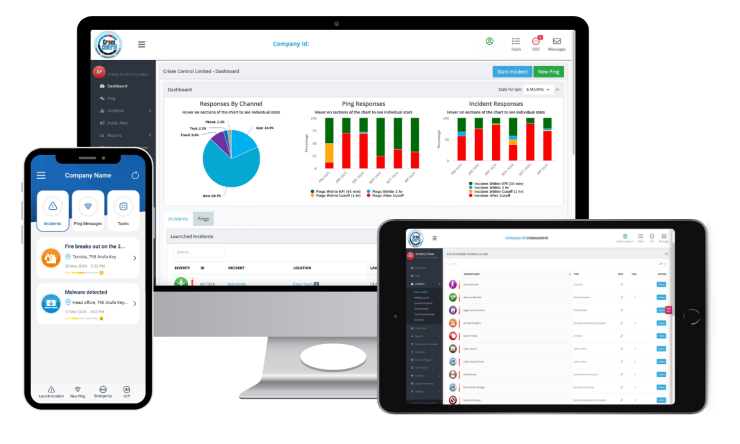
- Situational awareness: Decision makers can view incident status through central dashboards that show progress, risks and outstanding actions.
- Emergency communication: Critical alerts can be delivered quickly to employees and stakeholders when urgent action is required.
Together, these capabilities ensure that organisations maintain coordination even when incidents evolve rapidly.
The Role of Microsoft Teams During Crisis Response
Microsoft Teams remains an important communication tool during incidents. It enables employees to share updates, collaborate on investigations and coordinate discussions across departments.
Many organisations continue to use Teams throughout the incident response process because it is already embedded within daily operations.
However, collaboration tools are most effective when combined with structured response systems. Communication platforms allow teams to discuss the incident, while incident management software ensures that response activities remain organised and visible.
This complementary approach allows organisations to communicate freely while maintaining coordinated oversight of the response process.
How Crises Control Supports Incident Management
Crises Control is an incident management software platform designed to help organisations coordinate operational incidents while continuing to communicate through familiar collaboration tools such as Microsoft Teams.
The platform provides a structured environment where organisations can activate response plans, coordinate teams and maintain situational awareness throughout the incident lifecycle.
Using Crises Control, organisations can:
- Activate digital incident response plans: Predefined response procedures can be triggered immediately when an incident occurs.
- Mobilise response teams quickly: Employees can receive emergency alerts through multiple channels, ensuring that the right people are notified quickly.
- Coordinate response actions: Tasks and responsibilities can be assigned and tracked so that teams know what actions are underway.
- Maintain leadership visibility: Decision makers can monitor the incident through central dashboards that provide real-time status updates.
- Maintain audit and reporting records: All response actions and communications are recorded within the platform, providing organisations with a clear incident history for compliance and review.
Because Crises Control integrates with collaboration platforms such as Microsoft Teams, organisations can continue communicating through their existing tools while coordinating response actions within a dedicated crisis management platform.
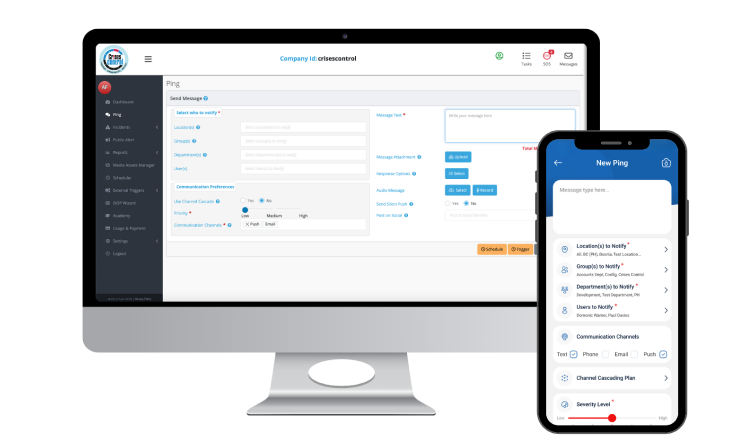
Interested in our Ping Mass Notification Software?
Efficiently alert everyone in seconds at scale with our Mass Notification Software.
Communication and Coordination Work Best Together
Operational disruptions require both rapid communication and structured coordination.
Collaboration tools such as Microsoft Teams enable employees to share updates and work together during incidents. Incident management software ensures that response activities are organised, tracked and visible to leadership teams.
When these capabilities are combined, organisations can respond more effectively to disruptions while maintaining operational oversight and accountability.
For financial institutions managing complex technology environments and regulatory obligations, this integrated approach supports stronger operational resilience.
Strengthening Crisis Response in Financial Services
As digital infrastructure becomes more complex, financial institutions must ensure that their incident response capabilities are designed for speed, coordination and visibility.
Organisations that rely solely on communication tools during crises may struggle to maintain control when incidents escalate quickly.
Incident management software provides the structure needed to coordinate teams, track response actions and maintain situational awareness during operational disruptions.
Solutions such as Crises Control enable organisations to digitalise response plans, coordinate incident response teams and maintain clear oversight during critical events.
To see how your organisation can strengthen its incident response capability, get a free personalised demo.
Request a FREE Demo