Written by Anneri Fourie | Crises Control Executive
The hardest part of a school incident is often not the event itself. It is the review that follows.
A pupil goes missing during a trip. A fight breaks out and ends in injury. A suspicious individual is seen near the gate. Police attend. Staff respond. The day eventually settles.
Then the questions begin.
Governors want a timeline. The local authority requests a report. Safeguarding partners ask for documentation. Data protection officers ask whether any personal information was exposed.
This is where many education providers discover a gap. They managed the situation. They did not structure the record.
That gap is why incident management software has become a governance issue, not just a technical one.
The problem is simple. Schools often respond well in the moment but struggle to demonstrate that response clearly afterwards. The solution is structured, documented coordination that stands up to scrutiny.
A Realistic Scenario: 08:42 On A Tuesday Morning
At 08:42, a member of staff reports a suspicious individual near the perimeter fence of a secondary school.
Within minutes:
- The safeguarding lead is informed
- Reception locks external doors
- The site manager checks CCTV
- A teacher messages a colleague on WhatsApp
- Police are called
By 09:15, the individual has left the area. No one is harmed. The police advise there is no ongoing threat.
At 11:00, parents start calling after seeing police vehicles outside the school.
At 14:00, the local authority requests a short written summary.
By the end of the week, governors ask for a full timeline and confirmation that safeguarding procedures were followed.
A month later, inspectors request evidence of communication controls and escalation decisions.
The operational risk has passed. The compliance pressure has just begun.
What Regulators And Governing Bodies Actually Ask
Across the UK and internationally, regulatory frameworks differ. The underlying expectations are consistent.
Authorities typically want to know:
- When was the incident first identified?
- Who was notified and at what time?
- Who authorised key decisions?
- What communication was sent, and to whom?
- Were safeguarding policies followed in full?
- Was there any impact on personal data?
- What changes have been made since the event?
These are not abstract questions. They require timestamps, accountability and documented evidence.
This is regulatory reporting for incident management in practice. Without structure, answers rely on memory, scattered emails and informal messages.
What Incident Management Software Means In Education
Incident management software is a digital system that records, coordinates and documents the full lifecycle of an incident from first report to post event review.
In a school or university setting, it allows:
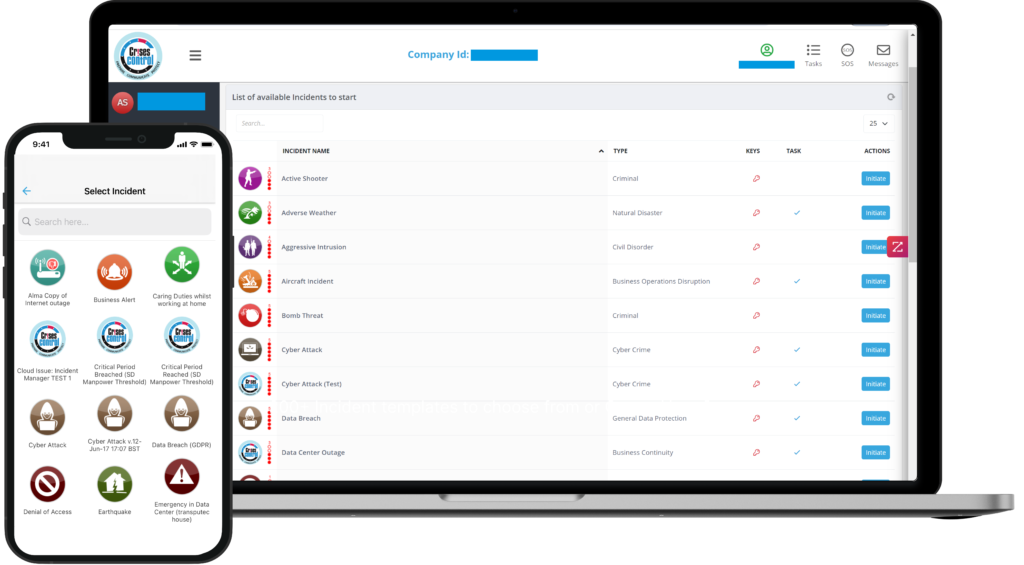
- Clear activation processes
- Defined escalation pathways
- Role based task assignment
- Centralised communication records
- Time stamped audit trails
- Structured reporting outputs
It moves response from ad hoc coordination to controlled documentation.
For leaders evaluating their current approach, the real question is not whether staff act quickly. It is whether the organisation can prove how it acted.
Why The Education Sector Faces Particular Scrutiny
Education providers carry specific duties.
They are responsible for:
- The safety of minors or young adults
- Safeguarding compliance
- Data protection
- Emergency preparedness
- Clear duty of care
A minor incident can trigger a multi layer review. Safeguarding authorities, local councils, governors and data protection officers may all request evidence.
This level of scrutiny exposes weaknesses in fragmented systems.
Where Traditional Approaches Struggle
Many schools rely on a mixture of tools and habits:
- Email threads
- Messaging apps
- Paper based business continuity plans
- Separate safeguarding systems
- Verbal updates
These methods work in the moment. They struggle under review.
Common breakdowns include:
- Escalation Uncertainty: Staff hesitate because they are unsure whether an incident warrants formal logging. Small delays create gaps in documentation.
- Informal Communication: WhatsApp or SMS messages may solve immediate coordination issues but leave no controlled audit trail.
- Manual Plan Activation: Emergency response plans may sit in folders or shared drives. During live events, few people refer to them in real time.
- Limited Leadership Visibility: Senior leaders may not see which tasks are complete or which staff have acknowledged alerts. That lack of oversight becomes visible during inspection.
This is where crisis management software for schools and universities shifts from optional to structural.
The Structured Response Model
A compliant response model in education usually follows six clear stages.
1. Defined Activation Thresholds: Staff need clarity about what must be formally recorded. Predefined templates reduce hesitation and inconsistency.
2. Role Based Escalation: Authority levels must be explicit. Site managers, safeguarding leads and senior leadership each have defined decision rights.
3. Controlled Communication: Multi channel messaging ensures consistent instructions reach relevant groups while maintaining records.
4. Task Assignment And Tracking: Every action is allocated to a named individual with a timestamp.
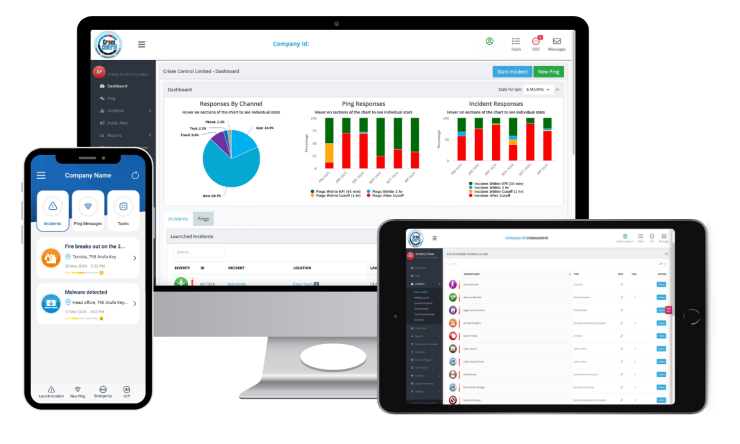
5. Live Oversight: Leadership dashboards allow real time visibility of progress and gaps.
6. Post Incident Review: Reports are generated from system data rather than reconstructed afterwards.
This is where incident management software for regulatory compliance in education becomes relevant. It supports not just coordination but defensible reporting.
A Common Misconception About Near Misses
Many leaders assume that if no one was harmed, the compliance risk is minimal.
Inspection processes do not focus only on harm. They focus on process integrity.
A near miss can reveal:
- Poor escalation logic
- Weak safeguarding documentation
- Informal communication habits
- Inconsistent decision authority
Regulators assess preparedness and governance, not just outcomes.
How Schools Demonstrate Compliance After A Serious Incident
When authorities review a serious incident, they expect structured evidence.
This usually includes:
- A clear chronological timeline
- Proof of who authorised decisions
- Records of communication distribution
- Safeguarding action logs
- Policy references
- Evidence of lessons learned
This is how schools demonstrate compliance after a serious incident in a way that satisfies governors and inspectors.
Digital systems provide:
- Automated timestamps
- Access logs
- Centralised documentation
- Report export functions
Manual approaches require staff to piece together emails and notes. That process increases risk of inconsistency.
Interested in our Incident Management Software?
Flexible Incident Management Software to keep you connected and in control.
Regulatory Reporting For Incident Management Explained
Regulatory reporting for incident management is the formal documentation of how an organisation identified, escalated, managed and reviewed an incident, supported by verifiable records.
In education, this often connects to:
- Safeguarding guidance
- Health and safety duties
- Data protection requirements
- Emergency preparedness frameworks
The expectation is that organisations can demonstrate structured control.
Manual Versus Structured Digital Response
The difference between manual coordination and structured systems becomes clear under scrutiny.
| Manual Response | Structured Digital Response |
| Email chains | Centralised incident log |
| Informal messages | Controlled communication records |
| Paper plans | Digital plan activation |
| Reconstructed timelines | Automatic timestamps |
| Limited oversight | Live dashboard visibility |
The shift is about governance maturity rather than technology preference.
Practical Questions For Education Leaders
If you are reviewing your current approach, ask yourself:
- Could we produce a complete incident timeline within 30 minutes?
- Can we prove who authorised each major decision?
- Are communication records stored securely and centrally?
- Can governors access a structured report without manual compilation?
- Do our plans guide live action, or are they static documents?
If the answers are uncertain, structural improvement is required.
Platforms such as Crises Control support education providers by digitalising plans, enabling role based response and maintaining secure, cloud based documentation. The aim is not to replace leadership judgement but to support it with structure.
Why This Matters For Long Term Governance
Education leaders are operating under increasing accountability.
Governance standards now resemble those in large enterprises. Inspectors assess documentation quality alongside safeguarding effectiveness.
Incident management software helps institutions move from reactive coordination to structured oversight.
It supports clarity during high pressure moments and confidence during formal review.
Final Thoughts: Preparing Before The Questions Arrive
Incidents in education settings cannot always be prevented. The way they are managed can be controlled.
Regulators do not ask whether a situation was stressful. They ask whether it was structured.
By adopting systems that support documented escalation, role clarity and reliable communication, schools strengthen both safety and accountability.
If your institution is reviewing how it would respond under inspection, now is the time to examine your framework.
Crises Control works with schools and universities to support structured incident coordination, digital plan activation and secure reporting.
To explore how this approach could strengthen your governance model, get a free personalised demo.
Request a FREE Demo