Written by Anneri Fourie | Crises Control Executive
Automotive manufacturing plants are busy, noisy, and full of complex machinery. When an emergency occurs, such as a chemical spill, machinery malfunction, or small fire, communication often fails. Traditional tools like public address systems or manual call trees cannot reliably reach every worker, particularly on noisy factory floors where employees may be wearing hearing protection. Miscommunication or slow responses in these situations can put staff at risk, damage equipment, and disrupt production.
The solution lies in using mass notification software that integrates with AI crisis management tools and incident management systems. By combining instant alerts, AI guidance, and automated workflows, manufacturers can respond quickly, protect employees, and reduce production downtime. This article explains how automotive plants can implement such systems, why they work, and how Crises Control supports every step of the process.
Challenges in Automotive Plant Emergency Communication
Manufacturing plants have unique issues when emergencies occur.
Noisy and complex work environments
Factory floors can be extremely loud, and workers are often spread across multiple zones. Alarms or verbal instructions can be missed, leaving staff unaware of an incident until it is too late.
Fragmented communication channels
Many plants rely on several unconnected systems to communicate alerts. A fire alarm, a chemical sensor, and a security system might all operate separately. This fragmentation can cause delays or missed messages during a critical event.
Manual procedures
Traditional call trees and printed checklists require human intervention and slow down the response process. Workers and supervisors may be unsure about who to contact or what actions to take, increasing the risk to both people and production lines.
Regulatory compliance pressures
Automotive manufacturers must demonstrate that safety procedures are effective and auditable. Failure to respond correctly can result in fines, lost production time, or injury claims.
These issues highlight the need for a system that delivers fast, reliable communication while guiding staff through a structured response to emergencies.
How Mass Notification Software Helps Manufacturing Plants
Mass notification software provides the tools to send immediate, targeted alerts across multiple channels. It ensures that the right people get the right message, allowing a coordinated response to incidents.
Multi-channel alerting
Manufacturers can send SMS, email, voice calls, push notifications, and alerts through collaboration tools such as Microsoft Teams. This ensures that messages reach staff regardless of their location or device.
Targeted communication
Alerts can be directed to specific zones, departments, or roles. For example, if a chemical spill occurs in the engine assembly line, only the employees in that area receive instructions, while plant managers are notified separately.
Automated escalation
If a message is not acknowledged, the system can automatically escalate it to backup personnel or management. This reduces human error and ensures that critical information is acted on promptly.
Implementing mass notification software improves response times and helps protect staff and assets. It also supports better oversight of emergency situations, giving supervisors visibility into who has received and acknowledged alerts.
Integrating AI Crisis Management for Smarter Responses
Mass notification is effective for sending alerts, but it cannot provide guidance on how to respond. This is where AI crisis management comes in.
Crises Control’s CRAiG AI emergency assistant supports decision-making during incidents. It can analyse incoming data from sensors, security systems, and reports to assess the severity of an incident. Based on this information, CRAiG recommends next steps, including evacuation routes, task assignments, and workflow priorities.
For example, if a small fire breaks out in a section of the plant, CRAiG can guide supervisors through activating alarms, contacting emergency teams, and sending clear instructions to staff in the affected area. By offering step-by-step guidance, CRAiG reduces errors and ensures that responses align with safety protocols.
Emergency Mass Notification Systems for Large Factory Floors
A large automotive plant requires a system that can reach thousands of employees quickly. Emergency mass notification systems provide features that make this possible.
Real-time status tracking
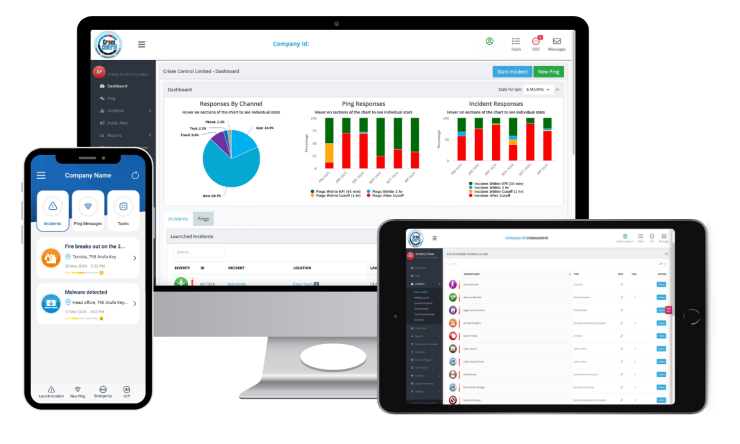
Supervisors can see which staff members have received and acknowledged alerts. This visibility helps ensure that all employees are accounted for and that no one is left unaware.
Integration with existing systems
Alerts can be triggered automatically by fire alarms, chemical sensors, or equipment malfunctions. This removes the need for manual input and speeds up the response process.
Scalability
A single notification system can handle thousands of recipients at the same time, so large plants can ensure everyone receives instructions promptly.
When mass notification software is combined with AI crisis management, manufacturers can coordinate alerts, instructions, and tasks in real time, making the response to emergencies faster and more effective.
Critical Event Management Software for Manufacturing Continuity
Critical event management software helps structure the emergency response process. Key features include:
Centralised dashboards
Incident data, alerts, and response actions are displayed in one place. Supervisors can quickly see what is happening, who is involved, and what actions have been completed.
Task assignment and tracking
Actions can be assigned to specific team members, with automatic tracking to ensure completion. This ensures that tasks are followed through and reduces the chance of mistakes.
Compliance reporting
All responses are logged and stored securely. This provides evidence of compliance with workplace safety regulations and helps identify areas for improvement after an incident.
Integrating critical event management software with mass notification ensures that instructions reach staff while supervisors coordinate the response, reducing human error and production downtime.
AI-Powered Mass Notification for Factory Workers
AI-powered mass notification adds intelligence to alerts. Crises Control’s Ping module determines the best way to reach each worker and prioritises messages based on the incident’s severity.
For instance, if a power outage occurs in the stamping area, Ping can combine push notifications with voice alerts to make sure workers in that zone are notified. AI also decides if supervisors need immediate escalation. The system learns from past incidents to improve how alerts are delivered in the future.
This ensures that everyone receives clear instructions, even in noisy or complicated environments, helping to protect staff and reduce the impact of the event on production.
Step-by-Step Integration for Automotive Manufacturers
Implementing an integrated emergency response system can be approached in five steps:
- Deploy Mass Notification Software: Install Ping to send alerts across multiple channels to the appropriate personnel.
- Integrate Incident Management Software: Centralise tasks and response tracking to improve coordination.
- Activate CRAiG AI Emergency Assistant: Use AI to analyse incidents in real time, provide guidance, and recommend workflows.
- Automate Response Protocols: Set up pre-defined procedures so alerts and tasks trigger automatically during emergencies.
- Monitor, Review, and Improve: Analyse data after incidents to find gaps, adjust workflows, and refine response plans.
Following this approach ensures that alerts move quickly from notification to action, keeping employees safe and reducing production disruption.
Benefits for Motor Vehicle Manufacturers
Integrating mass notification software with AI crisis management and incident management provides clear advantages:
- Faster, more accurate responses to emergencies.
- Improved workplace safety and reduced risk of injuries.
- Reduced downtime and production losses.
- Better compliance with safety regulations, supported by audit-ready reporting.
- Improved coordination across teams and departments.
Crises Control’s solutions make it easier to implement, scale, and maintain these systems across manufacturing plants of any size.
Getting Started with Crises Control
Crises Control provides a complete platform for modernising emergency response in automotive manufacturing.
- Ping Mass Notifications: Sends alerts instantly across multiple channels, with automated escalation and acknowledgement tracking.
- CRAiG AI Emergency Assistant: Offers intelligent guidance, real-time recommendations, and workflow automation during incidents.
- Cloud-based, secure, and scalable, the system adapts to plants of any size.
By using these tools, manufacturers move from reactive emergency management to coordinated, proactive responses that protect employees and production lines.
See how Crises Control can improve emergency communication in your automotive plant. Get a free personalised demo to explore how Ping and CRAiG can safeguard your staff and maintain production flow.
Request a FREE Demo