Written by Anneri Fourie | Crises Control Executive
Automotive manufacturing plants run on tight schedules where thousands of tasks must line up correctly throughout every shift. Stamping presses, paint booths, welding cells, battery lines, assembly stations and automated storage areas form a chain that cannot afford miscommunication. When urgent information does not reach the right people quickly, production stops, safety risks increase and teams struggle to respond in a coordinated way.
Many organisations still rely on radio calls, phone trees, loudspeakers or manual escalation. These approaches often fall short during power failures, chemical leaks, fires, near misses, technical disruptions or even simple equipment faults. Messages travel slowly, shift teams may miss updates and maintenance staff cannot always be reached across large or noisy areas. In a multi site environment, the gap becomes even wider.
This is where the right Mass Notification Software becomes a meaningful part of day to day operations. When a plant needs to communicate fast and accurately, an automated platform helps teams react without confusion. It strengthens safety procedures, shortens disruption time and improves the way people coordinate during both small and large incidents.
This guide explores the seven features that matter most for automotive manufacturers. These features support both safety and productivity while reducing the uncertainty that comes with outdated communication methods. Each section explains the problem it solves, what the feature should look like in practice and how Crises Control supports these expectations.
1. Multi Channel Delivery That Reaches Every Person On Site
Automotive plants are noisy, wide and complex. A single alert method rarely reaches everyone. Sirens cannot cut through mechanical noise everywhere. Emails may sit unread. Radios have range and channel limits. Even mobile network coverage varies in large industrial buildings.
A strong Mass Notification Platform sends alerts across many channels at the same time. This removes guesswork and ensures that people receive the message through the method they are most likely to notice. It also removes dependency on one system, which helps during power outages or network issues.
A feature like this should include:
- Mobile app alerts
- SMS
- Voice calls
- Desktop pop ups
- Push notifications
- Integrations with existing factory audio systems
Crises Control combines these delivery routes with automated failover, so if one channel is slow or unavailable, the system switches to another without manual intervention.
2. Targeted Communication for the Right Teams, Zones and Shifts
Automotive plants are divided into zones with different safety rules and technical risks. An alert that is critical in the paint shop may not apply to the stamping area. Maintenance staff often need messages that do not concern production teams. Contractors and visiting engineers may only require updates related to their temporary workspace.
Targeted communication makes this simple. Instead of sending everything to everyone, the system lets you select groups based on:
- Zone or building
- Shift or rotation
- Team or skill set
- Emergency response role
- Contractor group
- Device type
This removes noise and confusion and helps people act on information that applies to them. Crises Control allows plant managers to create unlimited groups, link them to floor plans and assign responsibilities. This supports both planned maintenance and unplanned incidents.
3. Real Time Acknowledgement to Confirm Who Has Seen the Alert
One of the major weaknesses of manual communication is the lack of visibility. You may send an update, but you cannot see who has read it, who has missed it or who may need follow up. During a fire alarm test, this might be manageable. During a chemical spill or an electrical failure, guesswork becomes dangerous.
A reliable Employee Mass Notification System shows in real time:
- Who received the alert
- Who acknowledged it
- Who has not responded
- Who may need help
- Which teams are active
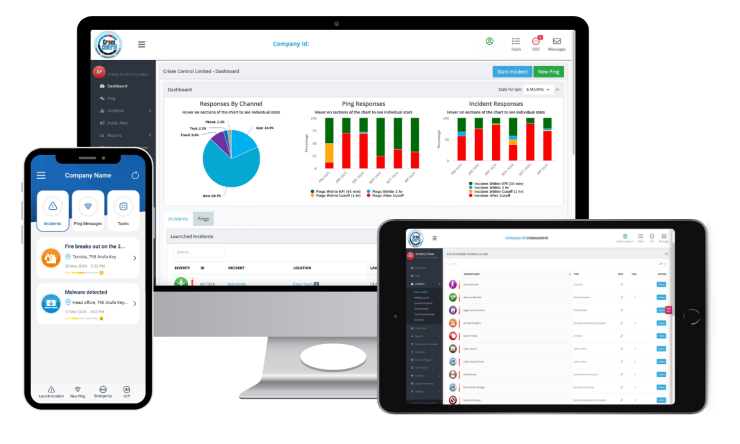
This helps supervisors make better decisions. They can see where to focus attention, who to contact again and how to direct response teams. Crises Control provides live dashboards that show this information as the incident unfolds.
4. Automation That Shortens Response Time and Reduces Mistakes
Manual processes take time that teams often do not have. Finding the right numbers, choosing which groups to inform, writing the message and sending it across multiple channels can take several minutes. During an equipment fire, a power trip, a gas leak or an evacuation, those minutes increase risk and prolong disruption.
Automation solves this by preparing scenarios in advance. When an incident starts, the plant manager or safety officer triggers a predefined workflow that sends the correct messages, activates the right teams and guides people step by step.
Strong automation should include:
- Prebuilt scenarios for fires, spills, equipment failures or evacuations
- Prewritten multilingual messages
- Automatic escalation to senior staff
- Triggering of roles such as fire wardens or first aiders
- Automatic logging of all activity
Crises Control supports these workflows, which reduces manual work and removes the chance of missing critical steps.
5. Integration With Sensors, Machinery and Safety Systems
Automotive manufacturing relies heavily on automation and monitoring. When a system detects a risk, the notification process should begin without delay. The best Mass Notification Software connects with:
- Fire alarm systems
- Access control devices
- Production line sensors
- Environmental monitors
- Safety PLCs
- SCADA and OT systems
For example, if a temperature sensor in a battery production zone crosses a threshold, the system can trigger an alert to maintenance, fire wardens and nearby staff. If a conveyor line stops unexpectedly, the system can notify the right engineers before production slows further.
Crises Control offers API integrations that connect with industrial monitoring systems, which helps plants streamline their safety and maintenance processes.
6. Support for Multi Site Organisations
Automotive manufacturers often operate more than one facility. These sites may include assembly centres, parts factories, distribution hubs or supplier facilities. Managing communication across all of them is complex, especially when each site has its own risks and its own safety procedures.
An emergency communication solution for multi site organisations should allow:
- Separate sites with their own workflows
- Site specific scenarios and languages
- Cross site escalation
- Shared reporting
- Centralised administration
- Local hosting options for data sovereignty
Crises Control supports local hosting in different regions, which helps organisations meet regulatory requirements and maintain control of their data. The platform also supports multi site dashboards, giving senior managers visibility across all plants.
7. Clear Reporting and Incident Review
After any incident, teams want to understand what happened, how quickly the response took place and where improvements can be made. A good Mass Notification Platform provides clear reports that show:
- Time taken to send alerts
- How long teams took to respond
- Actions taken throughout the incident
- Communication logs
- Escalation steps
- Audit trails
This supports continuous improvement and helps organisations meet compliance obligations under standards such as ISO 22301 and local health and safety regulations. Crises Control gives organisations detailed incident timelines that can be used for audits, insurance, training and future planning.
Why Many Traditional Communication Methods Fail
Many automotive plants still rely on legacy communication tools that were never designed for complex industrial environments. These include:
- Overhead public address systems
- Two way radios
- Manual phone trees
- Paper procedures
- Isolated SCADA alarms
- Shared email accounts
These methods fail for several reasons. They are slow. They rely on manual steps. They do not provide confirmation of receipt. They do not scale across multiple buildings or sites. They are easy to ignore in noisy environments. They create delays that can turn a small issue into a more serious disruption.
Modern systems are designed to remove these weaknesses and support both safety and productivity.
Short Incident Example: Electrical Fault in a Welding Line
A high current sensor on a robotic welding line detects abnormal behaviour. The line stops automatically. Maintenance needs to attend fast to avoid downtime. Nearby staff need to stay clear. Supervisors must decide whether to shut down the next line to prevent further issues.
With an automated alerting system:
- Sensor triggers a workflow
- Maintenance receives a targeted alert
- Staff in that zone receive a message to stay clear
- Supervisors get real time updates
- The incident timeline is logged instantly
This prevents confusion and reduces the chance of injury or extended downtime.
Final Thoughts
Automotive manufacturing environments change quickly and rely on coordinated responses. Clear and timely communication reduces both risk and downtime. A strong Mass Notification Platform with multi channel alerts, automation, targeted messages, sensor integration and detailed reporting gives plants the structure they need to handle day to day issues and larger incidents.
Crises Control supports these requirements with a system designed for industrial environments. If you would like to see how the platform can support your organisation, contact our team to arrange a free demo.
Request a FREE Demo