Written by Anneri Fourie | Crises Control Executive
When a gas leak is detected 800 metres underground, when toxic fumes spread through a processing plant, or when ground instability threatens an open-pit mine, the gap between controlled response and disaster can be extremely narrow. In hazardous environments where explosive atmospheres, confined spaces and extreme conditions are part of daily working life, outdated communication methods cannot provide the speed and reliability required to keep people safe.
A significant proportion of workplace fatalities in high-risk industries stem from communication breakdowns during critical events. Workers who never receive the alert. Supervisors who cannot locate their teams. Response plans that fail because standard systems collapse under pressure. Mass notification software closes these gaps by delivering instant, multi-channel communication that reaches everyone who needs to respond, no matter where they are or what conditions they are working in.
What Are the Communication Barriers in High-Risk Operations?
Hazardous environments present communication challenges that do not exist in conventional workplaces. Underground mines have signal blackspots where mobile coverage disappears completely. Oil and gas facilities operate across vast geographical areas. Chemical plants require rapid evacuation instructions delivered across multiple zones at the same time.
Regulatory frameworks recognise these complexities. The UK’s Mines Regulations 2014 require mine operators to maintain effective communication systems for emergency response and rescue. Similar obligations exist worldwide, including MSHA requirements in the United States and mining safety directives within the European Union.
Compliance is not a paperwork exercise. It is a safety foundation designed to protect lives in the moments when decisions carry the highest consequences.
Shift patterns create additional complexity. A large mine may have rotating crews, external contractors, maintenance teams working irregular hours and leadership who may be off-site. When an incident occurs, organisations must answer several urgent questions:
- How do you contact everyone who needs to respond?
- How do you confirm who received your message?
- How do you track availability and capability in real time?
Phone trees, radios and standard messaging apps cannot answer these questions. Communication systems must account for workers who may be asleep, in low-signal areas or unable to check their devices.
Why Do Traditional Communication Methods Fail During Critical Events?
Many high-risk industries still rely on communication tools that were never built for true emergencies. Radio channels become overloaded when multiple teams attempt to coordinate simultaneously. Messaging apps assume people are actively monitoring their phones. Phone trees depend on individuals being available and willing to pass messages along.
These tools share a common weakness: they require recipients to be in the right place, with the right device, at the right moment. In hazardous environments, that assumption is rarely realistic.
Consider a mine evacuation triggered by rising methane levels. Radio messages may not reach workers in certain tunnels. Calling supervisors individually wastes time that cannot be recovered. By the time information spreads informally, the situation may already have escalated.
Incident investigation reports across high-risk sectors regularly highlight the consequences of communication failure. When systems depend on human availability and manual forwarding of information, response times slow and risk increases.
How Mass Notification Software Transforms Emergency Response
Mass notification platforms use a proactive approach built for high-stakes environments. Crises Control provides capabilities designed to support rapid decision-making, coordinated action and reliable communication in the most challenging conditions.
Multi-channel redundancy for rapid delivery
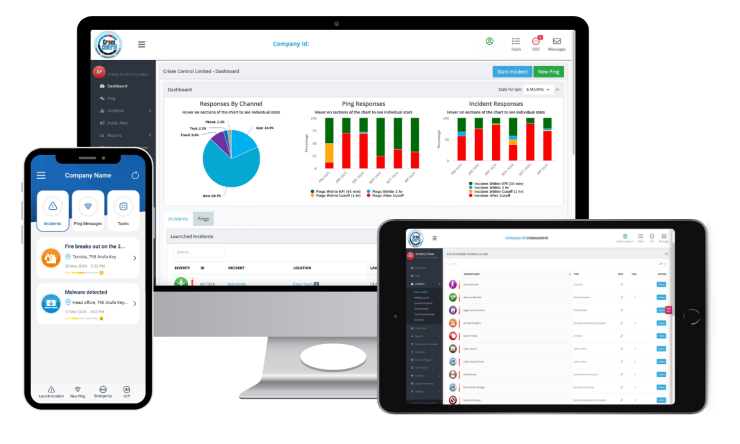
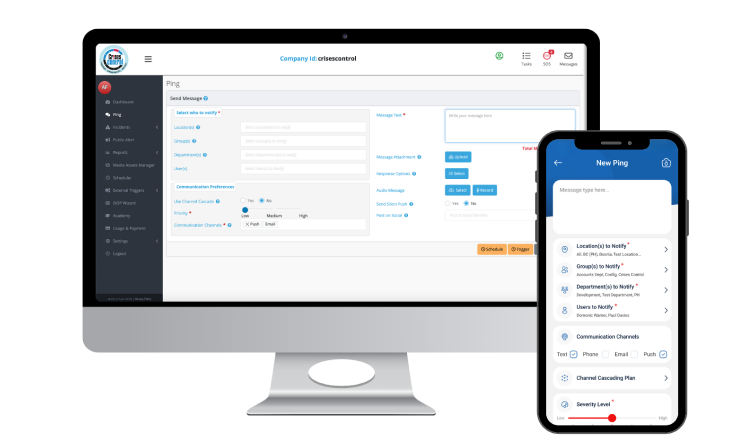
Messages are delivered through several channels at once. Crises Control PING alerts send voice calls, SMS messages, emails and mobile app notifications simultaneously. Whichever channel reaches the worker first prompts the required response. This increases the likelihood that messages get through even in low-signal areas or high-noise environments.
Structured response workflows for accountability
Recipients are not simply informed. They are asked to confirm their status. Options such as “I will respond“, “Not available” or “Need assistance” allow incident commanders to see who is coming, who cannot help and who requires support.
This creates a coordinated response rather than a one-way broadcast.
Independence from local infrastructure
Crises Control operates in the cloud. If on-site servers, networks or communication systems fail during an incident, the platform remains available. This is critical during fires, power failures, structural damage or incidents that compromise local operations.
Interested in our Ping Mass Notification Software?
Efficiently alert everyone in seconds at scale with our Mass Notification Software.
Mass Notification Software for Mining: Addressing Industry-Specific Challenges
Mining presents one of the most complex communication environments across any industry. Underground tunnels, surface plants, workshops, offices and remote accommodation facilities all have distinct communication barriers.
Crises Control supports mining operations through capabilities tailored for this demanding sector.
Alerts that reach off-duty responders
Mines operate around the clock. A large proportion of the workforce may be sleeping during an incident. Voice calls and SMS provide an improved chance of waking off-duty responders, ensuring specialist teams receive alerts when required.
Coordination across underground and surface teams
The platform enables targeted alerts based on location, job role or shift pattern, while giving safety teams a complete view of the entire response. Surface teams can prepare equipment, close access points or activate contingency plans while underground crews evacuate.
Compliance documentation for safety regulators
Every alert, acknowledgement and action is timestamped and automatically logged. This provides a clear audit trail for investigations, safety reports and regulatory compliance.
Building an Effective Emergency Response Plan with Integrated Technology
An emergency response plan only works when communication, responsibilities and actions align. In hazardous environments, printed documents, spreadsheets and verbal instructions cannot keep pace with the speed at which events unfold.
Crises Control strengthens planning and execution through integrated digital tools.
Digital playbooks for scenario-based response
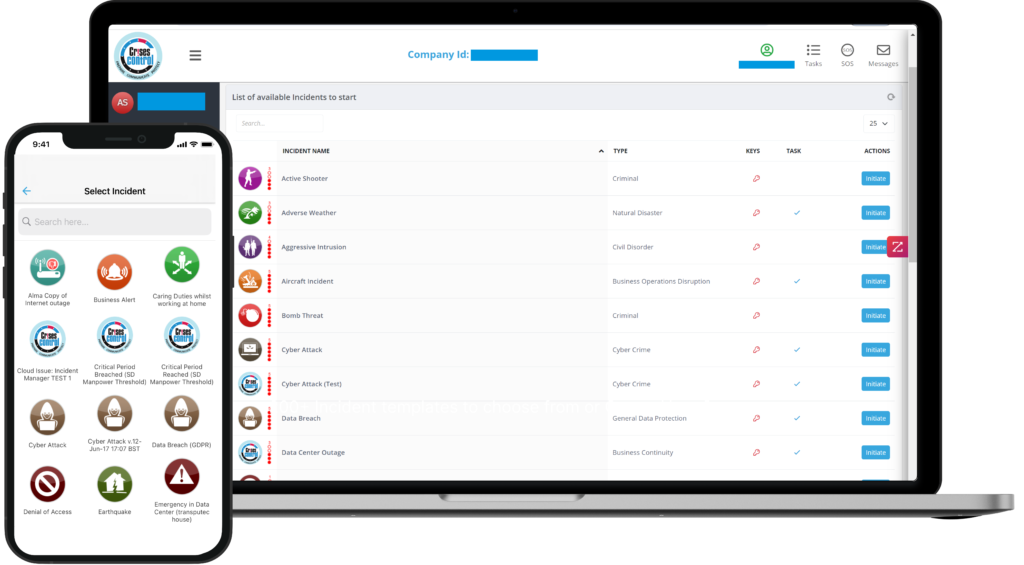
Different incidents require different actions. Gas leaks, structural failures, fire, flooding, equipment malfunction and medical emergencies each trigger unique procedures. Crises Control’s Incident Manager allows organisations to pre-build response playbooks that activate instantly when an incident is reported.
Automatic task allocation and escalation
Tasks can be assigned automatically to the correct individuals or teams. If someone fails to acknowledge or complete a task within a set timeframe, it automatically escalates to ensure no critical step is missed.
Real-time visibility for operational control
Live status boards display acknowledgements, task progress and team availability. Decision-makers gain immediate clarity without relying on multiple phone calls or fragmented updates.
Interested in our Incident Management Software?
Customise your Crisis Incident Management Software to meet your specific needs with our flexible tools & stay connected and informed during the crisis and incident management process
How Do Emergency Communication Systems Support Multi-Site Operations?
Organisations operating across several hazardous locations require consistent and coordinated communication. Mining groups, petrochemical companies, energy providers and heavy manufacturers must issue clear instructions across sites that may be hours or continents apart.
Crises Control provides a unified platform for mass notification for multi-site operations. Mines, processing plants, ports, logistics hubs, remote camps and office locations can all be managed within the same environment.
This supports:
- Consistent safety standards across jurisdictions
- Centralised reporting
- Faster mobilisation of specialist resources across locations
- Improved regulatory compliance
When an incident affects more than one site, such as severe weather, transport disruption or a security threat, a unified system ensures instructions are accurate, aligned and traceable.
Real-Time Incident Alerts for Remote Workers and Lone Personnel
Many hazardous industries depend on lone work. Underground electricians, maintenance engineers, surveyors, drivers and security teams all face situations where immediate support may not be available.
Real-time alerts ensure workers in remote areas, on the road or off-site receive critical information as soon as it is issued. This supports mobilisation of on-call responders, improves accountability and helps organisations identify when additional resources are required during an emergency.
SOS Panic Button App: Personal Safety for High-Risk Workers
Site-wide alerts cannot address personal emergencies experienced by individual workers. A trapped worker, a medical incident, or a sudden hazardous condition may require an immediate call for assistance.
The SOS panic button app from Crises Control enables workers to send a distress alert with a single action. The alert includes identity details and, when available, location information. It is sent directly to the correct response teams and integrates with the wider incident management system.
Key features include:
- One-touch activation
- Automatic location sharing where possible
- Immediate routing to designated responders
- Integration with incident workflows
This provides a critical safety layer for lone workers and supports regulatory compliance for high-risk operations.
What Defines the Best Emergency Communication System for Hazardous Environments?
Selecting an appropriate emergency communication solution requires evaluating several performance factors:
- Reliable operation in the specific conditions of your site
- Multiple communication channels that provide redundancy
- Simple user experience suitable for high-pressure situations
- Integration with safety management and incident reporting systems
- Ability to function even when local infrastructure is damaged
- Clear audit trails for compliance
Crises Control delivers these key elements, supporting rapid communication, regulatory readiness and operational resilience.
Taking Action: From Planning to Protection
Emergency communication capability is a critical component of your wider safety strategy. It supports your legal obligations, strengthens operational resilience and protects the people working in your most hazardous environments.
Seeing the technology operate in realistic scenarios provides clarity that written descriptions cannot. You can test how quickly alerts reach your workforce, how teams respond and how the platform performs under pressure.
If you are ready to assess an emergency communication solution purpose-built for hazardous operations, you can contact Crises Control for a free personalised demo.
Request a FREE Demo