Written by Anneri Fourie | Crises Control Executive
Operating in global trade brings a level of complexity few other industries face. Companies must manage employees across multiple countries, respond to unpredictable incidents, and keep operations running smoothly while complying with different regulations in each region. Imagine a manufacturing facility in Germany suddenly faced with a political protest outside the factory, or a logistics hub in the Middle East disrupted by a cyberattack. Without a reliable way to alert staff and coordinate a response, employees can be put at risk, shipments can be delayed, and the reputation of the business can suffer.
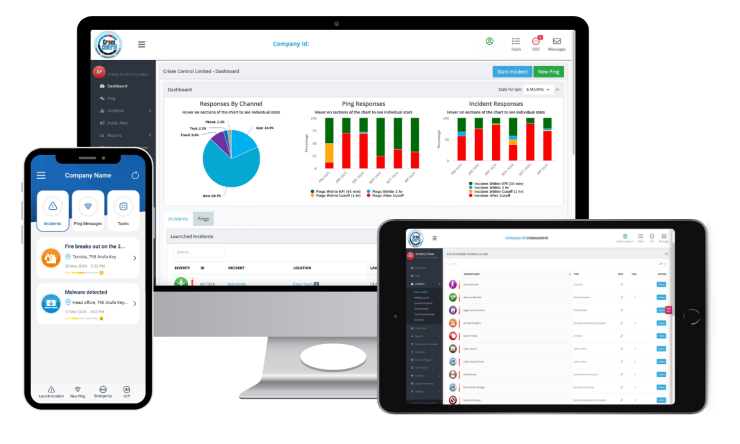
This is where Mass Notification Software comes in. It allows organisations to reach their people quickly, provide clear instructions, and track responses across multiple locations. Crises Control offers a platform that combines mass notification with incident management, crisis management, and business continuity tools to ensure international operations continue with minimal disruption.
Why Global Trade Companies Struggle with Crisis Communication
Companies operating in multiple countries face several challenges when communicating during a crisis. Employees may be spread across time zones, speak different languages, and work in locations with varying levels of risk. Traditional methods like emails or phone trees often fail because messages are missed or delayed. Managers need to know who is safe, what is happening in each location, and how to respond quickly.
For example, a manufacturing company with staff in Germany, France, and the Middle East may need to alert employees during a regional incident while keeping operations in other sites running. Sending a generic email or assuming messages are received is not enough. If employees are left uninformed, it can put them in danger and leave the company exposed to regulatory or operational issues.
How Mass Notification Software Solves These Challenges
Mass Notification Software is designed to reach large groups quickly using multiple communication channels at the same time. This can include mobile apps, SMS, voice calls, emails, and integrations with tools like Microsoft Teams. Messages are targeted based on location, role, or department, ensuring the right people get the right information.
Key benefits include:
- Delivering immediate alerts during incidents such as protests, natural disasters, or industrial accidents.
- Tracking responses so managers know which employees have received messages and are safe.
- Providing tailored instructions that account for local conditions and language differences.
Manufacturing companies have used these systems to protect staff during terrorist attacks and to manage evacuations during fire drills. This not only safeguards employees but also helps maintain trust in the company and limits disruption to operations.
Coordinating Responses with Crisis Management Software
Alerts alone are not enough. Crisis Management Software helps teams centralise information and coordinate responses effectively. It allows management to:
- Maintain up-to-date crisis plans that can be adjusted in real-time.
- Track the progress of incident response activities.
- Communicate with internal and external stakeholders, including regulators, suppliers, and partners.
In international trade, disruptions to the supply chain, port closures, or logistics delays require quick decisions. Integrating Incident Management Software with mass notification systems means these decisions can be acted on immediately. Automated workflows and structured reporting allow teams to respond efficiently and avoid confusion.
Keeping Operations Running with Business Continuity Software
When a crisis occurs, companies need to continue operating. Business Continuity Software stores actionable plans in the cloud and triggers alerts automatically when an incident occurs. Unlike paper-based plans or static files, cloud-based continuity software is accessible from anywhere, allowing managers to take action remotely.
For international trade companies, this can include:
- Cloud-hosted continuity plans accessible by teams across multiple countries.
- Automated workflows to ensure critical functions continue.
- Integration with mass notification systems to keep staff informed about disruptions.
Using continuity software alongside incident management allows organisations to minimise downtime and reduce the impact of unexpected events on operations and reputation.
Using Multiple Channels to Reach Employees
One of the biggest issues during international incidents is ensuring employees receive alerts. Relying on a single method of communication is risky. An Emergency Mass Notification System solves this by sending messages simultaneously through multiple channels. This can include:
- Push notifications via a mobile app for direct, immediate alerts.
- SMS messages for employees who may not have internet access.
- Emails for detailed instructions and documentation.
- Voice calls for urgent situations.
- Integrations with Microsoft Teams for internal coordination.
For example, a factory in Germany facing a sudden evacuation can ensure staff receive alerts on their phone, email, and Teams. Managers can track responses in real-time and confirm employees have reached safe areas.
Cloud-Based Mass Notification Software for Global Teams
Companies operating across continents need solutions that scale easily and remain reliable. Cloud-Based Mass Notification Software for Global Teams provides this flexibility. Hosting notifications in the cloud ensures messages are delivered efficiently, even when systems are under high demand or local infrastructure is down.
Benefits include:
- Real-time notifications for employees across different time zones.
- Centralised management of alerts and incidents for global oversight.
- Secure storage that meets GDPR, DORA, and other regional regulatory requirements.
Cloud solutions also make it possible to test emergency procedures frequently. Organisations can run simulations for evacuations, cyber incidents, or supply chain issues, allowing teams to practice responses and refine processes before a real event occurs.
Meeting Regulatory Requirements Across Regions
International trade exposes companies to a variety of legal requirements around safety, data privacy, and operational continuity. Using integrated crisis management platforms helps meet these obligations without adding unnecessary complexity.
- GDPR and DORA compliance is supported through secure data handling, audit trails, and reporting tools.
- Local safety and occupational regulations are addressed with targeted alerts and detailed incident tracking.
- Industry-specific standards such as ISO 22301 for continuity or NFPA for manufacturing are incorporated into response processes.
By meeting these requirements, companies can protect employees, avoid legal risks, and maintain credibility with clients and partners.
Building a Culture of Preparedness
Technology works best when paired with training and practice. Companies need to create a culture where preparedness is part of daily operations. Simulation exercises, fire drills, and practice evacuations allow teams to understand procedures and improve response times.
Using Crises Control, organisations can:
- Schedule drills and simulations for multiple sites and scenarios.
- Monitor performance and identify areas for improvement.
- Evaluate response effectiveness and update plans accordingly.
Regular exercises ensure employees are familiar with procedures and can respond calmly and efficiently when real incidents occur.
Benefits of Mass Notification and Crisis Management Systems for International Trade
By integrating Mass Notification Software with crisis management, incident management, and business continuity tools, global trade organisations can:
- Protect employees with clear, real-time alerts.
- Coordinate responses across multiple countries and time zones.
- Maintain operations during supply chain or logistical disruptions.
- Ensure compliance with regulations in every region of operation.
- Use cloud-based solutions for scalable, reliable communication.
- Improve preparedness through testing and AI-powered insights.
Organisations that adopt these systems can respond to incidents more quickly, reduce operational disruption, and demonstrate a commitment to employee safety and regulatory compliance.
Protecting Your Workforce and Operations with Crises Control
Global trade involves risks that can affect both people and operations. Delays in communication or uncoordinated responses can have serious consequences. Crises Control provides a complete platform combining Mass Notification Software, Crisis Management Software, Incident Management Software, and Business Continuity Software to help organisations respond effectively and protect employees worldwide.
Contact us today to get a free personalised demo and see how Crises Control can support your global operations.
Request a FREE Demo