Written by Anneri Fourie | Crises Control Executive
Managing multiple food production sites is challenging. Imagine a critical machine failing at one site while another site is dealing with a sudden food safety alert. Staff are spread across locations, and delays in communication can quickly disrupt production, create compliance issues, and put the brand at risk. Many factories struggle with slow communication, unclear responsibilities, and inconsistent responses across sites. Mass notification software provides a way to address these challenges, helping teams respond quickly, stay coordinated, and maintain business continuity.
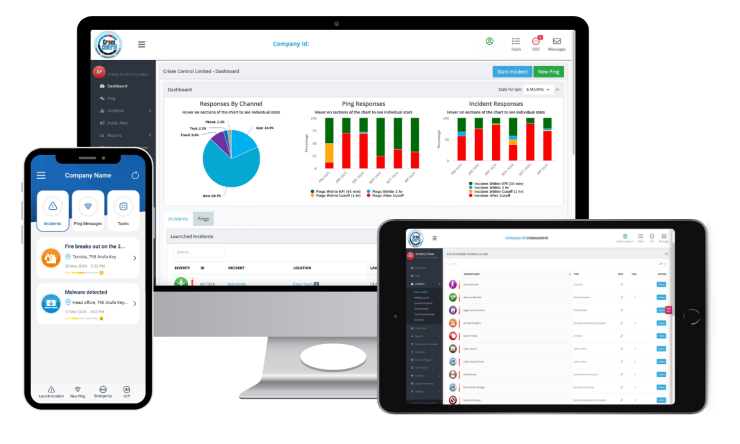
Crises Control combines mass notification software, incident management software, and business continuity software into a single platform, specifically designed to help food factories with multiple sites communicate, manage incidents, and keep operations running smoothly.
Understanding the Risks for Multi-Site Food Manufacturers
Running several factories comes with risks that go beyond equipment and production schedules. The key challenges include:
- IT system interruptions: ERP, MES, and SCADA systems control much of production, inventory, and quality tracking. Any downtime can delay production, create errors in inventory, and disrupt reporting needed for compliance.
- Food safety incidents: Even minor contamination can require immediate action. Without fast, coordinated communication, recalls may be delayed, which increases risk to consumers and the company’s reputation.
- Communication breakdowns: Messages can get lost or delayed when staff work across different locations or shifts. Critical instructions may not reach the right people at the right time, slowing response and creating confusion.
- Cyber threats: Ransomware or other cyberattacks can stop production lines and compromise sensitive operational data. Staff need clear instructions to respond quickly while protecting information.
Mass notification software ensures employees receive alerts instantly through mobile apps, email, voice, desktop notifications, SMS, and tools like Microsoft Teams. This keeps teams coordinated even when incidents occur at different sites.
How Mass Notification Software Supports Incident Management
Mass notification software works alongside incident management software to make sure response actions are structured, tracked, and consistent. When an incident occurs, factories can:
- Launch pre-configured workflows that guide staff through tasks based on their role and location.
- Escalate notifications automatically if someone does not acknowledge an alert.
- Keep detailed logs of actions for audit purposes and compliance checks.
Site-specific alerts allow only the relevant staff to receive messages, avoiding unnecessary notifications for other locations. Managers can see a clear overview of all ongoing incidents across every site, helping them coordinate actions and decisions without confusion.
Strengthening Business Continuity Across Sites
Business continuity is about more than restoring production. Factories need to maintain regulatory compliance, protect supply chains, and keep employees safe. Mass notification software, integrated with business continuity software, helps by:
- Sending real-time alerts that prompt immediate action to contain or resolve incidents.
- Assigning tasks to specific roles so everyone knows what they need to do.
- Connecting notifications to the factory’s emergency response plan for a seamless workflow.
Automation reduces mistakes, speeds up recovery, and safeguards production, inventory, and reporting. Staff are guided through the correct actions, even if managers are not immediately available.
Regulatory Compliance Across Different Regions
Multi-site operations often span countries, each with its own regulations. Food factories must keep track of:
- United Kingdom: UK Food Safety Act, UK GDPR, and NIS regulations require proper incident response, traceability, and data protection.
- European Union: General Food Law, GDPR, and DORA focus on ICT resilience and timely reporting to prevent operational and security risks.
- United States: FDA FSMA and CISA guidance require quick responses to food safety incidents and solid cyber preparedness.
- Middle East and Canada: Local authorities require secure communication, business continuity measures, and audit-ready documentation for compliance.
Crises Control provides GDPR-compliant alerts, DORA-aligned incident management, and centralised reporting that meets regulatory requirements. Factories can demonstrate compliance while keeping teams informed during critical events.
Coordinating Teams Across Multiple Sites
Communication across several factories can be complicated. Staff need consistent information without being overwhelmed with irrelevant alerts. Mass notification software helps by:
- Sending simultaneous alerts across all sites to ensure consistent messaging.
- Delivering site-specific alerts so only those affected receive the instructions.
- Using multiple communication channels including mobile apps, SMS, email, voice, and Teams, so staff can receive notifications wherever they are.
This coordination helps factories respond efficiently and prevents miscommunication that could slow recovery or compromise safety.
Linking Alerts to a Crisis Management Plan
A crisis management plan outlines responsibilities and procedures for incidents, but it is only effective if teams follow it. Crises Control makes it easier to put plans into action by:
- Connecting alerts to workflows so employees know exactly what to do.
- Tracking task completion and escalation to ensure accountability.
- Allowing simulation exercises and tests to identify weaknesses before a real incident occurs.
By integrating mass notification with the crisis management plan, factories improve operational consistency, compliance, and resilience.
Using AI to Predict and Respond
Modern platforms offer AI features to improve incident response and decision-making:
- AI emergency assistants provide guidance based on the type of incident and the locations affected.
- Automated alerts can be triggered by system anomalies, reducing reliance on staff to notice problems manually.
- Predictive insights identify risks in advance, allowing managers to take preventive steps.
This technology supports proactive management and helps multi-site operations stay prepared for incidents that could disrupt production or compliance.
Practical Steps for Implementation
Food manufacturers can get the most from mass notification software by following practical steps:
- Map communication flows: Determine who needs to be notified for each type of incident.
- Create pre-built incident workflows: Align alerts with the factory’s crisis management plan.
- Use multiple delivery channels: Ensure staff can receive notifications via mobile apps, SMS, email, voice, and Teams.
- Test systems regularly: Conduct simulations and tabletop exercises to spot weaknesses.
- Analyse and improve: Review audit logs and response metrics to optimise processes.
These steps make alerts effective, improve response times, and ensure incidents are managed efficiently.
Crises Control for Multi-Site Food Factories
Crises Control combines mass notification software, incident management software, and business continuity software into a single platform tailored for multi-site food manufacturing. It allows factories to:
- Notify employees instantly across multiple channels.
- Coordinate responses between sites to ensure consistent action.
- Connect notifications directly to crisis management plans.
- Maintain compliance through secure, auditable reporting.
By using this integrated approach, factories can respond faster to incidents, protect production lines, and keep operations running smoothly across all sites.
Take Action: Book a Free Demo
Delays in communication during incidents can disrupt production, affect compliance, and put staff and products at risk. Mass notification software ensures alerts reach the right people quickly, incident workflows guide teams through response steps, and business continuity software keeps operations stable.
Contact Crises Control today to book a free personalised demo and see how your multi-site food factories can stay connected, compliant, and resilient.
Request a FREE Demo