Written by Anneri Fourie | Crises Control Executive
High-security manufacturing environments such as defence and space facilities face risks that most workplaces do not. Staff work with hazardous materials, complex machinery, and sensitive intellectual property. Strict access controls often limit mobile and digital communications, and production areas are noisy or restricted. In an emergency—whether a fire, equipment failure, or security breach—how quickly and clearly staff receive instructions can make the difference between safety and serious harm, as well as between compliance and regulatory scrutiny.
Mass notification software for defence manufacturing improves emergency response by sending secure, multi-channel alerts, confirming receipt, tracking actions, and providing auditable records. It ensures staff act quickly, safely, and consistently, even under pressure or during system disruptions.
This article explains what mass notification is, why traditional methods struggle in these environments, and how modern systems improve safety, accountability, and operational resilience.
What is mass notification in high-security manufacturing?
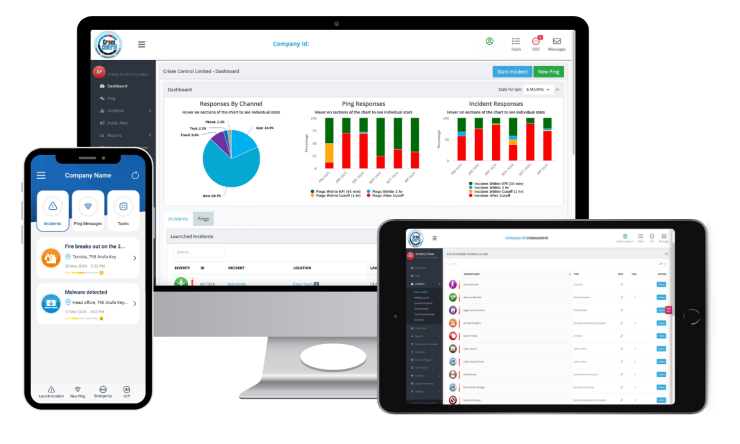
Mass notification software allows organisations to send secure, role-based emergency alerts to employees, contractors, and response teams across controlled environments. Alerts can be delivered through mobile apps, SMS, voice calls, desktop notifications, or secure integrations with collaboration platforms.
A strong system does more than broadcast messages. It provides:
- Fast delivery to all relevant staff
- Confirmation that messages are received and understood
- Automatic escalation if acknowledgements are missing
- Audit trails for compliance, drills, and incident review
In defence and aerospace settings, mass notification is not a generic alert system. It ensures the right people receive verified instructions at the right time and provides clear evidence that the messages were received and acted upon.
Why defence and aerospace facilities face unique challenges
Traditional emergency communication methods often fail in high-security manufacturing due to operational complexity, security restrictions, compliance obligations, and human factors.
Operational complexity
Facilities handle flammable materials, high temperatures, pressurised systems, and specialist machinery. Noise, protective equipment, and controlled zones reduce the effectiveness of alarms or public address systems. A minor incident can escalate quickly if instructions are unclear or delayed.
Security restrictions
Mobile devices may be banned, email may be inaccessible on production floors, and radios are often role-specific. Relying on a single channel to communicate during an incident is unreliable.
Compliance and audit requirements
Defence and aerospace organisations must meet strict safety, data protection, and operational resilience standards. During audits or investigations, they need to demonstrate that alerts were sent, received, and acted upon.
Human behaviour under pressure
Even well-trained staff respond differently in real incidents compared with drills. Fatigue, stress, unfamiliar scenarios, or language differences can reduce the effectiveness of response if instructions are not clear, accessible, and verifiable.
Why traditional emergency communication often fails
Traditional emergency communication methods often fail in high-security manufacturing due to operational complexity, security restrictions, compliance obligations, and human factors.
Operational complexity
Facilities handle flammable materials, high temperatures, pressurised systems, and specialist machinery. Noise, protective equipment, and controlled zones reduce the effectiveness of alarms or public address systems. A minor incident can escalate quickly if instructions are unclear or delayed.
Security restrictions
Mobile devices may be banned, email may be inaccessible on production floors, and radios are often role-specific. Relying on a single channel to communicate during an incident is unreliable.
Compliance and audit requirements
Defence and aerospace organisations must meet strict safety, data protection, and operational resilience standards. During audits or investigations, they need to demonstrate that alerts were sent, received, and acted upon.
Human behaviour under pressure
Even well-trained staff respond differently in real incidents compared with drills. Fatigue, stress, unfamiliar scenarios, or language differences can reduce the effectiveness of response if instructions are not clear, accessible, and verifiable.
How modern mass notification software addresses these challenges
Modern mass notification software is designed to work in restricted, high-pressure environments and under regulatory scrutiny. Key features include multi-channel delivery, role-based alerts, acknowledgement tracking, and cloud-based resilience.
Multi-channel delivery
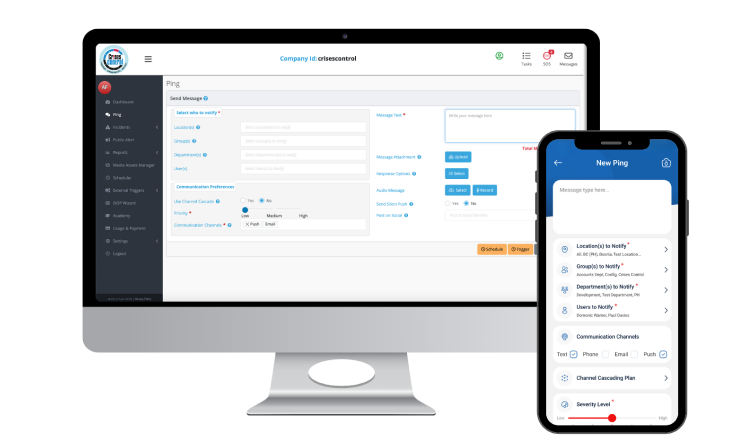
Alerts are sent simultaneously through mobile apps, SMS, voice calls, desktop notifications, and secure collaboration tools. If one channel fails, others ensure the message reaches staff.
Role-based messaging
Different teams require different instructions. Engineers, fire marshals, security teams, and leadership all have distinct responsibilities. Role-based alerts reduce confusion and prevent irrelevant notifications.
Acknowledgement and escalation
Recipients confirm receipt and indicate action taken. Missing acknowledgements trigger automatic escalation to backups or supervisors, ensuring leadership knows who has responded.
Resilience during outages
Cloud-based systems keep alerts and response workflows operational even if local systems fail. This is essential during fires, evacuations, or infrastructure outages.
Interested in our Ping Mass Notification Software?
Efficiently alert everyone in seconds at scale with our Mass Notification Software.
Secure emergency communication in high-security facilities
High-security sites demand more than speed; they require control, traceability, and reliability.
- Controlled access: Only authorised personnel can send alerts, with role-based permissions to prevent misuse and enable rapid action.
- Secure data handling: Alerts, responses, and logs are encrypted and accessible only to authorised users.
- Central oversight with local execution: Multi-site organisations need central visibility while allowing local teams to act effectively in their environment.
Accountability tracking for regulated environments
Accountability is essential for safety, compliance, and operational improvement.
- Evidence of duty of care: Documented alerts and responses demonstrate that reasonable steps were taken to protect staff.
- Learning from incidents: Tracking responses allows organisations to analyse gaps and recurring issues, supporting continuous improvement.
- Operational resilience: Knowing who is available and who has responded enables informed decision-making during prolonged or complex incidents.
Digitalising crisis and continuity plans
Static, paper-based plans are difficult to access during incidents and rarely reflect operational realities. Digital plans offer practical advantages:
- From documents to actions: Digital plan builders convert procedures into step-by-step actions assigned to roles, reducing reliance on memory under stress.
- Accessibility during disruption: Cloud-based plans remain available even if local systems fail, with mobile access for responders on the move.
- Consistency across sites: Standardised plans provide uniform guidance while allowing local adjustments for site-specific conditions.
Crises Control supports this approach by turning crisis and continuity plans into actionable workflows linked directly to alerting and response.
Common mistakes to avoid
Organisations increase risk when they:
- Treat mass notification as a standalone tool rather than part of a wider crisis management system
- Rely on single-channel alerts in restricted areas
- Assume drills reflect real incident behaviour
- Wait until after incidents to address reporting or audit gaps
- Underestimate human factors under pressure
Understanding these pitfalls helps leaders make more informed decisions and improve readiness.
A simple framework to assess readiness
Organisations can evaluate their emergency communication approach using three pillars:
- Reach: Can all critical roles be contacted quickly, even during outages?
- Clarity: Do recipients know exactly what actions to take?
- Accountability: Can the organisation track who received and acted on alerts?
Answering yes to these questions indicates a high level of readiness. Gaps indicate areas for improvement.
How Crises Control supports high-security manufacturing
Crises Control is an example of a platform that combines secure, multi-channel alerts, role-based instructions, and audit-ready reporting. Features include:
- Fast, multi-channel alerts
- Role-based instructions for different teams
- Automated audit trails for compliance
- Digitalised plans accessible during disruption
- Central oversight with local execution
This ensures alerts lead to coordinated action and measurable improvements, not just notifications.
Key takeaways
Mass notification software for defence manufacturing is more than sending alerts. Its value lies in delivering messages to the right people, recording actions, and enabling safe, accountable responses under pressure.
Organisations that adopt secure, accountable, and integrated systems reduce risk, protect staff, and meet regulatory requirements. Those relying on fragmented or outdated methods often discover gaps when it matters most. Reviewing emergency communication and crisis management approaches against operational realities helps ensure preparedness for real incidents.
Request a FREE Demo