Written by Anneri Fourie | Crises Control Executive
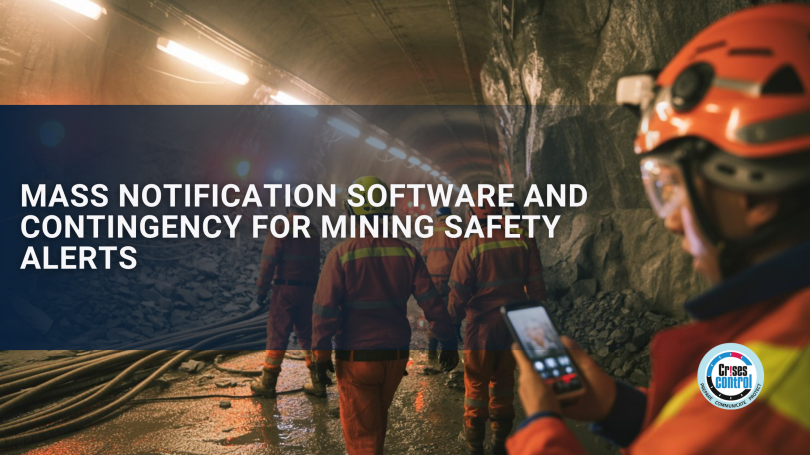
A sudden gas leak deep underground can turn a routine shift into a life-threatening emergency. Miners may be dispersed across multiple shafts, contractors might be off-shift, and standard communication methods may fail due to blocked signals or heavy machinery noise. In these moments, delayed alerts can cost time, safety, and operational continuity. Mining operators need a communication system that works reliably, even when one channel is unavailable.
Mass Notification Software provides a solution. By sending alerts across multiple channels, tracking responses, and queuing messages when devices are offline, it ensures emergency information reaches the right people quickly. Crises Control has built tools specifically for mining environments. This blog explains how contingency alerting works, why it matters for mining safety, and how operators can build a reliable communication system.
Why Mass Notification Software Matters for Mining Safety
Mining operations are spread across deep shafts, open pits, and remote locations. Workers rotate through shifts, contractors join and leave daily, and communication infrastructures underground are often outdated or patchy. In the event of an emergency, such as a sudden rock collapse or fire, reaching all personnel rapidly is challenging.
Mass Notification Software addresses these issues by delivering messages across multiple channels simultaneously. Alerts can be sent via SMS, voice call, email, or mobile app notification. Even if a worker is offline, messages queue and are delivered once connectivity is restored.
Key underground communication challenges include:
- Fluctuating networks affecting Wi-Fi and app connectivity
- Machinery noise that blocks radio or tannoy messages
- Rotating shifts and contractors with varying schedules
- Multiple languages across diverse teams
- Ageing underground infrastructure
With Mass Notification Software, safety teams can maintain coordination, reduce delays, and ensure emergency information reaches everyone, no matter the location or connectivity status.
Mining Emergency Alert System with Multi-Channel Failover
A single communication channel rarely works in underground mining. Contingency ensures that alerts continue to reach personnel even if one path fails. Crises Control uses a multi-channel approach to provide redundancy and reliability.
How it works:
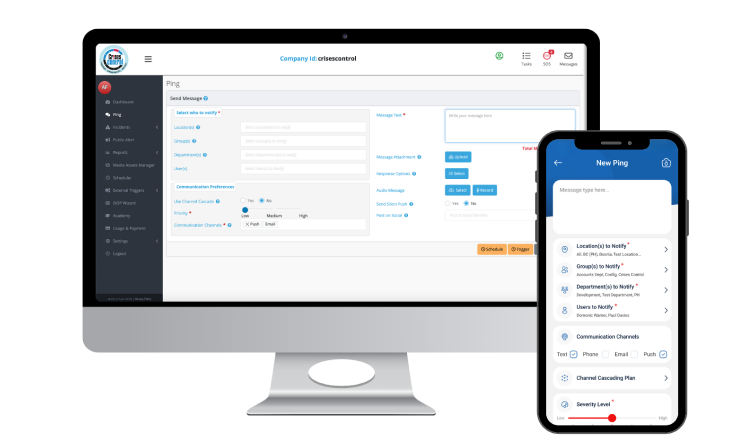
- Alert creation: Safety teams select the incident type, affected zones, and personnel to notify.
- Channel selection and escalation path: Safety teams choose which channels to send the alert through; mobile app, SMS, voice, Microsoft Teams or email, and define what happens if a message is not received or acknowledged. The system can automatically retry using a different channel.
- Multi-channel delivery: Alerts can be sent simultaneously across all chosen channels to ensure immediate coverage.
- Escalation management: Supervisors or incident commanders receive updates about personnel who remain unresponsive and can deploy backup teams as required.
- Audit trail: Every alert, acknowledgment, and escalation step is logged automatically, providing a full record for regulatory compliance and after-action review.
This flexible approach ensures that miners receive notifications regardless of connectivity, location, or device, and gives safety teams confidence that messages are tracked and acted upon.
Example scenario: A miner reports a ventilation failure via mobile app. The system sends an alert to the control room, triggers SMS for workers in low coverage areas, and escalates to supervisors if responses are delayed. All steps are recorded, giving teams a clear view of who is safe and who may need assistance.
The Role of Contingency in Mining Safety Alerts
Contingency in emergency communication means sending the same alert through several channels simultaneously. This ensures that if one route is unavailable, others will succeed. In mining, this is critical because signal blackspots, cable damage, and noisy machinery are common.
Crises Control supports contingency by:
- Sending alerts via SMS, voice, email, Microsoft Teams and app notifications
- Tracking acknowledgements to identify unresponsive personnel
- Escalating messages to backup responders if primary teams are unavailable
- Queuing messages when devices are offline to ensure delivery once connectivity is restored
By having multiple routes for alerts, mines can reduce the risk of delayed responses and improve overall safety during emergencies.
How Crises Control Supports Contractors and Rotating Teams
Contractors often move between sites or rotate on short schedules, creating additional communication challenges. Crises Control simplifies onboarding and integration by:
- Pre-loading contractor contact details into the system
- Allowing mobile registration for temporary or new personnel
- Including contractors in daily or weekly drills
- Ensuring alert paths and escalation rules automatically cover all staff
By including contractors in emergency alerting processes, mines maintain accountability and ensure that all personnel receive critical information during an incident.
Interested in our Ping Mass Notification Software?
Efficiently alert everyone in seconds at scale with our Mass Notification Software.
What Makes an Emergency Communication System Reliable
Mines operate in hazardous, noisy, and unpredictable environments. Reliability comes from:
- Multiple alert channels to maximise delivery success
- Low dependency on data networks, ensuring messages reach recipients via SMS or voice calls even with weak connectivity
- Automated escalation rules to notify supervisors or backup teams
- Acknowledgement tracking for accountability
- Integration with response plans for evacuation, rescue, and hazard management
Crises Control combines all these features, making it suitable for high-risk underground operations where traditional communication methods may fail.
Supporting Business Continuity in Mining
Mining incidents can disrupt production and safety. Mass Notification Software combined with business continuity planning enables faster recovery and reduced operational impact.
Benefits include:
- Rapid mobilisation of responders and maintenance teams
- Clear guidance for off-site personnel
- Coordinated communication between surface control rooms and underground units
- Secure storage of emergency plans and recovery procedures
- Complete audit trails for regulatory review
Meeting Regulatory Expectations
Mining regulations require operators to:
- Maintain accurate records of underground personnel
- Demonstrate effective emergency communication
- Coordinate rescue operations efficiently
- Log participation in drills
Mass Notification Software supports these requirements by providing:
- Automatic logging of alerts and acknowledgements
- Evidence of compliance with safety plans
- Reports for post-incident review
This helps mines demonstrate due diligence while improving emergency response readiness.
How Crises Control Supports Safety Operations
Crises Control is designed for complex, multi-site mining operations. Key features include:
- Multi-channel alerting for delivery even when one channel fails
- Acknowledgement tracking to identify who is safe or unresponsive
- Intelligent escalation to backup responders
- Integration with evacuation routes, fire procedures, and rescue protocols
- Complete audit trails for compliance
- Cross-site communication for consistent messaging
These capabilities create a structured and accountable emergency communication system, allowing teams to respond quickly and safely.
Putting It All Together
Mining environments are unpredictable, and communication challenges are real. Mass Notification Software with multi-channel contingency ensures alerts reach personnel, tracks responses for accountability, and continues to operate even when connectivity is limited.
Crises Control provides a platform designed for mining operations, combining alerting, escalation, and audit trails. It helps operators maintain safety, strengthen business continuity, and demonstrate regulatory compliance.
If you want to explore how Crises Control can improve your underground safety and emergency response processes, contact our team to get a free personalised demo.
Request a FREE Demo