Written by Anneri Fourie | Crises Control Executive
The shift towards borderless design studios has created a significant safety gap that many agency directors are only just beginning to realise. When your creative team is spread across London, Manila, and New York, the old way of managing emergencies falls apart. You cannot rely on a fire warden to check a desk in a home office three thousand miles away. This lack of physical proximity creates a dangerous silence during a crisis. If a designer is caught in a local flood or a city-wide power outage, the head office often finds out hours too late, leaving the employee at risk and the client’s project in limbo.
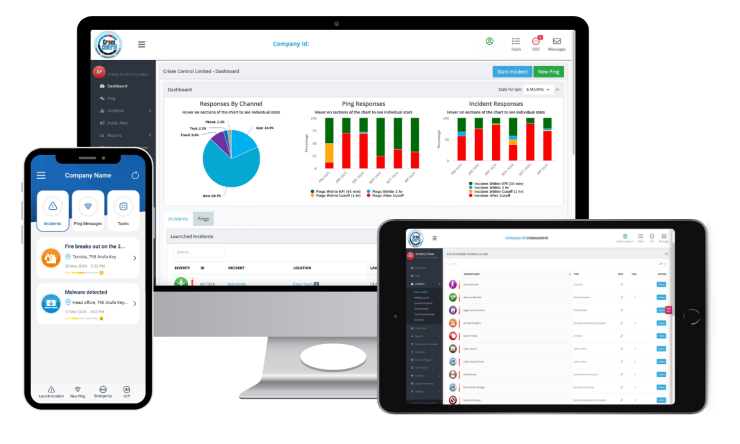
The solution is a mass notification system for global teams. This technology provides a direct, reliable link between a central hub and every individual contributor, ensuring that safety alerts and operational updates reach the right people instantly, no matter where they are working.
Why Design Agencies Face Unique Risks
Design services are built on the talent of individuals. Unlike manufacturing, where a person can be replaced on an assembly line, a lead designer or art director often holds the “DNA” of a specific project in their head. This makes the agency’s business continuity entirely dependent on the immediate welfare and connectivity of specific people.
The problem is that most agencies treat remote worker safety as a secondary concern or a “tick-box” exercise. They assume that because a designer is at home, they are automatically safe. This ignores the reality of localised threats. A political protest in a specific district, a sudden extreme weather event, or even a regional cyber-attack on a local internet service provider can take a key creative offline in an instant. Without a structured way to communicate, the agency enters a state of chaos, trying to piece together who is safe and who can still work.
The Failure of Informal Chat Groups
When a crisis occurs, many managers instinctively reach for WhatsApp or Microsoft Teams. While these tools are great for daily collaboration, they are fundamentally flawed for emergency use.
First, there is the issue of notification fatigue. Designers are bombarded with messages all day. In a true emergency, a life-safety alert looks exactly like a request for a file edit. It gets buried. Second, these platforms do not offer a status overview. You cannot see at a glance who has acknowledged an evacuation order or who has marked themselves as “safe.” Third, these tools rely on a single point of failure: the internet. If the local data network is congested or down, an app-only message will never arrive. Redundancy is not just a technical preference; it is a requirement for safety.
Building Operational Resilience for Design Agencies
Operational resilience for design agencies is about more than just data backups. It is about the ability to keep the creative engine running when the unexpected happens. For a studio to be truly resilient, it must be able to account for its people within minutes, not hours.
When you integrate cloud-based mass notification software into your business continuity planning, you move away from reactive panic. Instead of wondering if the team in a specific region is affected by a local emergency, the system can automatically trigger a check-in request. This allows the agency to pivot. If three designers are offline due to a regional power failure, the project manager knows immediately and can reassign tasks to the New York team before the client even notices a delay. This protects the agency’s reputation and its bottom line.
Ensuring Remote Designer Safety During Local Emergencies
One of the hardest things to manage in a global setup is the local-global paradox. A situation can be a minor news story in the UK but a total catastrophe for your lead illustrator in another country. Ensuring remote designer safety during local emergencies requires a geographic approach to communication.
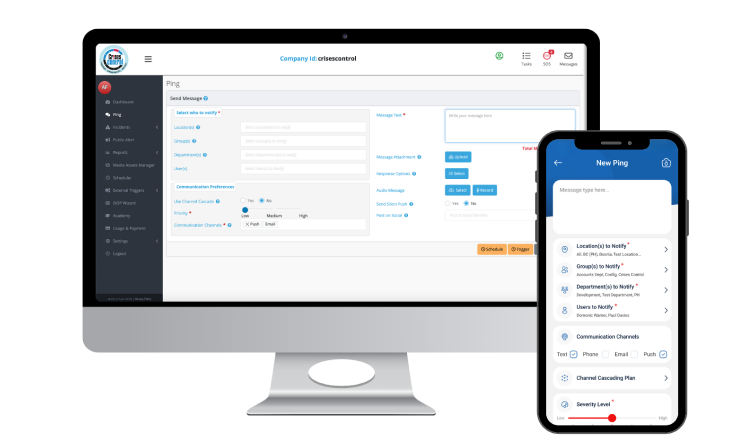
Modern notification systems allow administrators to use geo-fencing. You can draw a circle on a map around a specific city and send a message only to the people currently located there. This is far more effective than emailing the whole company. It ensures that the people who need help get it, while the rest of the team continues their work without unnecessary distraction. It shows your staff that you are looking out for them specifically, which builds immense cultural loyalty.
Interested in our Ping Mass Notification Software?
Efficiently alert everyone in seconds at scale with our Mass Notification Software.
The Role of the SOS Panic Button App
A design career often involves more than just sitting at a desk. Staff visit print shops, attend client presentations in unfamiliar cities, or go to site installations. In these moments, they are at their most vulnerable. Providing an SOS panic button app on their mobile phone is a practical way to extend the agency’s duty of care.
If an employee finds themselves in a dangerous situation, a single tap of a button alerts the agency’s response team. The alert includes the person’s exact location, allowing for immediate help to be dispatched. It is a simple tool that provides a massive amount of reassurance. In an industry where talent is the primary product, showing that you value the individual’s safety above all else is a powerful retention tool.
Common Mistakes in Global Crisis Planning
Many agencies fall into the trap of over-simplifying their emergency plans. They create a document, save it as a PDF, and put it on a server. This is a static solution for a fluid problem.
Relying on the Follow the Sun Safety Model
The Follow the Sun model is a common way to manage global teams, where the duty shifts between offices as the day progresses. The assumption is that someone is always awake to manage a crisis. In reality, the handover periods are a major risk. If an incident happens at 8:00 AM in London just as the Singapore office is closing, information often falls through the cracks.
Relying on a human handover for safety is a mistake. A digital system like Crises Control removes this risk by using automated triggers. If a global threat feed identifies a major event near one of your employees, the system can send an alert automatically, regardless of what time it is or who is currently managing the shift. This automation ensures that no one is left waiting for a human to notice the news.
The Danger of Outdated Contact Data
A mass notification system for global teams is only as good as the phone numbers and email addresses inside it. Creative agencies often have high staff turnover or use many freelance contractors. If your emergency list is six months old, it is useless. High-performing firms integrate their notification software with their HR systems. When a new designer joins or an old one leaves, the notification list updates automatically. This ensures that you are never trying to reach a person who no longer works for you while ignoring someone who does.
Meeting Global Compliance Standards
Operating in multiple countries means dealing with multiple sets of rules. From the UK Health and Safety at Work Act to various data privacy laws in the EU and the Middle East, agencies have a legal responsibility to protect their staff and report incidents accurately.
The Practicality of an Audit Trail
One of the practical consequences of a poor response is the inability to prove what actions were taken after the fact. If a regulator asks for evidence of your response, a list of sent emails is rarely enough. Regulatory reporting for incident management in global studios requires a detailed log of every action taken.
A professional system tracks exactly when a message was sent, which channel it used (SMS, voice, Email, or push), and when the recipient acknowledged it. This data is invaluable for improving future responses and for satisfying legal requirements. It turns a chaotic event into a clear, documented timeline that protects the agency from liability.
Steps to Modernise Your Studio Safety
If you are responsible for the operations of a design firm, the move to a digital system should be methodical.
- Map your actual workforce: Don’t just look at office addresses. Look at where your remote workers and frequent travellers actually spend their time.
- Identify the triggers: Decide what constitutes an emergency. Is it a weather event? A cyber-attack? A fire at a client’s office?
- Choose multi-channel tools: Ensure your software can send SMS and voice calls. If the data network fails, a standard app message will not get through, but a text or a phone call might.
- Integrate with daily tools: Look for a system that works with things like Microsoft Teams. This ensures that real-time incident alerts for distributed creative teams appear where they are already looking.
- Run a live test: Don’t wait for a real disaster. Run a silent test to see how many people acknowledge a dummy alert within five minutes.
Comparing Manual and Digital Approaches
| Feature | Manual (Email/Chat) | Digital (Mass Notification) |
| Response Speed | Highly variable; slow | Instant and automated |
| Accountability | No way to track responses | Real-time dashboard of safety |
| Reliability | Low; dependent on single platform | High; multi-channel redundancy |
| Compliance | Impossible to audit effectively | Automated audit trails |
| Employee Privacy | Personal numbers often shared in groups | Secure, centralised data |
Why Getting This Wrong Costs More Than Money
When a communication strategy fails, the damage to the agency is multi-layered. There is the immediate safety risk to the person, which is the most significant concern. But following that is the damage to the studio’s culture. If employees feel that their employer does not have a plan to protect them when they are working remotely, morale and trust vanish.
Then there is the client perspective. Design is a business of trust. Clients trust you with their brand and their deadlines. If you cannot reach your team to manage a disruption, you cannot give the client an honest update. This leads to missed deadlines and, eventually, lost contracts. Moving to a professional notification system is an investment in your agency’s reputation as a reliable, mature business partner.
Closing the Safety Gap
The transition from a traditional office to a global, remote-first model is a huge opportunity for design agencies. It allows for a level of creativity and flexibility that was previously impossible. However, this new way of working requires a new way of thinking about safety.
By digitalising your crisis response and using tools like Crises Control, you ensure that your distributed team never feels isolated. You provide a safety net that follows them from their home office to a client’s studio and everywhere in between. This is the foundation of a modern, resilient creative business. It ensures that when the unexpected happens, you can focus on the people first and the project second, knowing that you have the tools to manage both effectively.
Maintaining the safety and productivity of a distributed creative team requires a dedicated infrastructure for communication.
Request a FREE Demo