Written by Anneri Fourie | Crises Control Executive
Picture a busy Wednesday morning in a large NHS trust. A critical internal system goes down without warning. Within minutes, three departments are working from three different versions of what has happened. Clinical teams slow their workflows to compensate. Operations staff field calls from colleagues who have heard conflicting updates. Senior leaders try to build a clear picture, but the information arriving from different directions does not quite match.
The problem is not silence. People are communicating constantly. Phones ring. Emails arrive. Staff share updates in corridors. Yet all this activity is uncoordinated, and uncoordinated communication during a disruption does not settle a situation. It amplifies uncertainty.
This is exactly the gap a mass notification system for hospitals is meant to close. Not just sending messages quickly, but ensuring the right people receive the right information and understand what they are expected to do next.
What Is A Mass Notification System For Hospitals
A mass notification system for hospitals is a structured communication platform that sends targeted alerts, assigns response roles, and coordinates actions during operational or clinical incidents.
Unlike simple messaging tools, it connects alerts to responsibilities and workflows so communication leads to action rather than confusion.
The Real Problem Hospitals Face During Disruptions
When systems fail or incidents unfold, hospitals often experience predictable communication challenges:
- Conflicting updates across departments
- Unclear ownership of response actions
- Delayed escalation while staff seek confirmation
- Limited visibility for leadership
- Difficulty documenting what actually happened
These issues rarely stem from lack of effort or capability. They arise because communication tools are not designed for coordinated response.
What Actually Happens During A Hospital Disruption
Healthcare organisations are complex environments where multiple teams operate simultaneously. Clinical staff focus on patient care. IT investigates technical faults. Facilities manage operational impacts. Leadership assesses risk and oversight.
Under normal conditions, established routines keep everything aligned. During a disruption, those routines break down. Without structured communication, each team fills the information gap with whatever it can piece together.
The result is familiar to many healthcare managers. Teams work in parallel, often duplicating effort. Decisions are made with partial information. Leadership struggles to understand what is happening on the ground.
In the opening scenario, the technical fault was not the biggest issue. The real challenge was what happened to communication in the first thirty minutes. Accurate information was needed quickly. Guidance was needed across departments. Without structure, each group improvised.
Why Traditional Communication Methods Fall Short
Hospitals often rely on phone calls, email, pager systems, and informal conversations during incidents. These methods are familiar and accessible, but their limitations become clear under pressure.
Phone calls are immediate but linear. You can only speak to one person at a time and there is no shared record. Emails provide documentation but do not confirm whether messages have been read or acted upon. Pager systems reach individuals but lack context. Informal updates spread quickly but can easily become distorted.
Information becomes inconsistent as it passes from person to person. Some teams receive updates while others do not. Nobody can confirm who has acknowledged what. After the incident, reconstructing a timeline becomes guesswork.
This is not a reflection of individual performance. It is a structural issue. These tools were built for everyday communication, not coordinated incident response.
The Difference Between Sending A Message And Enabling A Response
Many organisations assume the primary goal of an emergency mass notification system is speed. Speed matters, but speed alone does not create coordination.
A fast message without clarity leaves staff unsure what to do. Some pause to confirm details. Others wait to see how colleagues react. That hesitation creates fragmentation.
Too many alerts can create another problem. When notifications feel routine, staff begin to tune them out. When a serious incident occurs, the alert carries less weight.
A well-designed mass notification platform for hospital emergency alerts connects the notification to a structured response pathway. It tells recipients what has happened, what their role is, and what actions are expected. That clarity changes behaviour.
Understanding The Different Types Of Hospital Alerts
Confusion between alert types is a common issue in healthcare communication. Not every notification requires the same response.
A broadcast alert provides information but may not require immediate action. An incident alert activates a response plan and assigns responsibilities. An operational update supports ongoing work without escalation.
When these distinctions are unclear, staff may delay action or respond unnecessarily. Clear classification ensures alerts trigger the right level of response.
Role-Based Communication And Why It Matters
One of the key differences between a basic messaging tool and a hospital staff emergency alert system is the ability to target communication by role.
Broadcast messaging sends the same information to everyone. This can create noise and uncertainty. A facilities manager does not need the same information as a clinical lead. A resuscitation team requires different instructions from an IT team investigating a system fault.
Role-based communication ensures each group receives information relevant to their responsibilities. Clinical teams understand immediate actions. Operations manages logistics. Leadership receives a strategic overview.
Platforms such as Crises Control enable organisations to predefine roles and escalation pathways. When an incident occurs, response follows a structure rather than improvisation.
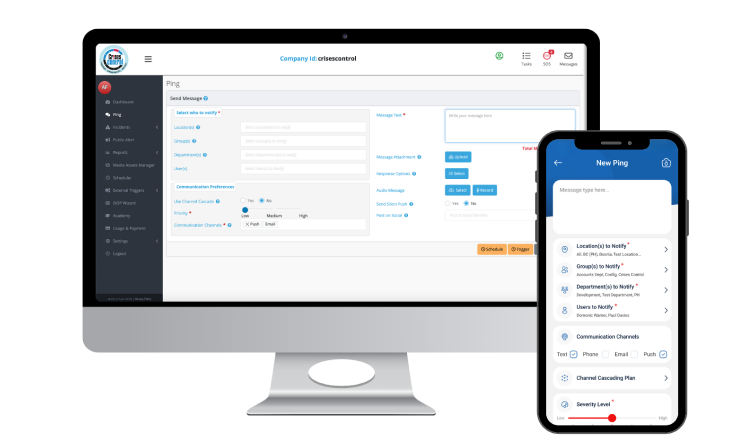
Interested in our Ping Mass Notification System?
Efficiently alert everyone in seconds at scale with our Mass Notification System.
What Good Looks Like In Practice
Consider how the opening scenario might unfold with structured communication in place.
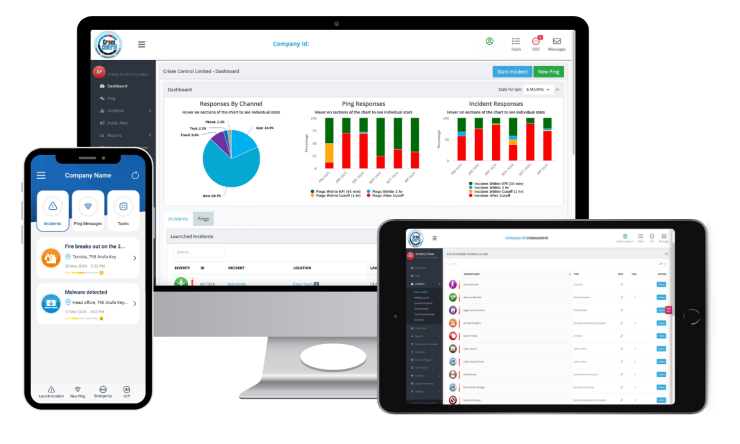
The system fault is identified. An incident notification is triggered through the platform. IT receives an alert with response tasks. Clinical leads receive guidance for affected workflows. Operations receives instructions for managing patient flow. Leadership sees a dashboard view showing progress and acknowledgements.
No one waits for phone calls. No one relies on rumours. Everyone understands their role. The response is coordinated even if conditions remain challenging.
When the incident ends, the platform has already created a complete timeline of alerts, acknowledgements, and actions. This record supports review, governance, and learning.
Governance And The Importance Of Documentation
Hospitals operate within strict governance frameworks. Organisations must demonstrate how incidents were managed, what decisions were taken, and how communication occurred.
Manual communication methods make this difficult. Reconstructing events from memory or scattered notes often leads to gaps.
Structured platforms capture communication and actions in real time. The audit trail exists automatically. This supports accountability and enables organisations to learn from each incident with confidence.
The Human Element In Communication
There is sometimes concern that structured systems reduce human judgement. In reality, they support it.
Healthcare professionals make complex decisions every shift. A structured communication layer reduces the cognitive load associated with coordination. Staff do not need to wonder who else has been informed or what others are doing.
When coordination is clear, teams can focus on clinical and operational decisions that require expertise. Structure supports judgement rather than replacing it.
How Crises Control Supports Coordinated Response
Healthcare organisations are increasingly adopting platforms that connect communication with operational workflows. Crises Control supports this approach by digitalising response plans and enabling role-based communication during incidents.
Alerts trigger predefined workflows. Teams receive clear instructions. Leadership gains visibility. Cloud access ensures coordination continues even during technical disruptions. Automated records provide a reliable timeline of events.
The aim is not to replace human decision-making but to provide clarity and consistency across teams.
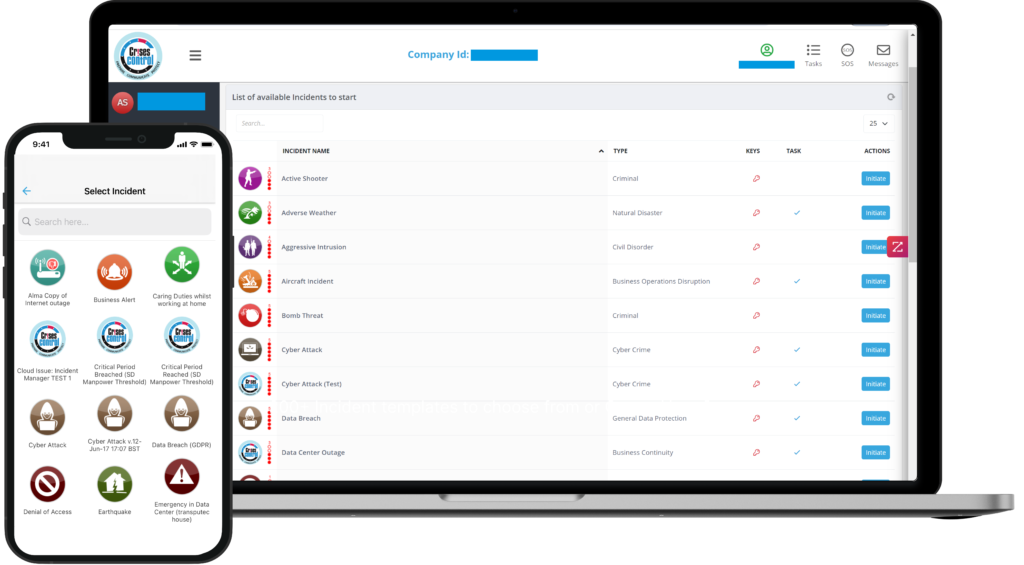
Interested in our Incident Management Software?
Flexible Incident Management Software to keep you connected and in control.
Questions Leaders Should Ask When Evaluating Communication
Organisations reviewing their incident communication capability should consider:
- How quickly teams share a common understanding of the situation
- Whether alerts can be targeted by role
- Whether staff know what is expected when they receive a notification
- Whether communication timelines are captured automatically
- Whether the organisation can learn effectively from incidents
If communication relies heavily on informal methods, variability is likely to remain.
Moving From Fragmented Communication To Coordination
The scenario described earlier is not unusual. Many healthcare organisations have experienced similar situations where communication activity was high but coordination was low.
A mass notification system for hospitals should not simply broadcast messages faster. It should connect alerts to workflows, assign ownership, track responses, and provide visibility across departments.
Structured communication does not remove uncertainty during incidents, but it provides a shared foundation that helps teams respond with clarity.
Final Thoughts
Hospital disruptions test how well communication supports coordination. The difference between fragmented updates and structured response often determines how effectively organisations manage risk and maintain safe operations.
When alerts are connected to roles and workflows, teams act with greater confidence. Leadership gains clearer visibility. Documentation supports governance and learning.
Crises Control provides a practical example of how structured communication can support coordinated response while allowing healthcare professionals to focus on patient care.
If you are reviewing your approach to incident communication and want to explore how a structured system could support your organisation, request a free personalised demo today.
Request a FREE Demo