Written by Anneri Fourie | Crises Control Executive
Mining is one of the few industries where a small delay in communication can turn a manageable situation into a serious incident. Underground teams often work far from supervisors, surrounded by machinery, noise and dust. When something goes wrong, such as a ventilation fault or a sudden build-up of gas, the people closest to the danger need instructions straight away. Many mines still rely on a mix of radios, phones and verbal messages passed along the line. These methods are familiar, but they leave space for missed alerts, misunderstandings and slow reactions.
This problem is not caused by a lack of effort. It comes from the reality of the mining environment. Signals struggle to travel through rock, teams move between levels and tunnels, and not everyone carries the same device. Mines also run long shifts, which means that the teams on site change throughout the day. These conditions make it harder to reach the right people quickly.
A mass notification system gives mining companies a clear and reliable way to send urgent information to everyone who needs it. Instead of hoping a radio call reaches its intended audience, a mass notification system delivers the message directly to workers through several channels at once. It sends alerts to mobiles, radios, computers and fixed devices. It also tracks who has received the message and who has responded. This is the kind of visibility mining leaders need when they are responsible for teams working deep below ground.
Crises Control supports this by giving mines a communication and incident response platform that works across remote environments, shift-based teams and varied communication tools. The aim is not to replace day-to-day communication methods. The aim is to make sure that when something urgent happens, no worker is left behind.
This blog explains the risks faced in mining operations, how mass notification tools address these challenges and how platforms like Crises Control make it easier to keep people safe.
The Communication Problems Mines Face Daily
Mining creates communication challenges that few other industries experience. Understanding these challenges helps explain why modern notification tools have become essential.
Depth and distance
Underground workers move through tunnels carved hundreds of metres below the surface. Walls of rock interfere with signals. Standard mobile coverage is usually non-existent. Even radio systems weaken as teams move further away from access points. A message that reaches one team instantly might fail to reach another working only a few levels lower.
Constant machinery noise
Fans, drills, conveyors and heavy vehicles create a loud environment. Verbal warnings can be drowned out. A radio call can be lost under background noise. In these situations, alerts need to come through in a way that cuts through distractions and does not rely only on sound.
Remote and isolated locations
Many mines are located far from towns and cities. Connectivity is limited. Staff often work in small, spread-out groups. If an incident happens in one area, it needs to be communicated quickly to teams who might be kilometres away across the site.
Changing shifts and rotating crews
Mining operations run for long hours, often through the night. Supervisors may not always know which individuals are underground at a particular moment. A mass notification system helps keep track of who is on shift and sends alerts to the correct group automatically.
The need for audit trails
Mines operate under strict safety rules. Once an alert is sent, companies must be able to show who received it and how they responded. Traditional tools do not provide this record, which can make regulatory compliance more difficult.
How a Mass Notification System Solves These Challenges
A mass notification system focuses on one key task: send clear information to the right people in the fastest and most reliable way possible. To do this, it must be designed for environments where communication can easily break down.
Multiple channels for one message
Rather than relying on a single channel, a mass notification system delivers alerts through several. For example, if a worker has no radio coverage underground but their mobile has a small Wi-Fi connection through an access point, their mobile will receive the alert. If the mobile signal is poor but their radio is working, the alert comes through the radio. This gives mining teams a safety net and reduces the chance of missed notifications.
Crises Control supports SMS, app push, email, phone calls and secure in-app notifications. Mines can use whichever mix works best for their site.
Alerts that reach people even with poor connectivity
Some systems require a strong and stable internet connection. Mining environments rarely provide this. Crises Control is designed for sites with inconsistent connectivity. Alerts can be queued and delivered as soon as a device reconnects. This ensures teams in deep tunnels or remote parts of the site stay connected to critical information.
Clear instructions that can be acted on immediately
An alert by itself is not always enough. Workers need to know what to do next. A mass notification system lets managers attach simple instructions that guide the response. These instructions might include evacuation directions, muster points, shut-down steps or confirmation requests. Workers can respond with a quick tap, which feeds real-time information back to supervisors.
Visibility for supervisors and control rooms
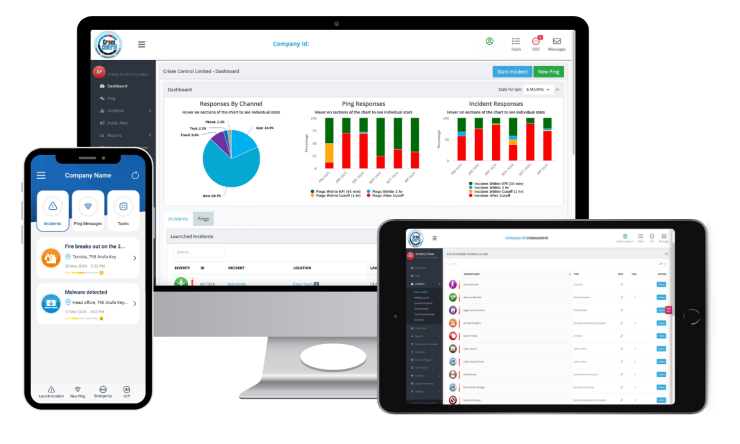
When an incident unfolds, control rooms must know who has seen the alert and who has responded. Mass notification systems provide real-time dashboards that show acknowledgment rates, delivery failures and team locations. Supervisors can use this information to prioritise who needs help and who is safe.
Prepared templates for common mining scenarios
Mines often face similar categories of risk. Gas build-up, ground instability, equipment failure, power loss and ventilation issues are typical examples. A mass notification system lets companies prepare message templates in advance. During an incident, supervisors can send the correct alert instantly without drafting a message under pressure. Crises Control supports stored templates and workflows so that actions are clear and consistent.
Mining Scenarios Where Mass Notification Systems Make a Difference
The value of a mass notification system becomes clear when looking at situations mining teams encounter.
Ventilation faults
If a fan fails, airflow underground changes quickly. Workers need to be moved to safe areas. A mass notification system can send immediate instructions to all teams in the affected zone and confirm that each group has acknowledged the message.
Gas detection alerts
Gas levels can rise without warning. When sensors detect dangerous levels, alerts must reach workers instantly. Because mass notification systems deliver through several channels, the information gets through even if one method is compromised.
Machinery fires
A fire underground is a serious risk. Smoke spreads fast in confined spaces. A mass notification system helps control rooms warn crews across every level and direct them to the nearest safe route.
Severe weather affecting surface operations
Open-pit mines face sudden storms and strong winds. Heavy rain can trigger slope instability or flooding. Lightning poses a high risk to workers on elevated equipment. A mass notification system helps move surface teams out of harm’s way without delay.
Medical emergencies
If a worker becomes ill or injured, nearby teams need to be alerted quickly. Mass notification systems allow supervisors to send a targeted message to first-aid responders or emergency teams without interrupting unrelated groups.
Evacuation of remote areas
Large sites often contain remote work areas. A mass notification system helps reach these teams instantly when evacuation is required. Because the system tracks responses, supervisors know who is on the move and who might still need support.
Interested in our Ping Mass Notification Software?
Efficiently alert everyone in seconds at scale with our Mass Notification Software.
What Mining Companies Look for in a Mass Notification Tool
Mining leaders usually prioritise four areas when selecting a notification platform.
Reliability in difficult environments
A system must continue working even when signals are weak or inconsistent. Crises Control operates across multiple channels and stores messages offline until the device reconnects.
Ease of use for supervisors and workers
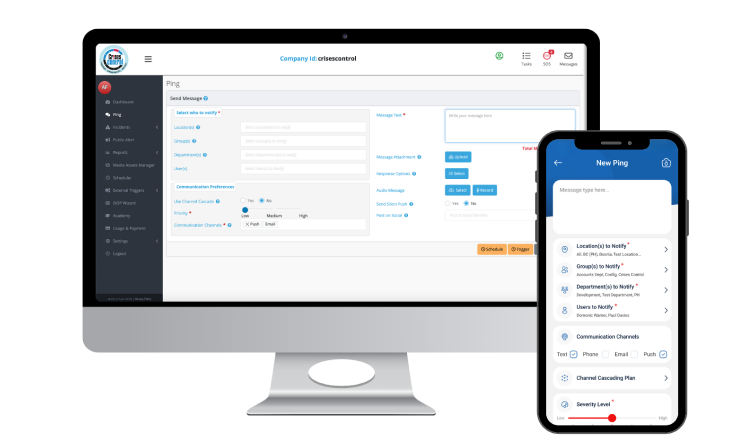
During an incident, no one has time to navigate complex systems. A mass notification tool must be simple enough for a supervisor to send an alert in seconds and easy for workers to understand at a glance. Crises Control focuses on clarity and quick actions.
Integration with existing equipment and safety processes
Mines use a mix of radios, internal networks, sensors and monitoring tools. A mass notification system needs to slot into this without causing disruption. Crises Control integrates through APIs and works alongside current communication tools.
Real-time reporting and accountability
Regulators and internal safety teams expect accurate records. Companies need proof that alerts were delivered and instructions followed. Crises Control provides acknowledgment tracking, audit logs and detailed incident reports that are available after every event.
How Crises Control Supports Mining Operations
Crises Control is built for organisations that need dependable communication tools during emergencies. Mining operations use the platform for several reasons.
Multi-channel alerts that cut through noise
Crises Control sends alerts through SMS, app push, voice calls, Microsoft Teams and email. Workers are reached on whichever device is available at that moment, helping teams stay informed even in difficult conditions.
Incident workflows tailored to mining risks
Mines can create step-by-step workflows for known risk scenarios. These workflows ensure that actions such as evacuation, area isolation or shutdown follow the same structure every time.
Real-time dashboards for better decision making
Supervisors can watch acknowledgment rates in real time and follow the progress of each team. This helps them decide when to escalate actions or send support to a specific area.
Works across remote and underground sites
The system does not depend on perfect connectivity. As soon as a device reconnects, it receives any missed alerts.
Clear records for safety teams and regulators
Audit trails and incident logs make post-event reviews smoother and help companies demonstrate compliance.
Final Thoughts and Invitation
Mining will always involve risk, but clear and reliable communication reduces that risk dramatically. A mass notification system gives mining companies a direct line to their workforce, even in the most challenging environments. It strengthens safety processes, speeds up incident response and provides the visibility supervisors need to protect their teams.
Crises Control works with mining organisations that want to modernise their communication and incident response processes. If you would like to see how it performs in a real mining scenario, you can request a free personalised demo and explore the tools at your own pace.
Request a FREE Demo