Operational incident management software is a dedicated technology platform that enables organisations to activate a structured response, coordinate teams, assign tasks and document every action during a live operational incident. Many organisations already have systems that detect operational issues. The challenge begins once people need to work together to resolve them. It is not a communication tool with a crisis mode switched on. Operational incident management software is purpose-built for the specific demands of real incidents: the speed, the multi-team coordination, the regulatory accountability and the need to demonstrate exactly what happened afterwards.
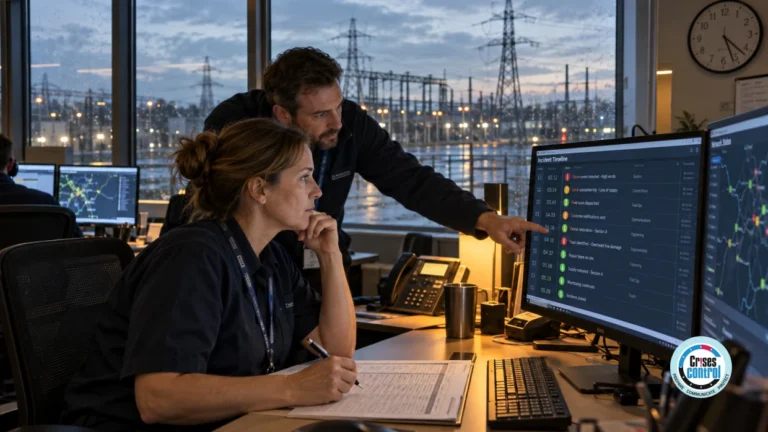
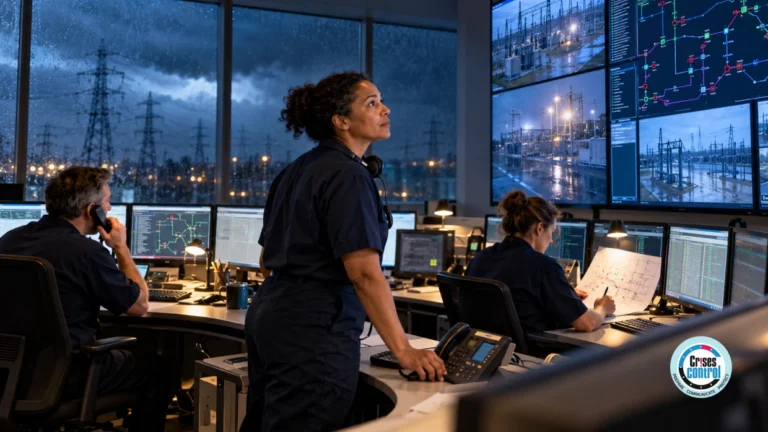
At 02:17 on a Tuesday morning, a control room operator at a regional electricity distributor notices pressure readings dropping across three substations simultaneously. There is no playbook on screen. No automatic task assignments go out to field crews. There is no single view of who has acknowledged the situation and who is en route. Instead, there are phone calls, messages to a group chat that not every relevant person monitors, and a site manager being woken up who is working from a contact list that has not been updated in two years. By the time the first engineer arrives on site, 38 minutes have passed. The actual fault could have been isolated in 12. The technology identified the fault quickly. The response slowed because the organisation had no structured way to coordinate people, tasks and decisions.
That gap between detection and coordinated response is not a monitoring problem. Organisations in the energy, utilities and industrial sectors have invested heavily in detection technology. The gap is a coordination problem. And in a sector where every minute of disruption carries operational, financial and regulatory consequences, it is a problem that costs far more than most organisations have calculated.
Why Energy and Utilities Face a Different Kind of Operational Risk
The energy, utilities and industrial sectors carry a level of operational complexity that most other industries do not. Infrastructure is distributed across dozens or hundreds of sites. Teams work across rotating shifts, often in remote or isolated locations. A single fault at one point in a network can trigger cascading effects across a wider system. And the consequences of a slow or disorganised response are rarely contained.
In 2023/24, the Health and Safety Executive reported 138 fatal injuries to workers in Great Britain, with the highest rates consistently found in sectors involving industrial plant, high-pressure systems and remote field operations (HSE 2024). When a gas pipeline develops an unexpected fault, when a water treatment plant loses pressure, or when a substation trips unexpectedly, the response needs to be fast, structured and fully traceable.
What organisations often have is something closer to the opposite.
Most utilities operators have invested significantly in monitoring. SCADA platforms, sensor arrays and control room dashboards provide excellent real-time visibility of what is going wrong. The gap is not detection. The gap is what happens immediately after detection. Who gets told, and through which channel? Who takes ownership of coordination? Who assigns specific actions to field crews and verifies those actions have been completed? Who documents the decisions made so that a regulator, insurer or internal audit function can see exactly what was done and when?
These are questions that a SCADA system cannot answer. They are questions that a group messaging application cannot answer. They are questions that only a purpose-built operational incident management platform can answer reliably, at speed, under pressure, with a complete record.
The goal of operational incident management software is not to replace the expertise of the people responding. It is to give that expertise a structure it can operate within, at speed, under pressure, with a complete and defensible record of everything that happens.
The Coordination Gap That Costs Utilities Most
Incident response in energy and utilities typically involves multiple teams operating in parallel: control room staff, field engineers, network operations, communications leads, senior management and, in some cases, external regulators or emergency services. Getting those teams moving in the same direction, with the same information, towards the same objective, within a compressed time window, is one of the hardest coordination challenges in any sector.
The tools most organisations currently rely upon were not designed for this. Email is asynchronous. Phone calls have no record and no way to confirm completion. Microsoft Teams and similar platforms provide communication but offer no structure around roles, responsibilities or escalation paths. When incidents occur, teams revert to instinct, informal networks and whoever happens to be available. The outcome varies depending on the individuals involved rather than the process in place.
This produces a consistent set of failure modes that any experienced operations manager will recognise.
Fragmented Information
Fragmented information is the first. Different teams operate from different versions of what is happening. The control room has one picture. The field crew has another. Senior management, briefed by phone, has a third. By the time anyone produces a coherent status update, the situation may already have changed significantly.
Delayed Decision-Making
Delayed decision-making follows. Without a single view of who knows what and what actions have been assigned, leaders hesitate. The instinct is to gather more information before committing. In an operational incident where every minute of delay extends disruption, risk to personnel or regulatory exposure, hesitation is a cost.
Unverified Task Completion
Unverified task completion creates the third failure mode. Actions are delegated informally. There is no mechanism to confirm that a field engineer has isolated the fault, that a notification has been sent to the relevant regulatory body, or that a secondary crew is en route. The incident commander is left relying on callbacks that may or may not come.
Inadequate Incident Records
Inadequate records close the loop. When the incident is over, it is frequently impossible to produce a reliable account of what happened, in what sequence, and who made which decisions. This creates sustained exposure to regulatory scrutiny, legal challenge and reputational risk that can outlast the incident itself by months or years.
Traditional Response vs Operational Incident Management Software
The difference between traditional response methods and a structured operational approach is easier to see side by side.
Traditional Response | Operational Incident Management Software |
Phone calls | Automated multi-channel alerts |
Email updates | Real-time incident dashboard |
Manual task tracking | Assigned and tracked actions |
Paper records | Automatic audit trail |
Separate teams | Shared operational picture |
Interested in our Incident Management Software?
Flexible Incident Management Software to keep you connected and in control.
Operational Incident Management Software: What Real Coordination Looks Like
Purpose-built operational incident management software changes the response picture entirely by providing the coordination infrastructure that organisations need to run a structured response from the moment an incident is detected to the moment the post-incident record is complete.
The Five Stages of Operational Incident Management
No two operational incidents are identical, but successful organisations tend to follow the same structured response. Whether the incident involves a power outage, pipeline fault or equipment failure, the response generally moves through five stages.
- Detect: Identify the incident quickly through monitoring systems, employee reports or automated alerts.
- Activate: Notify the appropriate response teams using predefined roles and escalation paths.
- Coordinate: Assign tasks, share a common operational picture and maintain communication across all stakeholders.
- Resolve: Complete operational activities, monitor progress and restore normal operations safely.
- Review: Generate an audit trail, capture lessons learned and update response plans to strengthen future resilience.
Purpose-built Operational Incident Management Software supports every stage of this lifecycle, helping organisations maintain control from the initial alert through to post-incident review.
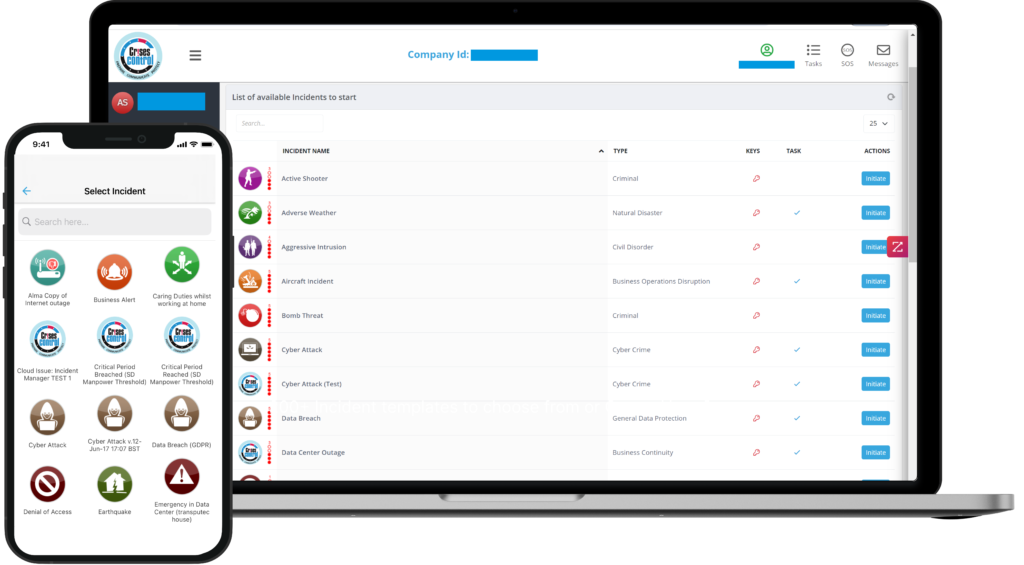
When an incident begins, the platform activates the response immediately: alerting all relevant personnel across SMS, voice, email, push notification and in-app messaging simultaneously, collecting acknowledgements in real time and giving the incident commander a live view of who has responded and who has not. There are no delays caused by manual contact list searches. There is no uncertainty about message delivery.
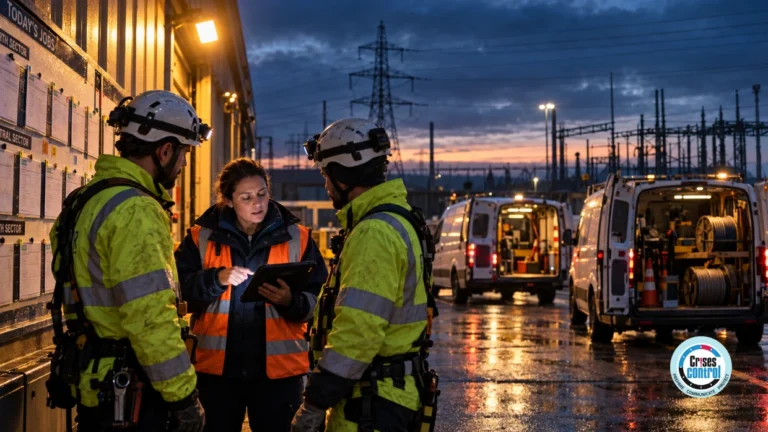
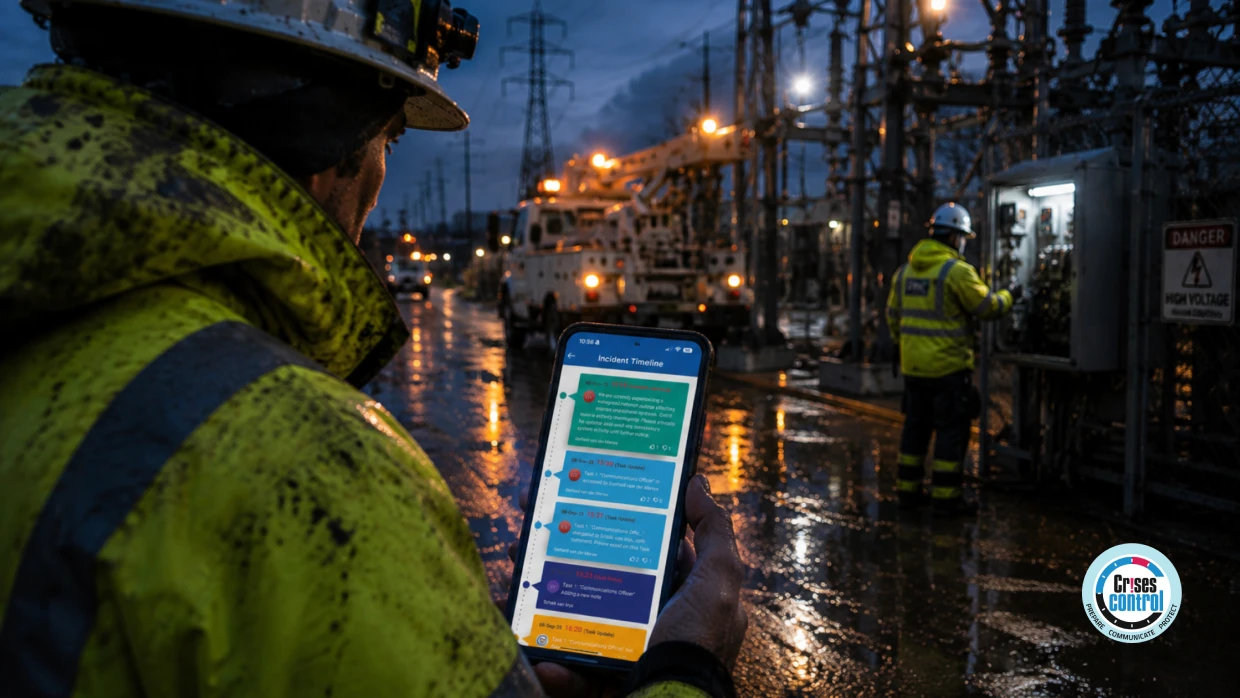
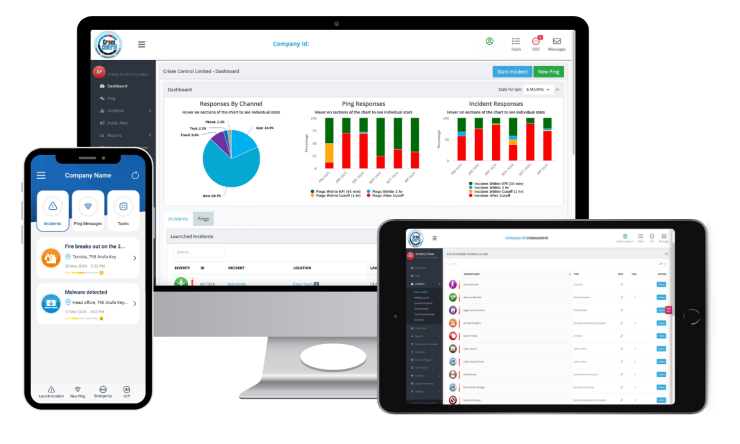
From activation, the platform supports structured coordination. Roles are assigned. Tasks are created with named owners and time expectations. The incident timeline builds automatically as actions are completed and communications are logged. Every team member, from the field engineer at a remote substation to the Head of Operations monitoring a real-time dashboard in the control centre, operates from the same information.
When the incident resolves, the platform generates a complete audit trail: every notification sent, every response received, every task completed, every decision logged. This is not a manual report written from memory and notes after the event. It is an automatically generated record of the response in full, shareable with regulators, insurers and leadership with confidence.
This is the operational layer that most energy and utilities organisations currently lack. In a sector where the question “what did you do and when?” is asked routinely by Ofgem, the HSE, the Environment Agency and insurers, it is the layer that determines whether an organisation can defend its response with evidence.
How Crises Control Delivers Operational Control for Energy and Utilities
Many organisations already have tools for communication or planning. The challenge is bringing those capabilities together during a live incident. Crises Control executes the response. Built for real incidents, not demos.
Alerting platforms send messages well. They confirm who has received a notification. What they do not do is manage what happens after the alert goes out: the coordination, the task tracking, the decision documentation, the real-time visibility of where the response stands. Enterprise crisis platforms such as Everbridge offer broad functionality at scale, but at a complexity and implementation burden that many utilities operators find difficult to justify for routine operational incidents. Governance tools focus on plans and frameworks rather than live response.
Crises Control sits in a different position. The platform covers the full incident lifecycle: alerting and activation through Ping, frontline escalation and lone worker safety through SOS, structured coordination through Incident Manager, task assignment and tracking through Task Manager, real-time operational visibility through Control Centre, and post-incident evidence generation through Audit and Reporting.
For energy operators and utilities organisations, this means the ability to activate a response in seconds, coordinate across field crews, control room staff and leadership simultaneously, track every action to verified completion and produce a defensible record for the regulator. The platform supports ISO 22301 and ISO 22320 alignment and is designed to operate under pressure without requiring specialist users or a lengthy deployment programme.
Organisations can start with the capability they need today and expand as operational requirements grow.
Bringing It All Together
Operational incidents place enormous pressure on people, processes and decision-making. The organisations that respond most effectively are not necessarily those with the most advanced monitoring systems. They are the ones that have a clear structure for coordinating people, tracking actions and maintaining visibility throughout the response.
Operational Incident Management Software helps organisations move from reacting to incidents to managing them in a consistent, accountable and repeatable way.
If your organisation is reviewing how it prepares for operational disruption, now is a good time to assess whether your current processes provide the coordination and visibility needed when incidents occur.
FAQs
1. What is operational incident management software?
Operational incident management software is a dedicated platform that enables organisations to activate, coordinate and track their response to live incidents from a single connected system. It covers the full incident lifecycle, from initial alerting and team activation through to task management, real-time visibility and post-incident reporting. Unlike general communication tools, it is purpose-built for high-pressure operational situations where accountability, speed and traceability are all critical requirements.
2. Why do energy and utilities organisations need dedicated incident management software?
Energy and utilities organisations manage distributed infrastructure, multi-team responses and regulatory accountability requirements that general communication tools cannot adequately support. Dedicated operational incident management software provides the structure needed to coordinate field crews, control room staff and leadership simultaneously, track actions to verified completion and produce records that satisfy Ofgem, the HSE and internal audit requirements.
3. How does incident management software differ from a mass notification system?
A mass notification system sends alerts and confirms receipt. Incident management software does everything that happens after the alert goes out: assigning roles, tracking tasks, maintaining an incident timeline, providing real-time visibility of the response and generating a complete audit trail. For utilities organisations, the gap between alerting and coordinating is precisely where most response failures occur.
4. What should energy sector organisations look for when evaluating operational incident management software?
Organisations should look for a platform that covers the full incident lifecycle rather than a single capability. Key requirements include multi-channel alerting with response confirmation, structured incident coordination, task assignment and tracking, real-time operational visibility and automatic audit trail generation. Ease of deployment and the ability to operate reliably under pressure are equally important evaluation criteria.
5. How does operational incident management software support regulatory compliance?
Purpose-built platforms generate a complete, timestamped record of every action, decision and communication during an incident. This record supports post-incident review by regulators such as Ofgem and the HSE, demonstrates response adequacy to insurers and provides defensible evidence for leadership accountability purposes. Platforms aligned with ISO 22301 and ISO 22320 standards provide an additional compliance assurance framework.