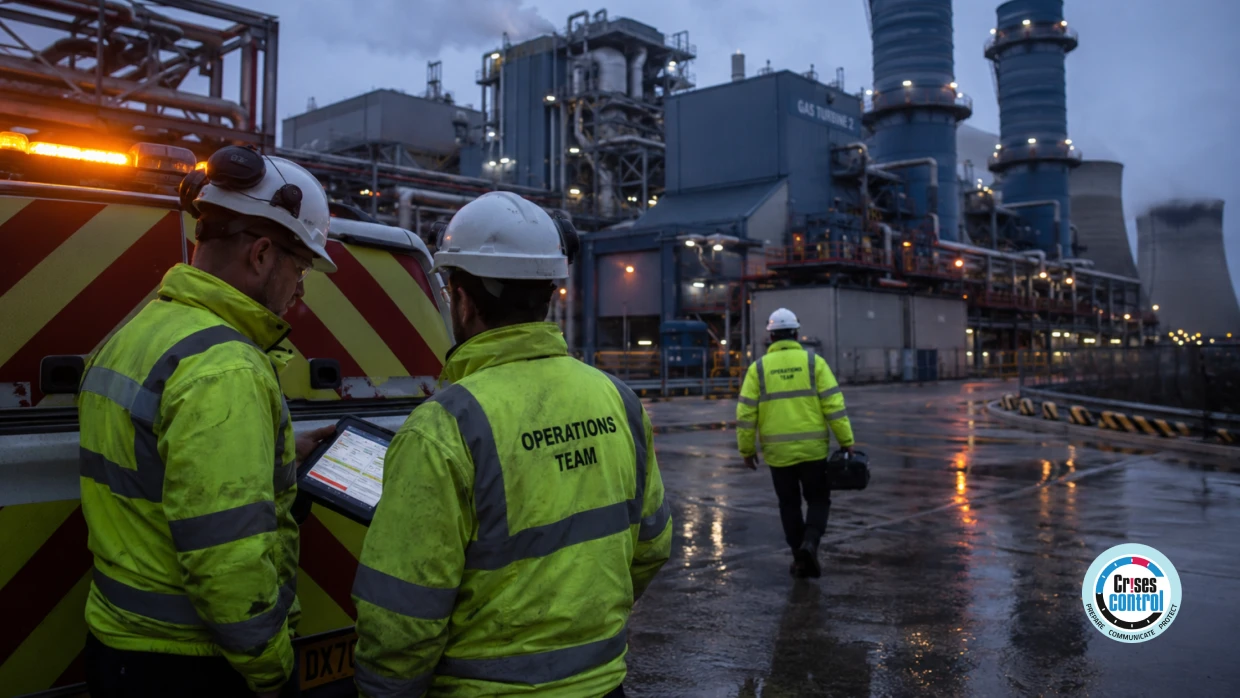
On the evening of 9 August 2019, a series of events unfolded that demonstrated just how quickly a single infrastructure failure can affect an entire country.
Almost simultaneously, generation was lost at the Hornsea offshore wind farm and the Little Barford gas power station. The sudden drop in electricity generation caused the frequency on the National Grid to fall, triggering automatic protection systems across the network. Around one million customers lost power, rail services came to a standstill, and hospitals switched to backup generators while engineers worked to restore stability. (Source: Technical Report on the Events of 9 August 2019.)
For most people, it was a power cut. For the organisations responsible for restoring the network, it became a complex operational response involving network operators, field engineers, control rooms, emergency services and regulators, all working to restore services while maintaining safety and accountability.
The technical fault was only the beginning.
The real challenge was coordinating the response.
While events on this scale are uncommon, the same operational challenge plays out across the energy and utilities sector every day. A transformer fails without warning. A water main bursts beneath a busy road. A gas pressure fault affects part of a distribution network. The impact may be smaller, but the response follows the same pattern. Multiple teams, multiple priorities and constant pressure to make informed decisions with incomplete information.
This is where Incident Management Software for Infrastructure Failures makes the difference. Monitoring systems can identify that something has gone wrong, and communication tools can help people exchange information. What they cannot do is coordinate the response from start to finish.
Purpose-built platforms bring together people, tasks and operational information into a single shared view, helping organisations activate the right teams, manage actions as they happen and maintain a complete record of the response. For energy, utilities and industrial organisations, this provides the structure needed to respond consistently, even when infrastructure failures become complex.
In this guide, we’ll explore why infrastructure failures become coordination challenges, where traditional approaches create unnecessary delays, and how a structured operational response helps organisations restore services more effectively while improving accountability.
The Cascading Nature Of Infrastructure Failures
Infrastructure failures rarely remain isolated for long.
A transformer fault can interrupt power across multiple sites. A burst water main can reduce pressure across an entire distribution network. A damaged gas pipeline may require sections of the network to be isolated while engineers investigate the cause and make the area safe.
What begins as a single technical fault quickly becomes a coordinated operational response involving multiple teams working at the same time.
Operations managers need an accurate view of the situation. Field engineers require clear instructions before arriving on site. Health and Safety teams assess the risks, while customer service teams prepare for increased enquiries. Depending on the severity of the incident, contractors, emergency services or regulators may also become involved.
Each team plays a different role, but they all rely on the same thing: accurate information.
When everyone is working from a shared operational picture, decisions become clearer and resources can be deployed with confidence. When information becomes fragmented, delays and misunderstandings begin to spread just as quickly as the incident itself.
This is where many organisations face their biggest challenge.
The technical fault is often straightforward to identify. Coordinating the response is far more difficult.
Many organisations still rely on a combination of phone calls, emails, messaging apps and spreadsheets to manage live incidents. These tools are familiar and useful for everyday communication, but they were never designed to coordinate a complex operational response involving multiple teams, locations and priorities.
Sending a message is not the same as confirming that the right action has been completed.
Knowing an engineer has received an alert is not the same as knowing the affected equipment has been isolated safely.
Receiving an update from one team does not guarantee that every other team is working from the same information.
This is the difference between communication and coordination.
Incident Management Software for Infrastructure Failures helps organisations bring people, tasks and operational information together in one place, providing a shared operational picture from the moment an incident begins until the final review is complete.
Interested in our Incident Management Software?
Flexible Incident Management Software to keep you connected and in control.
What Breaks Down During Infrastructure Failures
When infrastructure failures occur, the technical problem is often only one part of the challenge.
Keeping people aligned, making informed decisions and maintaining visibility across multiple teams quickly becomes just as important as repairing the fault itself.
Whether it’s an electricity distributor, a water utility or a gas network operator, experienced incident managers tend to describe the same operational challenges.
Losing The Shared Operational Picture
One of the first things to break down is visibility.
Control room operators see one version of the incident. Field engineers arrive on site with new information. Customer service teams are responding to enquiries, while senior leadership is asking for updates on the wider operational impact.
None of these teams are wrong.
They’re simply working from different pieces of the same picture.
Without a central source of truth, information becomes fragmented. Decisions are based on partial updates, tasks are duplicated and priorities begin to shift as new information arrives. By the time someone pieces together an accurate picture of what’s happening, the incident may already have moved on.
The Gap Between Assigning Work And Completing It
Infrastructure failures generate dozens of actions in a short space of time.
An engineer needs to isolate equipment.
Another team must inspect the site.
Contractors are called in.
Communications teams prepare customer updates.
Each task depends on another being completed first.
The difficulty isn’t assigning the work. It’s knowing whether it has actually been done.
Without a structured way to track progress, incident managers spend valuable time following up with phone calls and messages instead of coordinating the wider response. Delays become harder to identify, and small issues can quickly affect the rest of the operation.
Documentation Becomes An Afterthought
The response doesn’t end when services are restored.
In many cases, that’s when the questions begin.
Regulators, insurers and internal investigators may need to understand exactly what happened, when key decisions were made and how the organisation responded throughout the incident.
Trying to rebuild that timeline from emails, call logs and handwritten notes is both time-consuming and unreliable. Small gaps in documentation can make it difficult to demonstrate that the response was managed appropriately, even when the operational outcome was successful.
For organisations operating in regulated industries, this matters. Under the Reporting of Injuries, Diseases and Dangerous Occurrences Regulations 2013 (RIDDOR), certain incidents must be reported to the Health and Safety Executive, with records retained for at least three years. The quality of those records depends on how well information was captured during the incident itself.
Why A Structured Response Matters
The cost of an infrastructure failure isn’t measured solely by how long the outage lasts.
Poor coordination can lead to delayed recovery, duplicated effort, incomplete records and increased regulatory scrutiny long after operations return to normal.
This is why many organisations are moving beyond disconnected communication tools and adopting Incident Management Software for Infrastructure Failures. A structured platform helps teams maintain a shared operational picture, track actions as they happen and create a reliable record of every decision, making it easier to respond confidently when operational pressure is at its highest.
What Effective Infrastructure Incident Response Looks Like
No two infrastructure failures unfold in exactly the same way.
A burst water main requires a different response to a power outage or a gas leak. Even two similar incidents can develop differently depending on the location, weather conditions or the availability of engineering teams.
Despite those differences, organisations that manage infrastructure failures effectively tend to follow the same principles.
Respond Quickly, But Stay Structured
The first few minutes often determine how the rest of the response unfolds.
The priority isn’t simply notifying people. It’s making sure the right people receive the right information and understand what they’re expected to do next.
Instead of relying on manual call lists or group messages, leading organisations activate predefined response plans based on the type of incident. Engineers, operations managers, Health and Safety teams, communications staff and senior leaders all receive relevant information at the same time, allowing the response to begin without unnecessary delays.
Give Everyone The Same Operational Picture
As more information becomes available, maintaining visibility becomes just as important as restoring the affected infrastructure.
Everyone involved should be working from the same operational picture.
Incident commanders need to see which tasks have been assigned, which activities are still in progress and where additional support may be needed. Field teams need access to the latest updates without waiting for another phone call. Leadership needs confidence that decisions are based on accurate, real-time information.
When every team shares the same understanding of the situation, coordination becomes far more effective.
Keep Accountability Built Into The Response
A well-managed response doesn’t rely on memory.
As actions are completed, decisions made and updates shared, that information should be captured automatically as part of the response itself.
This creates a clear timeline showing who did what, when it happened and how the incident progressed from detection through to recovery.
Instead of spending days reconstructing events afterwards, organisations already have a complete operational record that supports internal reviews, insurance enquiries and regulatory reporting.
Where Incident Management Software Supports The Process
This is where Incident Management Software for Infrastructure Failures provides real value.
Rather than replacing existing monitoring systems or communication tools, it connects people, tasks and operational information into a single coordinated response.
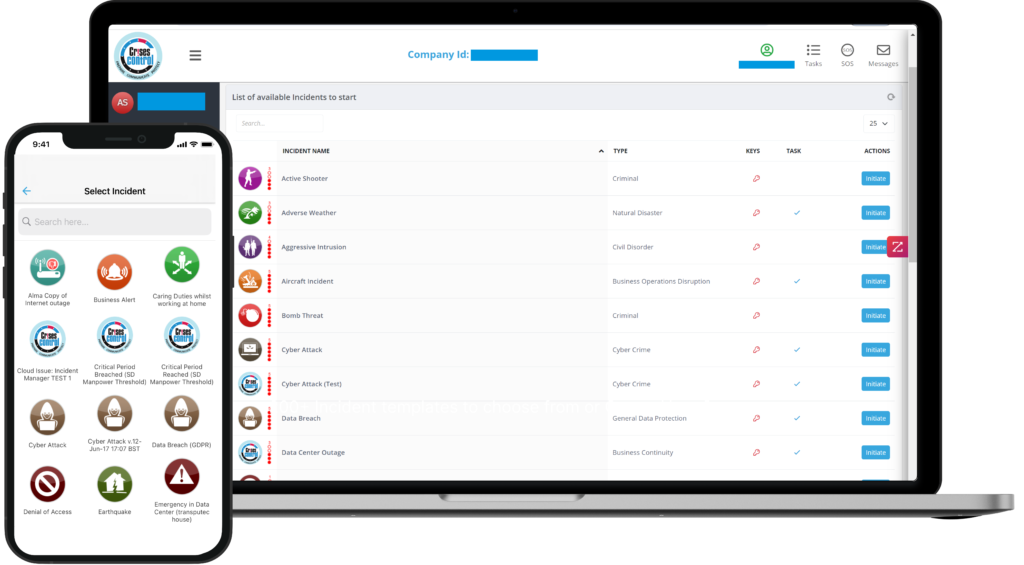
Alerts can be sent across multiple communication channels, response plans can be activated automatically, responsibilities assigned to specific individuals and progress tracked as work continues.
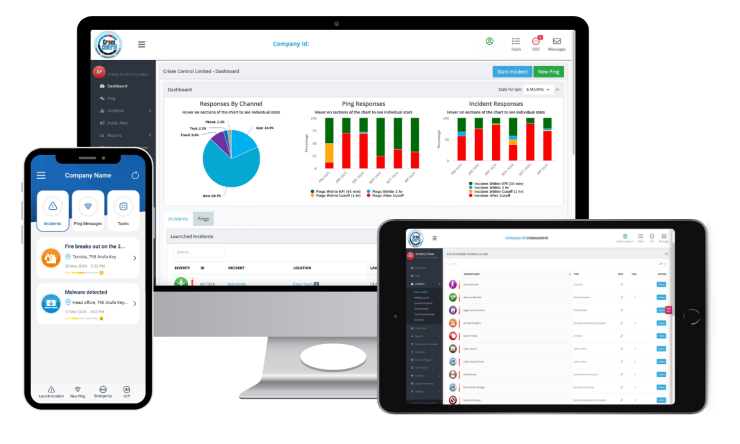
At the same time, every action is recorded within a live incident timeline, giving incident managers the visibility they need during the response while creating a complete audit trail for afterwards.
The goal isn’t simply to respond faster. It’s to respond in a way that is coordinated, consistent and fully accountable from beginning to end.
How Crises Control Supports Infrastructure Failure Response
By the time an infrastructure failure is detected, organisations already have enough pressure to manage. The last thing incident managers need is to switch between multiple systems to understand what’s happening, assign work or check whether critical tasks have been completed.
This is where platforms such as Crises Control can support the operational response.
Rather than replacing monitoring systems, SCADA platforms or existing communication tools, Crises Control brings people, tasks and operational information together in one place. It provides a structured environment where teams can activate predefined response plans, assign responsibilities, monitor progress and maintain a clear operational picture as the incident develops.
For organisations managing distributed infrastructure, this means field engineers, control room operators, Health and Safety teams, communications staff and senior leadership can all work from the same source of information, helping to reduce confusion and improve decision-making throughout the response.
As work progresses, tasks can be assigned to named individuals, tracked through to completion and updated in real time. At the same time, every notification, decision and action is recorded automatically, creating a complete audit trail that supports post-incident reviews, regulatory reporting and organisational learning.
The platform is designed to support the full incident lifecycle, from the first alert through to recovery, helping organisations respond more consistently without adding unnecessary complexity to existing operations.
If you’d like to learn more about building a structured operational response, our guide to Operational Incident Management Software explores the wider principles behind coordinated incident response.
Bringing It All Together
Infrastructure failures are inevitable.
How organisations respond to them is a choice.
While monitoring systems have become increasingly effective at detecting faults, successful incident response depends on far more than knowing something has gone wrong. It depends on bringing together the right people, giving them a shared operational picture and ensuring every action is coordinated from the first alert through to recovery.
For energy, utilities and industrial organisations, the greatest challenge is rarely the technical fault itself. It is managing the operational complexity that follows. As more teams become involved, decisions need to be made quickly, responsibilities must remain clear and every action should be recorded accurately. Without a structured approach, even relatively small infrastructure failures can become difficult to manage.
This is where Incident Management Software for Infrastructure Failures provides real value. By supporting coordinated decision-making, improving operational visibility and creating a complete record of the response, organisations can manage incidents with greater confidence while strengthening resilience for the future.
If you’re reviewing how your organisation prepares for infrastructure failures, now is the time to consider whether your current processes provide the visibility, coordination and accountability needed when operational pressure is at its highest.
Get a free personalised demo and discover how Crises Control helps energy and utilities organisations coordinate infrastructure incidents from detection through to recovery.
FAQs
1. What Is Incident Management Software For Infrastructure Failures?
Incident Management Software for Infrastructure Failures helps organisations coordinate their response when critical infrastructure is disrupted. It brings together alerts, team communication, task management and incident tracking in one platform, giving everyone involved a shared view of the situation. This helps energy, utilities and industrial organisations respond more consistently while creating a complete record of every decision and action.
2. Why Is Dedicated Incident Management Software Important For Utilities?
Utilities organisations often manage incidents across multiple locations, involving field engineers, control room operators, contractors and senior leadership. Relying on phone calls, emails and messaging apps can make it difficult to keep everyone aligned. Dedicated Incident Management Software for Utilities helps coordinate people, track actions and maintain a clear operational picture from the moment an incident begins until services are restored.
3. How Is Operational Incident Management Different From IT Incident Management?
Although both aim to restore normal operations, they deal with very different types of incidents. IT incident management focuses on systems, applications and digital services. Operational incident management involves physical infrastructure, field teams, public safety and regulatory requirements. This means organisations need tools that support operational coordination as well as communication.
4. How Does Incident Management Software Support Regulatory Compliance?
During an infrastructure incident, organisations may need to demonstrate what happened, who was involved and how decisions were made. A structured incident management platform automatically records notifications, task updates, decisions and response timelines, making it much easier to support regulatory reporting, internal investigations and post-incident reviews. This is particularly valuable for organisations operating under regulations such as RIDDOR or industry-specific requirements.
5. What Should Organisations Look For When Choosing Incident Management Software For Infrastructure Failures?
The most effective platforms do more than send alerts. They should help organisations activate response plans, coordinate multiple teams, assign and track tasks, provide real-time operational visibility and generate a complete audit trail. Just as importantly, they should be easy to use under pressure and integrate into existing operational processes rather than adding unnecessary complexity.